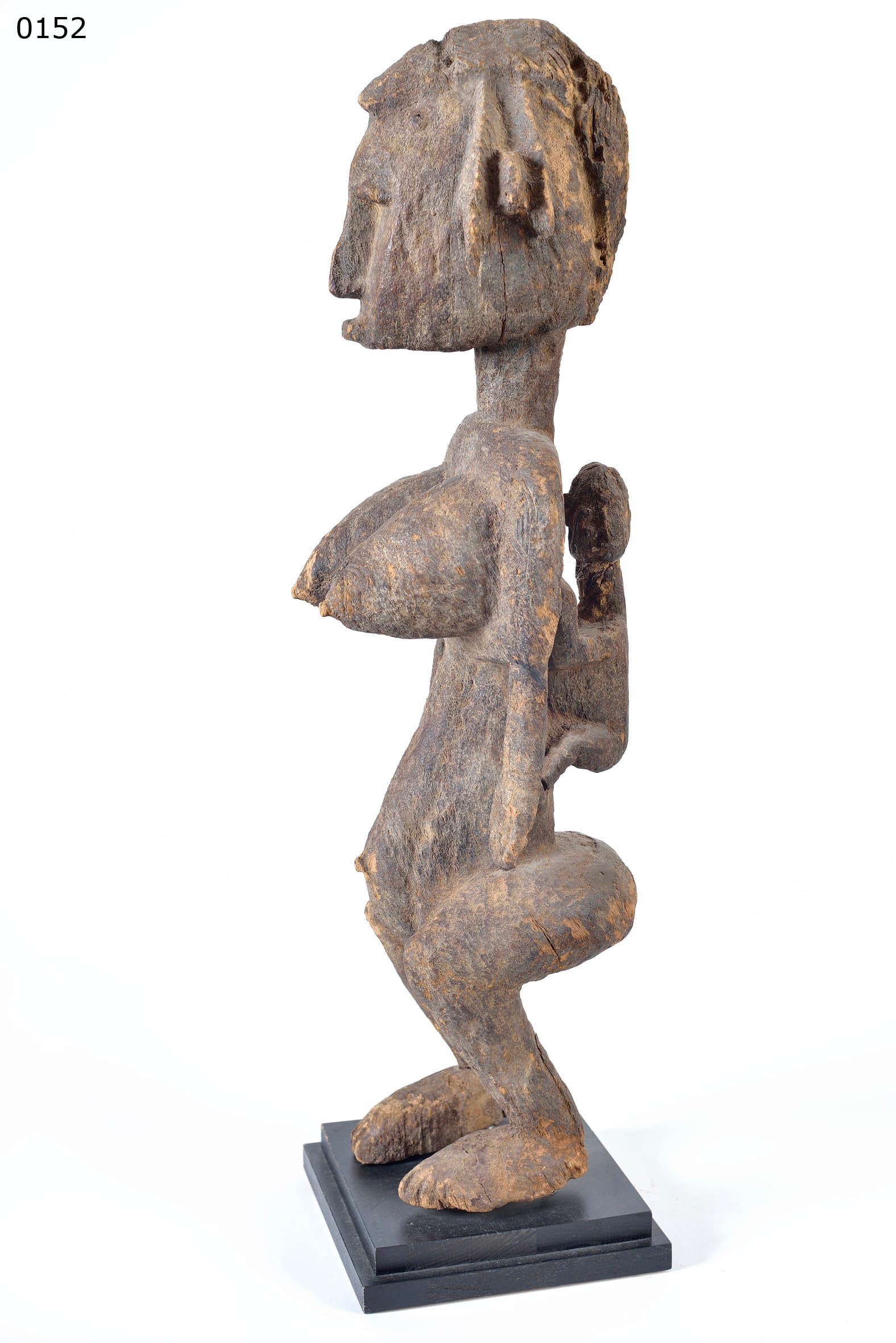
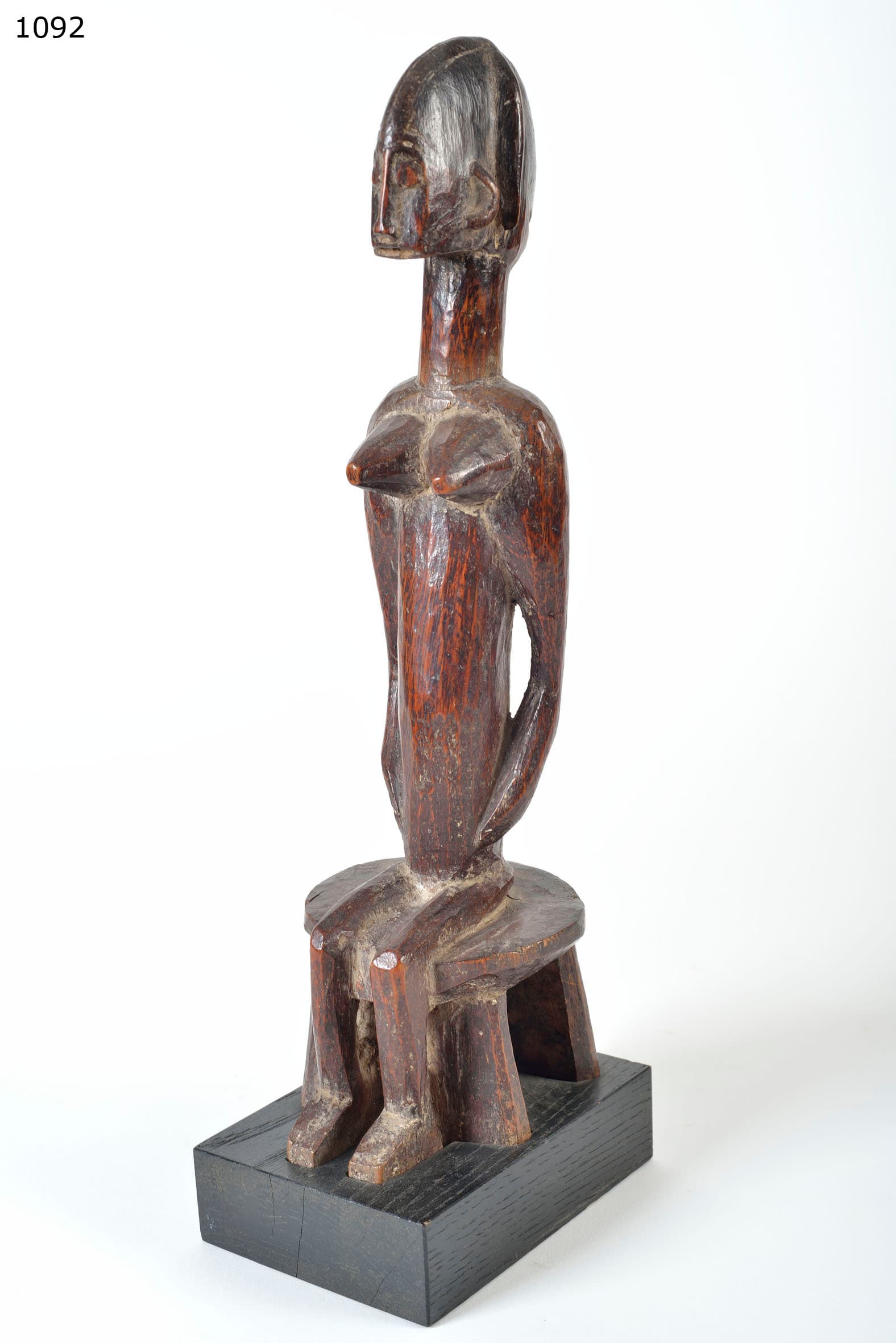
Eine stark geometrische, tief erodierte weibliche Holzfigur mit spitz zulaufenden, konischen Brüsten, einem kantigen Gesicht mit sagittalem Kamm und einer trockenen, stark zerklüfteten Oberfläche, die vollständig von jeglicher ursprünglicher Politur befreit ist.
1. Ästhetischer Stil und regionale Charakteristika
Die Marka-Schnitzer, die eng mit ihren Bamana-Nachbarn verwandt sind, verwenden eine Bildsprache der strengen geometrischen Reduktion. Diese Figur wird durch scharfe, sich überschneidende Flächen definiert - die konischen Brüste, die starre Vertikalität des Rumpfes und der kantige, kammartige Kopf. Die Abstraktion unterstreicht die Rolle der Figur als zeitloser spiritueller Vermittler und nicht als Porträt eines lebenden Menschen. Während die Bamana-Skulpturen dazu neigen, ihre geometrischen Kerne in abgerundeten Übergängen abzuschwächen, bewahren die Arbeiten von Marka die kantigen Überschneidungen, was zu einer stärkeren und architektonischeren Lesart des Körpers führt.
2. Rituelle Funktion und Fürbitte für den Altar
Diese Figur wurde geschnitzt, um als physischer Anker auf einem Stammesaltar zu dienen. In der Marka-Kultur ist die Verehrung der weiblichen Ahnen von entscheidender Bedeutung, um die Fruchtbarkeit des Landes und den Fortbestand der Familienlinie zu gewährleisten. Die Figur wird regelmäßig mit Gebeten und Trankopfern bedacht und fungiert als Mittlerin zwischen dem irdischen Reich und dem Reich der verstorbenen Ahnen. Die konisch geformten Brüste und die ausgeprägte Vertikalität weisen diese Figur eher als Fruchtbarkeits- und Abstammungsfigur aus als eine allgemeine Altarfigur, was auf das besondere Interesse des Haushalts an Abstammung und Reproduktion hinweist.
3. Physische Patina und Altershinweise
Der physische Zustand dieser Statue spricht für ein hohes Alter. Das Holz ist stark zersetzt, was zu tiefen, vertikalen Austrocknungsrissen und einer weichen, erodierten Textur geführt hat. Das Fehlen von modernen Bearbeitungsspuren oder nachträglichem Polieren stützt eine Datierung in das 19. Jahrhundert und legt nahe, dass die Statue über Generationen hinweg im rauen Klima Malis überdauert hat. Die Risse folgen der Maserung des Holzes und verlaufen nicht quer zu ihr – was auf eine langsame, mehrere Jahrzehnte dauernde strukturelle Trocknung hindeutet.
Zusammenfassung
Eine archaisch anmutende Marka-Altarfigur, die die weibliche Form auf eine geometrische Essenz reduziert. Die tiefgreifende, trockene Erosion und die tiefen Austrocknungsrisse weisen auf ein hohes Alter dieses Artefakts malischer Herkunft hin, das dem 19. Jahrhundert zugeschrieben werden kann.
KI-unterstützt erstellt aus Sammlungsgutachten, Objektfotografie und eigener Recherche, redaktionell geprüft. Fehler sind möglich — Hinweise darauf sind uns willkommen. Zum Verfahren →