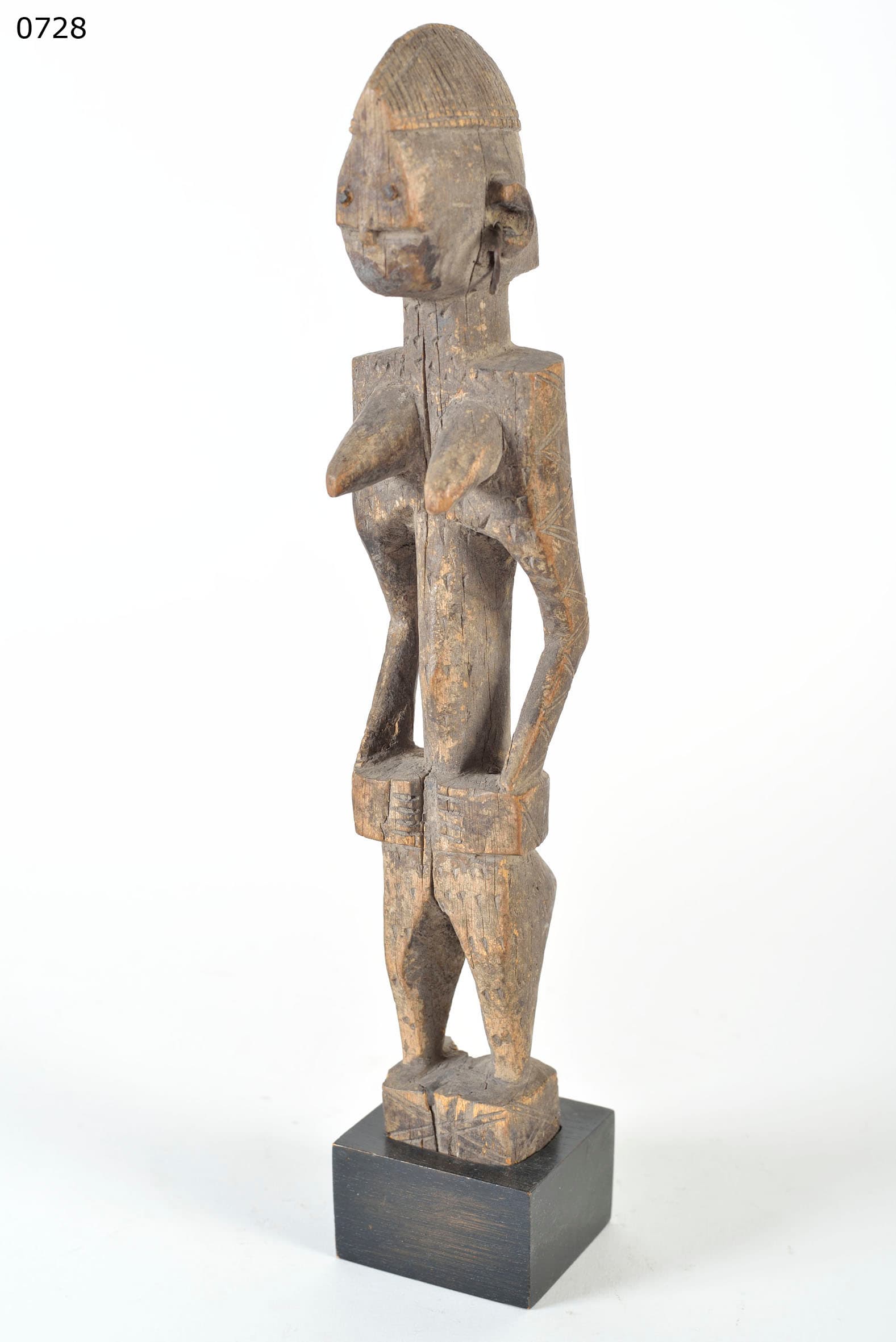
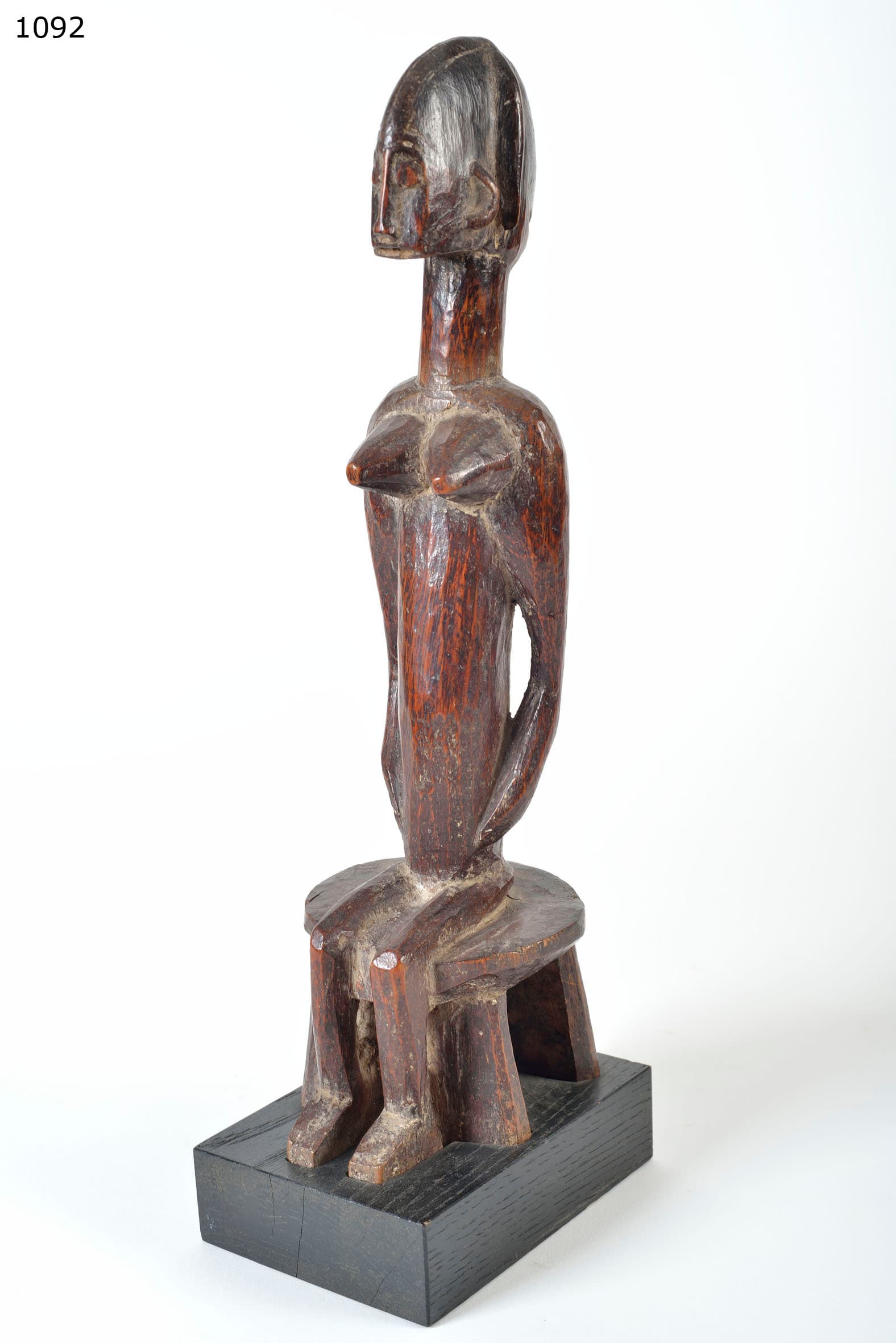
Eine hölzerne Mutterschaftsfigur (73 cm) der Marka aus Mali, deren Entstehung im 16. bis 18. Jahrhundert vermutet wird – eine stilisierte Frau mit einem Kind, das fast organisch mit ihrem Rücken verschmolzen ist, mit strengen, langgestreckten Proportionen, einem kantigen, vorspringenden Profil und einer stark erodierten Oberfläche mit einer trockenen, verkrusteten Patina über degradierten geometrischen Schnitzereien.
1. Geometrische Abstraktion in der Nigerschleife
Das Volk der Marka (oder Dafing) ist kulturell und ästhetisch mit den benachbarten Bamana verwandt, doch ihre Skulpturen treiben die geometrische Abstraktion oft noch weiter auf die Spitze, wobei sich hier stilistische Einflüsse im Grenzbereich zu frühen Dogon- oder Tellem-Formen andeuten.
- Architektonischer Körper: Die langgestreckten Proportionen, der markante sagittale Scheitelkamm, die weit vorstehenden, konischen Brüste, die blockhaften Füße und die vereinfachten Volumina lassen die menschliche Form als reine Architektur erscheinen.
- Archetypus statt Porträt: Die strenge Stilisierung entfernt den Naturalismus und konzentriert sich eher auf die wesentliche, archetypische Idee der Mutterschaft der Vorfahren als auf eine bestimmte Frau.
2. Fruchtbarkeit und Kontinuität der Abstammung
In der Gesellschaft der Marka sind die Mutterschaftsfiguren eher idealisierte Verkörperungen als Porträts.
- Zentral für Initiationskulte: Figuren dieser Art verankern Vereinigungen wie die Jo-Gesellschaft, die um erfolgreiche Geburten, landwirtschaftlichen Reichtum und soziale Harmonie bittet.
- Kind als Metapher: Das stark abstrahierte Kind, das auf dem Rücken getragen wird, ist eine visuelle Metapher für den Fortbestand der Gemeinschaft durch den Segen der Ahnen, nicht die Darstellung eines bestimmten Säuglings.
3. Extreme Verwitterung vom 16. bis 18. Jahrhundert
Ein hohes Alter der Figur wird durch ihren körperlichen Zustand und den massiven Substanzverlust, wie die fehlenden Arme und die stark verschliffenen Gesichtszüge, nahegelegt.
- Tiefe strukturelle Oxidation: Ein derartiges westafrikanisches Holzobjekt, dessen Alter auf das 16. bis 18. Jahrhundert geschätzt wird, zeigt eine natürliche Aufweichung der geometrischen Kanten und eine organische Patina, die bei den harten Hölzern der Sahelzone meist auf einen jahrhundertelangen Prozess hindeutet.
- Generationen von Ritualen: Aufeinanderfolgende Libationen, klimatische Einflüsse oder eine temporäre Erdlagerung haben die Oberfläche in einer Weise geprägt, die schwer zu imitieren ist – vergleichbare Skulpturen aus dem inneren Nigerdelta wurden bei C14-Analysen teils in diese frühe Epoche datiert, was die profunde Degradation hier als Indikator für ein beträchtliches Alter stützt.
Zusammenfassung
Diese mutmaßlich sehr alte Marka-Mutterschaftsfigur ist ein eindrucksvolles Beispiel sahelischer Abstraktion und Ahnenverehrung. Ihre tief erodierte Oberfläche, die mit einer Datierung in das 16. bis 18. Jahrhundert vereinbar ist, und ihre eleganten geometrischen Linien machen sie zu einer seltenen ethnografischen Arbeit.
KI-unterstützt erstellt aus Sammlungsgutachten, Objektfotografie und eigener Recherche, redaktionell geprüft. Fehler sind möglich — Hinweise darauf sind uns willkommen. Zum Verfahren →