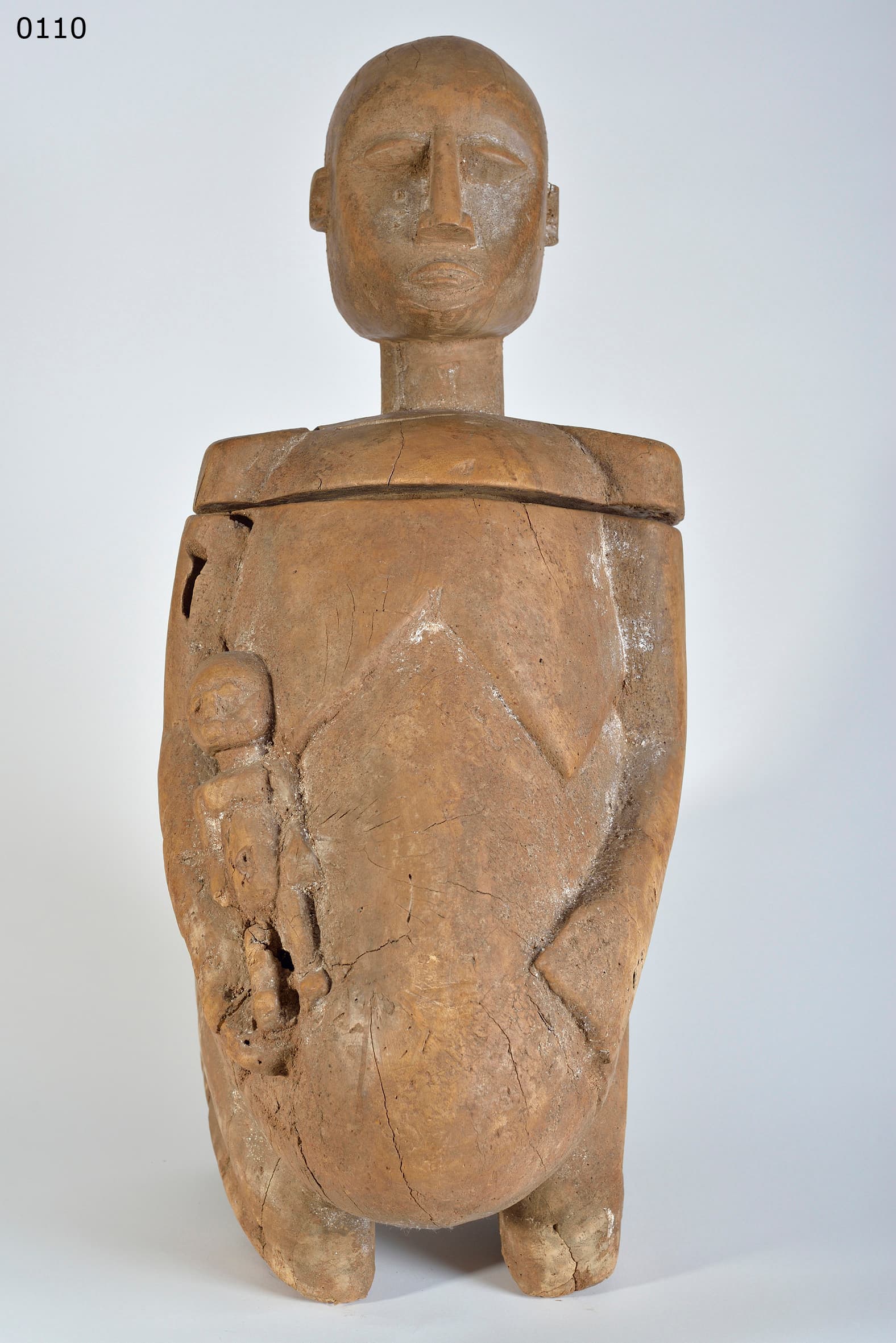
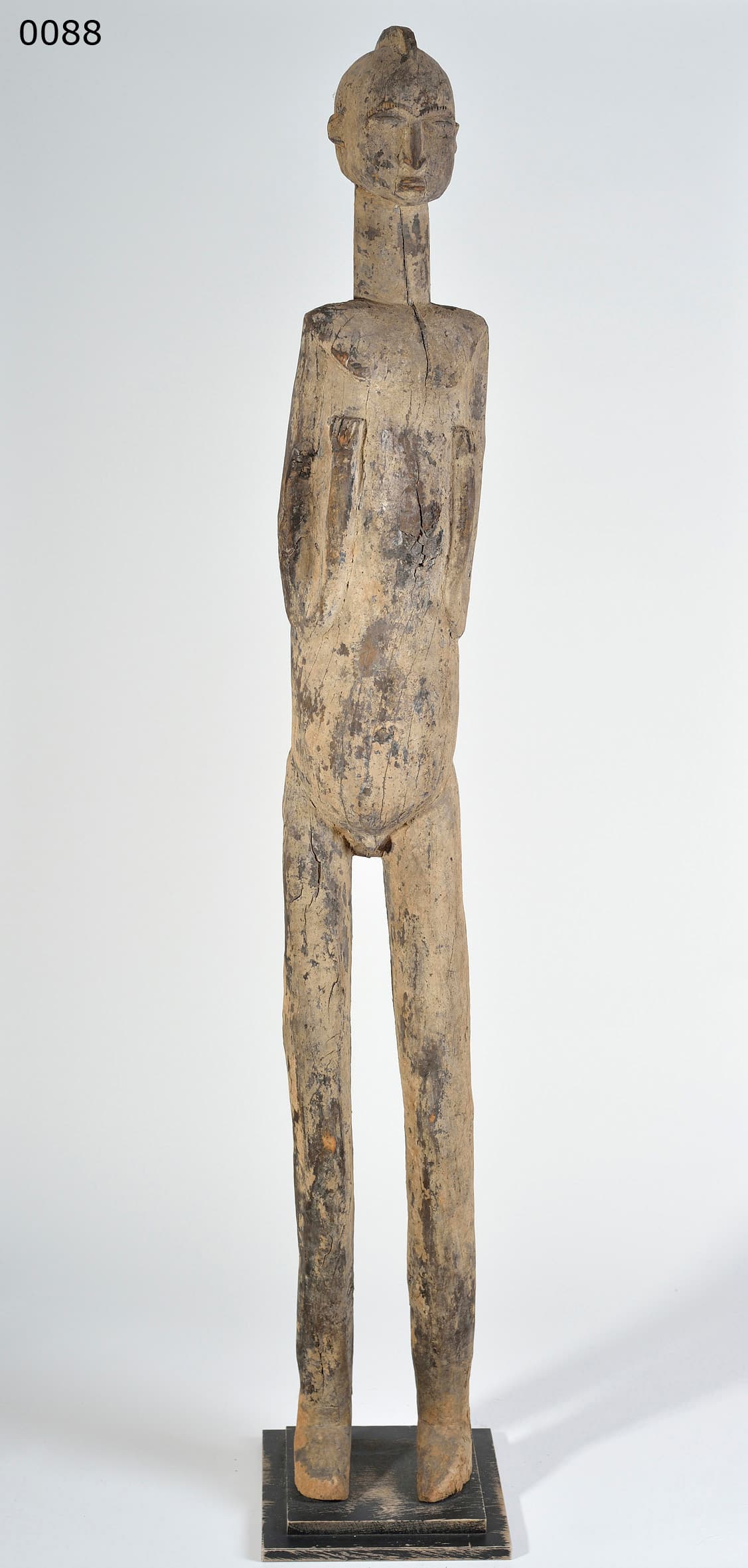
Eine stark vereinfachte, blockhafte Holzfigur, die starr steht und deren Arme bündig an den Rumpf geschnitzt sind. Das Stück hat einen ausgeprägten gespaltenen Kopf und eine trockene, stark erodierte, erdfarbene Patina mit tiefen, natürlichen Austrocknungsrissen entlang der Basis.
1. Ästhetischer Stil und regionale Merkmale
Diese Figur verkörpert den strengen, utilitaristischen Minimalismus der Lobi-Schnitzerei. Durch die vollständige Verschmelzung der Arme mit der zylindrischen Masse des Rumpfes und die Reduktion der Gesichtszüge auf geometrische Grundflächen vermied der Schnitzer absichtlich den Naturalismus. Diese schwere, unbewegliche Ästhetik spiegelt die Bestimmung der Figur als dauerhafter, stoischer spiritueller Anker und nicht als fließende Darstellung des Lebens wider. Der gespaltene Kopf ist ein regionales Unterscheidungsmerkmal - wahrscheinlich eher ein Verweis auf eine bestimmte Frisur oder rituelle Identität als eine stilistische Verzierung - und ordnet diesen Schnitzer einer bestimmten subregionalen Werkstatttradition der Lobi zu.
2. Rituelle Funktion und Thildu-Mechanik
Diese als bateba phuwe (ein gewöhnlicher bateba) identifizierte Figur wurde von einem Wahrsager in Auftrag gegeben, um als physisches Gefäß für einen thil (einen lokalen Naturgeist) zu dienen. Die Statue wurde im dunklen, privaten Heiligtum des Thildu (Schreinraum) einer Familie aufgestellt und fungierte als aktiver Vermittler, der Gebete und Opfer entgegennahm, um den Haushalt vor Hexerei, Krankheit und landwirtschaftlichem Misserfolg zu schützen. Die phuwe-Klasse innerhalb der Lobi-Taxonomie ist die grundlegende Schicht des spirituellen Personals des Schreins - der bateba, dessen Aufgabe eher in anhaltender, undramatischer Wachsamkeit als in speziellen magischen Handlungen besteht.
3. Physische Patina und Altersnachweis
Die starken Austrocknungsrisse - insbesondere der große Riss, der Gesicht und Rumpf halbiert - und die krustige, trockene Patina sind klassische Indikatoren für ein authentisches Lobi-Schreinobjekt. Diese Figuren wurden oft weitgehend unpoliert belassen, so dass das raue, trockene Klima in Burkina Faso und die gelegentliche Verwendung von Opfererde das Holz organisch altern ließen, was ihre Herkunft aus dem frühen 20. Die Risse folgen der Maserung des Holzes und verlaufen nicht quer zu ihr, was eher auf eine langsame strukturelle Trocknung als auf künstliche Risse hinweist.
Zusammenfassung
Diese Bateba ist ein Paradebeispiel für die minimalistische Schnitzkunst von Lobi und reduziert die menschliche Gestalt auf einen strengen, schützenden Monolithen. Seine starke physische Austrocknung und seine unlackierte Oberfläche belegen seine Geschichte als funktionierendes Fürbittgefäß in einem traditionellen animistischen Schrein.
KI-unterstützt erstellt aus Sammlungsgutachten, Objektfotografie und eigener Recherche, redaktionell geprüft. Fehler sind möglich — Hinweise darauf sind uns willkommen. Zum Verfahren →
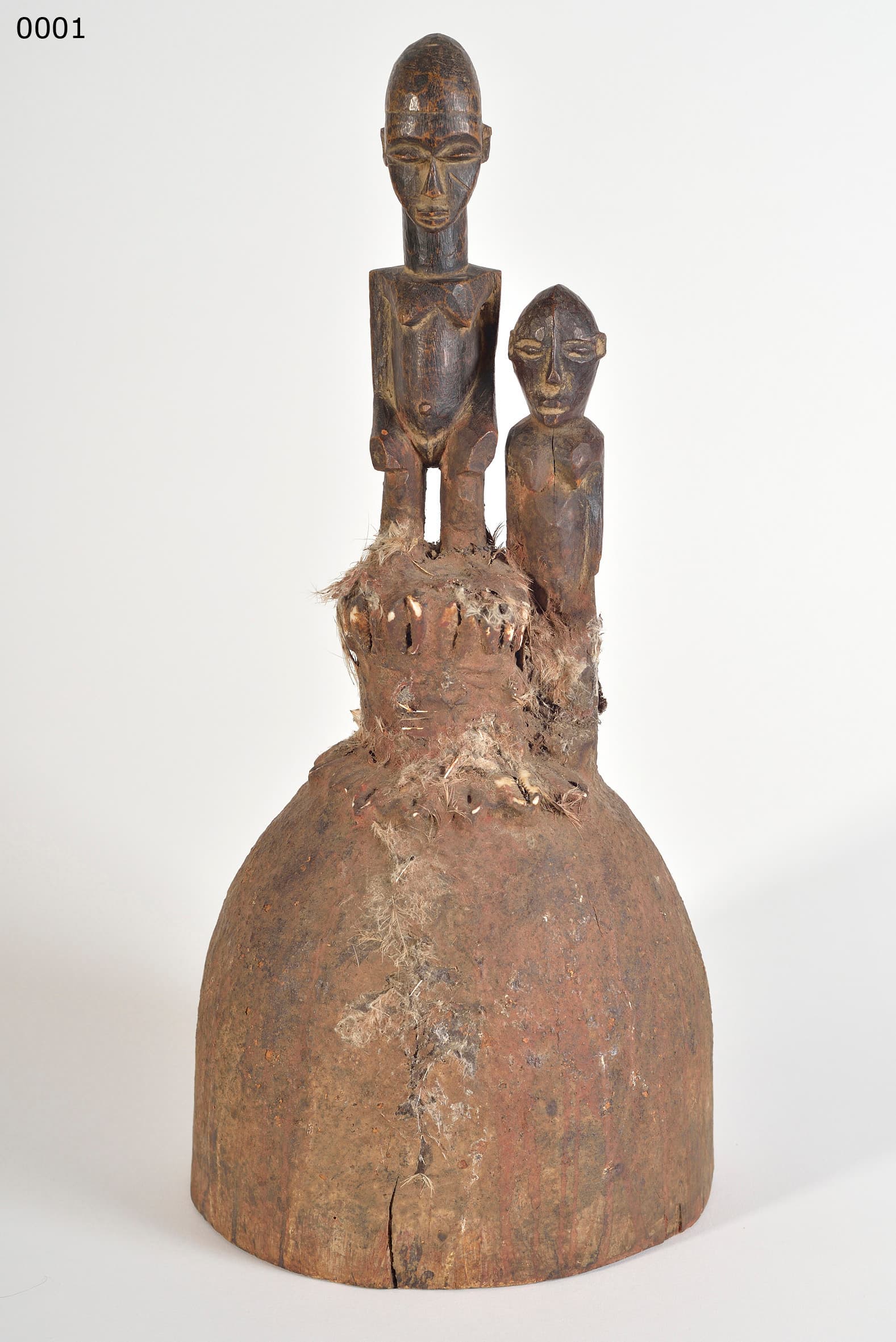
Schreinaltar mit Ehepaar BATEKE
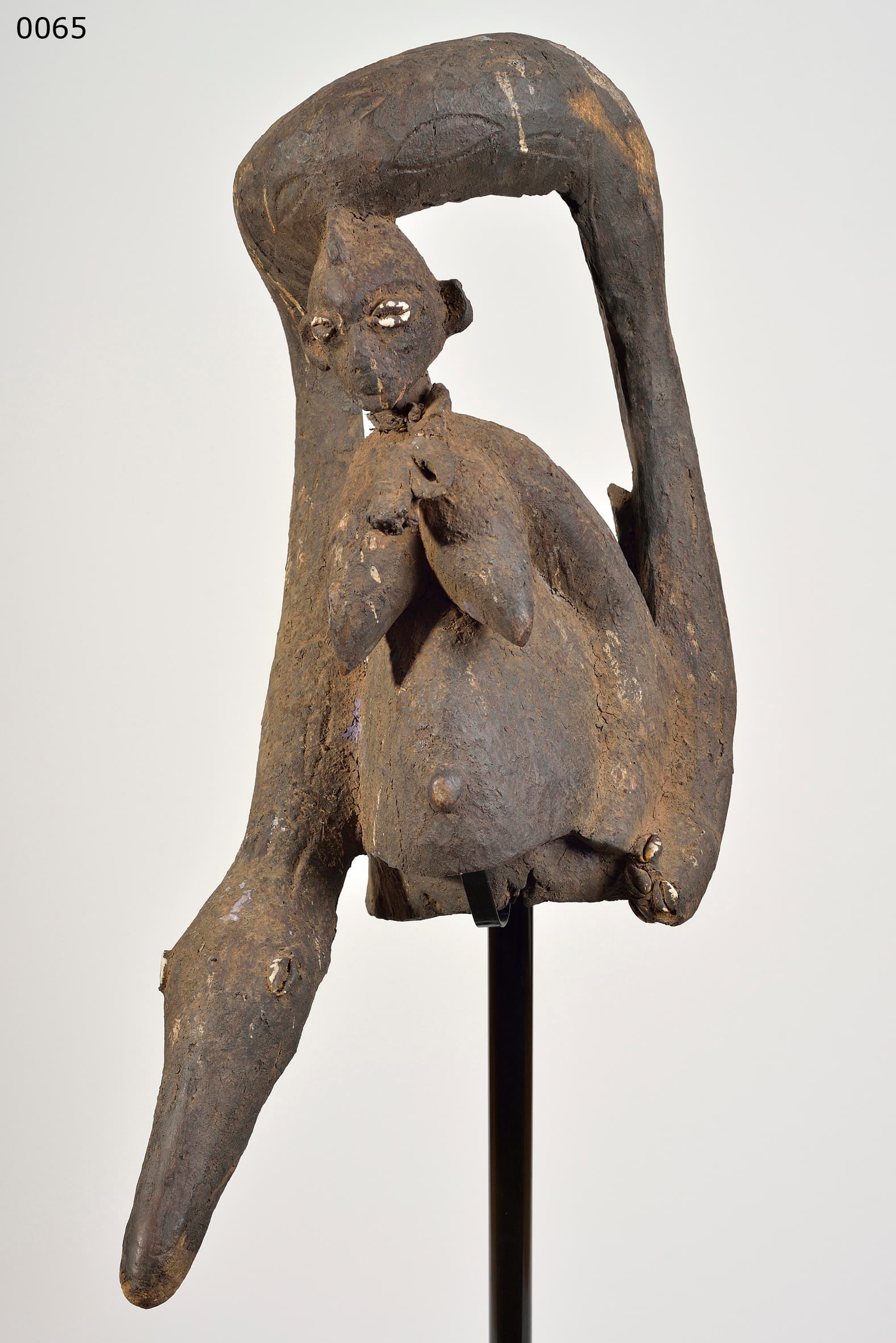
Seltene Kopfhaubenmaske
Schreinfigur, die einen BATEBA-Geist darstellt (ungewöhnlich groß, selten)