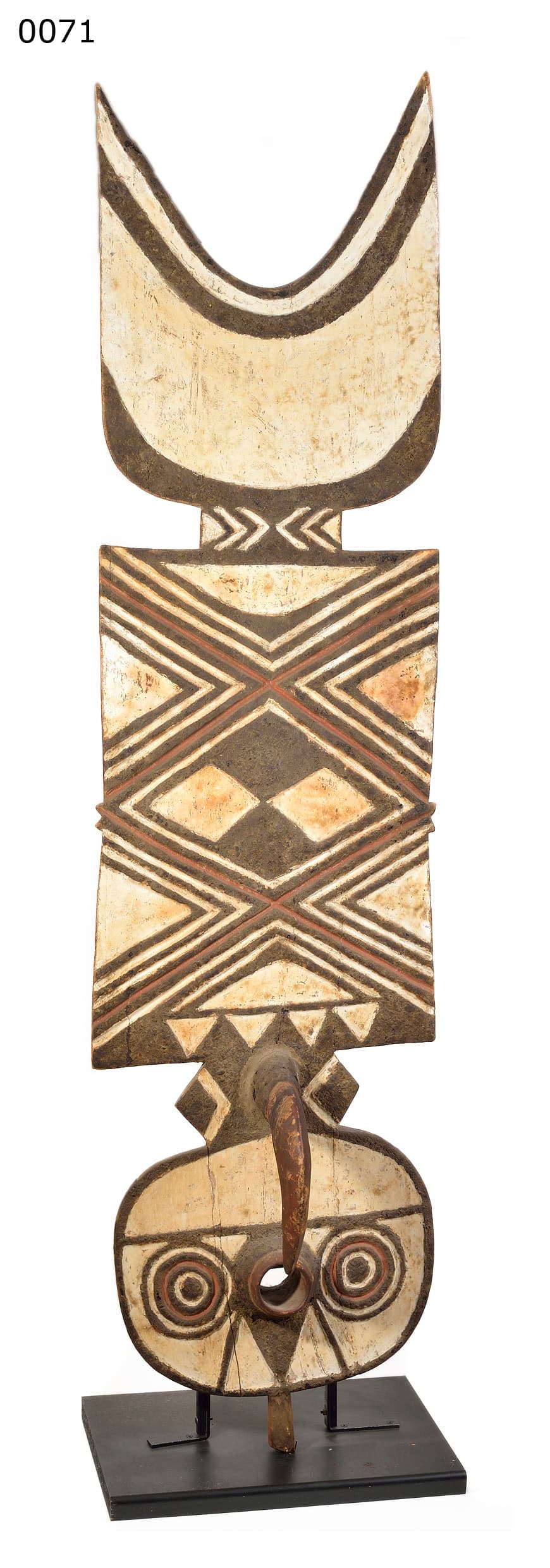
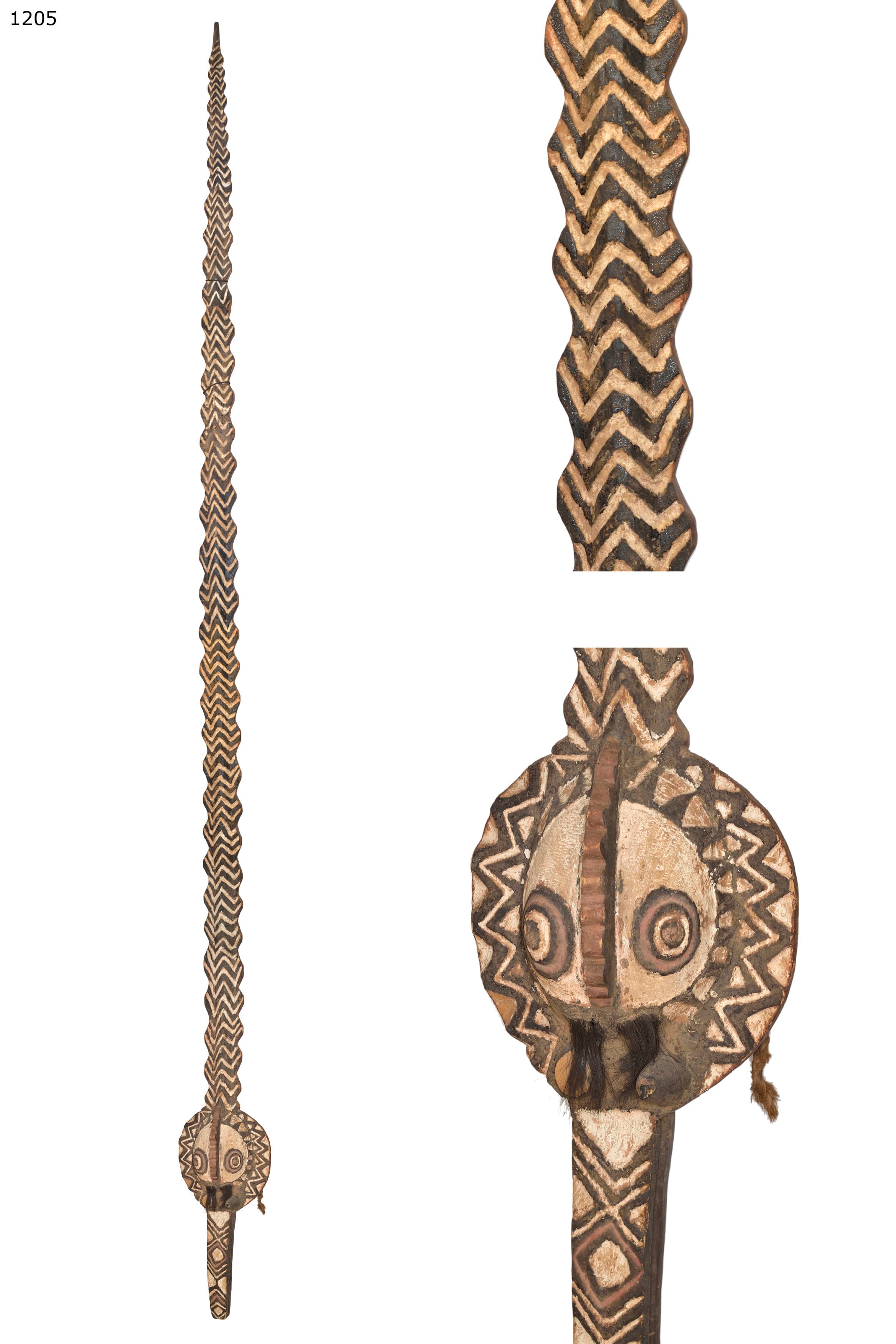
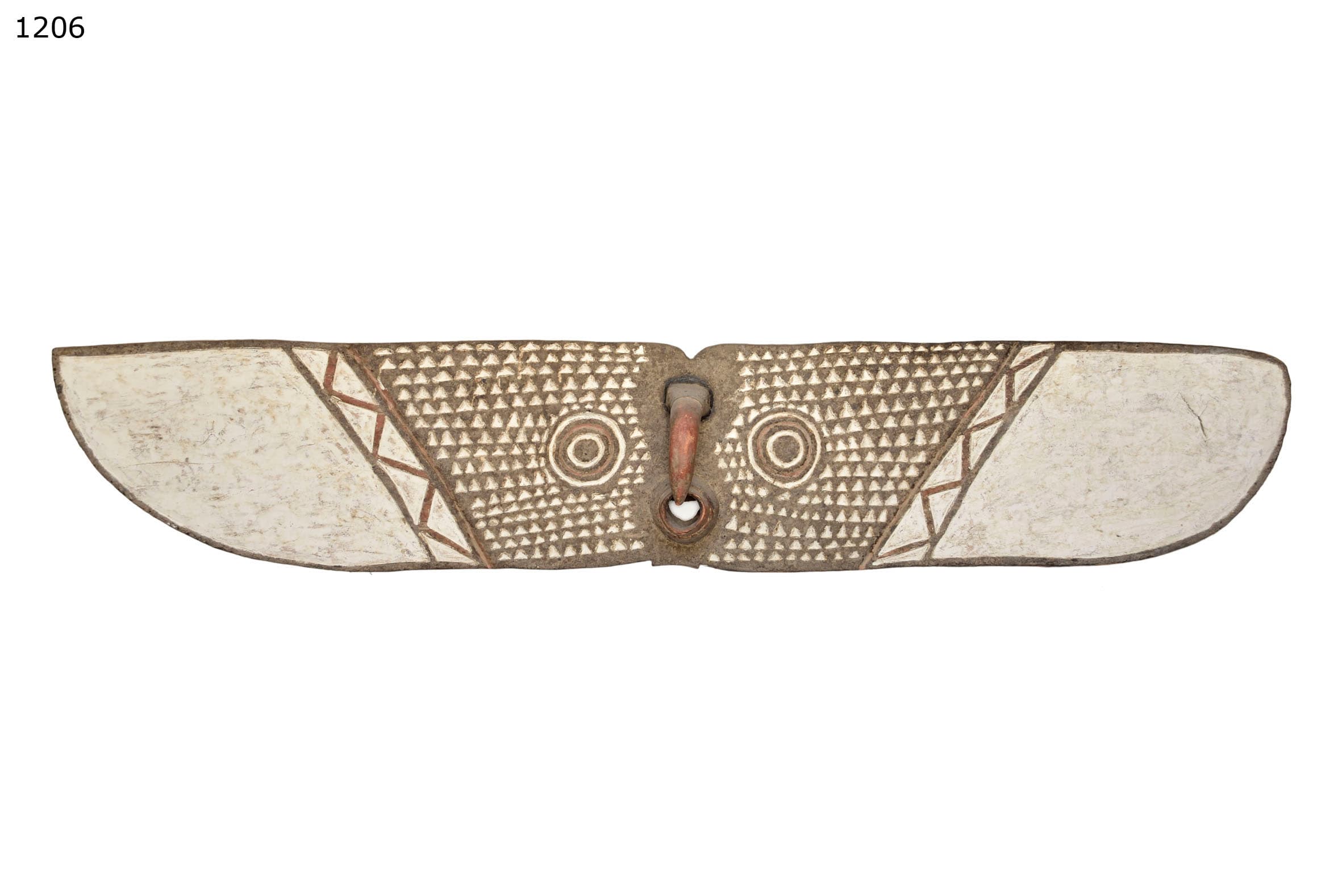
Eine riesige, plankenartige Holzmaske (Nwantantay), die 150 cm hoch ist. Sie weist ein kleines, vorstehendes, rundes Gesicht mit konzentrischen Ringmotiven auf, das von einem hoch aufragenden, segmentierten vertikalen Brett gekrönt wird, das vollständig mit kontrastreichen, schwarz-weißen geometrischen Schachbrett- und Zick-Zack-Mustern verziert ist. Unter dem Gesicht hängt eine dicke Halskrause aus getrockneten Bastfasern.
1. Ästhetischer Stil und regionale Eigenheiten
Das Bwa-Volk ist weltberühmt für seine massiven, grafisch brillanten Plankenmasken. Die Ästhetik beruht auf der aggressiven visuellen Vibration von abwechselnd schwarzen und weißen geometrischen Formen. Diese Muster sind nicht nur dekorativ, sondern stellen eine hochgradig kodifizierte Sprache dar, die die moralischen Gesetze der Gemeinschaft, den Flug der Fledermäuse, die Wege der Ahnen und die Trennung von Wissen und Unwissenheit repräsentiert. Das Bwa-Mustersystem ist eine der am besten entschlüsselten visuellen Sprachen in der westafrikanischen Maskierungsliteratur, wobei jedes Motiv eine spezifische institutionelle Bedeutung hat.
2. Rituelle Funktion und die Do-Gesellschaft
Diese hoch aufragenden Nwantantay-Masken sind die physischen Manifestationen der schützenden Naturgeister, die mit der Do-Geheimgesellschaft verbunden sind. Sie treten bei dörflichen Reinigungszeremonien, landwirtschaftlichen Riten und Beerdigungen auf. Die Tänzerinnen und Tänzer vollbringen unglaubliche akrobatische Kunststücke, indem sie die massiven, 1,5 Meter langen Bretter so drehen, dass sie die Luft dramatisch durchschneiden und bösartige Kräfte, Krankheiten und Hexerei aus der Gemeinschaft vertreiben. Die akrobatische Darbietung ist ein zentrales operatives Element - die Schutzfunktion der Maske wird sowohl durch die körperliche Anstrengung der Tänzer als auch durch die Ikonografie der Maske vermittelt.
3. Physische Patina und Altersnachweis
Die Authentizität dieses massiven Objekts zeigt sich in seiner strukturellen Abnutzung. Die Kanten der Planke weisen historische Dellen und Abschürfungen auf, die durch dynamisches Tanzen und gelegentlichen Kontakt mit der Erde entstanden sind. Die schwarzen und weißen Pigmente sind tief gesetzt, verblasst und kreidig, was auf eine wiederholte einheimische Anwendung und anschließende Verwitterung durch die Umwelt hindeutet. Der dicke Bastkragen ist brüchig, staubig und organisch gealtert, was für eine Verwendung in der ersten Hälfte des 20. Jahrhunderts spricht.
Zusammenfassung
Eine monumentale Bwa-Plankenmaske, die die Verwendung einer kontrastreichen Geometrie für die spirituelle Kommunikation und den Schutz der Gemeinschaft anschaulich dokumentiert. Ihre gewaltigen Ausmaße, die verblassten Pigmente und die erhaltene Tanzkleidung sprechen für eine Einordnung als bedeutendes Werk der Kunst Burkina Fasos.
KI-unterstützt erstellt aus Sammlungsgutachten, Objektfotografie und eigener Recherche, redaktionell geprüft. Fehler sind möglich — Hinweise darauf sind uns willkommen. Zum Verfahren →