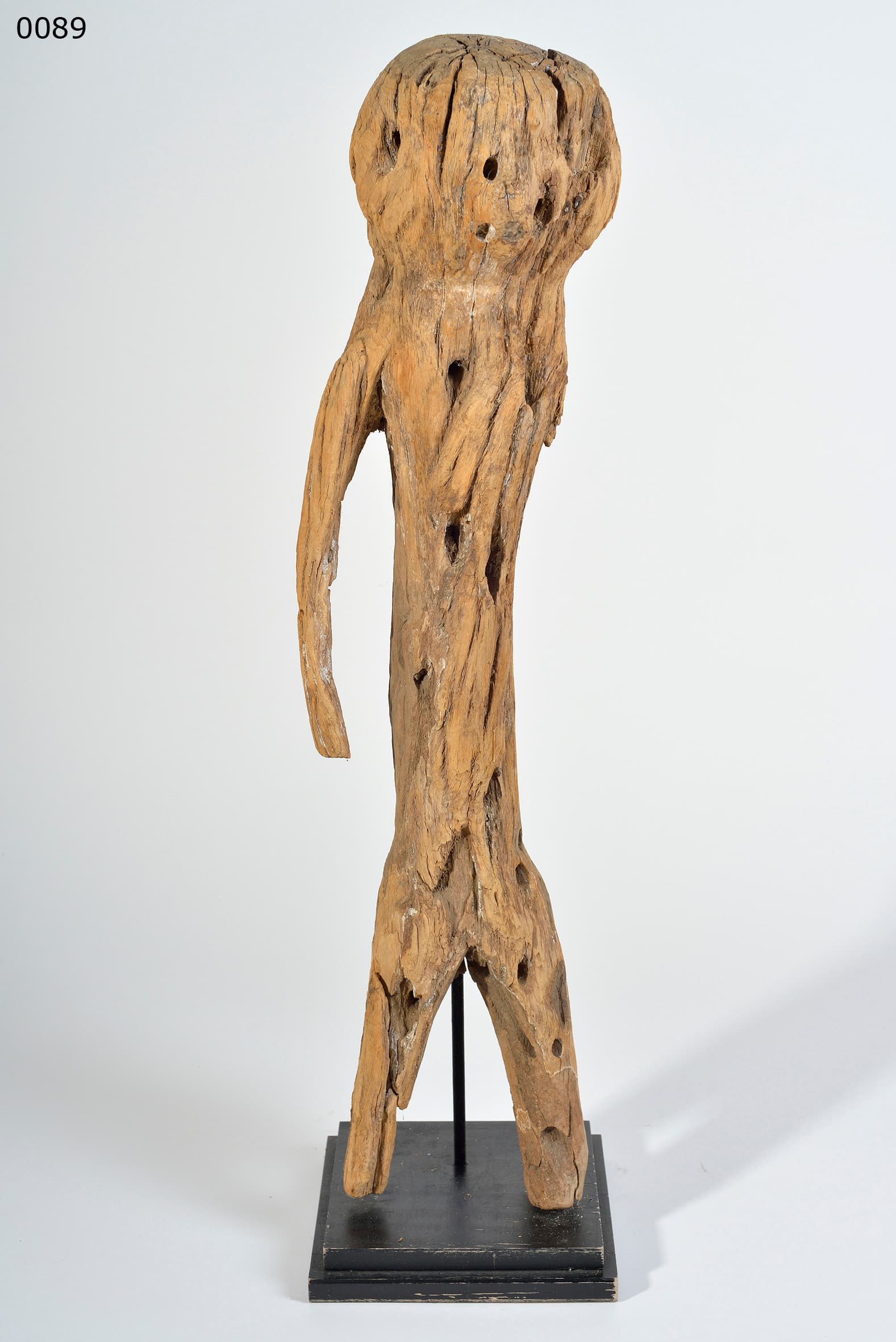
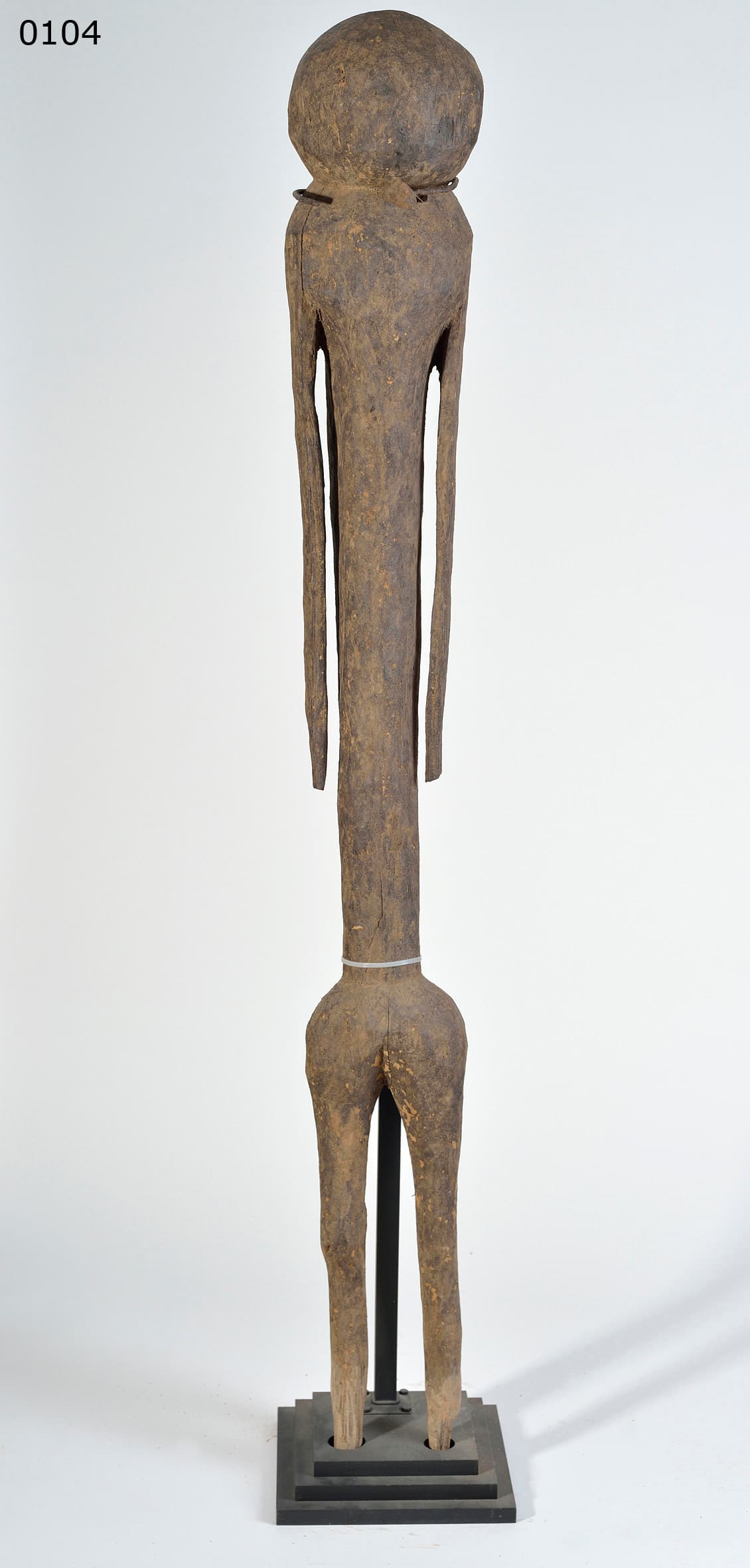
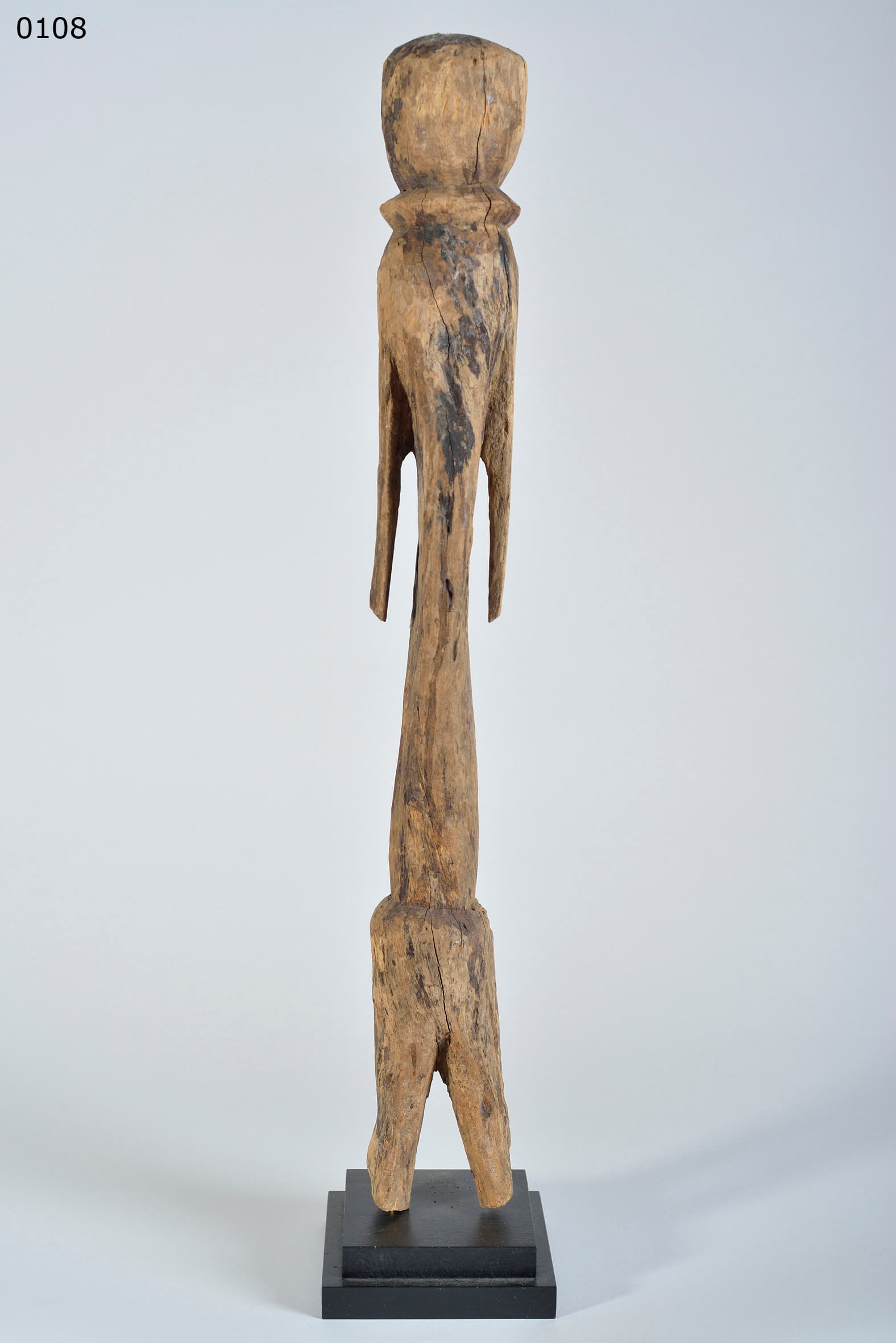
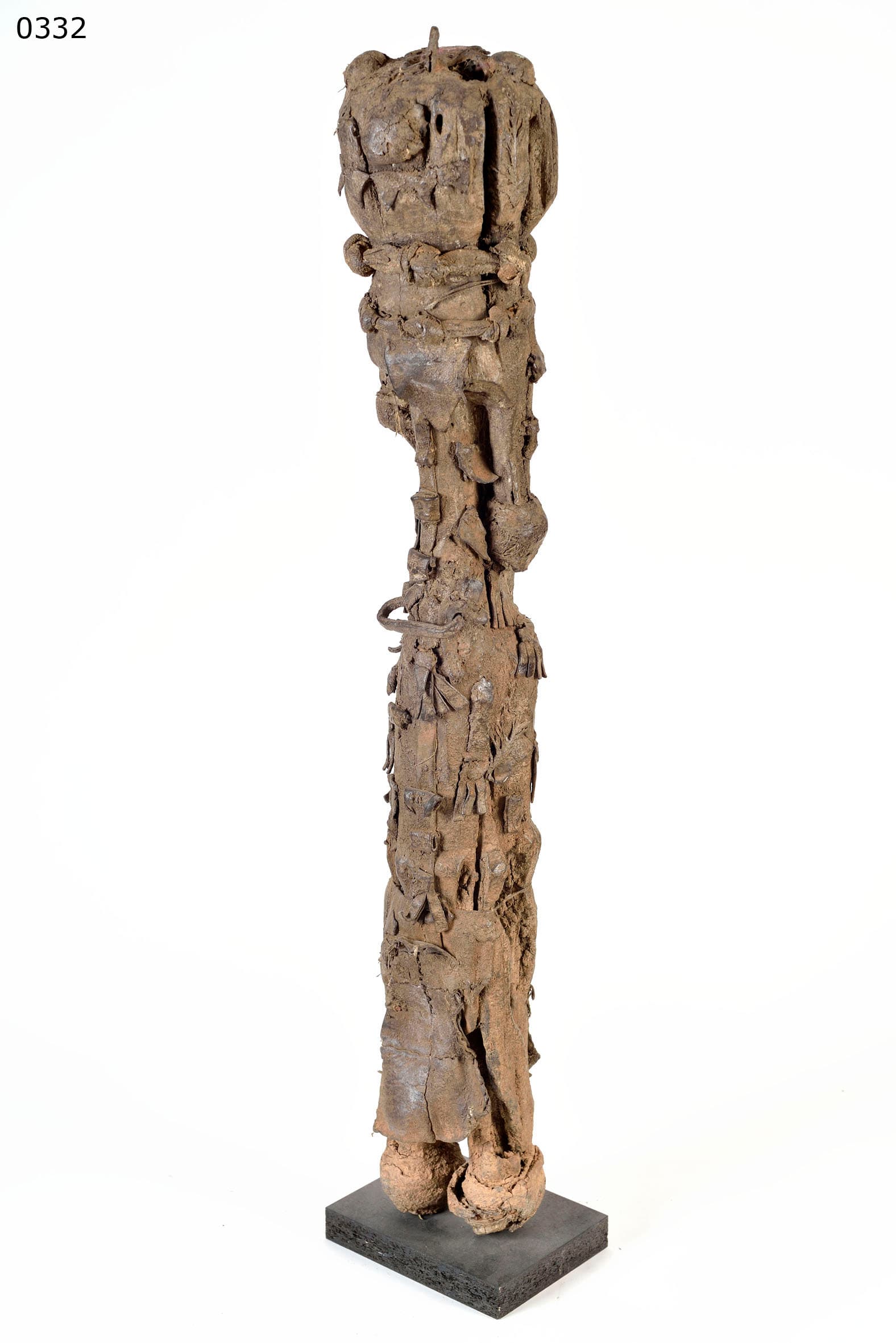
Eine stark reduzierte, schlanke Holzfigur (1. Hälfte 20. Jh., 106 cm) von den Moba aus Togo - völlig gesichtsloser, bauchiger Kopf, langer Torso, parallel zum Körper herabfallende Arme.
1. Die ultimative Reduktion: Tchitcheri Sakwa
Die Moba im Norden Togos stellen Figuren her, die als Tchitcheri bekannt sind. Aufgrund seiner Größe (106 cm) wird dieses Stück als Tchitcheri Sakwa eingestuft - eine Figur, die einen mächtigen Stammvater eines ganzen Clans darstellt. Der Bildhauer hat den menschlichen Körper auf sein absolutes strukturelles Minimum reduziert: Kopf, Rumpf und Gliedmaßen.
2. Die Gefährlichkeit des Gesichts
Das charakteristische Merkmal der Moba-Kunst ist das leere, gesichtslose Gesicht. Die Moba glauben, dass das Schnitzen realistischer Augen, Nasen oder Münder spirituell gefährlich ist - es könnte unbeabsichtigt umherwandernde bösartige Geister anlocken, die das Holz bewohnen. Indem der Schnitzer den Kopf als glatte, abstrakte Kuppel belässt, stellt er sicher, dass nur der jeweils beschworene Vorfahr die Figur bewohnen kann.
3. Die Verankerung des Clans
Diese Figuren wurden am zentralen Schrein des Clans direkt in die Erde gepflanzt. Die geraden, pfahlartigen Beine (die oft unten durch den Bodenkontakt verrottet waren) waren buchstäblich im Boden verwurzelt und bildeten eine dauerhafte physische Achse zwischen den lebenden Nachkommen und dem Boden, auf dem der Gründer begraben war.
Zusammenfassung
Diese Moba Tchitcheri ist der Inbegriff der afrikanischen minimalistischen Abstraktion. Es entfernt alle menschlichen Details, um ein reines, anonymes Gefäß für einen Gründervorfahren zu schaffen - einen hoch aufragenden hölzernen Anker für die spirituelle Identität des Clans.
KI-unterstützt erstellt aus Sammlungsgutachten, Objektfotografie und eigener Recherche, redaktionell geprüft. Fehler sind möglich — Hinweise darauf sind uns willkommen. Zum Verfahren →