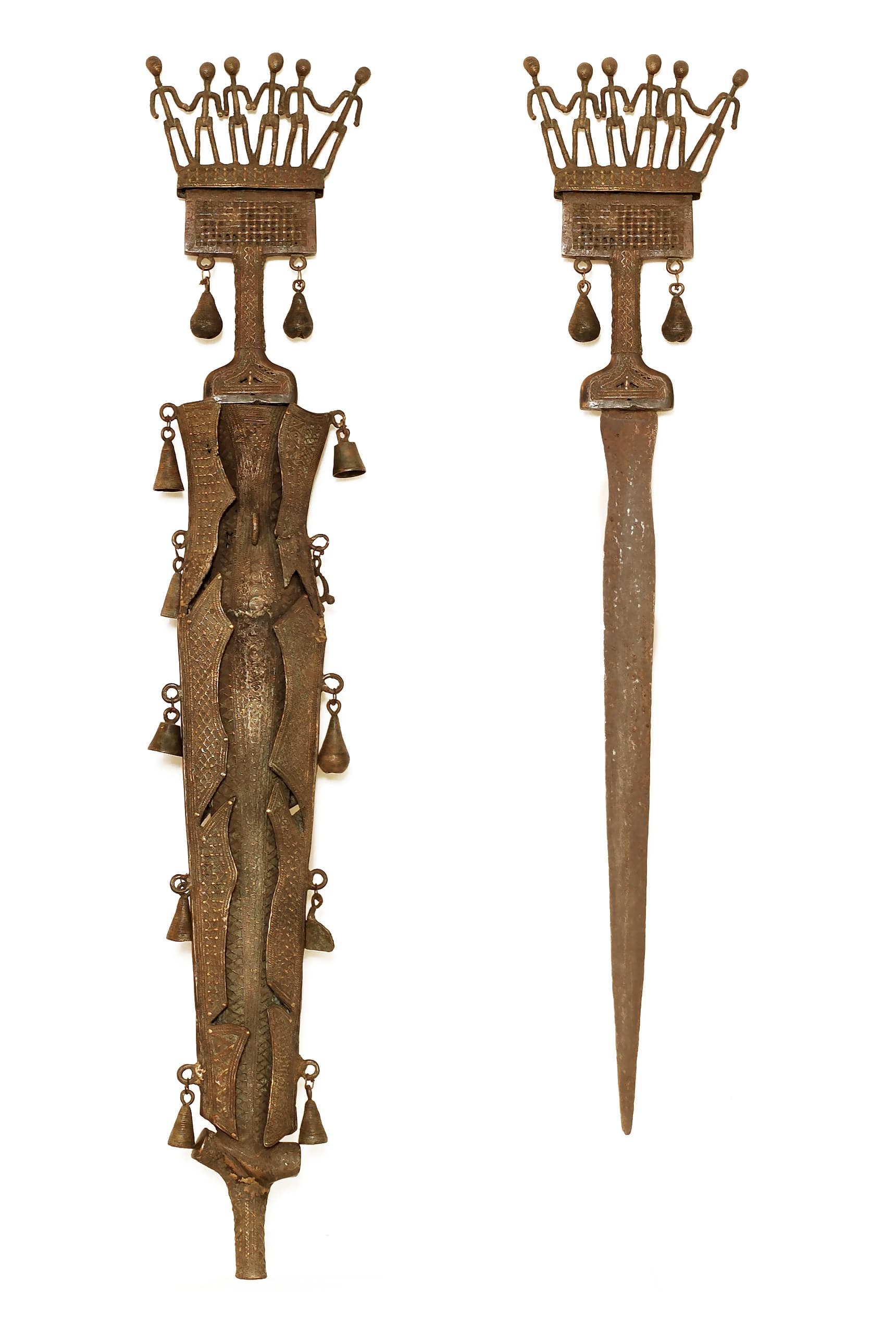
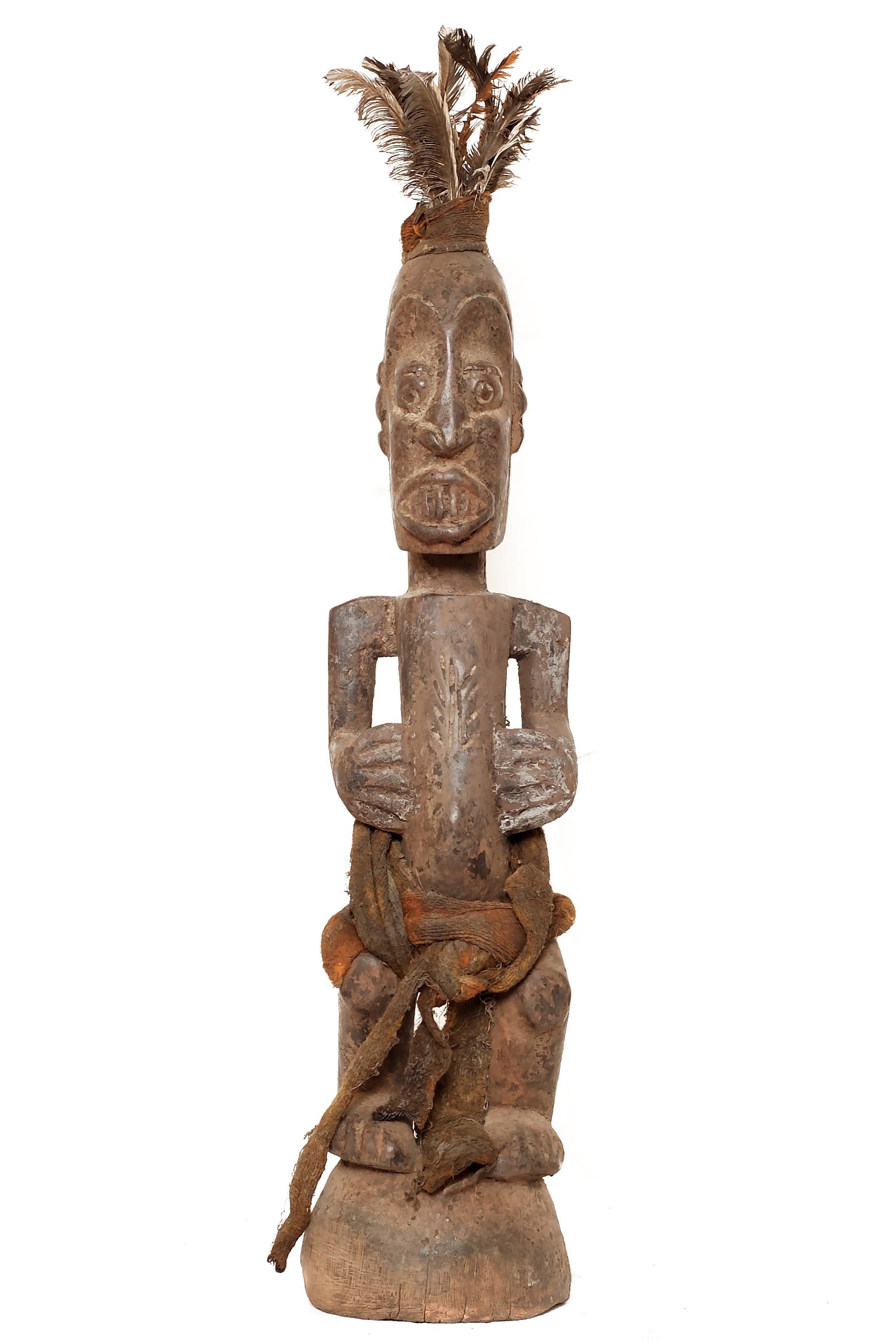
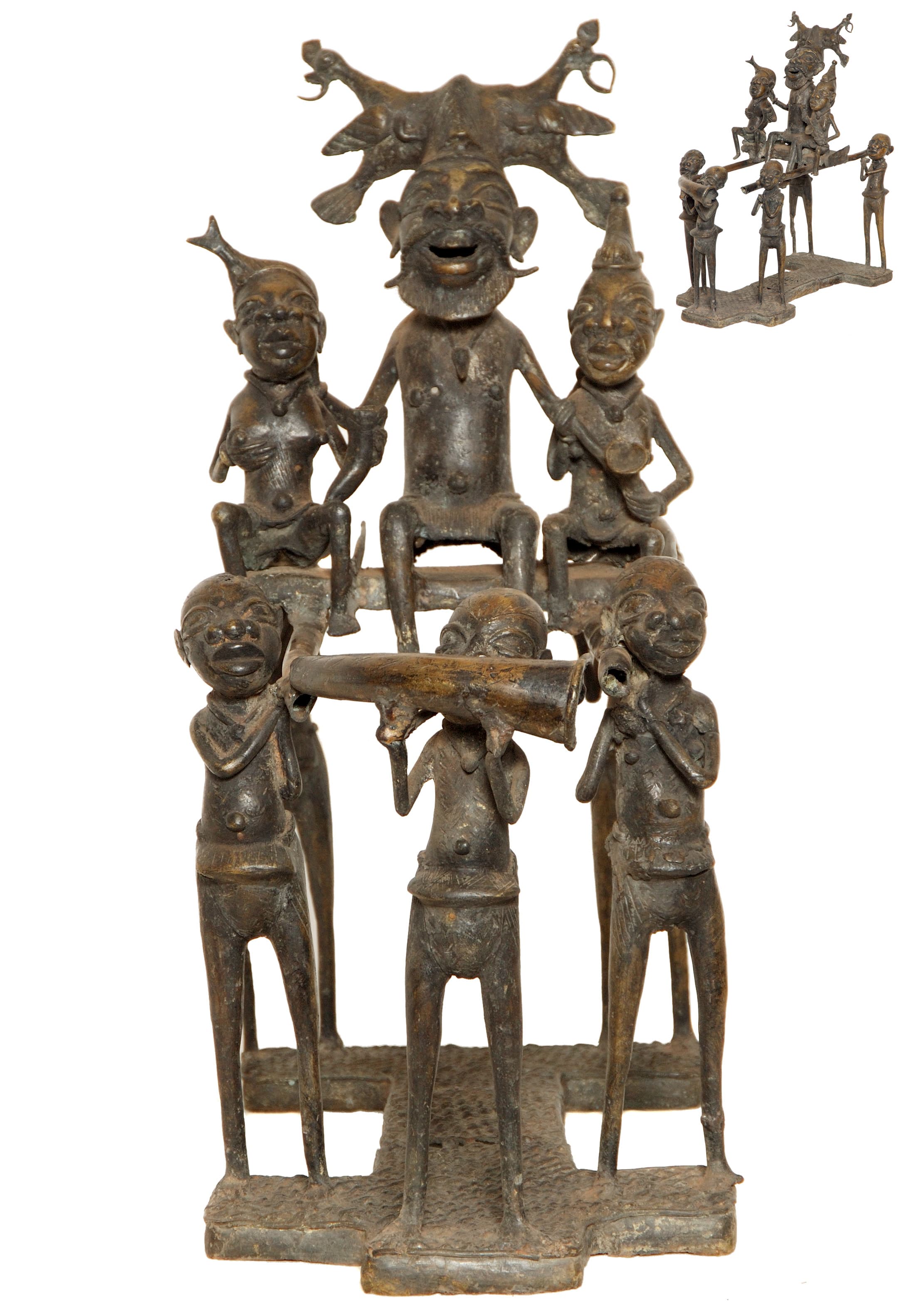
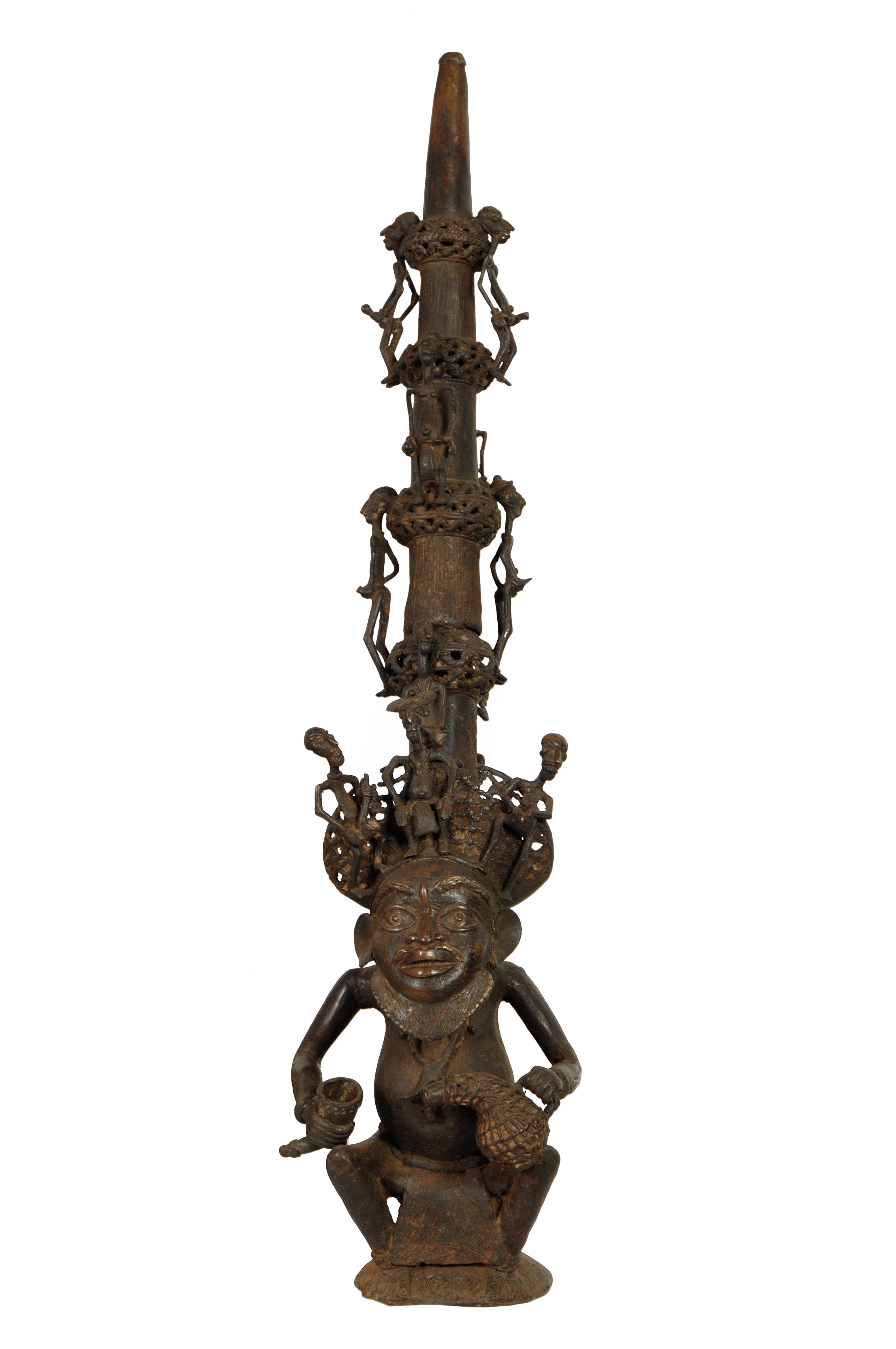
Cast in a heavy copper alloy, this monumental bell is surmounted by a highly expressive, laughing female figure smoking a pipe, seated with spread legs. The bell's massive flared base is entirely encrusted with a high-relief register of smaller, grotesque human figures in dynamic, seated postures.
1. Aesthetic Style and Lost-Wax Mastery
This piece represents a highly developed expression of the lost-wax (cire perdue) casting technique in the Cameroon Grassfields, a tradition for which the Tikar and Bamum were renowned. The style is characterized by a "horror vacui" (fear of empty space), with almost every surface covered in complex iconography, cowrie shell motifs, and concentric rings. The main figure's grotesque realism — bulging eyes, bared teeth, exaggerated sexual characteristics — is a hallmark of Tikar prestige bronzes, meant to evoke awe, amusement, and intimidation simultaneously.
2. Ritual Function and Ancestral Invocation
Large-scale bronze bells in the Grassfields were not merely musical instruments; they were acoustic engines of spiritual power used by secret societies and the royal court. A bell of this substantial size (130 cm) would have been a stationary altar object or carried only during the most critical state rituals, such as the installation of a new king or the purification of the land. The pipe-smoking female figure at the apex likely represents a powerful royal ancestor or a "First Mother," whose spirit is activated by the sounding of the bell, linking the living court with the founding generation.
3. Patina, Material Weathering, and Indications of Age
The bronze surface exhibits a highly complex, mottled patina with areas of deep malachite-green oxidation, earthy encrustations, and localized rubbing where the metal has been polished to a dark bronze hue through handling. The soil deposits in the deep recesses of the subsidiary figures suggest it was kept in a traditional shrine environment.
Summary
A notable example of African metallurgy, this Tikar bell is a significant work of impressive scale and iconographic density. It serves as a profound acoustic and visual symbol of Grassfields royal authority and ancestral power.
Written with AI assistance from the collection appraisal, object photography and our own research; editorially reviewed. Mistakes are possible — corrections are welcome. How we work →