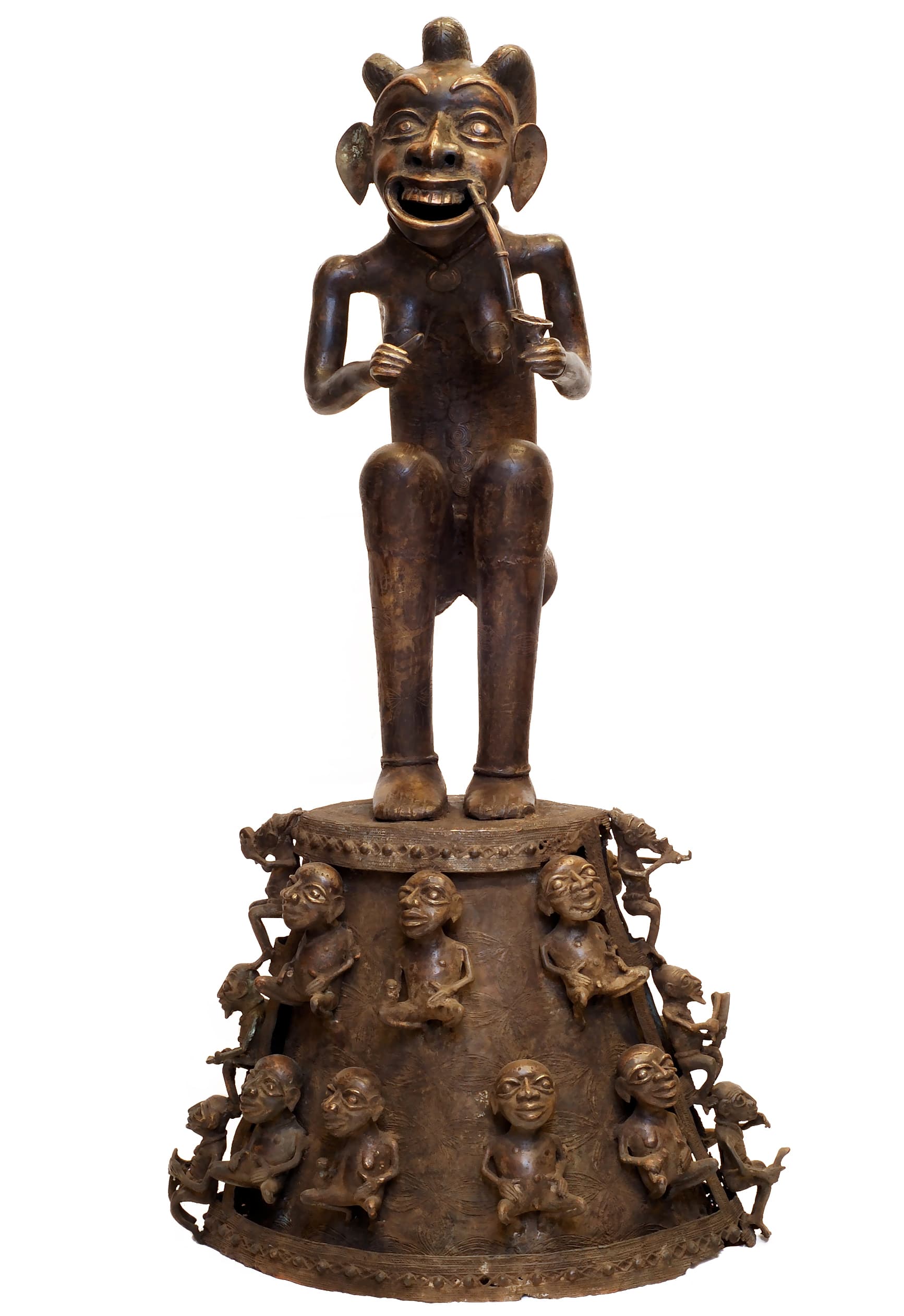
Two standing wooden figures carved in aggressive, rigid postures with heavily stylized faces. They wear prominent, thick loincloths and feature actual tufts of hair or feathers embedded into the crowns of their heads.
1. Aesthetic Style and Martial Vigor
These figures embody the raw, unyielding aesthetic of Tikar martial carving. Unlike the refined, seated maternity figures of the same tribe, these sculptures prioritize tension and physical strength. The rigid, upright postures, the sharply carved facial features, and the prominent, thick loincloths all convey an aura of readiness and aggression. The incorporation of real hair or feathers into the top of the heads adds a terrifying, organic realism to the wood, bridging the gap between a carved effigy and a living, breathing combatant.
2. Ritual Function and the Usurpation of Power
According to local history, these are not generic ancestors, but specific commemorative portraits of two historical Tikar chiefs who seized power through sheer military force and warfare. In a society that highly values lineage and tradition, a violent usurpation must be justified and immortalized. These figures served as permanent, physical testaments to the chiefs' war-minded abilities. Placed in a shrine, they reminded both subjects and potential enemies that the current ruling dynasty was founded on, and protected by, absolute martial supremacy.
3. Patina, Material Weathering, and Age
The figures exhibit a dry, heavily oxidized patina consistent with long-term storage in a shrine environment rather than an active, oil-anointed domestic altar. The embedded hair/feathers on the crowns are extremely brittle and desiccated. The deep, darkened crevices around the thick loincloths show accumulations of dust and soot.
Summary
Pulsing with martial tension, these Tikar figures are stark, physical records of political usurpation. Their aggressive carving style and organic attachments make them fascinating monuments to the violent realities of Grassfields history.
Written with AI assistance from the collection appraisal, object photography and our own research; editorially reviewed. Mistakes are possible — corrections are welcome. How we work →