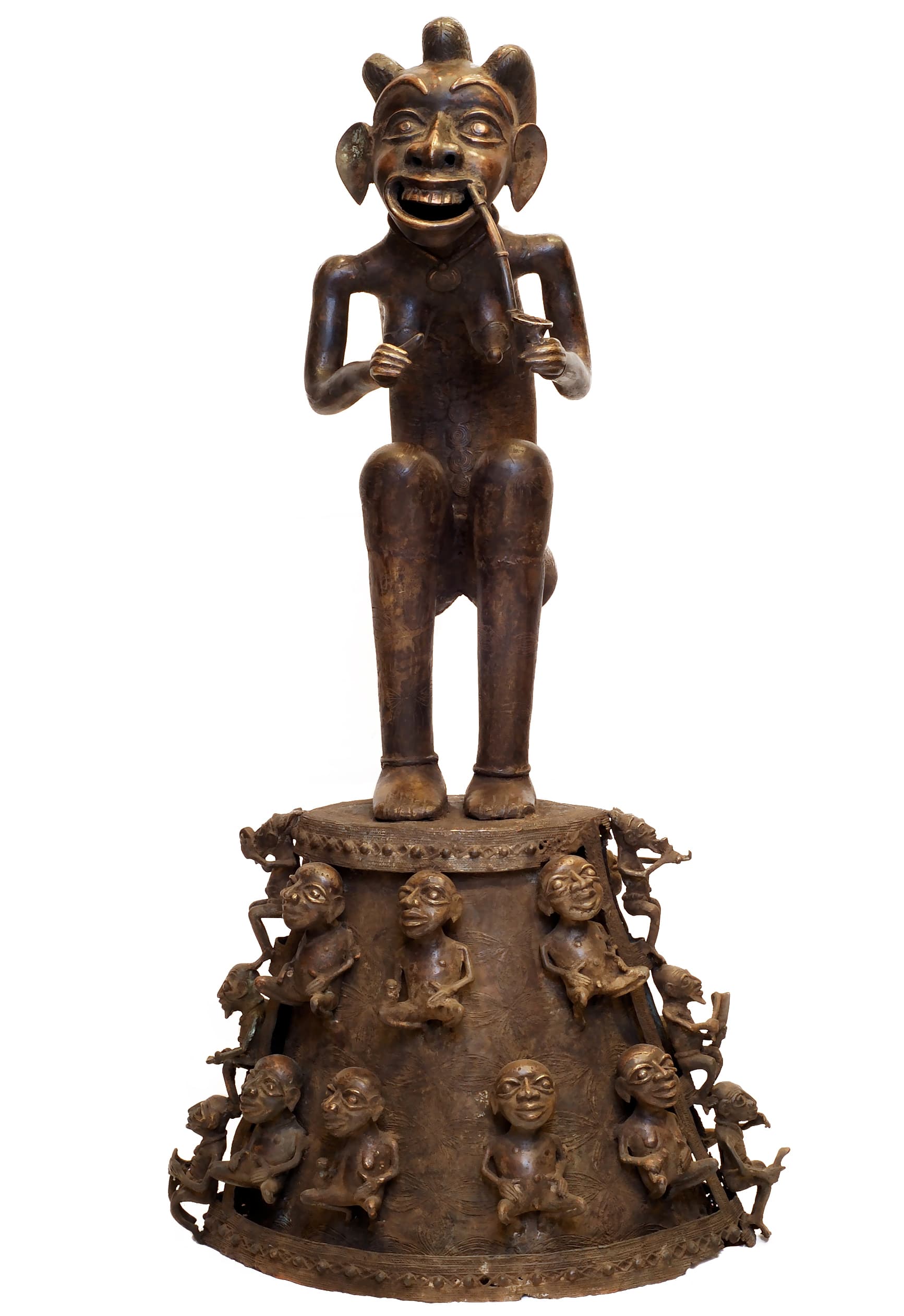
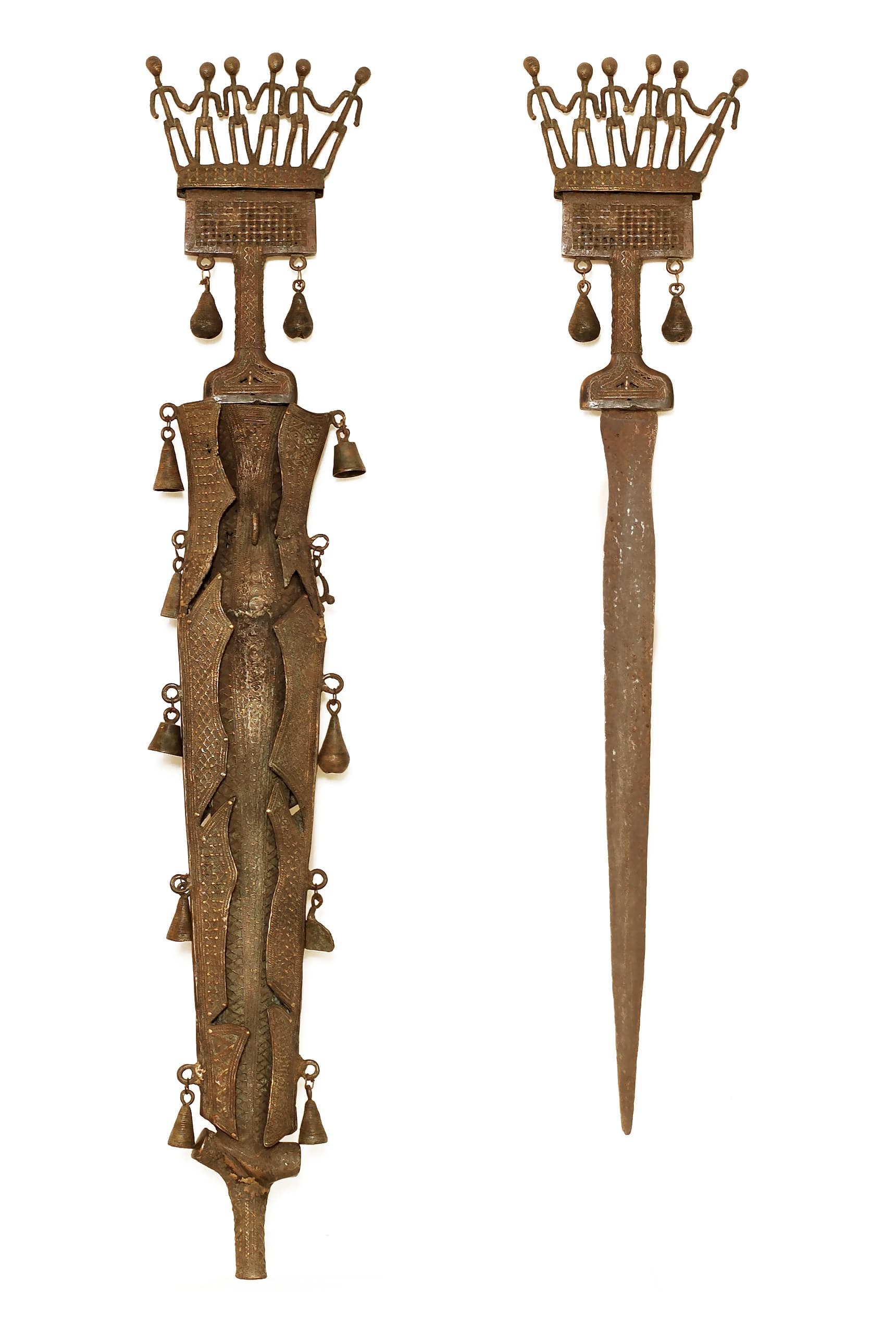
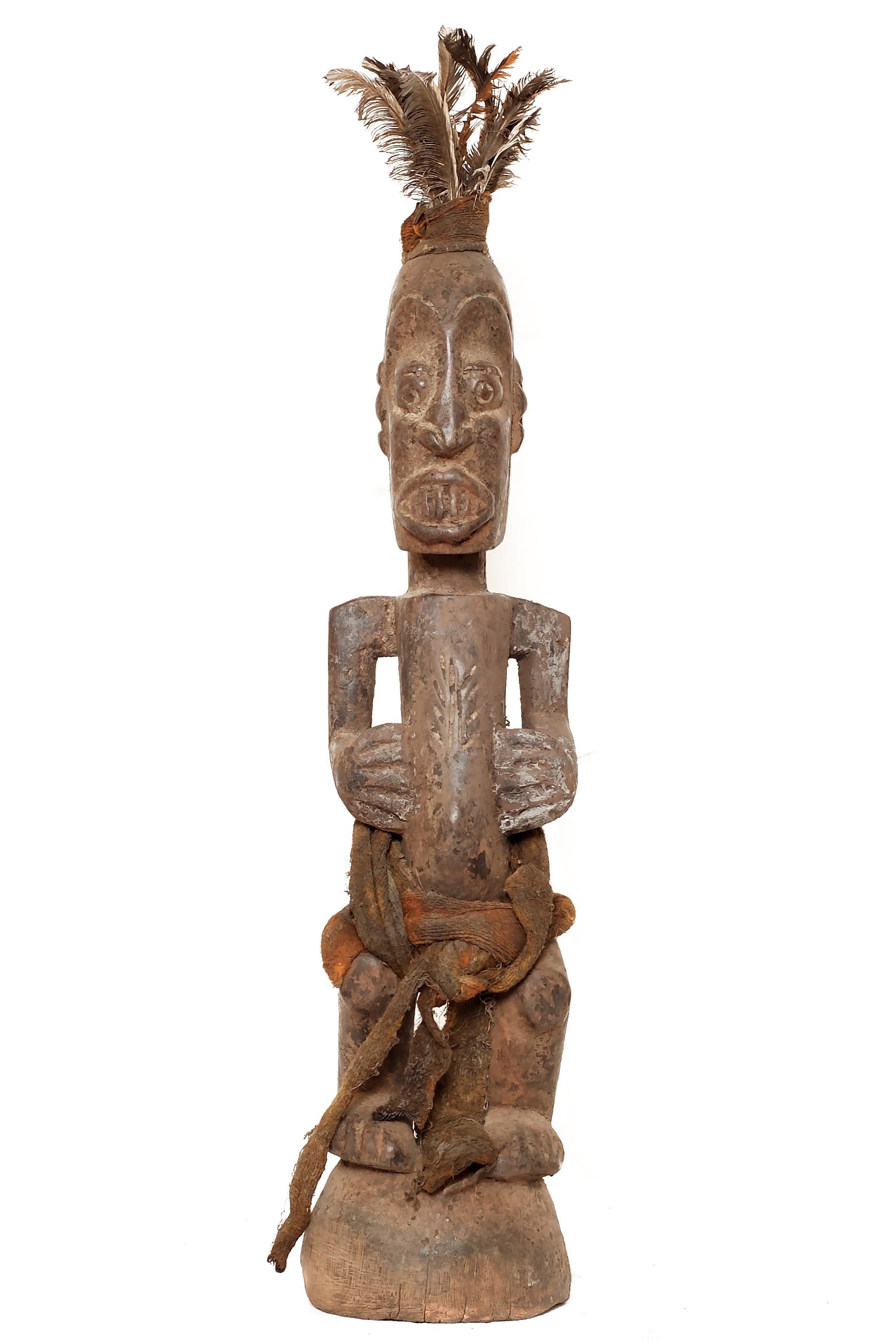
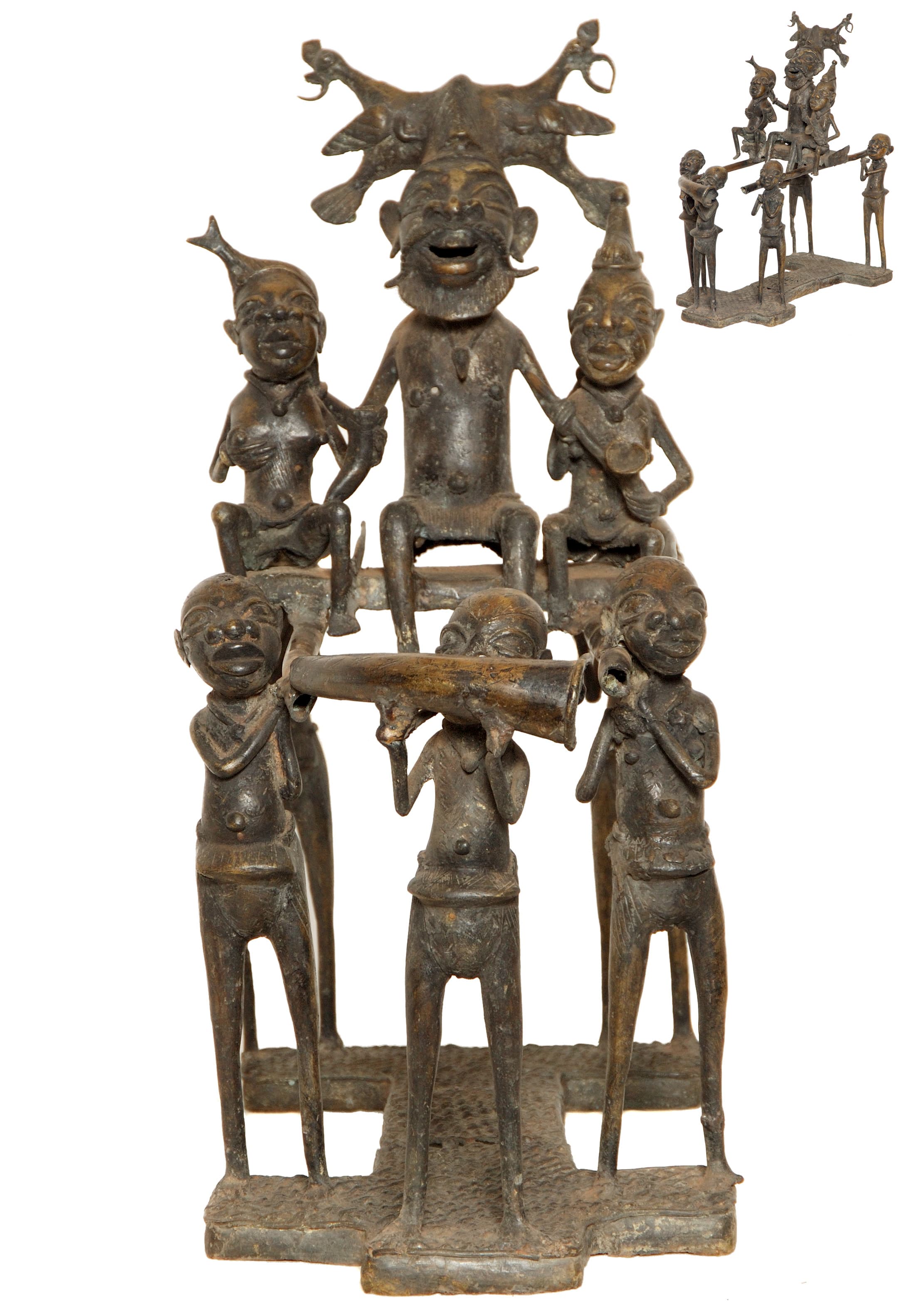
A brass pipe about 120 cm high from the Nganbé chiefdom. A large seated figure forms its base, and a long stem with openwork rings and small figures rises above it.
1. Form and Casting
The pipe is built as a tall vertical tower. At its foot, a large figure sits on a stool with wide-set eyes, a lattice headdress and a beaded collar. In its right hand it holds a small cup, in its left a woven bag, and both are rendered in fine detail. Several small figures stand on the headdress and around the base of the stem. The stem itself rises in four stages. Each stage is marked by a ring of openwork lattice, and slender figures climb or cling along the sides between the rings. Above the last ring, the stem narrows to a smooth tapered end with the mouthpiece.
2. Use and Context
According to the collection catalogue, brass pipes of this degree of ornament are reserved for the chief of a clan of small ethnic groups. They are generally kept in his royal treasury, usually a separate hut in the palace complex, and displayed only on special occasions. Such objects were meant as outward signs of the chief's wealth.
3. Surface
The brass is dark brown, with a smooth, slightly golden sheen on the face, hands and the woven bag, and darker tones in the lattice rings and between the small figures. The long stem carries a finely ribbed band at its centre.
Summary
A tall Tikar brass pipe with a seated figure at its base and a stem of openwork rings and climbing figures, made as a sign of a chief's wealth.
Written with AI assistance from the collection appraisal, object photography and our own research; editorially reviewed. Mistakes are possible — corrections are welcome. How we work →