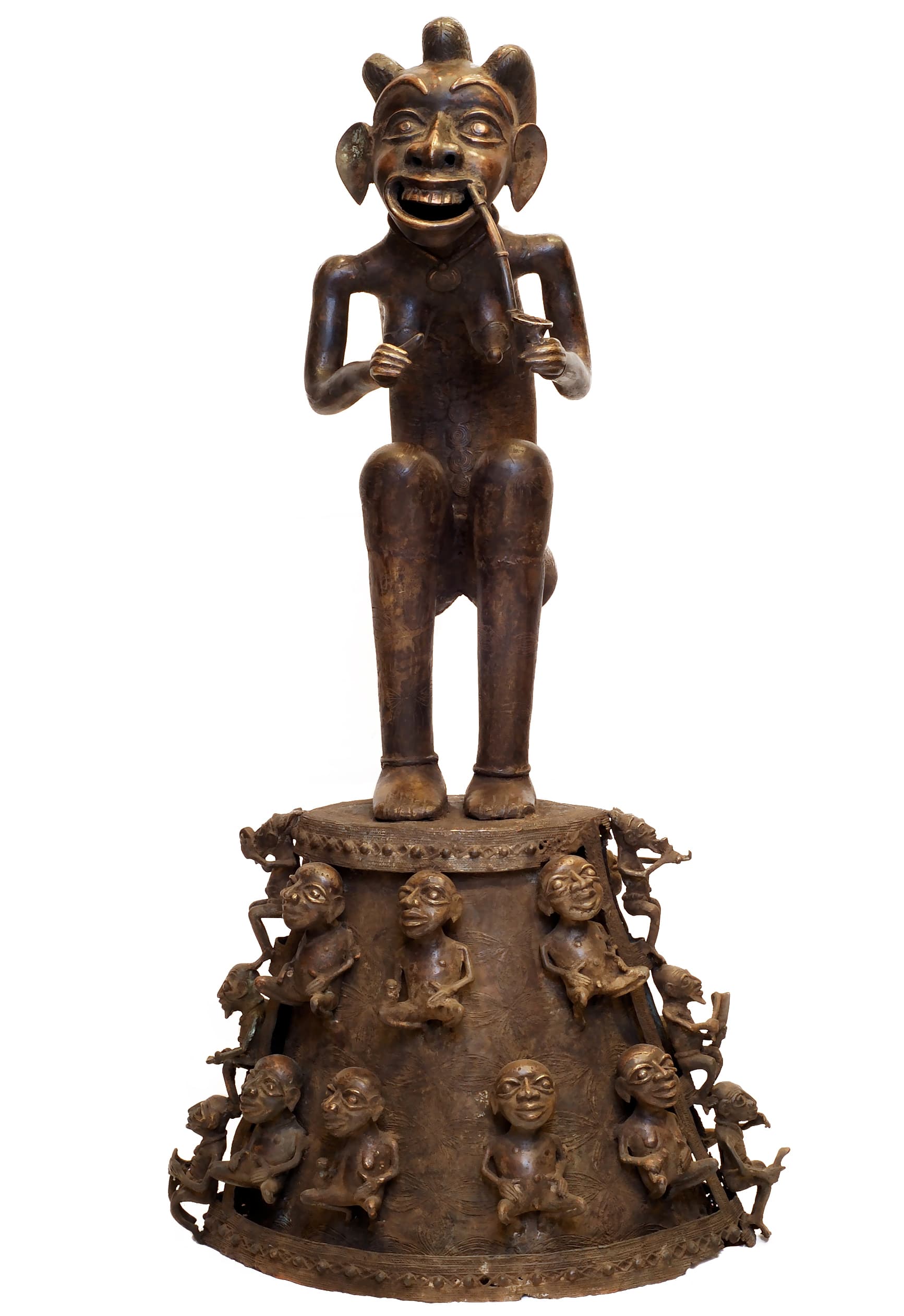
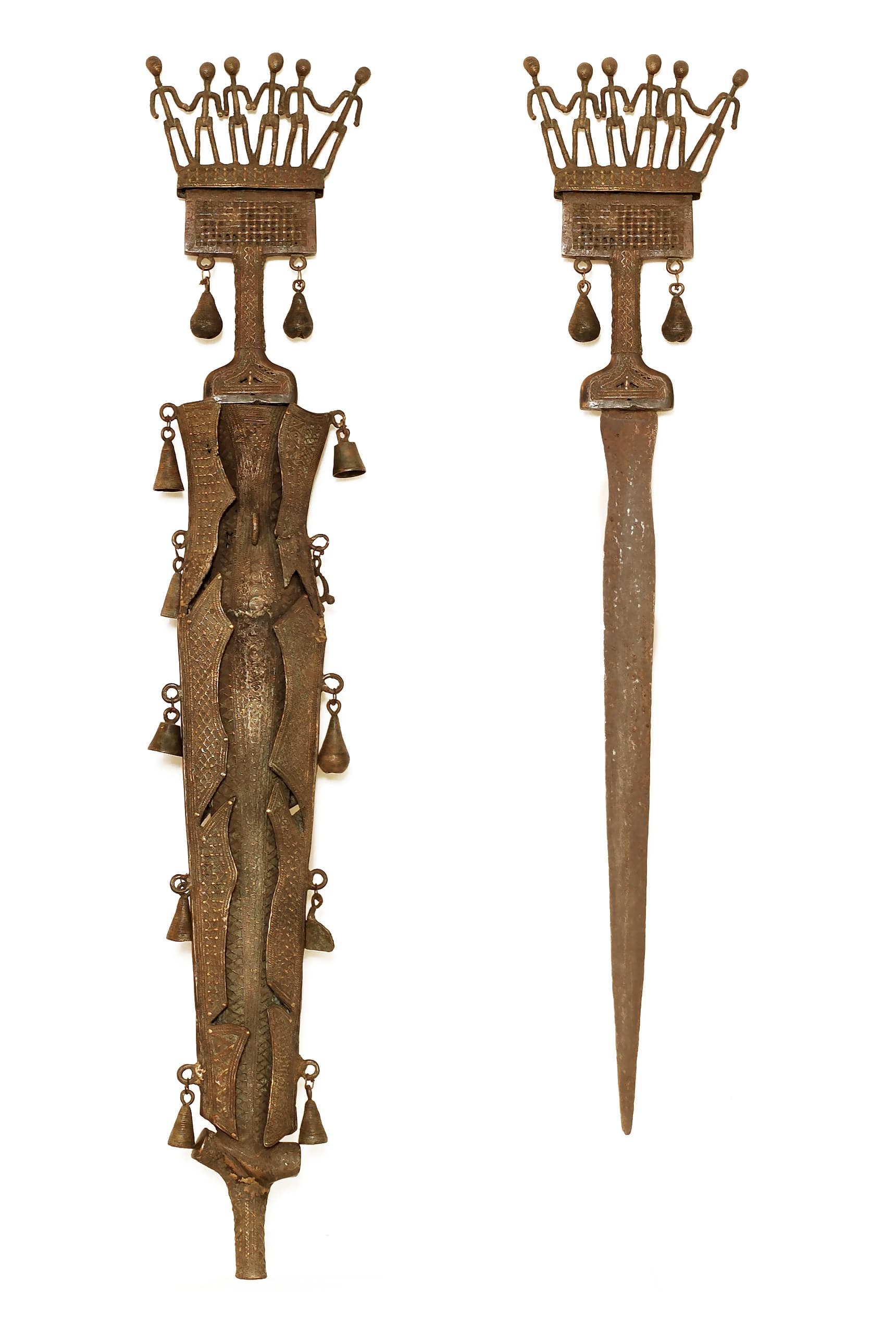
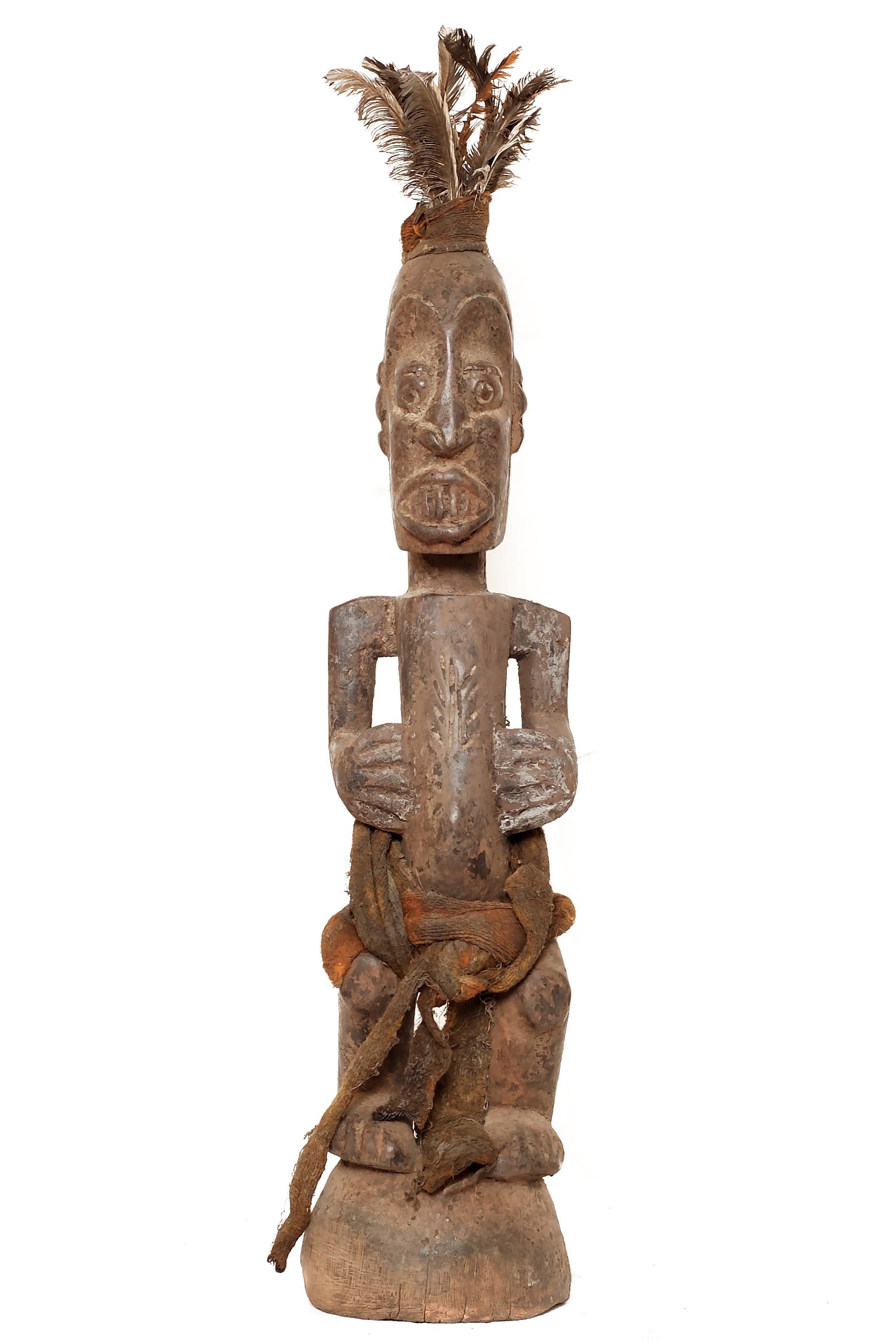
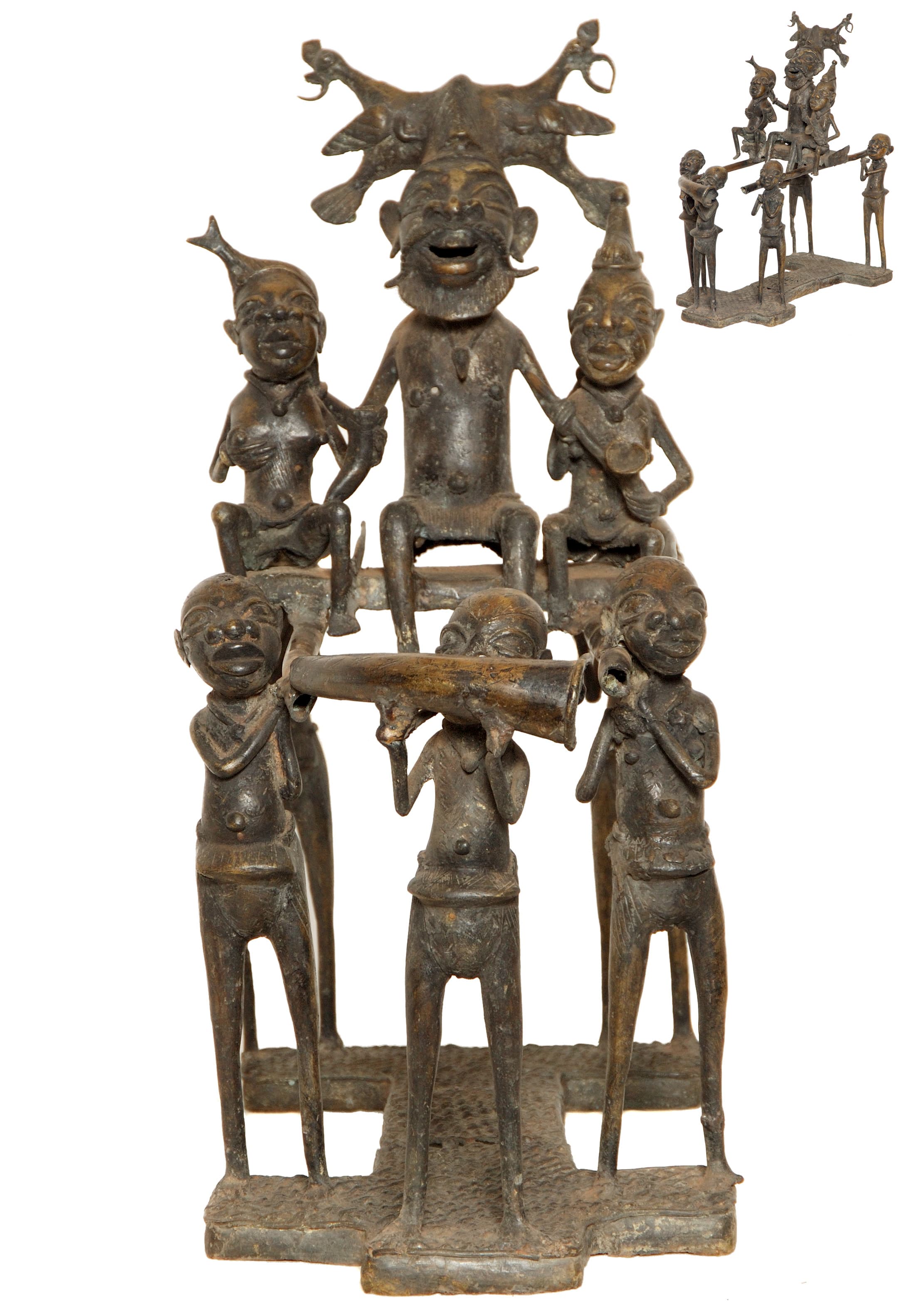
This dark wooden sculpture depicts a seated, high-ranking figure with an elaborate headdress, behind a large, lidded, hemispherical bowl. The bowl is carved in high relief with lizards and smaller figures, an infant lies on its lid, and a small figure below carries the bowl on its raised arms.
1. Aesthetic Style and Courtly Realism
This piece reflects the highly refined, courtly carving style of the Tikar people, neighbors to the Bamum. The artist has placed immense focus on the markers of elite status: the complex headdress with its perforated, rounded coils, the dignified, seated posture, and the calm, authoritative facial expression. The integration of the large functional bowl into the composition, resting on a small supporting figure between the legs of the seated figure, demonstrates advanced spatial composition. The smaller figures carved into the sides of the bowl and the infant on the lid likely represent members of the household or court, reinforcing the central figure's elevated status within the tribal hierarchy.
2. Function and the Diplomacy of Kola
According to the collection catalogue, this figure was used for the ritual offering of kola nuts to guests. In the Grassfields, hospitality is a highly formalized political act, and presenting kola from such an intricately carved, symbolic object elevated a simple act of sharing into a demonstration of the chief's wealth, generosity, and cultural sophistication. The lid kept the nuts covered until they were offered to honored guests.
3. Patina and Surface
The sculpture exhibits a dark, layered patina. The head and shoulders of the main figure show a smooth, slightly oily sheen from handling, while small flecks of lighter material remain on the surface. The base is lighter and more worn, with a carved zigzag band along its edge. The provenance given in the collection catalogue, the Tikar chiefdom of Nganbé, supports its attribution as a court object.
Summary
This ritual bowl is a significant example of Tikar functional sculpture, joining aristocratic aesthetics with ceremonial use. It is a physical testament to the rituals of hospitality and power in the Cameroon Grasslands.
Written with AI assistance from the collection appraisal, object photography and our own research; editorially reviewed. Mistakes are possible — corrections are welcome. How we work →