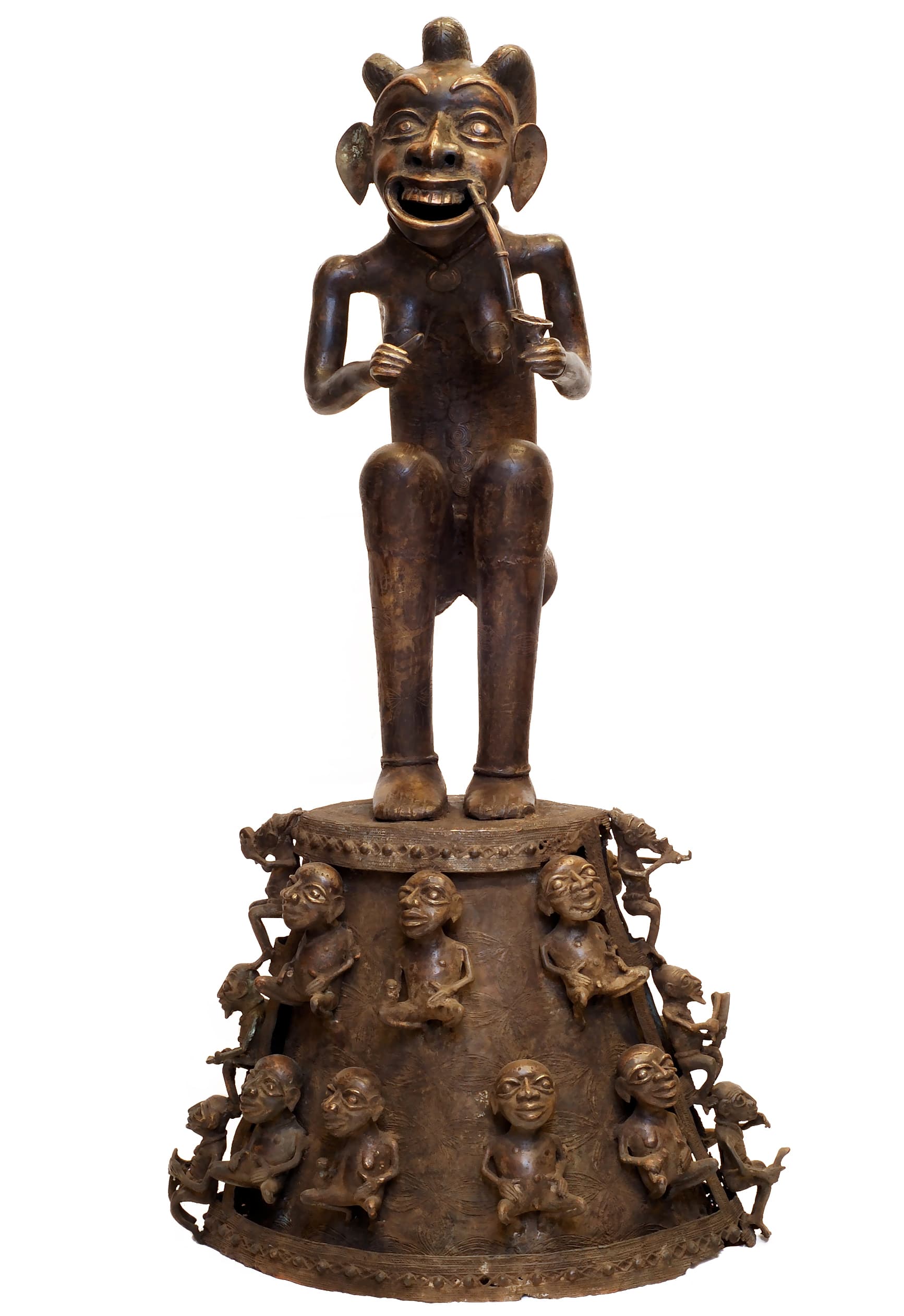
This seated maternity figure from the Tikar of Cameroon features a heavily patterned torso, prominent rounded breasts, and a highly geometric facial structure. She is seated on an openwork cylindrical stool, holding two small infant figures at her sides.
1. Aesthetic Style and Iconography
This figure exemplifies the sculptural traditions of the Tikar, a culturally and linguistically diverse group situated in the central region of Cameroon. The aesthetic approach is strictly frontal and hierarchically scaled, prioritizing the oversized, stylized head and the pronounced breasts of the mother over the relatively diminutive infants. The intricate geometric patterns of spirals and lozenges across her chest and abdomen recall body scarification, a traditional practice denoting social maturity. The figure is seated upon an openwork stool, a common motif in the region's visual vocabulary.
2. Representative Function and Fertility Symbolism
According to the collection catalogue, this is a representative figure with fertility symbolism. Rather than serving as a portrait, the figure embodies the idealized concept of maternity and the continuation of the community. The two children at the figure's sides visually reinforce the themes of fecundity and generational succession.
3. Surface Patina and Material Condition
The figure displays a rich, dark patina with a metallic sheen on the raised areas, particularly the face, nose and breasts. In the recesses the surface is matte, with areas of brownish encrustation. Small losses and abrasions are visible along the legs and the base of the stool.
Summary
This figure is a representative object that captures fertility symbolism within Tikar society. Its patterned torso and the two infants at her sides make it a notable example of the region's artistic heritage.
Written with AI assistance from the collection appraisal, object photography and our own research; editorially reviewed. Mistakes are possible — corrections are welcome. How we work →