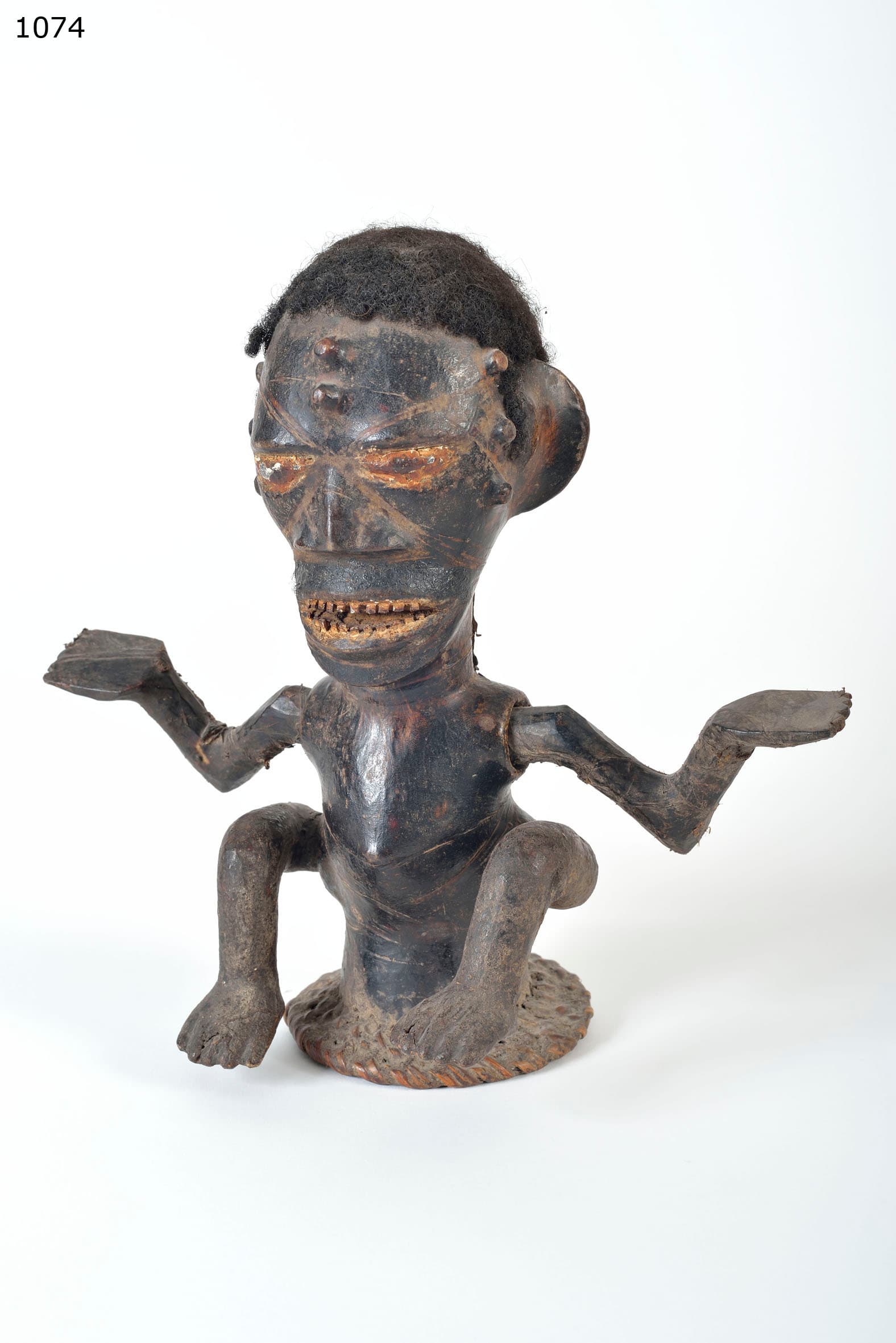
This standing figure is tightly covered in dark leather, which conforms to the underlying carved wooden core. It wears a crest of long dark feathers set in a leather band, and has inset eyes and a closed mouth with a faint smile.
1. Aesthetic Style and Skin-Covered Realism
Originating from the Cross-River region of North-West Cameroon and neighboring Nigeria, the Ekoi (Ejagham) people are known for their skin-covered objects. The leather is stretched over a carved wooden core and shrinks tightly onto it, creating a naturalistic, almost flesh-like surface. Raised bands and stitched seams mark the arms, waist and legs, suggesting a garment or body decoration. The prominent feather crest and the calm, direct expression reflect the Ekoi's dedication to maintaining traditional styles while adapting to specific social narratives.
2. Function and Commemoration
According to the collection catalogue, such leather-covered so-called wedding figures are ascribed to the Ekoi of the Cross-River area. It can be assumed that, in the absence of photography, figures like this were made for weddings and erected at the ceremonies, so that the memory of the event is symbolically kept alive in them.
3. Patina and Surface
The leather covering has hardened and darkened, with a glossy, reddish-brown sheen on the raised areas. Seams and edges show small losses, and the leather has pulled away slightly at the feet, where the wooden core is visible. The feathers are dry and slightly frayed.
Summary
This leather-covered figure is a distinctive example of the Cross-River region's sculptural tradition. Made, it can be assumed, as a symbolic record of a wedding, it keeps the memory of the occasion alive.
Written with AI assistance from the collection appraisal, object photography and our own research; editorially reviewed. Mistakes are possible — corrections are welcome. How we work →
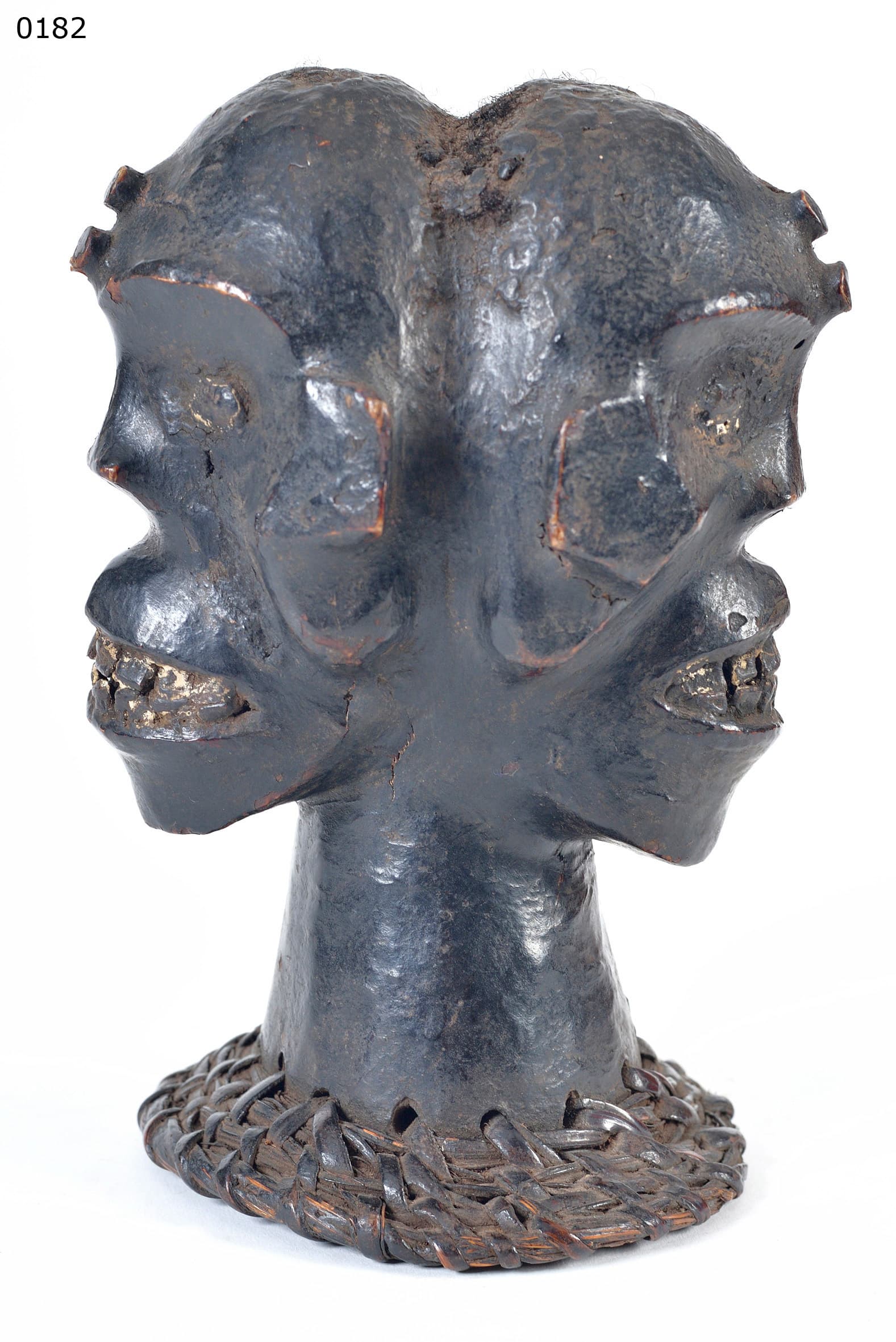
Janus head crest mask
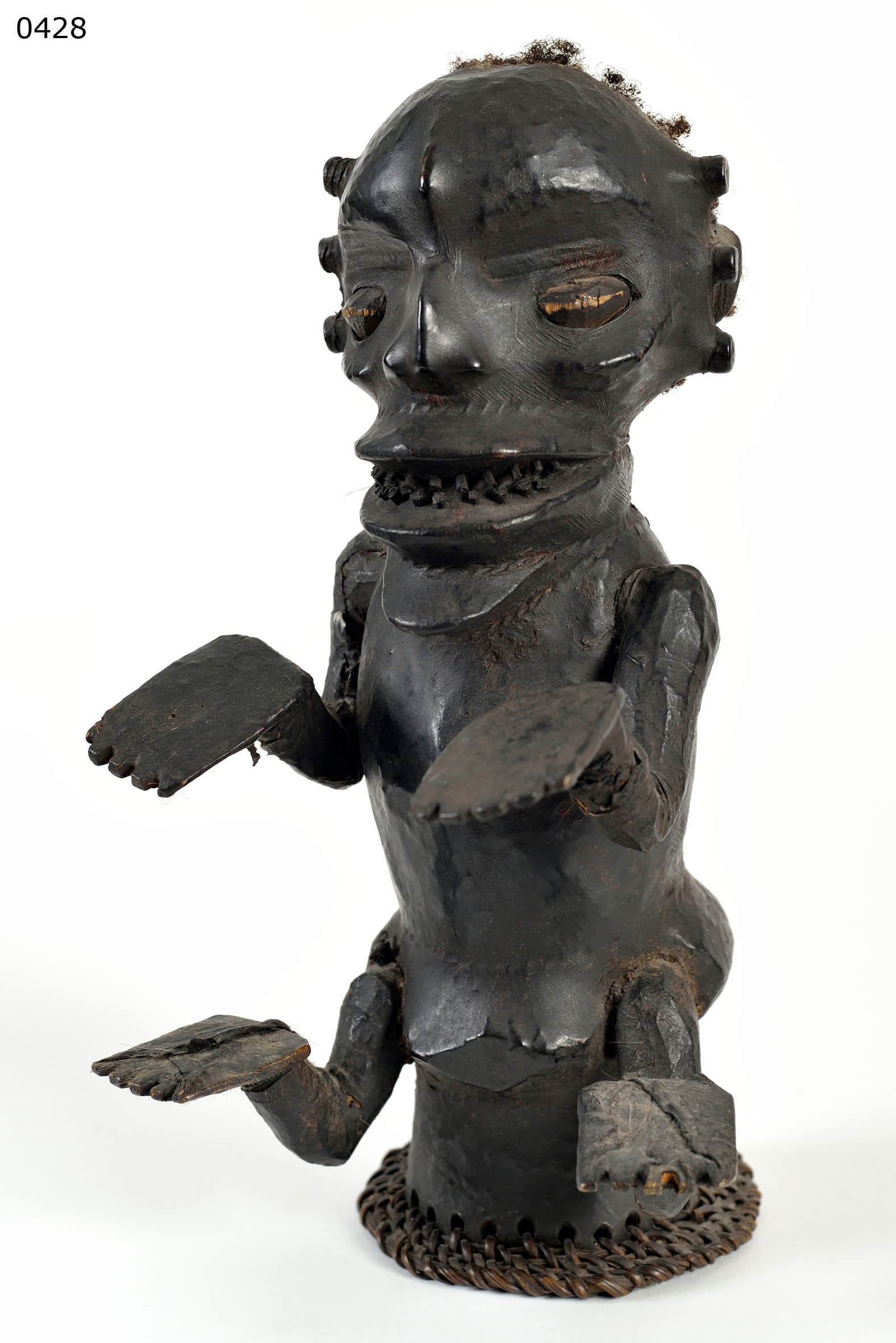
headcrest
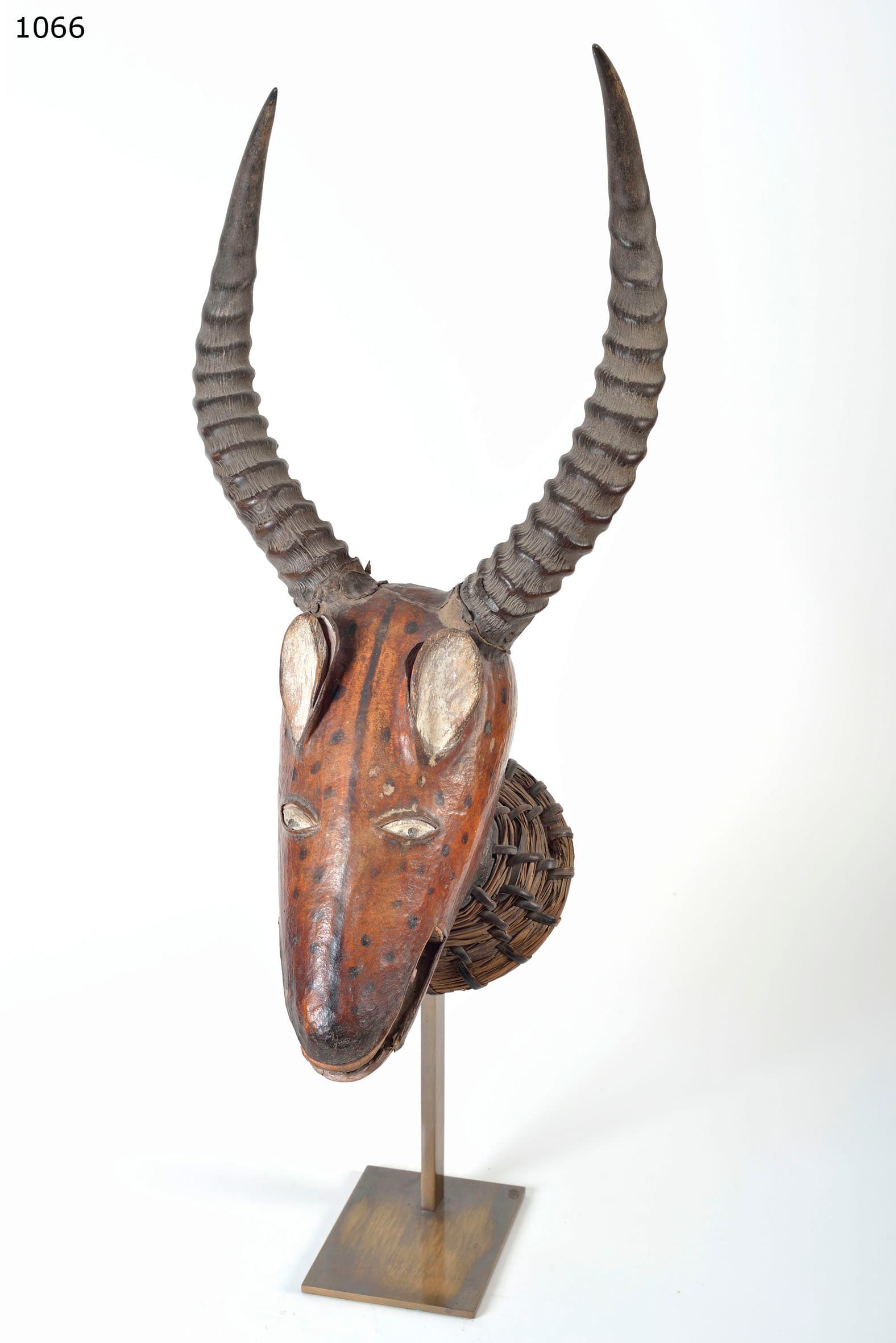
animal headcrest mask on METRA socle