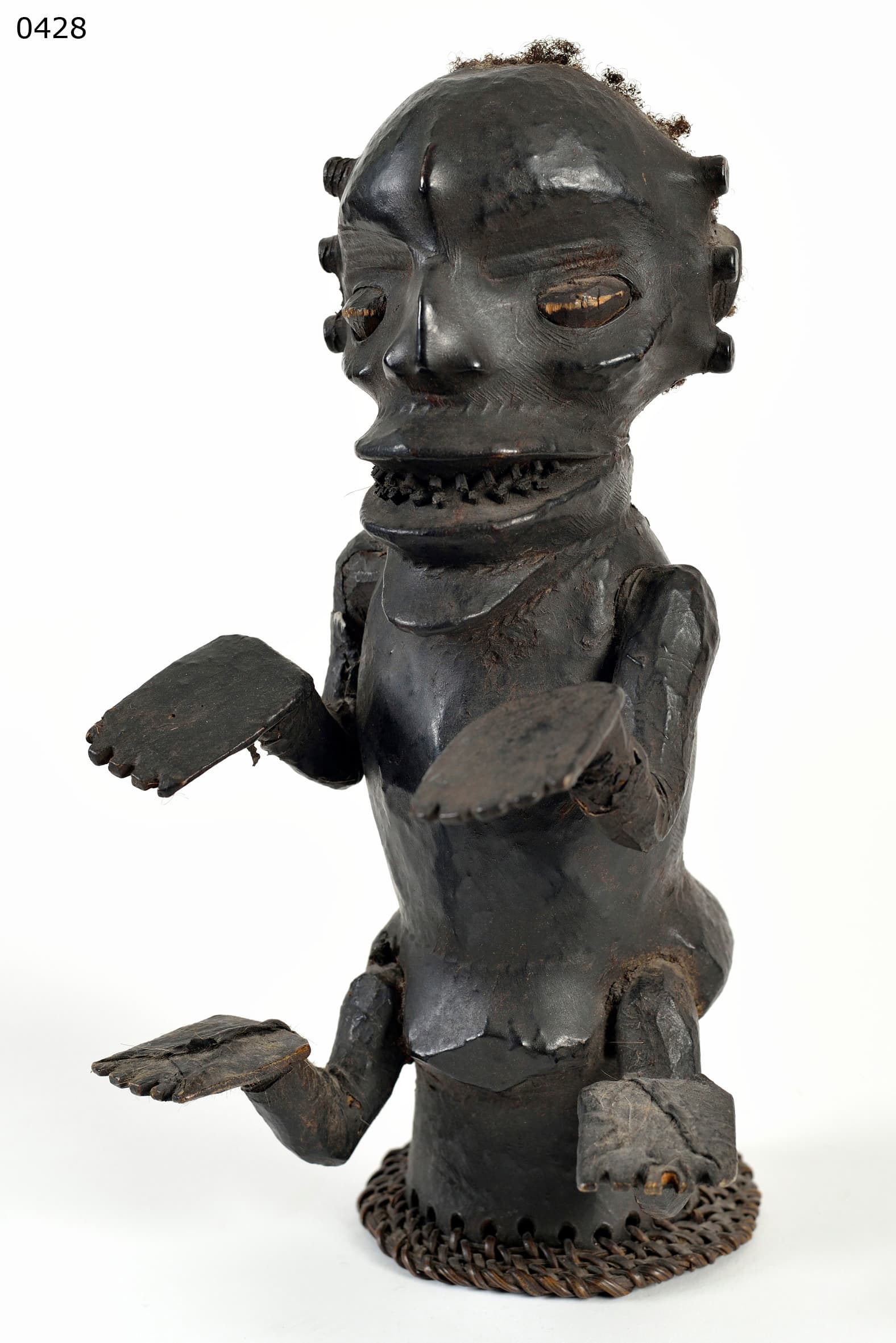
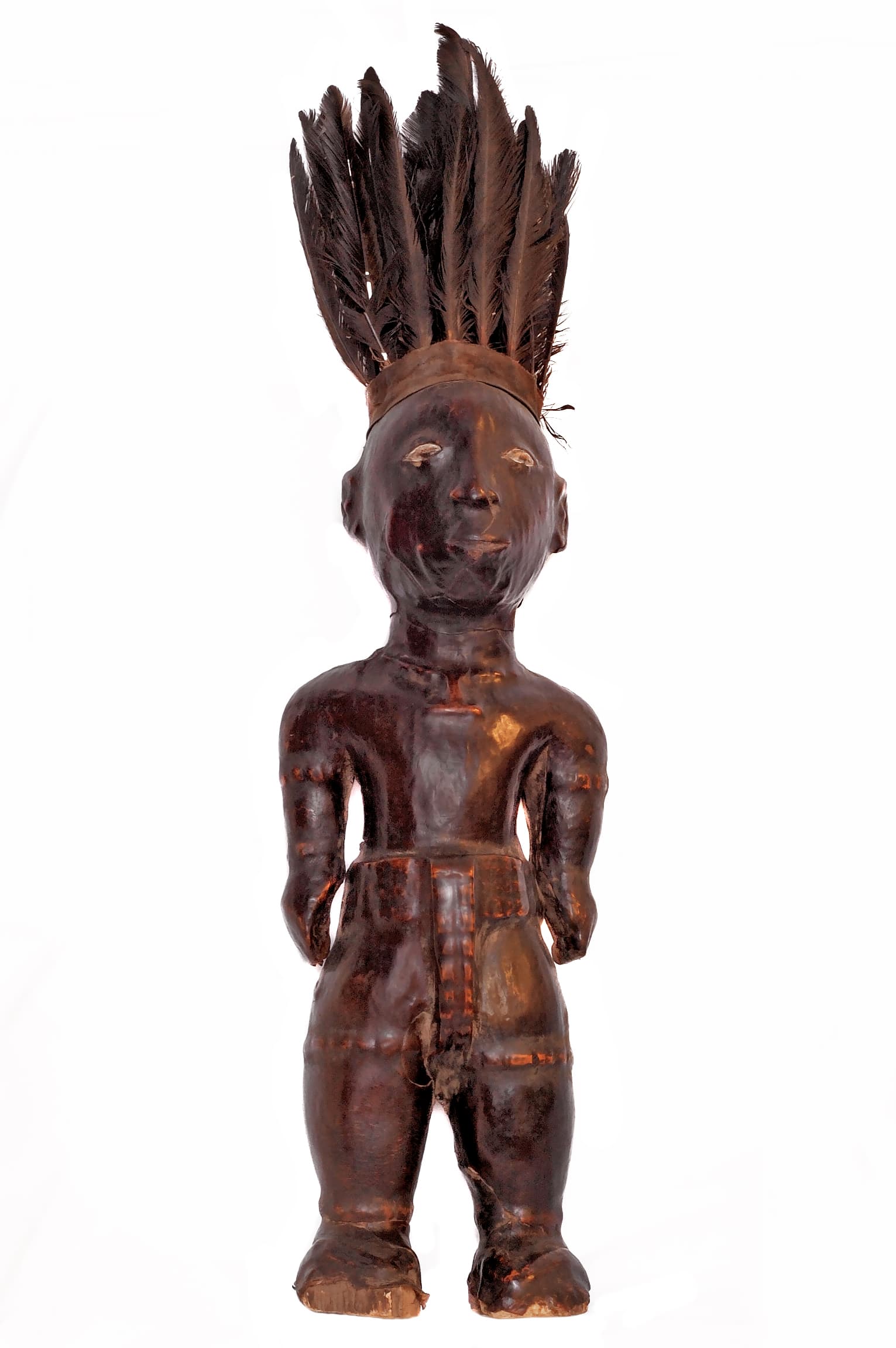
A striking hide-covered Janus crest mask (late 19th to early 20th C., 21 cm) from the Ekoi of Nigeria — mounted on a woven basketry base, a carved wooden core tightly wrapped in tanned animal hide, with expressive open mouths holding inset teeth, projecting wooden pegs for hair, and a dark heavily aged rigid leather surface.
1. Hyper-realism of the cross river region
The Ekoi (Ejagham) of the Cross River region are unique in Africa for covering wooden sculpture with animal skin.
- Antelope Hide Technique: The hide (often antelope) is stretched over the carved wooden core while wet, then allowed to shrink tight.
- Janus Omniscience: Combined with inset bone or wooden teeth and the double-faced Janus form, the result is a startling visceral hyper-realism — the ancestors looking into both the physical and spiritual realms simultaneously.
2. The Ngbe and Ekpe leopard societies
These skin-covered crests are the exclusive prerogative of powerful graded male secret societies.
- Ngbe and Ekpe: The Leopard societies historically acted as the primary judicial and political force in the Cross River region.
- Transfer of Animal Nyama: The skin covering is believed to trap the vital energy of the source animal, transferring its primal power to the senior initiate dancing beneath it during funerals and initiation rites.
3. Hide tanning and organic preservation
Authenticity and the significant age of a skin-covered mask are evaluated by the condition of the hide and its integration with the wood.
- Hardened and Darkened: The leather exhibits a profound, deep dark, and somewhat greasy patina resulting from decades of ritual use, repeated rubbing with palm oil, and storage in smoky huts. It conforms perfectly to the uncompromising bone structure of the underlying carving.
- Natural Shrinkage: Fine cracking and shrinkage at the tension zones around the eyes and mouth, along with sparse remnants of original hair on the crown, attest to extensive use. Furthermore, the woven rattan base shows deep oxidation and a dark sweat patina, natural aging signatures consistent with ritual use in the late 19th or early 20th century (c. 1890–1920).
Summary
Viscerally commanding, defined by archaic sculptural power, and technologically complex, this Ekoi Janus crest mask is a notable example of Cross River skin-covered artistry. Its organic aging and dual-faced design are consistent with examples of this tradition.
Written with AI assistance from the collection appraisal, object photography and our own research; editorially reviewed. Mistakes are possible — corrections are welcome. How we work →