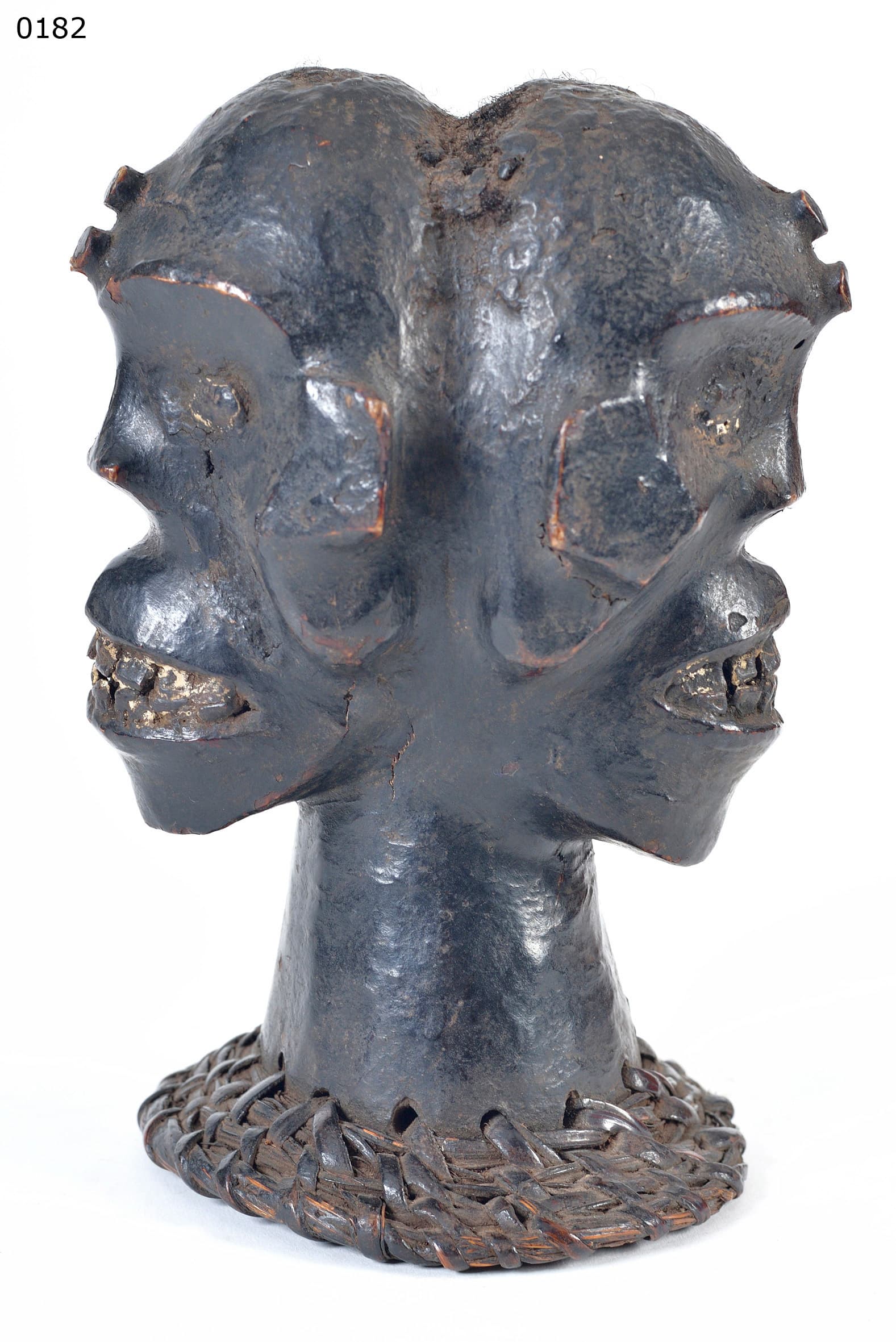
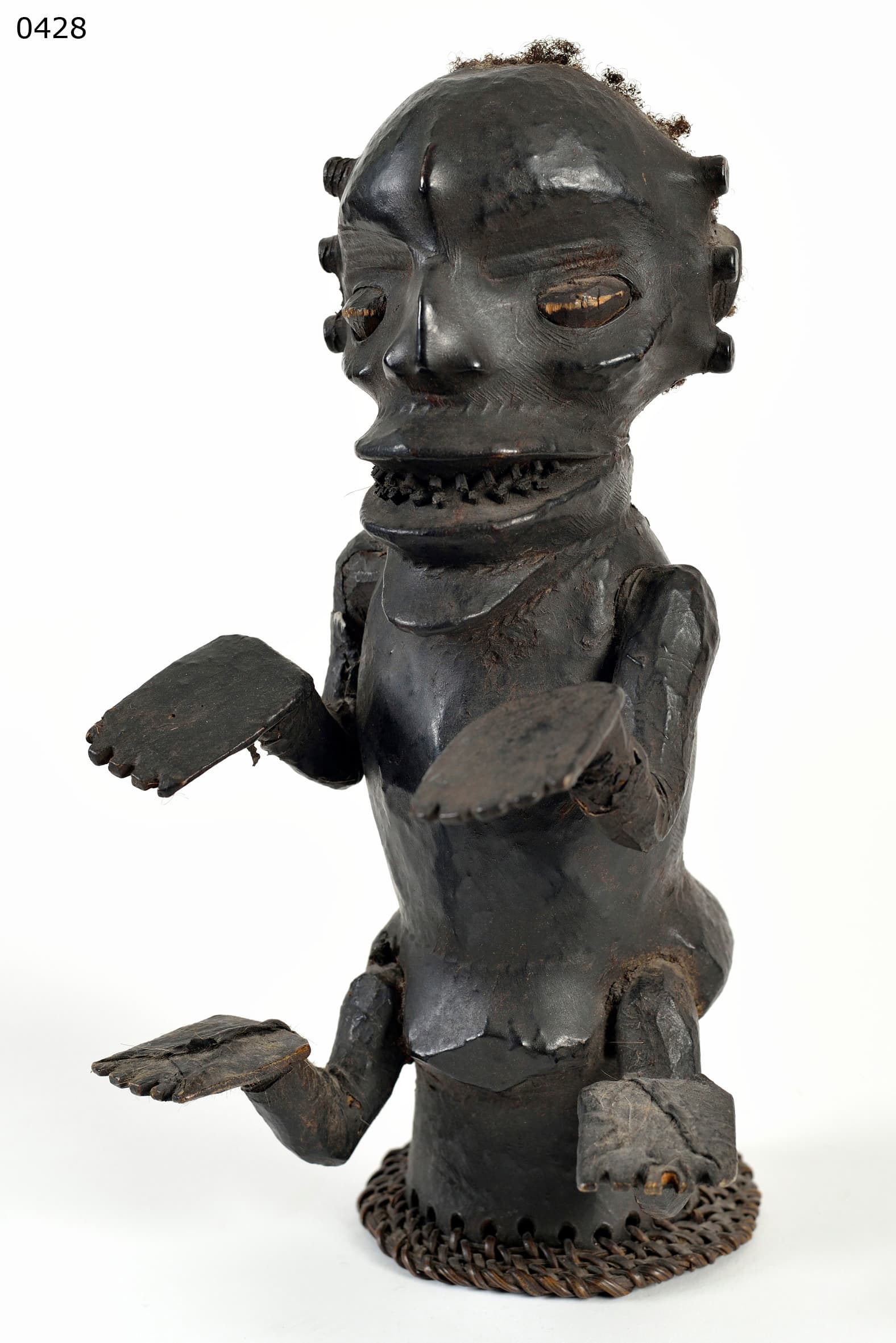
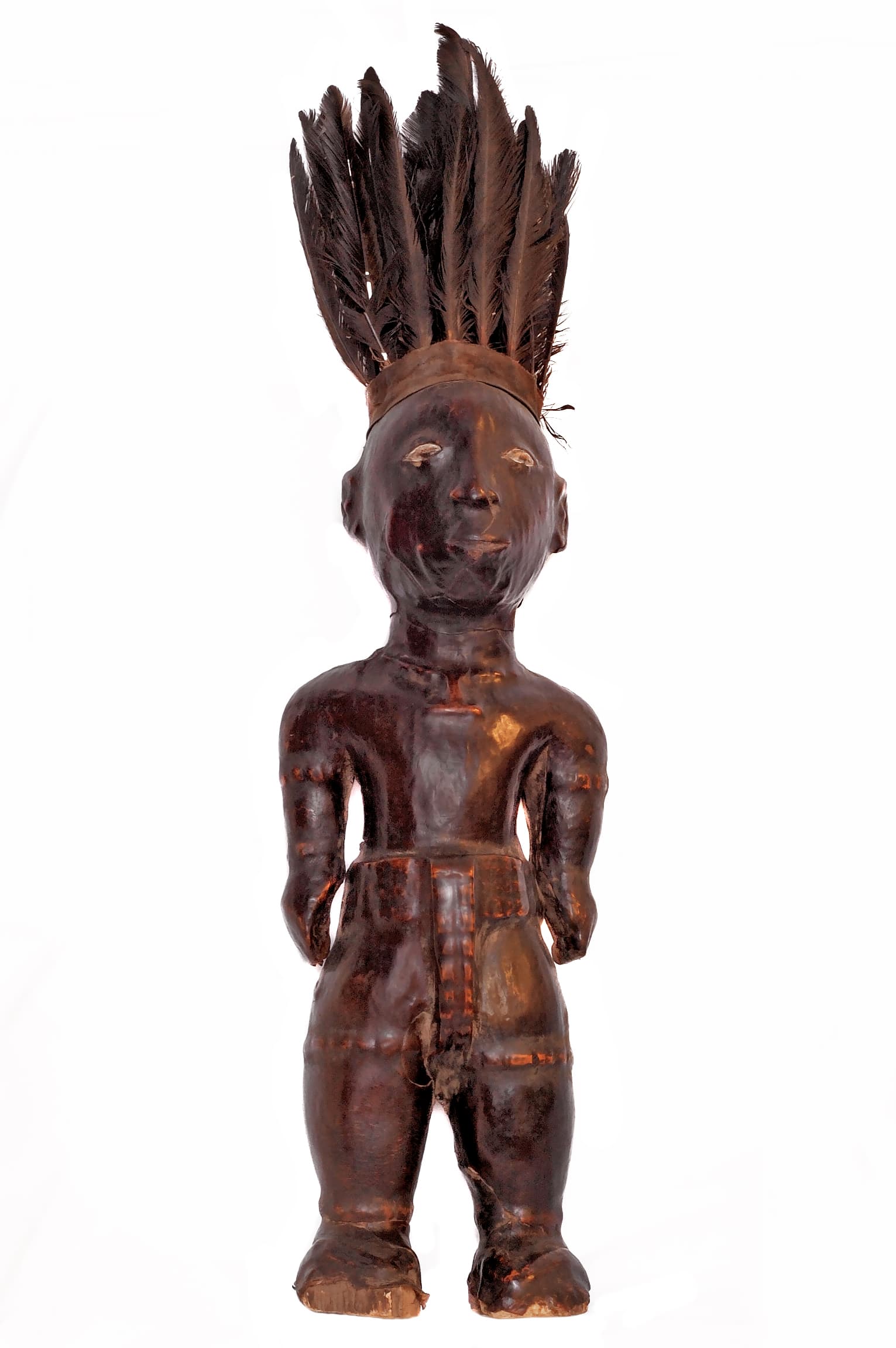
This large 52 cm headcrest depicts an imposing antelope head with towering, spiraled wooden horns, its surface meticulously covered in stretched animal skin and adorned with bone or metal inlaid eyes. The piece sits atop its original woven cane basketry base, exuding a dark, highly polished, and deeply aged organic presence.
1. Aesthetic style — the skin-covered technique and realism
The Ekoi (Ejagham) people of the Cross River region developed one of the most distinctive and technically demanding art forms in Africa: the skin-covered mask. The artist first carved a highly detailed wooden armature of an antelope, then stretched fresh, wet animal skin (often antelope or goat) tightly over the wood, pinning it in place. As the skin dried and shrank, it gripped the carving perfectly, creating an incredibly lifelike, fleshy realism. The towering, spiraled horns and inlaid eyes add to the imposing, terrifying presence of the beast.
2. Ritual function — Ngbe (leopard) society and martial display
These highly realistic, skin-covered crests were the exclusive property of elite male secret societies, most notably the Ngbe (Leopard) society, which maintained law, order, and political power across the region. Worn atop the head of a principal dancer during funerals for society members, the massive antelope mask projected intense martial strength and masculine vitality. It served to visibly channel the untamed, muscular energy of the bush into the highly regulated political sphere of the village.
3. Physical patina — epidermal patination and basketry integrity
The physical state of this object is remarkable. Over the decades, the stretched animal skin has cured, oxidized, and absorbed palm oil, transforming into a hard, glossy, dark-brown shell that resembles polished leather or ancient mahogany. This epidermal patination is highly characteristic of traditional age and use. Furthermore, the mask remains firmly attached to its original woven cane basketry base — the mechanism used to secure the heavy object to the dancer's head — indicating it has survived intact as a complete, functional ceremonial unit.
Summary
A highly accomplished example of the Ejagham skin-covered technique, this Ekoi antelope headcrest projects terrifying, lifelike realism and martial strength. Its dark, hardened epidermal patina and intact woven base are consistent with an active artifact of the elite Ngbe society.
Written with AI assistance from the collection appraisal, object photography and our own research; editorially reviewed. Mistakes are possible — corrections are welcome. How we work →