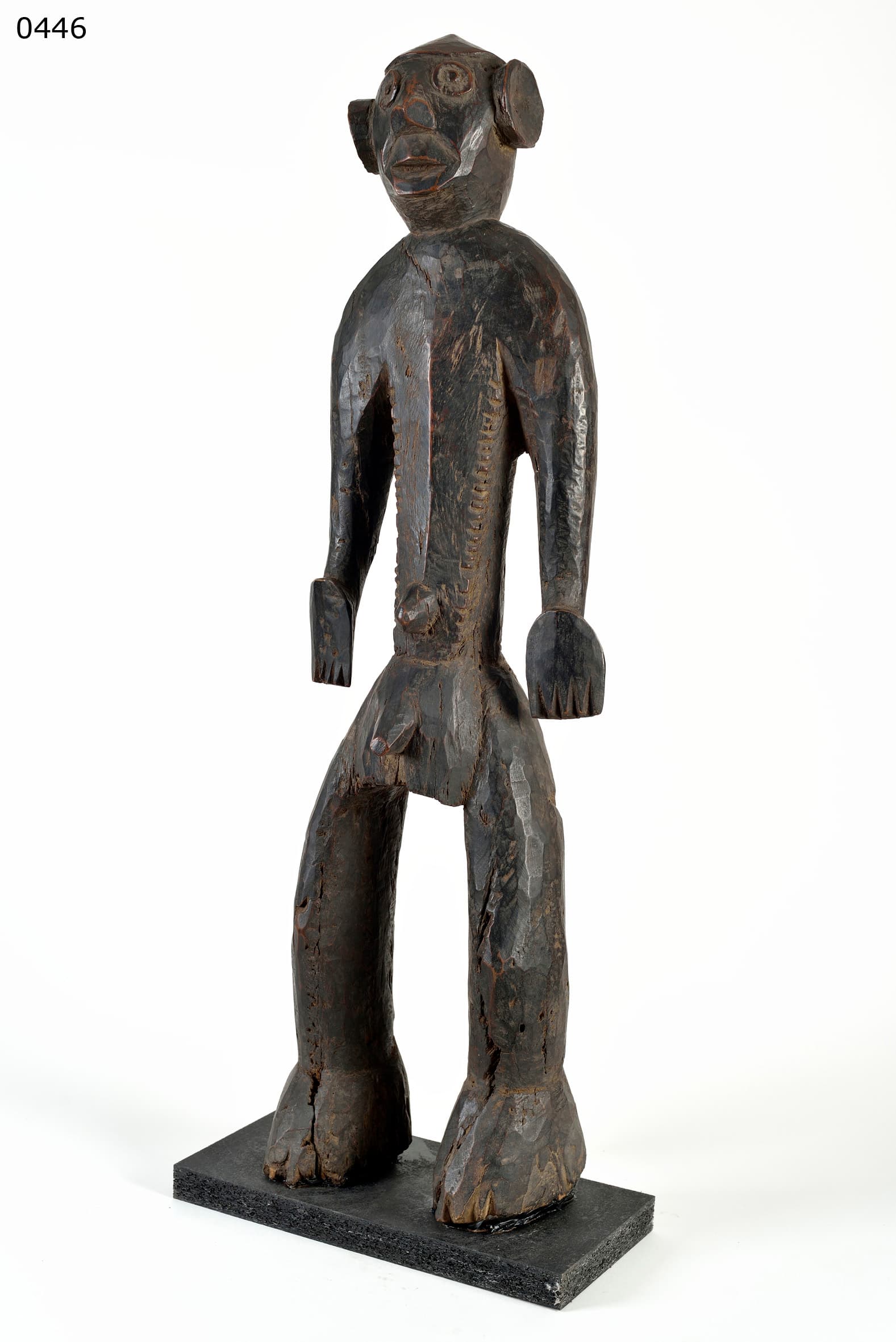
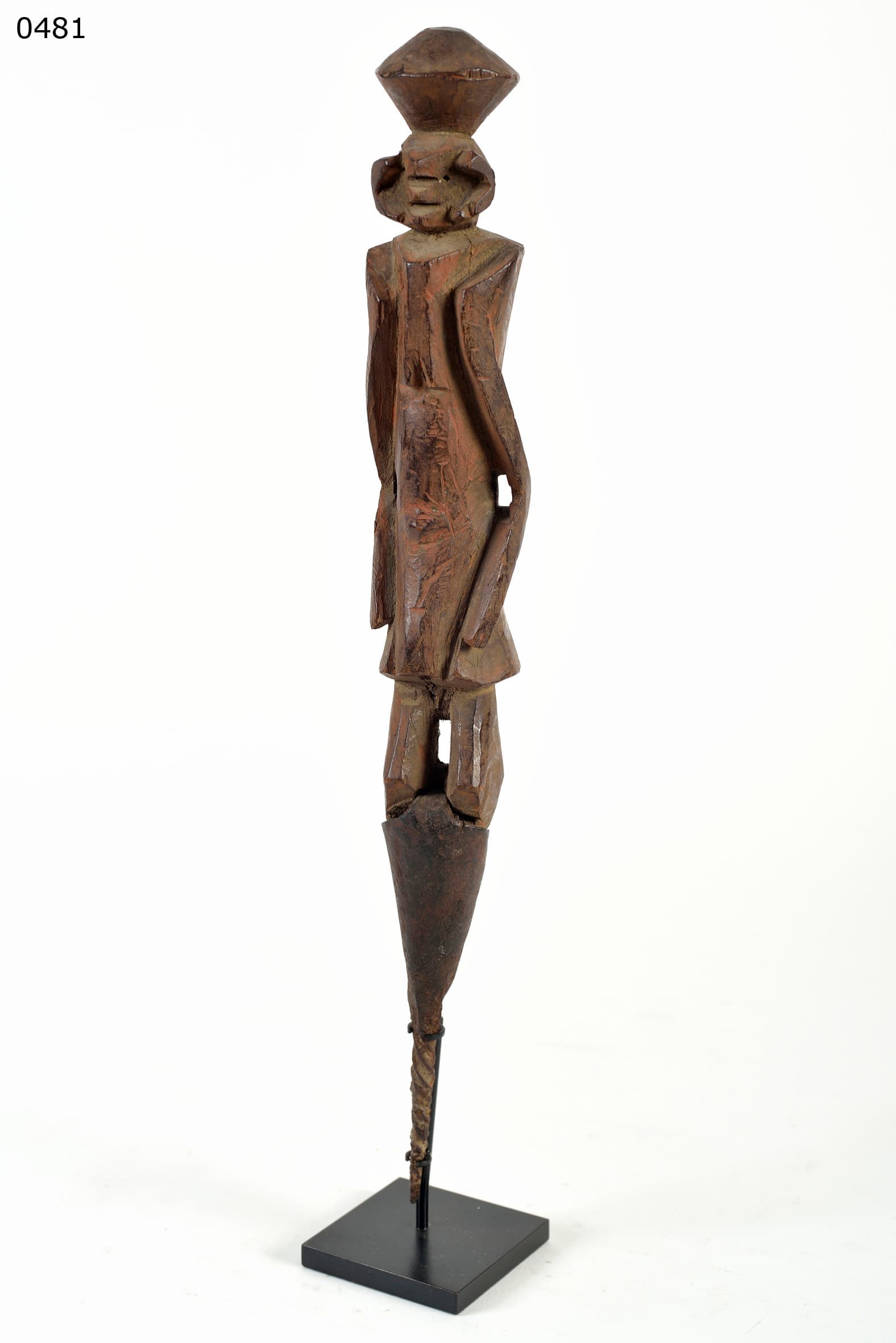
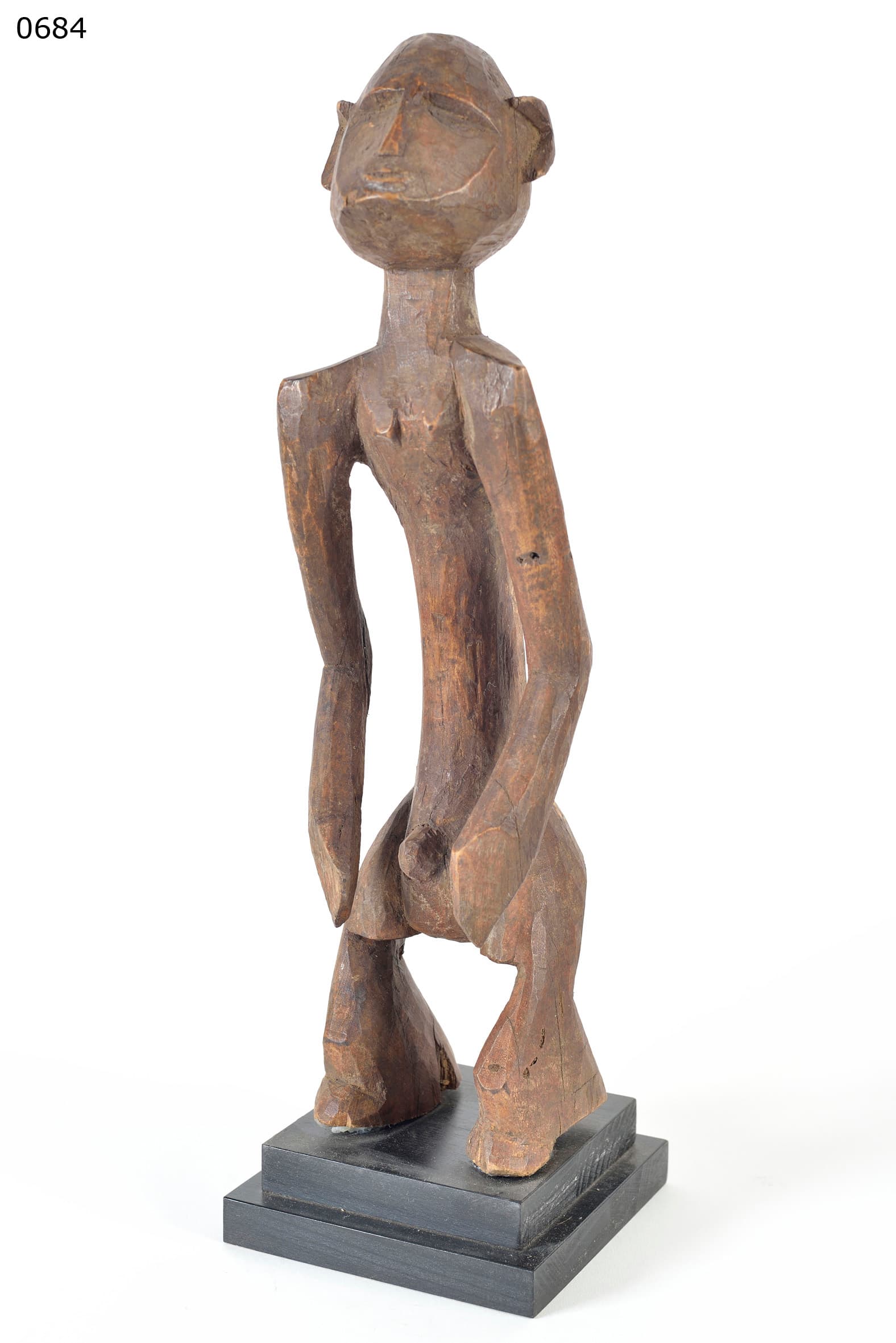
These striking terracotta pots are anthropomorphic, featuring bulbous bodies that transition into highly stylized human heads with open, circular mouths. They often rest on woven fiber ring bases and display coarse, textured lower halves.
1. Aesthetic Style and Domestic Altars
The Chamba people, who inhabit the remote borderlands between Nigeria and northern Cameroon near the Atlantika Mountains, utilize a highly localized, distinct ceramic aesthetic. These pots merge the utilitarian form of a storage vessel with the spiritual presence of a human bust. The gaping mouths and simplified, expressive facial features are designed to serve as a direct, physical conduit to the spirit world. The lower halves are often heavily textured to contrast with the smoother faces, giving the objects an earthy, grounded presence appropriate for domestic altars.
2. Ritual Function and Ancestral Propitiation
These pots form the absolute center of Chamba religious life in villages like Yeli. The Chamba believe that the ancestors are directly responsible for the daily fortunes and misfortunes of the living. If illnesses, crop failures, or calamities strike, it is believed the ancestors are disgruntled. The appointed "chief of the sacrifice" utilizes these pots to communicate with the dead. Offerings of millet beer are poured into the pot, and chickens, goats, or cattle are sacrificed before it to appease the spirits. The open mouth of the pot acts as the literal ear of the ancestor, receiving the community's prayers and libations.
3. Patina, Material Weathering, and Age Verification
The vessels exhibit a deeply encrusted, crusty patina, specifically showing the authentic, layered residue of dried millet beer and sacrificial blood around the rims and mouths. Because these pots are kept on domestic altars outside or just inside the huts, they are heavily weathered by the elements, dust, and continuous ritual anointing. The surviving woven fiber bases are deeply stained and desiccated, verifying continuous, authentic use across multiple generations of Chamba families.
Summary
These anthropomorphic pots are the vital, physical bridges between the living Chamba people and their powerful ancestors. Their crusty, libation-stained patinas serve as undeniable records of decades of intense, life-saving domestic rituals.
Written with AI assistance from the collection appraisal, object photography and our own research; editorially reviewed. Mistakes are possible — corrections are welcome. How we work →