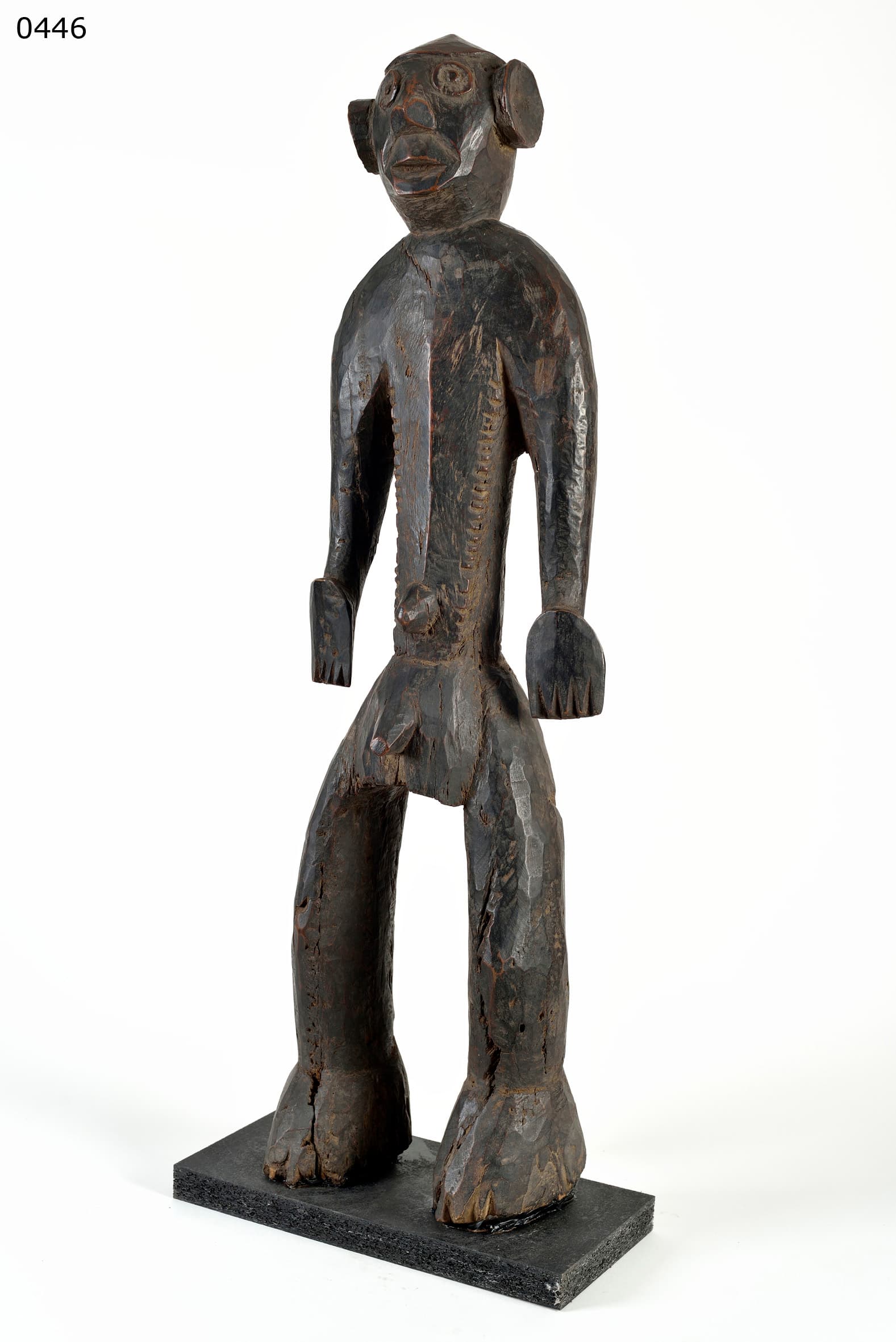
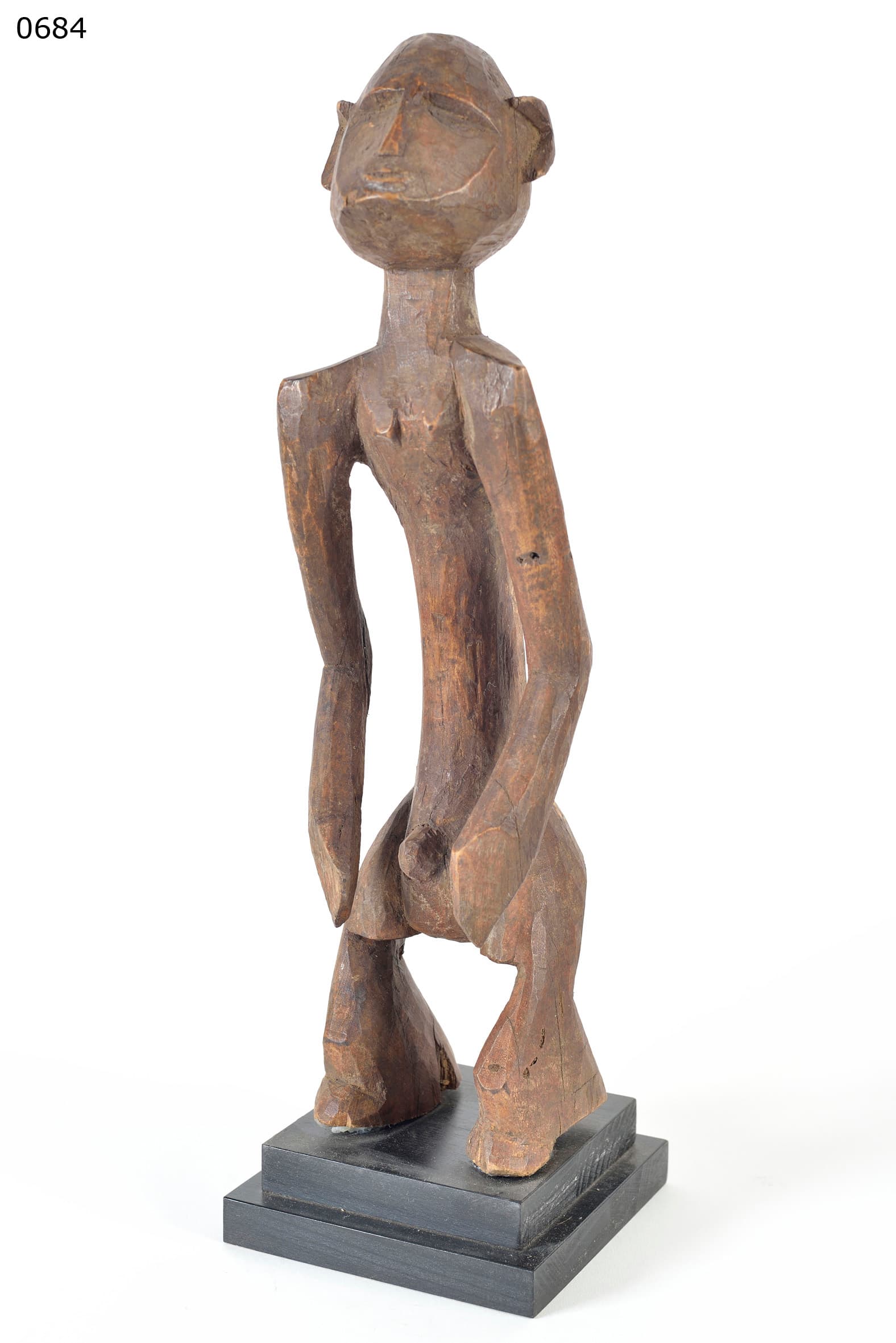
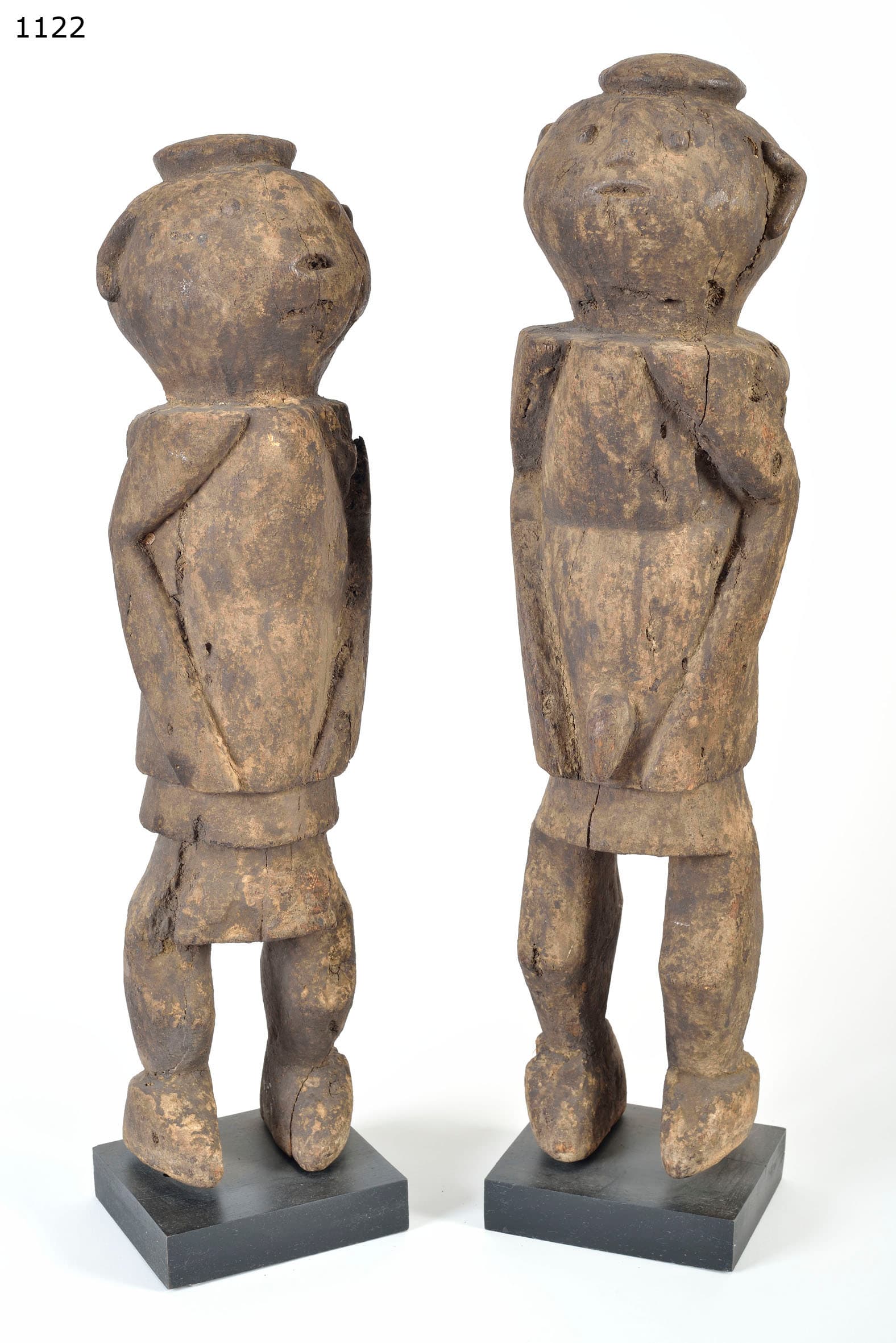
A highly abstracted pole-like Chamba altar power figure (1st half 20th C., 37 cm) from Nigeria — minimalist conical head, an elongated cylindrical torso with stylized arms carved flat against the body, terminating in a forged iron spike serving as the base. The wood is severely dry, exhibiting deep longitudinal cracks and a powdery oxidized brown patina.
1. Benue river valley pole-style carving
The Chamba of the Middle Benue River Valley are masters of "pole-style" abstraction — rigid geometric verticality replacing anatomical realism.
- Branch-Dimension Restriction: The artist restricted the human form to the original dimensions of the branch or pole, rendering the head as a stark geometric cone and reducing the arms to simple parallel ridges.
- Anonymous Ancestral Vessel: Intense reductionism strips away individual human identity, transforming the wood into a pure anonymous vessel for ancestral energy.
2. Earthen anchors and agricultural sentinels
The defining functional feature is the forged iron base.
- Ogun Material Charge: In traditional Nigerian cosmology, iron is a highly charged magical material associated with Ogun (god of iron) — the spike was engineered so the figure could be driven forcefully into the earth.
- Grounding Ancestral Power: Diviners planted these statues at field borders or within compounds — by physically penetrating the soil, the iron spike grounded protective supernatural energy directly into the earth, ensuring a bountiful harvest and blocking malevolent witchcraft.
3. Elemental desiccation and subterranean wear
The physical condition shows wear consistent with outdoor shrine use.
- Bleached Sun-Baked Wood: Never polished with palm oil — subjected to severe environmental exposure; deep stabilized desiccation fissures and a powdery bleached-brown surface are consistent with decades of exposure to the Nigerian sun and dry seasonal winds.
- Iron Oxidation from Soil Contact: Heavy oxidation on the iron spike is compatible with long-term insertion into damp acidic soil.
Summary
An exceptional example of Nigerian pole-style abstraction, this Chamba power figure seamlessly integrates wood and iron. Its functional iron spike and severe elemental desiccation support its attribution as an active earth-bound agricultural sentinel.
Written with AI assistance from the collection appraisal, object photography and our own research; editorially reviewed. Mistakes are possible — corrections are welcome. How we work →