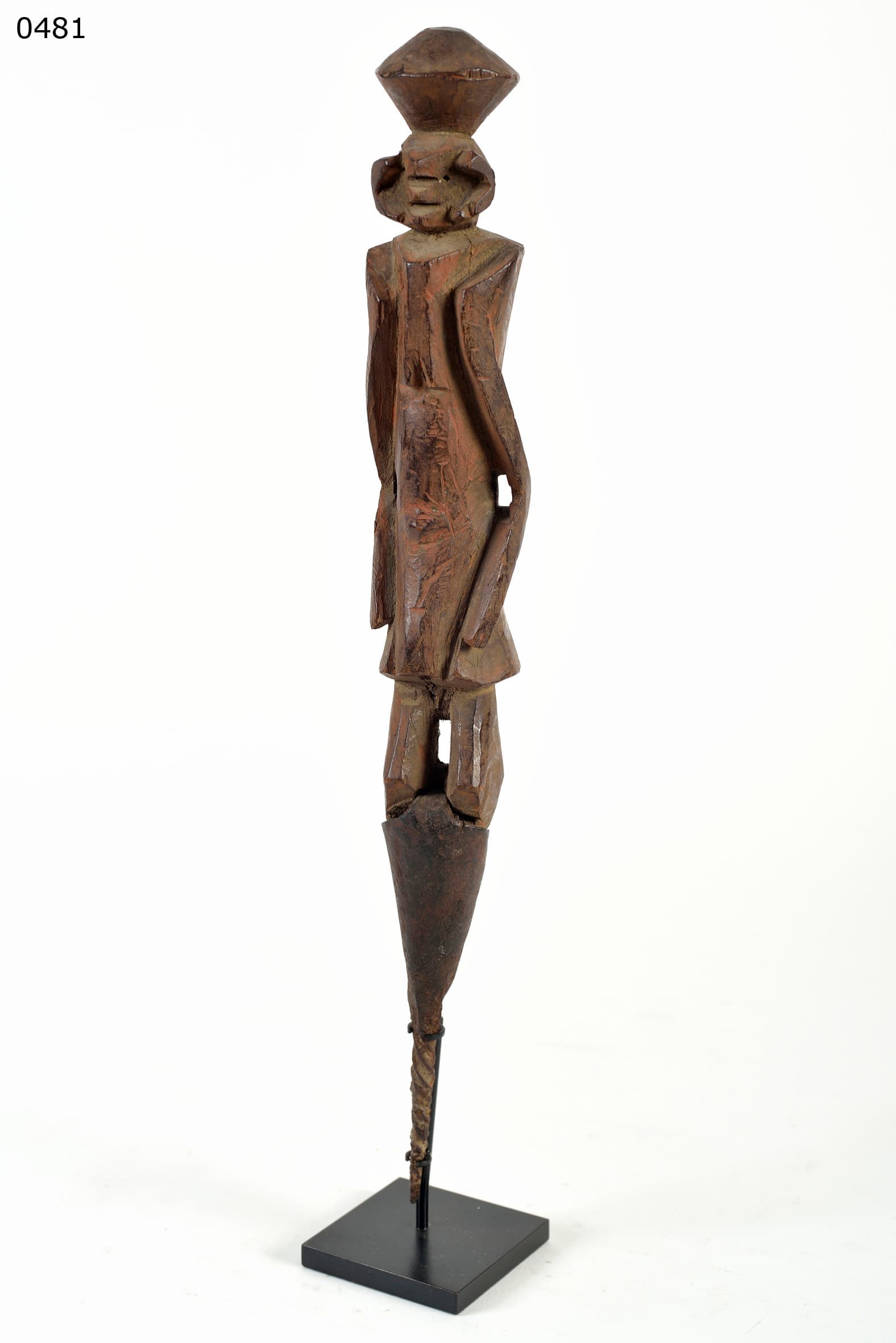
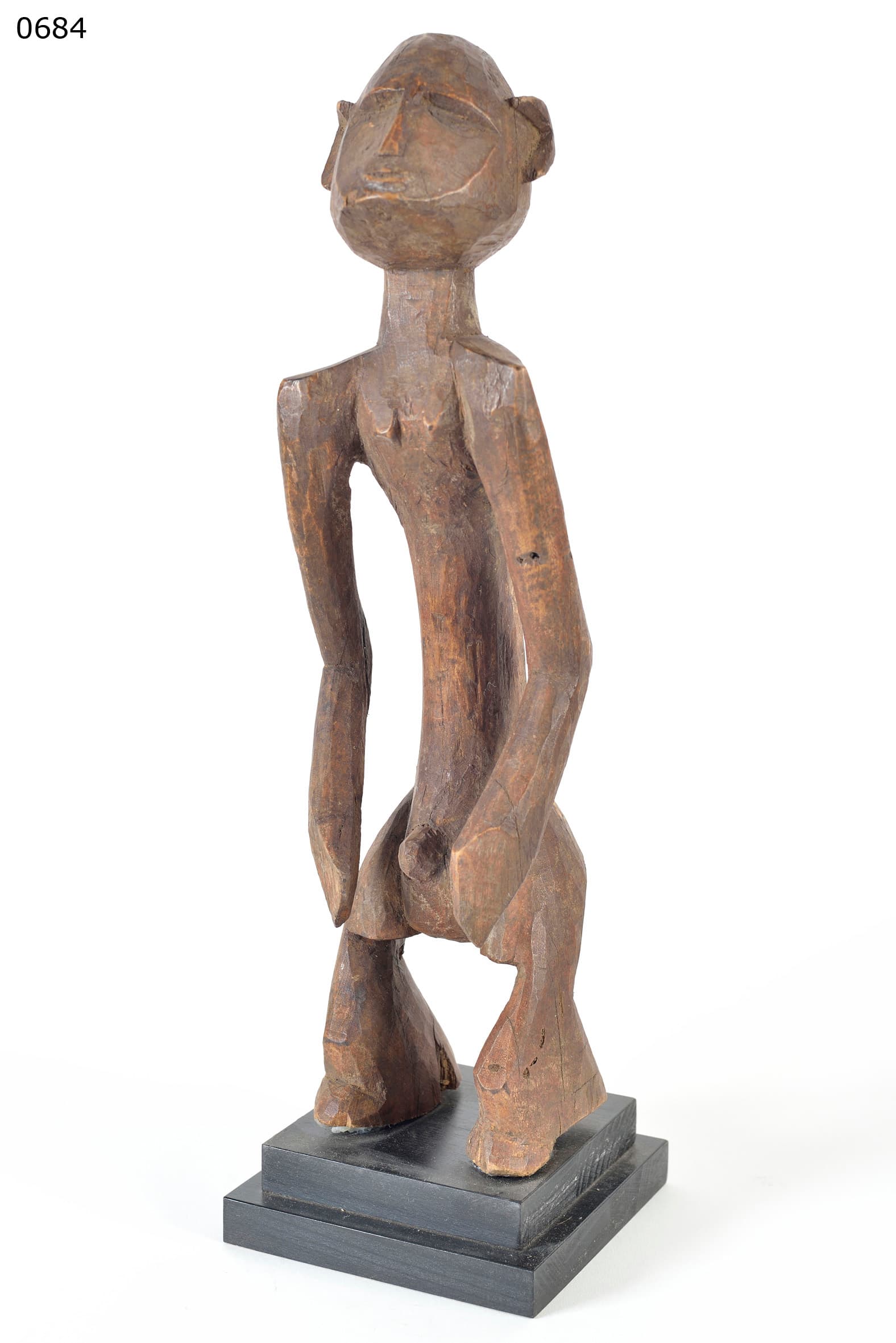
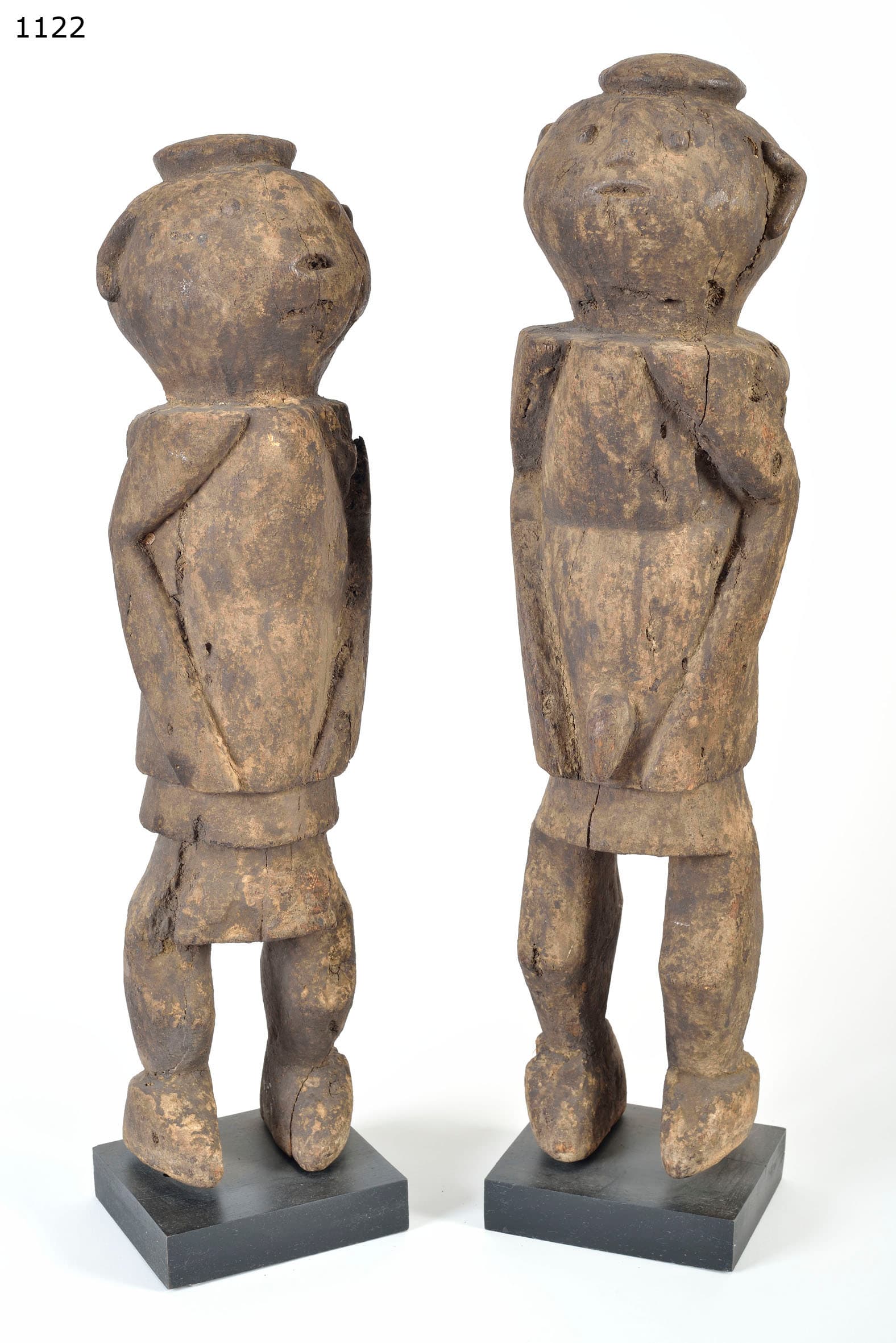
A monumental Chamba male ancestor figure (1st half 20th C., 88 cm) from Nigeria — highly abstracted with an elongated columnar body, prominent volumetric sweeping buttocks/hips, and a stylized helmet-like head with large circular disc ears. The wood is severely aged with a deeply weathered dry blackened patina and significant elemental erosion.
1. Volumetric cubism of the benue valley
The Chamba people of the Middle Benue River Valley carve statuary that represents a distinctive localized iteration of African cubism.
- Volume Injection vs. Mumuye Poles: While sharing the "pole-style" verticality of their Mumuye neighbors, Chamba art injects massive swelling volumes — dominated here by the deeply carved plunging curve of the hips and buttocks that anchors the towering cylindrical torso.
- Minimalist Silhouette: The head, completely lacking intricate facial features, is reduced to a stark hemispherical dome flanked by prominent flat disc-like ears, creating a forceful minimalist silhouette.
2. The volumbi cult and the ancestral sentinel
Figures of this substantial size and intense abstraction are associated with Chamba Volumbi or Tau ancestor cults.
- Founding Patriarchs: Stripped of individual portraiture, these statues represent founding patriarchs or powerful lineage heads — the large disc ears signify omniscience and the ability to hear the prayers of the living and the approaching steps of malevolent spirits.
- Permanent Lineage Guardians: Kept in restricted lineage shrines, they were petitioned for agricultural fertility, rain, and protection from disease — acting as unyielding earthen guardians.
3. Extreme elemental desiccation
The surface shows weathering consistent with an early 20th-century age.
- Benue Valley Weathering: Unprotected by coastal oils, the heavy timber exhibits profound dry environmental desiccation — a powdery oxidized charcoal-brown deeply textured by decades of grain splitting, wind erosion, and atmospheric fluctuations.
- Blunted Extremities: The severe blunting of the hands and feet suggests it stood as an active earthen anchor for generations within a semi-exposed Benue shrine.
Summary
Towering at nearly a meter tall, this Chamba ancestor figure is a notable example of sweeping volumetric abstraction. Its severe elemental desiccation and stark cubist geometry support its association with Nigerian Volumbi cult worship.
Written with AI assistance from the collection appraisal, object photography and our own research; editorially reviewed. Mistakes are possible — corrections are welcome. How we work →