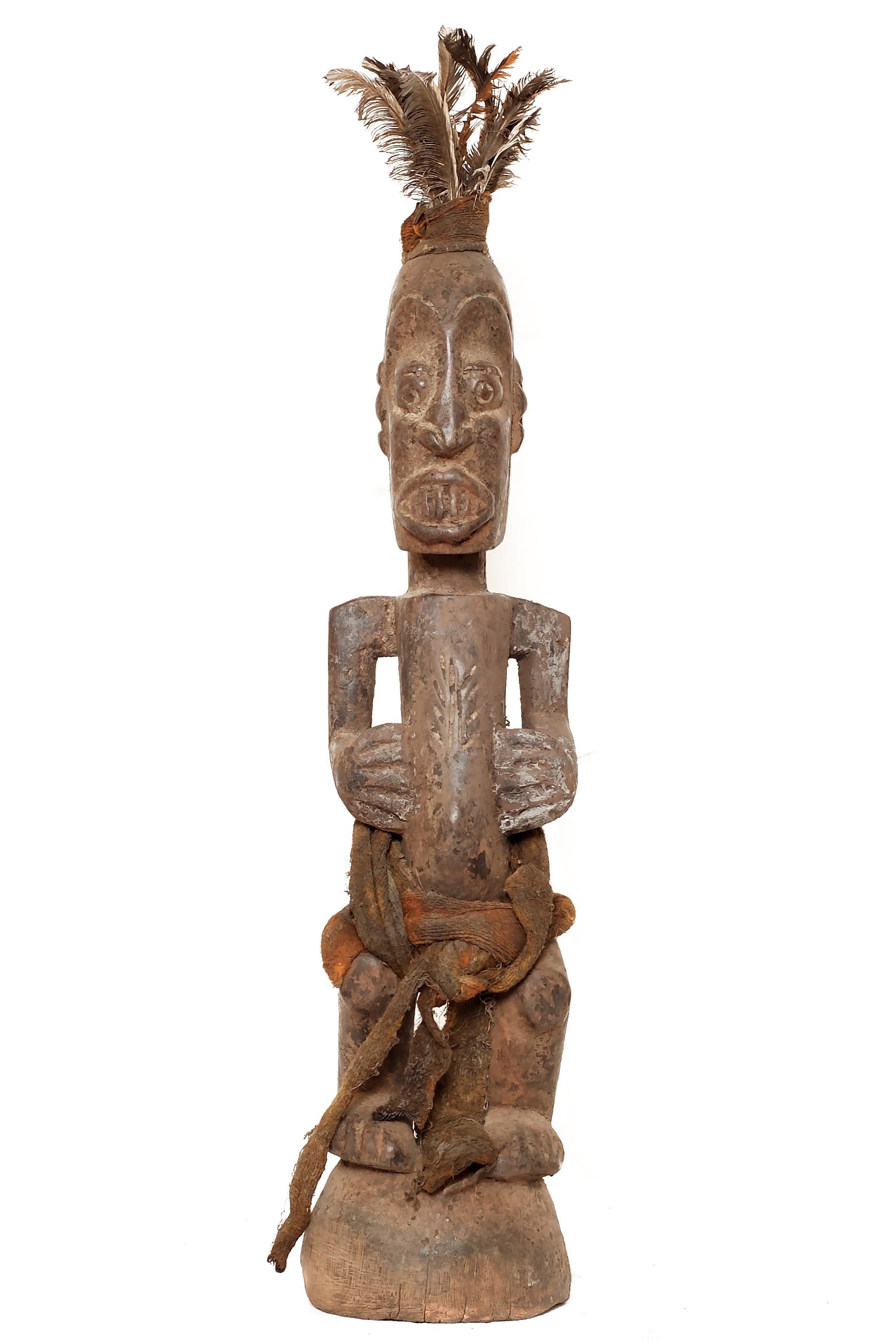
A standing wooden male figure carved with exaggerated, almost cartoonish features: bulging eyes, an open mouth with bared teeth and a crested topknot. He holds a curved club or horn in one hand and a small cup in the other, and wears a carved apron.
1. Aesthetic Style and Caricatured Memory
This figure from the Nganbé Chiefdom presents a fascinating deviation from standard, solemn ancestral portraiture. As the collection catalogue notes, the carver chose to depict the deceased in an almost "cartoonish" or caricatured manner. The extreme exaggeration of the facial features — the bulging eyes and dramatically pronounced mouth — abandons naturalistic proportion to capture a specific, perhaps humorous or highly idiosyncratic essence of the individual's personality. This bold, expressive liberty demonstrates the wide range of artistic freedom permitted within certain Tikar commemorative commissions.
2. Ritual Function and Ancestral Presence
Despite its unconventional, almost whimsical aesthetic, the object served a profound ritual purpose. It functioned as a commemorative figure (Gedenkfigur) created to honor and remember a specific deceased member of the community. Such a figure gives the memory of the deceased a physical anchor. It allowed the living to maintain an ongoing relationship with the ancestor, offering a focal point for veneration, remembrance, and the sharing of familial history.
Patina, Material Weathering, and Surface Wear
The wood has a dry, weathered surface with traces of white pigment on the head and face. The deep, rough adze marks are softened by time and dust, and the wear on the protruding parts, nose, hands, knees and feet, is uneven and consistent with handling.
Summary
This Tikar figure is a fascinating, highly individualized portrait that challenges the strict solemnity of typical Grassfields art. Its caricatured features and weathered wood make it a poignant, personal monument to a remembered person.
Written with AI assistance from the collection appraisal, object photography and our own research; editorially reviewed. Mistakes are possible — corrections are welcome. How we work →