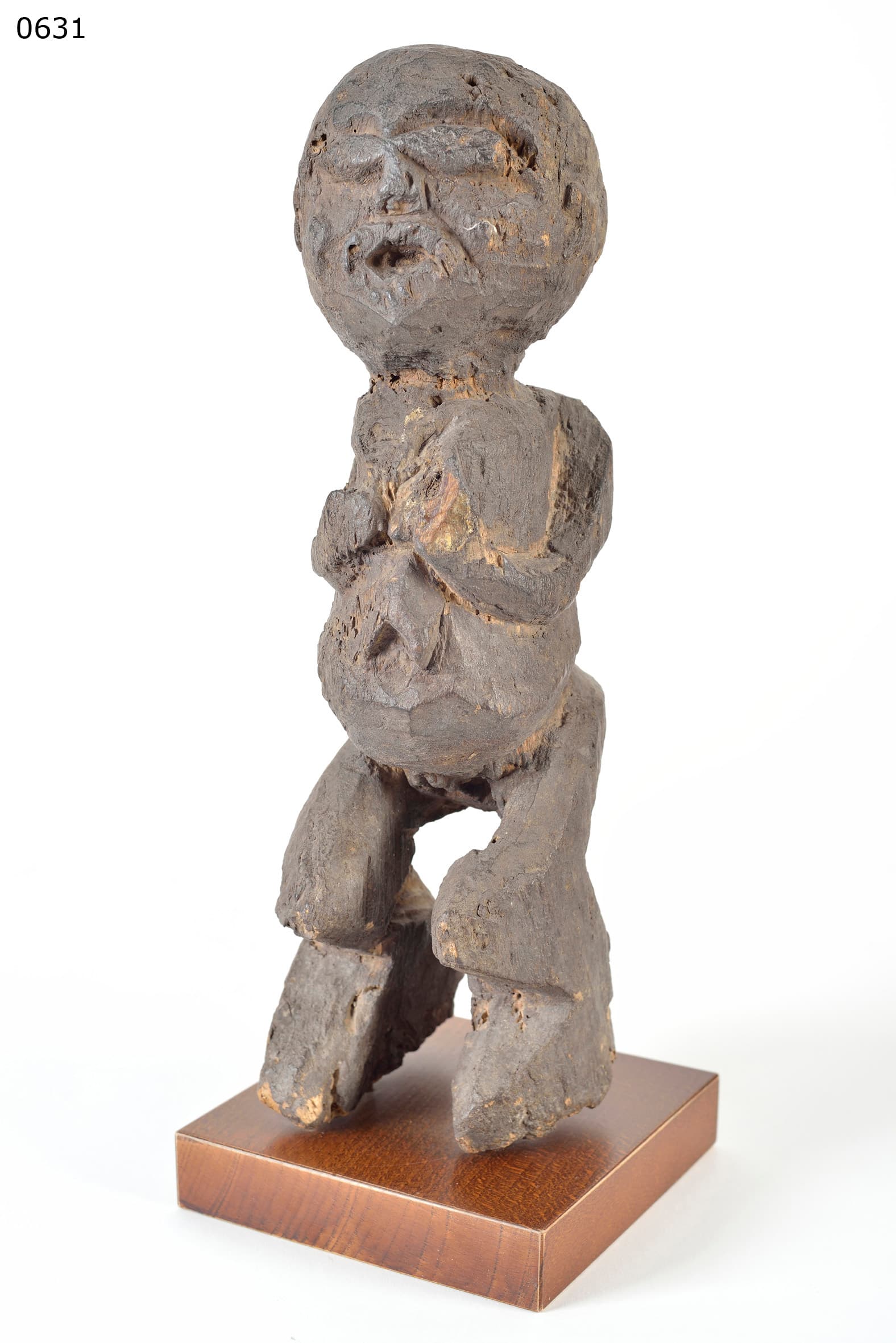
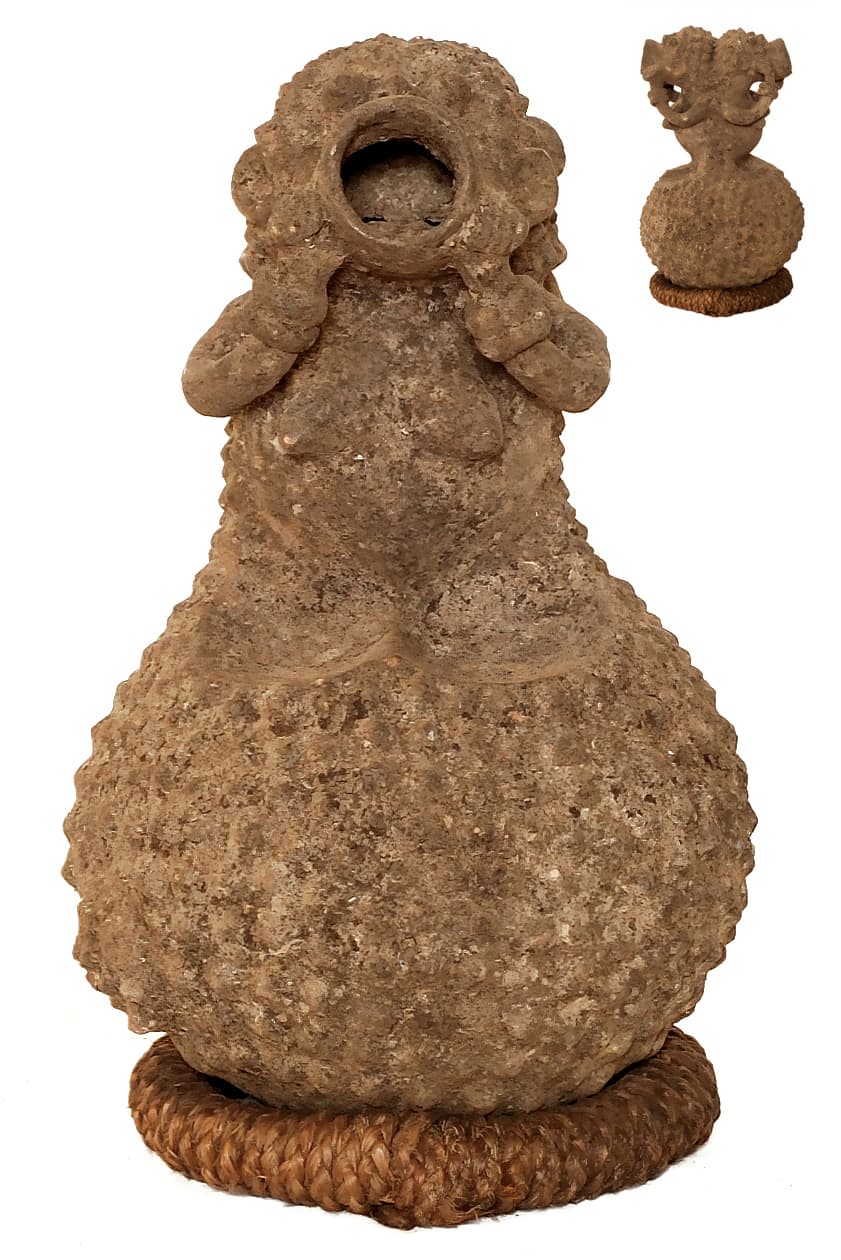
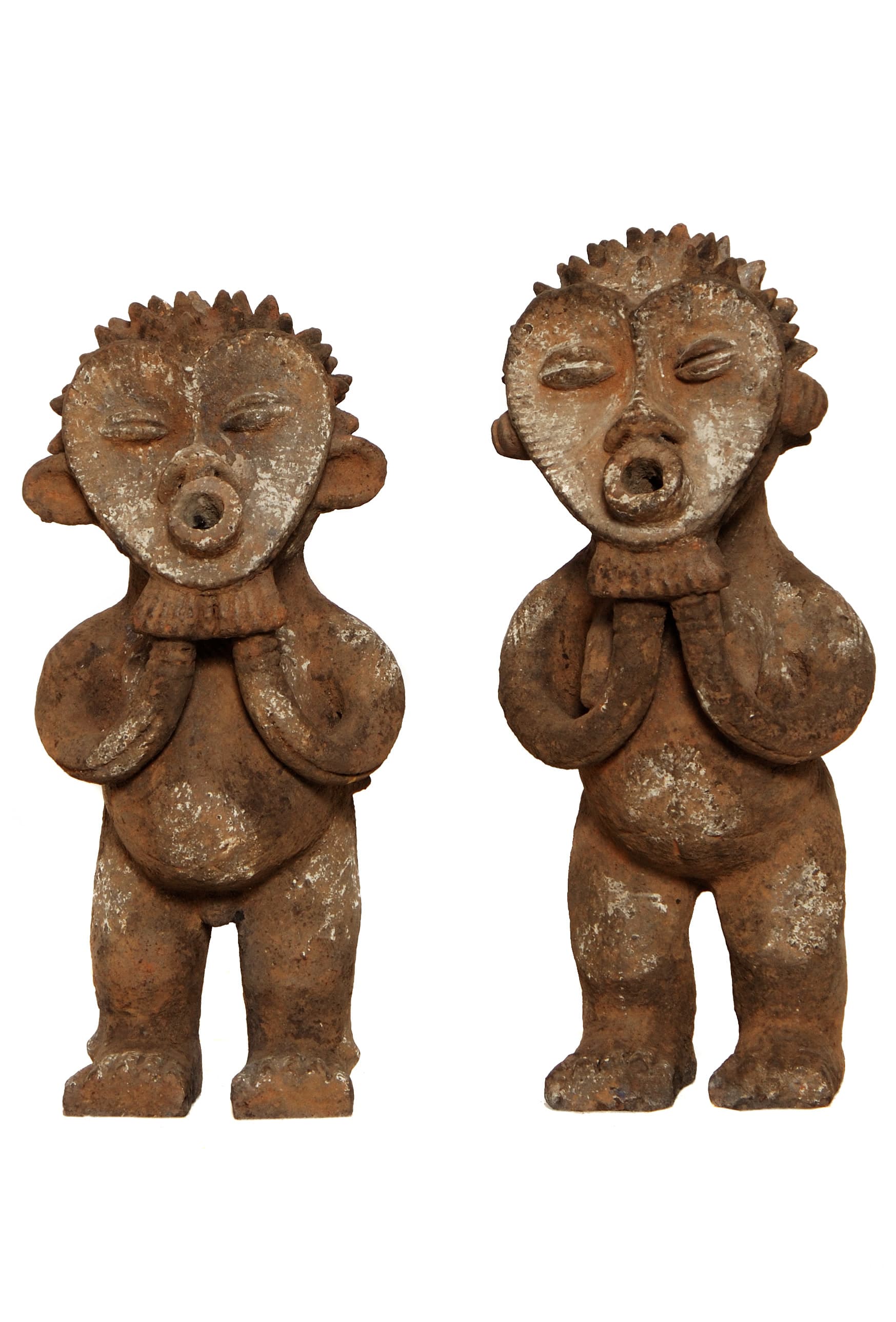
Two stout, highly textured terracotta figures featuring the classic Mambila heart-shaped face, wide, gaping mouths, and prominent, tubular eyes.
1. Aesthetic Style and Mambila Abstraction
These figures possess an aesthetic characteristic of Mambila cult ceramics. The artist has moved away from naturalistic proportions, focusing on the expressive power of the face. The gaping, open mouth and the protruding, tubular eyes create a highly vigilant, expressive presence. The rough, unfinished texture of the clay emphasizes the figures' connection to ritual contexts, paralleling the aesthetic of Mambila ritual figures elsewhere in this collection (compare object 137).
2. Ritual Function and Diplomatic Mobility
The historical interest of these figures lies in their reported provenance. While stylistically Mambila, they are documented by Hornek as having been recovered from the treasury of the Mabouo Chiefdom — a Bamum community. This illustrates "African mobility": in the Grassfields, high-ranking chiefs frequently exchanged powerful cult objects as diplomatic gifts to forge alliances or settle debts. These Mambila figures were integrated into the Bamum treasury not necessarily for their original ritual function, but as prestigious, highly potent objects that reflected the Mabouo chief's far-reaching diplomatic connections.
3. Patina, Material Weathering, and Surface Condition
The terracotta exhibits a dry, heavily oxidized patina that is free of the recent, active libation crusts found on figures still used in daily Mambila sacrifices. Instead, the deep recesses are filled with the fine dust and soot typical of long-term, undisturbed storage within a Bamum royal treasure house. This stable patina is consistent with their transition from active Mambila ritual tools to carefully preserved Bamum diplomatic objects.
Summary
These Mambila figures are expressive examples of ceramic abstraction, and their primary interest is historical. Preserved in a Bamum treasury, they offer physical evidence consistent with the complex diplomatic exchange networks of the Cameroon Grasslands.
Written with AI assistance from the collection appraisal, object photography and our own research; editorially reviewed. Mistakes are possible — corrections are welcome. How we work →