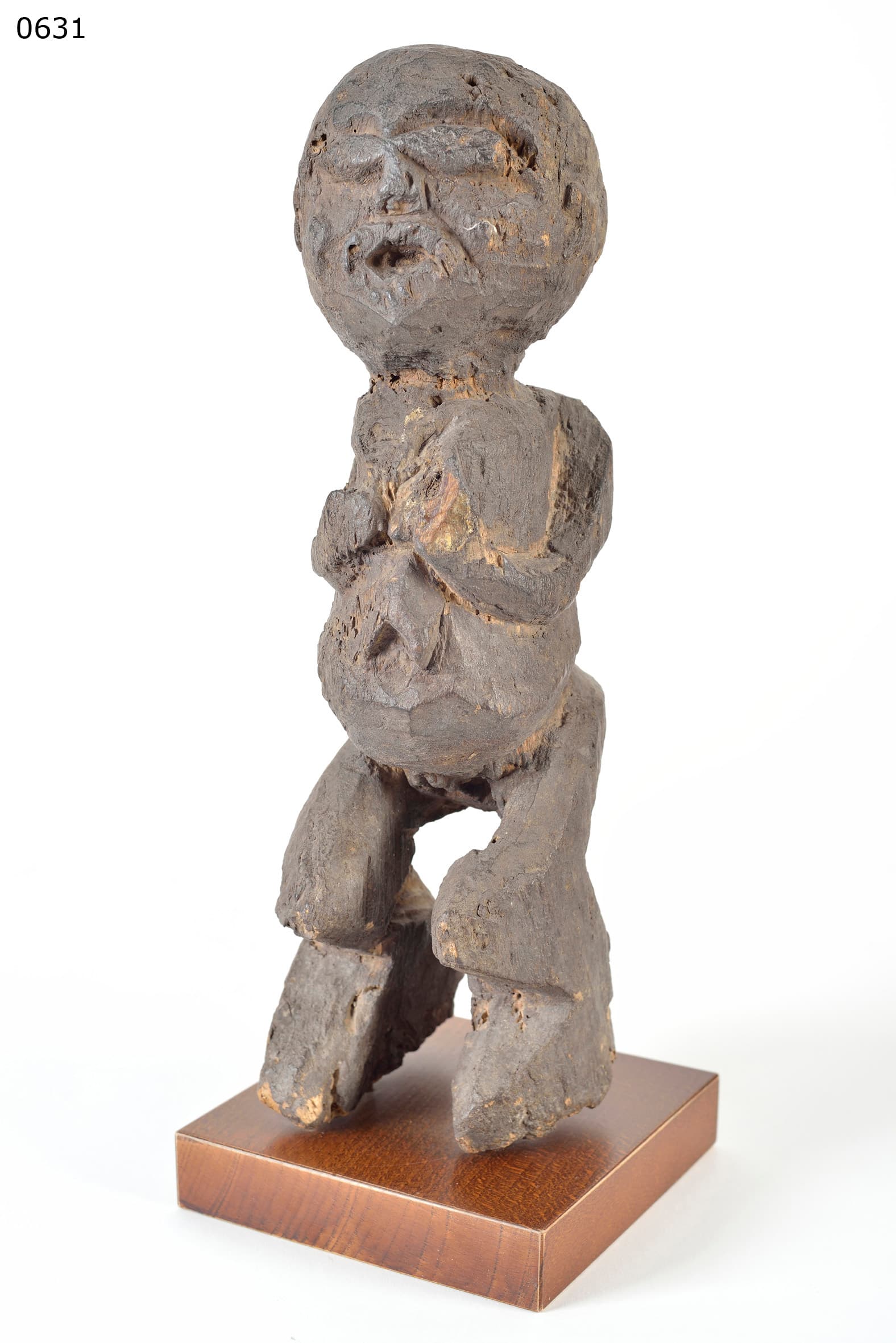
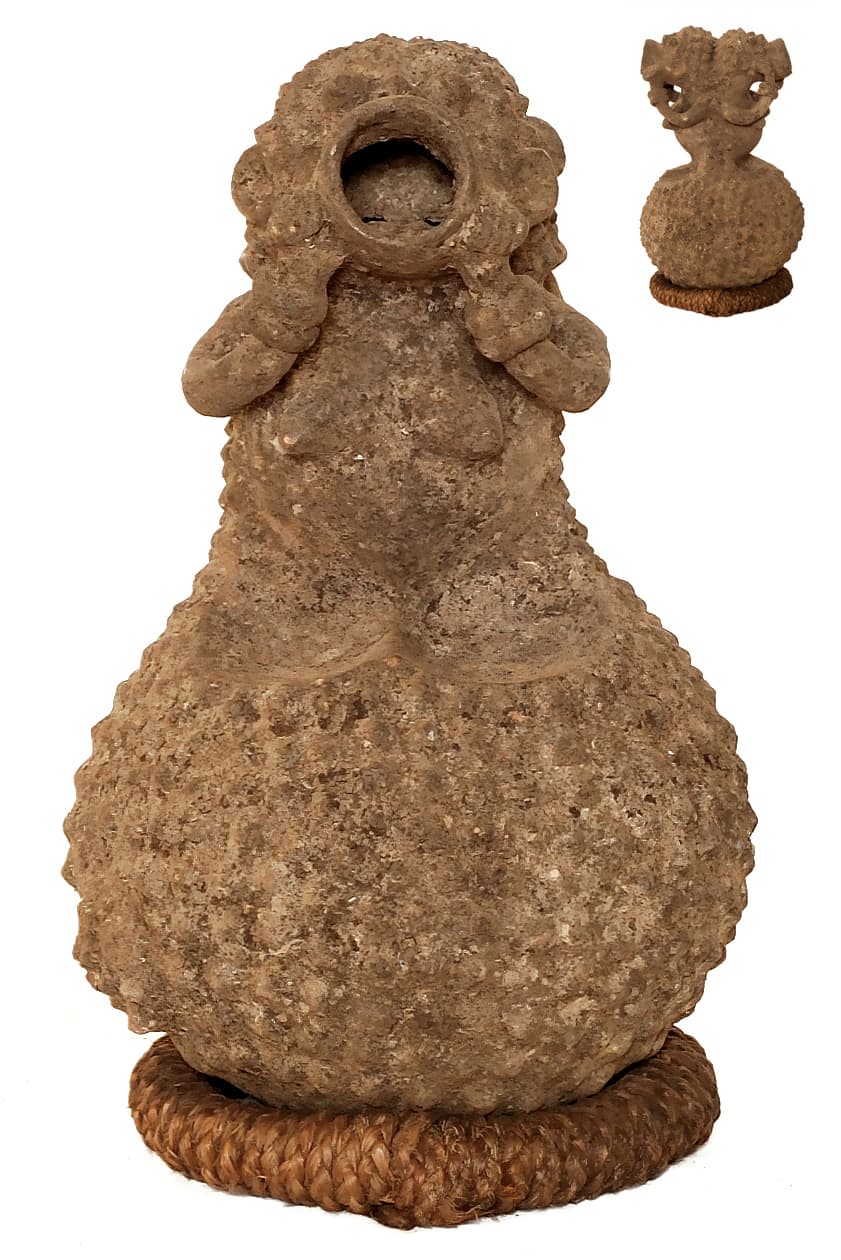
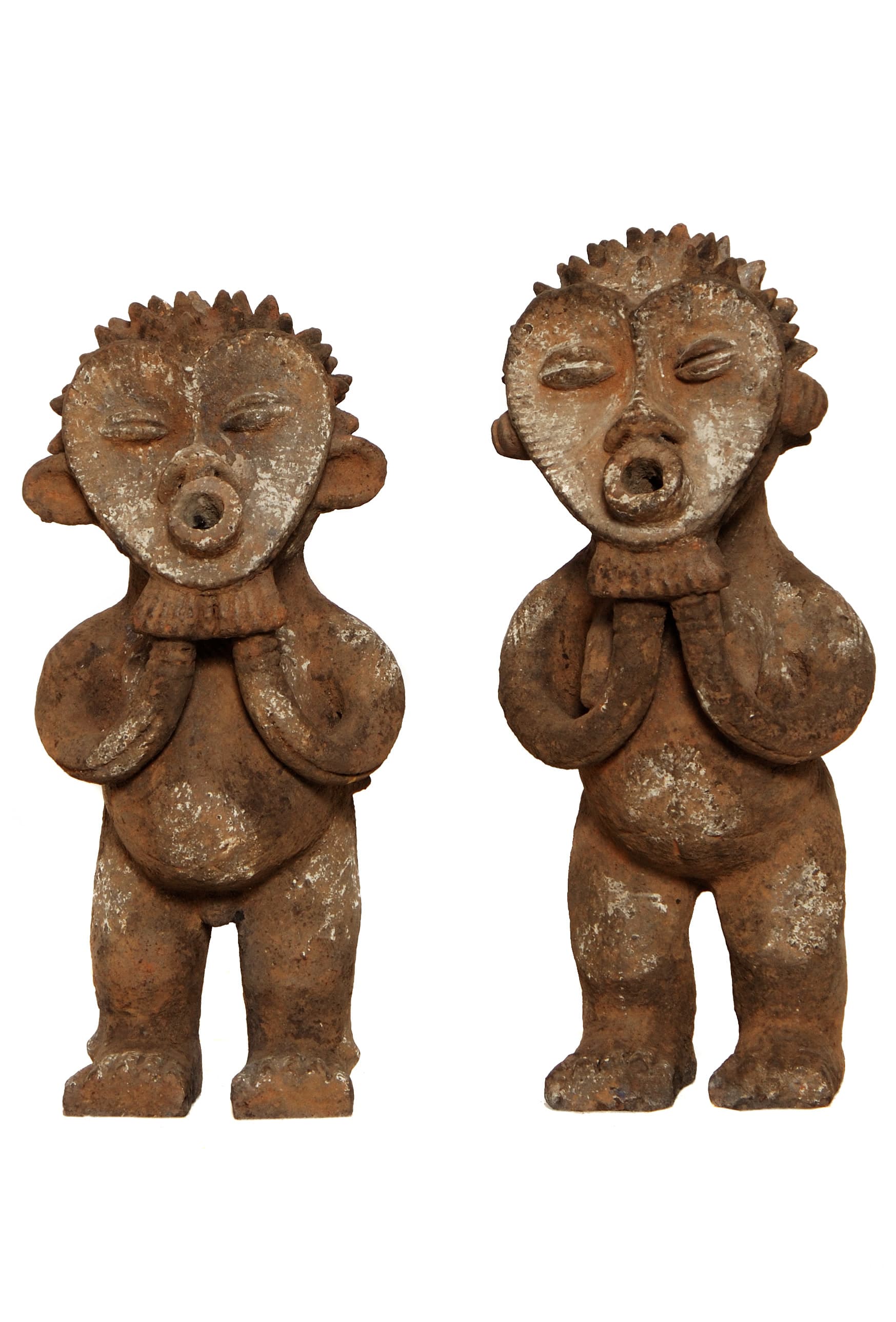
Two large (80 cm), heavily stylized terracotta figures featuring massive heads with gaping, upward-facing, beak-like mouths and protruding, tubular eyes. Their hands rest firmly on their abdomens.
1. Aesthetic Style and Zoomorphic Alertness
Originating from Foubiegouo Village, this pair pushes the Mambila aesthetic into a realm of terrifying, zoomorphic hyper-vigilance. The artist has completely abandoned human facial proportions. The mouths are extended into massive, gaping beaks, and the eyes are constructed as long, protruding tubes. This creates a deeply unsettling, aggressive visual presence. The rough, earthy texture of the clay emphasizes their connection to the raw, untamed forces of the natural world, perfectly reflecting the Mambila's intense and isolated spiritual worldview.
2. Ritual Function and Occult Sentries
By analogy with other Mambila ritual figures (compare Hornek's cross-reference to object 137), these figures likely functioned as supernatural sentries within the deeply secretive environment of Mambila cult life. They are commonly placed on altars to oversee the highly dangerous, alcohol-fueled rituals associated with chief-transformation symbolism. The tubular eyes, peering intently into the distance, symbolize an omniscient gaze capable of perceiving hidden, spiritual threats. The wide-open, beak-like mouths suggest they are ready to sound a mystical alarm or actively consume hostile energies, ensuring the absolute safety of the fetishist during his vulnerable trance state. The specific ritual function for THIS pair, however, is not explicitly documented by Hornek.
3. Patina, Material Weathering, and Age Verification
The figures bear a dense, crusted patina of soot and sacrificial residue, perfectly matching their origins in a smoke-filled ritual house. The tubular eyes and prominent beaks — the areas most exposed to the environment and handling — show a smoothed, darkened wear that contrasts with the rough, dusty texture of the torsos. This layered degradation, combined with the porous nature of the low-fired clay, is a hallmark of authentic, long-term ethnographic use.
Summary
With their tubular eyes and gaping beaks, these Mambila figures are brilliant ceramic expressions of supernatural vigilance. They stood as terrifying, ever-watchful sentries originating from Foubiegouo Village.
Written with AI assistance from the collection appraisal, object photography and our own research; editorially reviewed. Mistakes are possible — corrections are welcome. How we work →