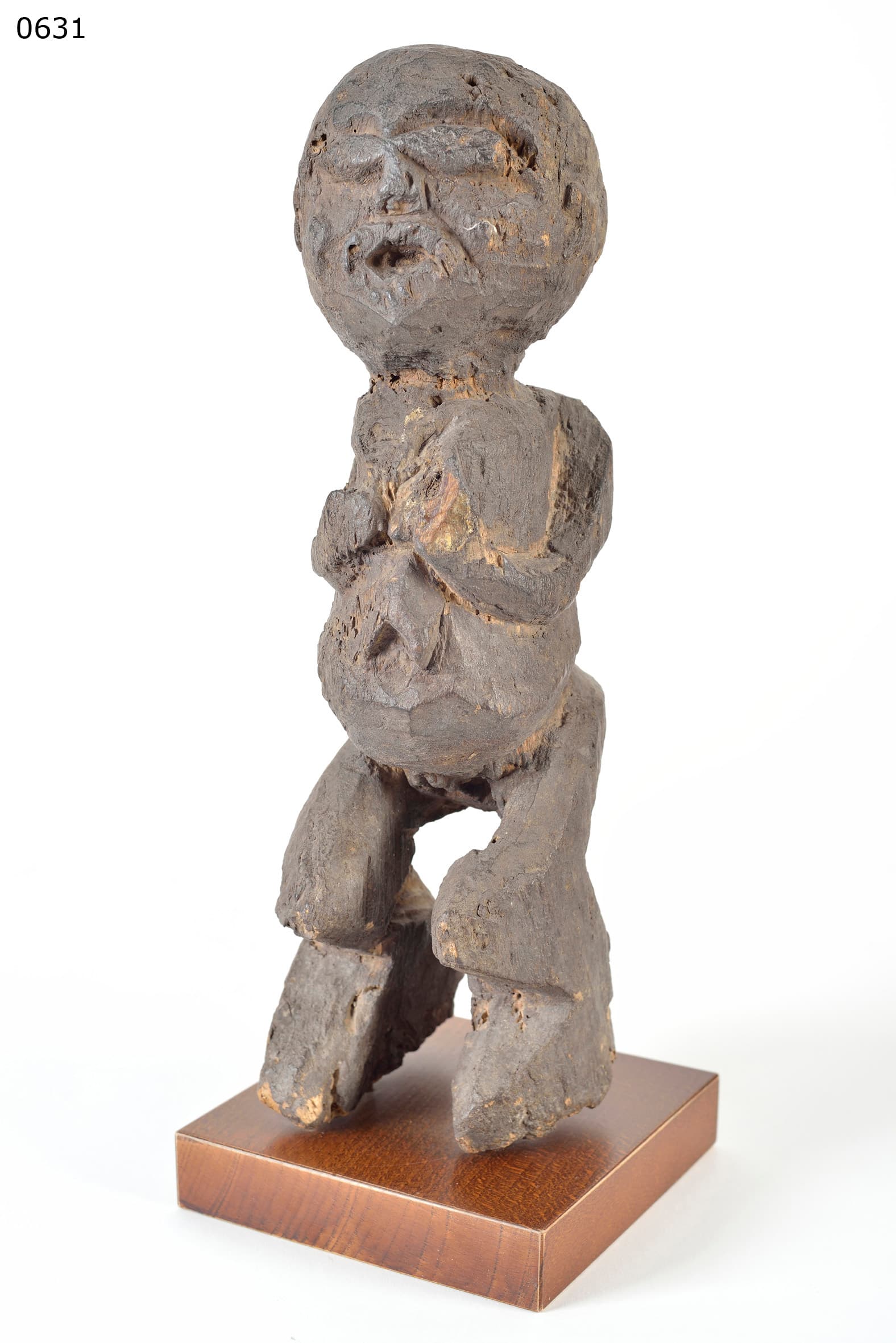
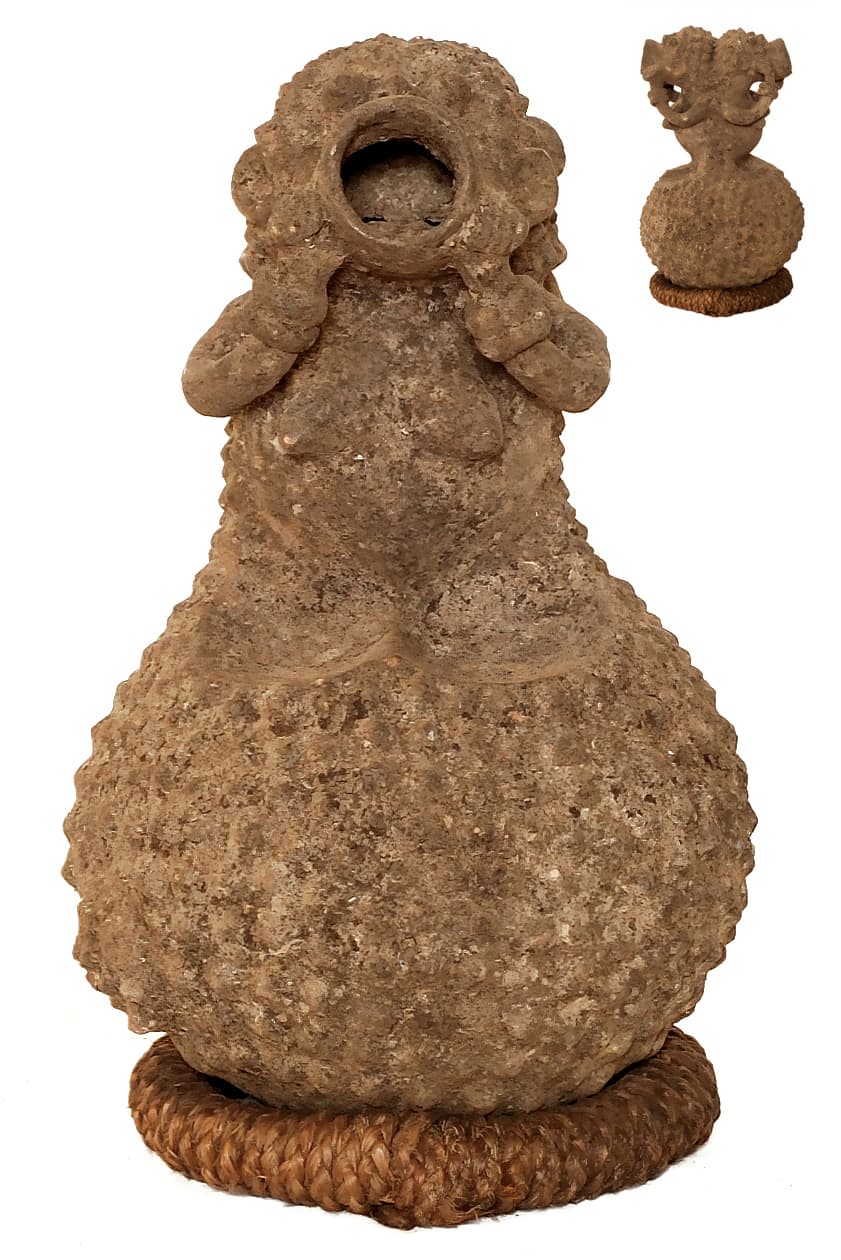
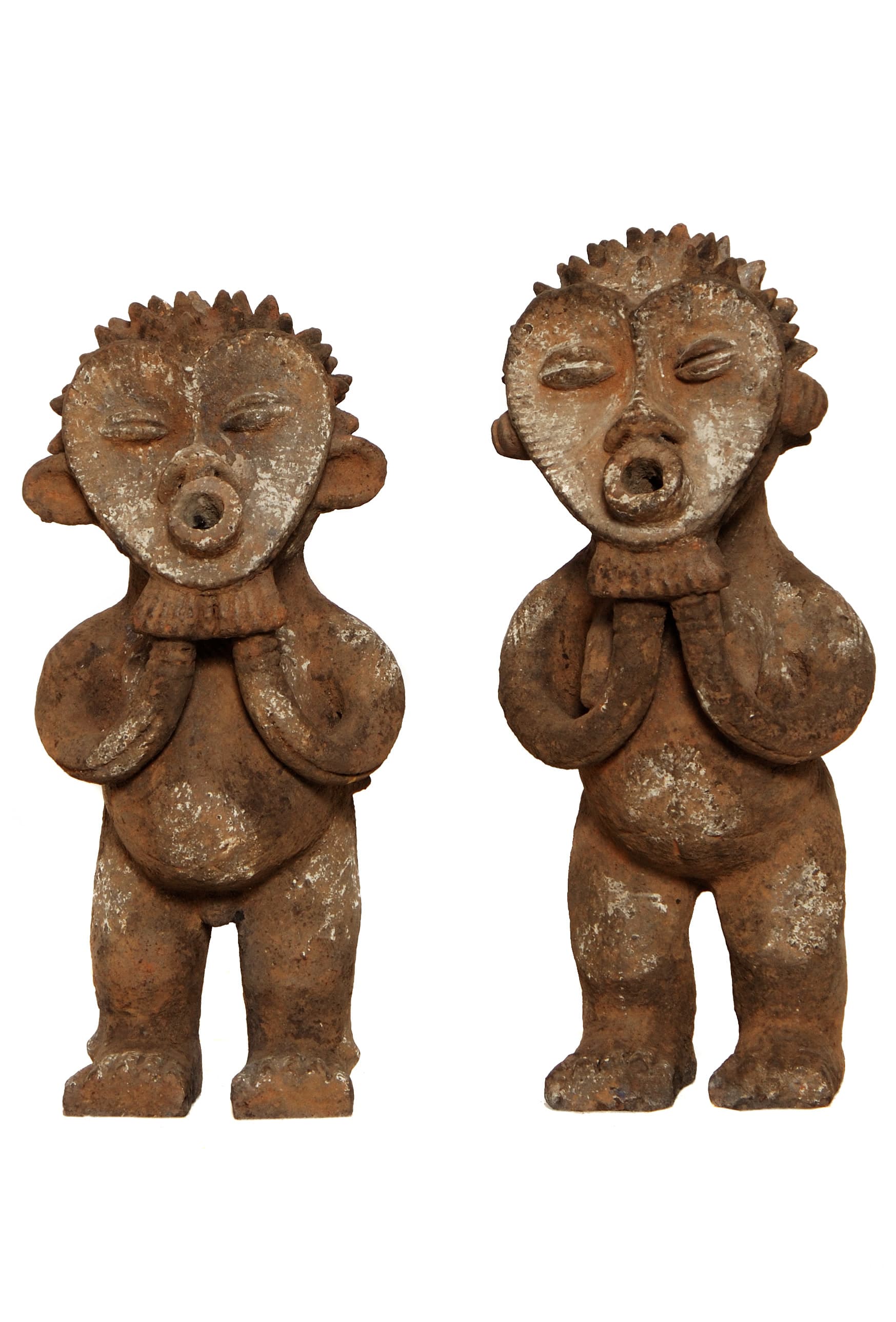
A complex, multi-figure terracotta altar piece (material to be verified). It depicts a dense cluster of large-headed, wide-eyed figures packed tightly together on a single, circular base, alongside smaller animal forms.
1. Aesthetic Style and Clustered Vigilance
Associated with the Gon Chiefdom, this altar piece is a notable example of Mambila ceramic modeling. The aesthetic utilizes an intense "horror vacui," packing multiple figures tightly together onto a single base to create a dense visual representation of spiritual presence. The figures feature the characteristic Mambila heart-shaped faces and wide, staring eyes, projecting an aura of collective observation. The rough, unpolished texture of the terracotta grounds the piece in the traditional aesthetic of Mambila ritual objects.
2. Ritual Function and the Collective Ancestors
Rather than representing a single deity, this clustered altar likely symbolizes the collective presence of the ancestors. By analogy with the individual Mambila figure pairs (Hornek cross-refs 137 & 138), this altar may have been utilized within secret society huts to oversee chief-transformation rituals. By condensing multiple observing spirits into one dense object, the ritual practitioner would seek to ensure that the ritual space was supervised by ancestral oversight, helping to contain the forces being conjured. Hornek's text does not document the specific ritual use of this particular altar.
3. Patina, Material Weathering, and Surface Wear
The entire altar is coated in a thick, dry, and highly encrusted patina. The deep crevices between the tightly packed figures are filled with accumulated soot and residues consistent with palm wine and organic libations. The outer edges of the base and the most prominent noses and brows of the figures exhibit minor chipping and abrasion, suggesting a history of use as an active object of veneration associated with the Gon Chiefdom.
Summary
This dense terracotta altar is a notable representation of collective ancestral vigilance. Its heavily encrusted, soot-stained surface is consistent with a role as a ritual observer within the Mambila Gon Chiefdom.
Written with AI assistance from the collection appraisal, object photography and our own research; editorially reviewed. Mistakes are possible — corrections are welcome. How we work →