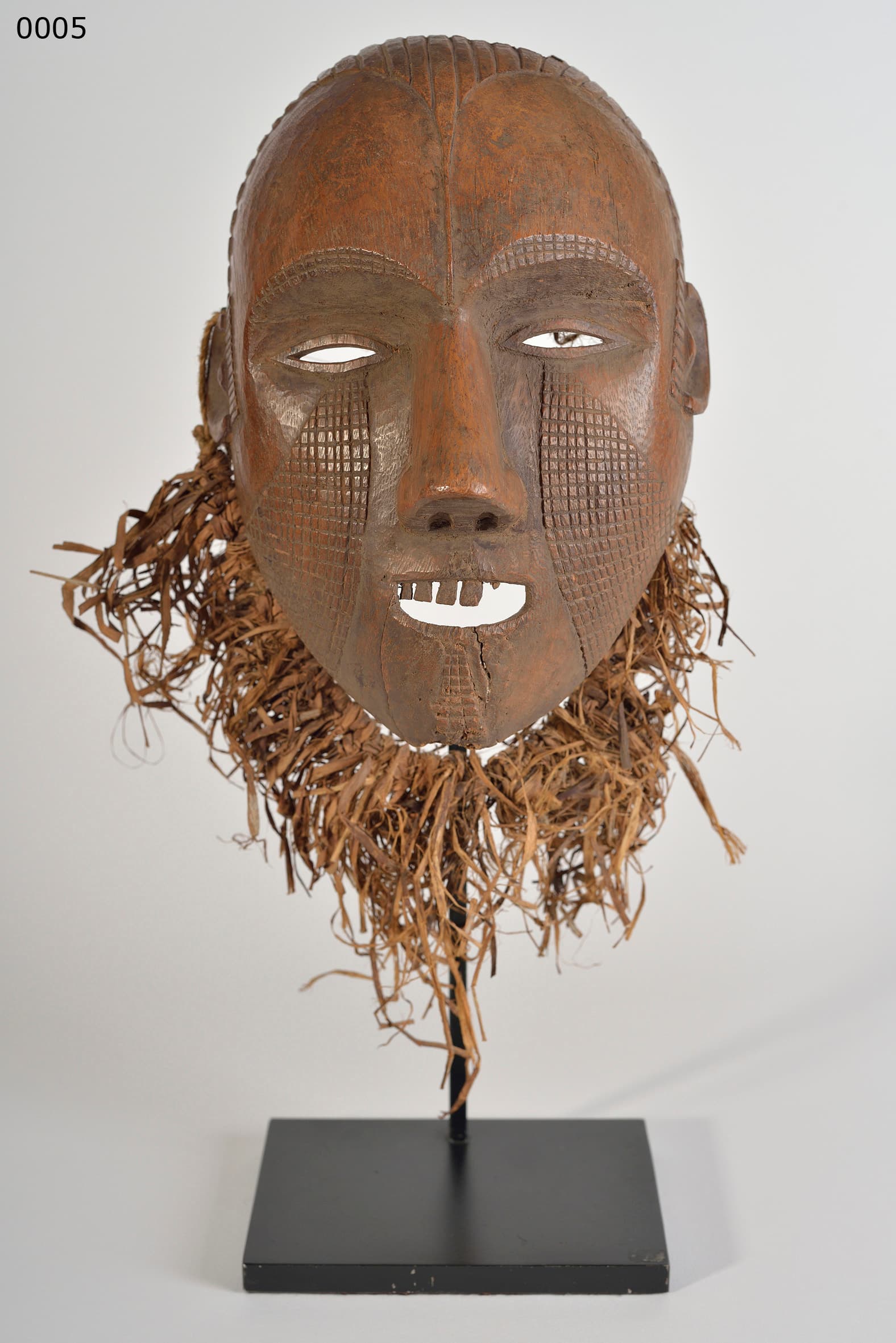
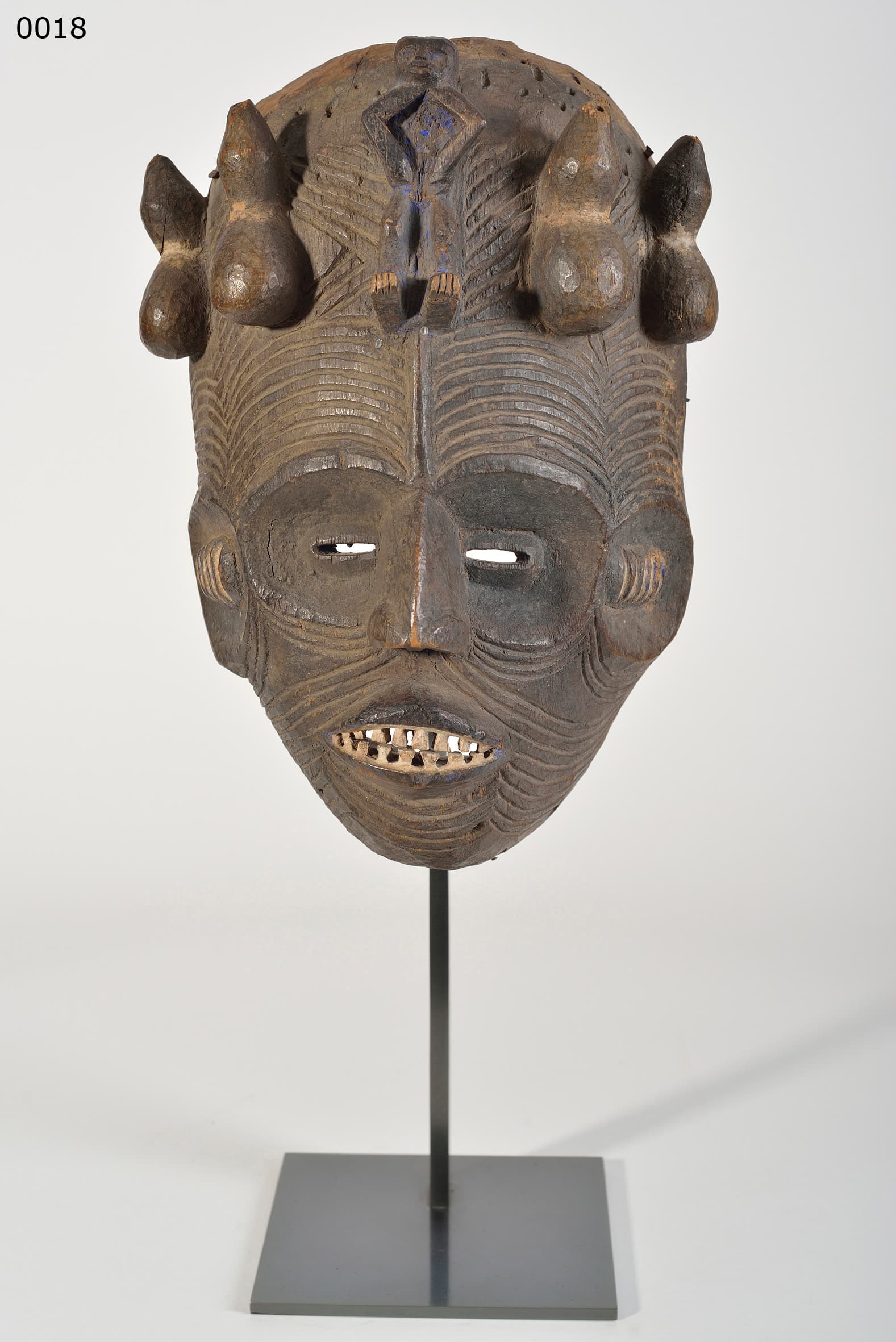
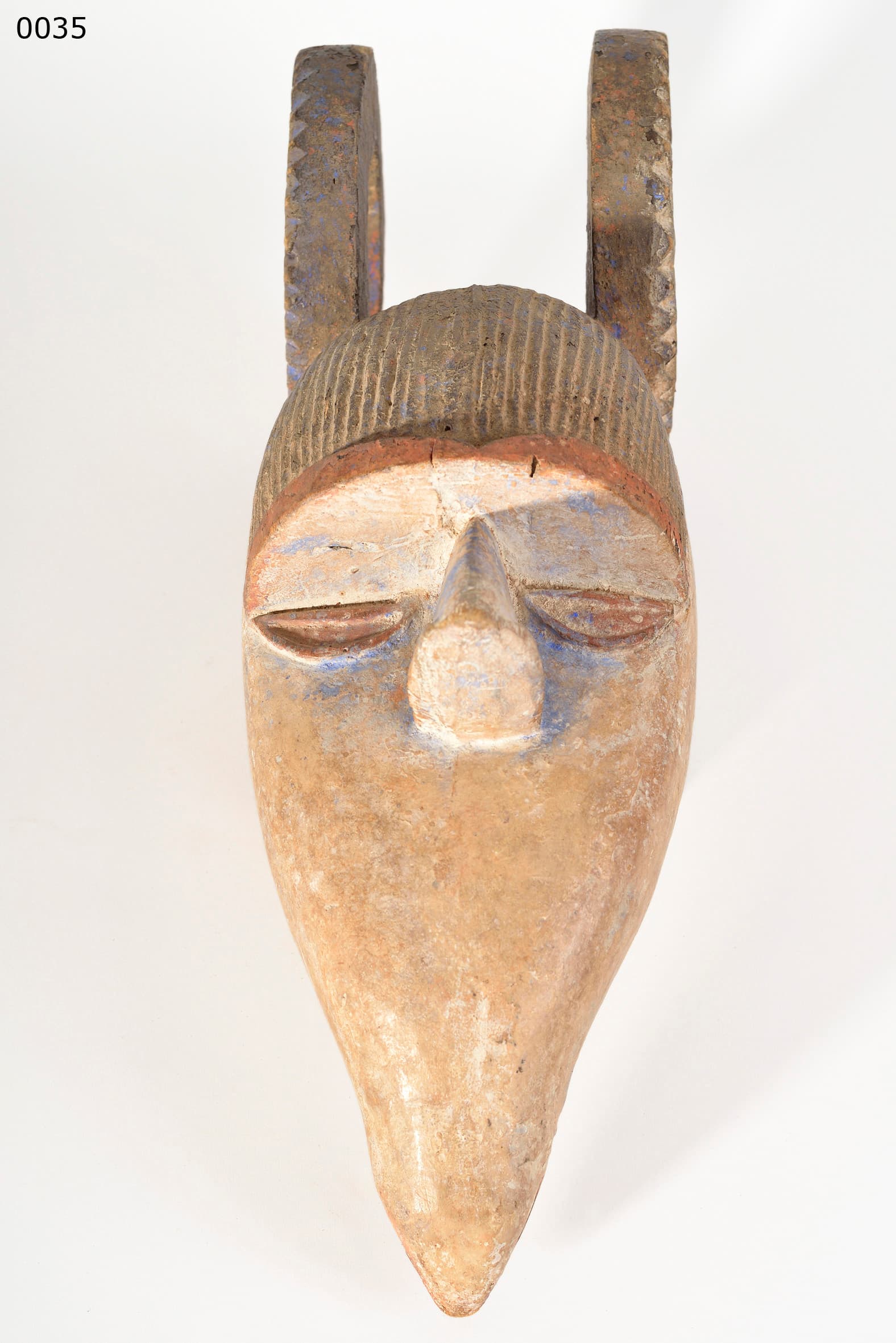
Two elaborate Agbogho Mmuo (maiden spirit) masks. They feature the classic white kaolin faces with fine features, and are distinguished by the accumulation of fabric, yarn, and beads attached to their coiffures.
1. Aesthetic Style and Individualized Competition
While these masks are consistent with the Igbo aesthetic ideal of the maiden spirit — symbolized by the white kaolin face and delicate black scarification lines — they display distinct individuality in their headdresses. The carvers and dancers have attached an array of brightly colored textiles, yarns, and trade beads. Consistent with documented accounts of the performative context, dancers actively compete against one another during festivals to possess the most colourful, striking, and visible garb, transforming the traditional wooden mask into a dynamic, mixed-media kinetic sculpture.
2. Ritual Function and the Acrobatic Celebration
According to ethnographic accounts, these "female" masks are worn by young, athletic men. During the dry season festivals and the funerals of high-ranking women, the dancers execute athletic leaps and dynamic figures to the rhythm of drumming. This performance is a complex celebration: it honours both male and female ancestors, venerates motherhood and female fertility, and symbolically extends that fertility to ensure the success of the upcoming agricultural harvest.
3. Patina, Material Weathering, and Signs of Use
The masks show wear consistent with performance. The white kaolin pigment on the faces is smudged, flaked, and stained with red earth, suggesting they were danced outdoors. The attached fabrics and yarns are faded, frayed, and stiffened with sweat and dust. The interior wooden cavities are darkened and smoothed, which is compatible with the friction and heat generated by dancers during their routines, supporting an attribution of active ceremonial use.
Summary
These Agbogho Mmuo masks are expressive examples of Igbo masquerade. Their chaotic fabric attachments and sweat-stained interiors capture the competitive, athletic energy of Nigerian dry-season festivals.
Written with AI assistance from the collection appraisal, object photography and our own research; editorially reviewed. Mistakes are possible — corrections are welcome. How we work →