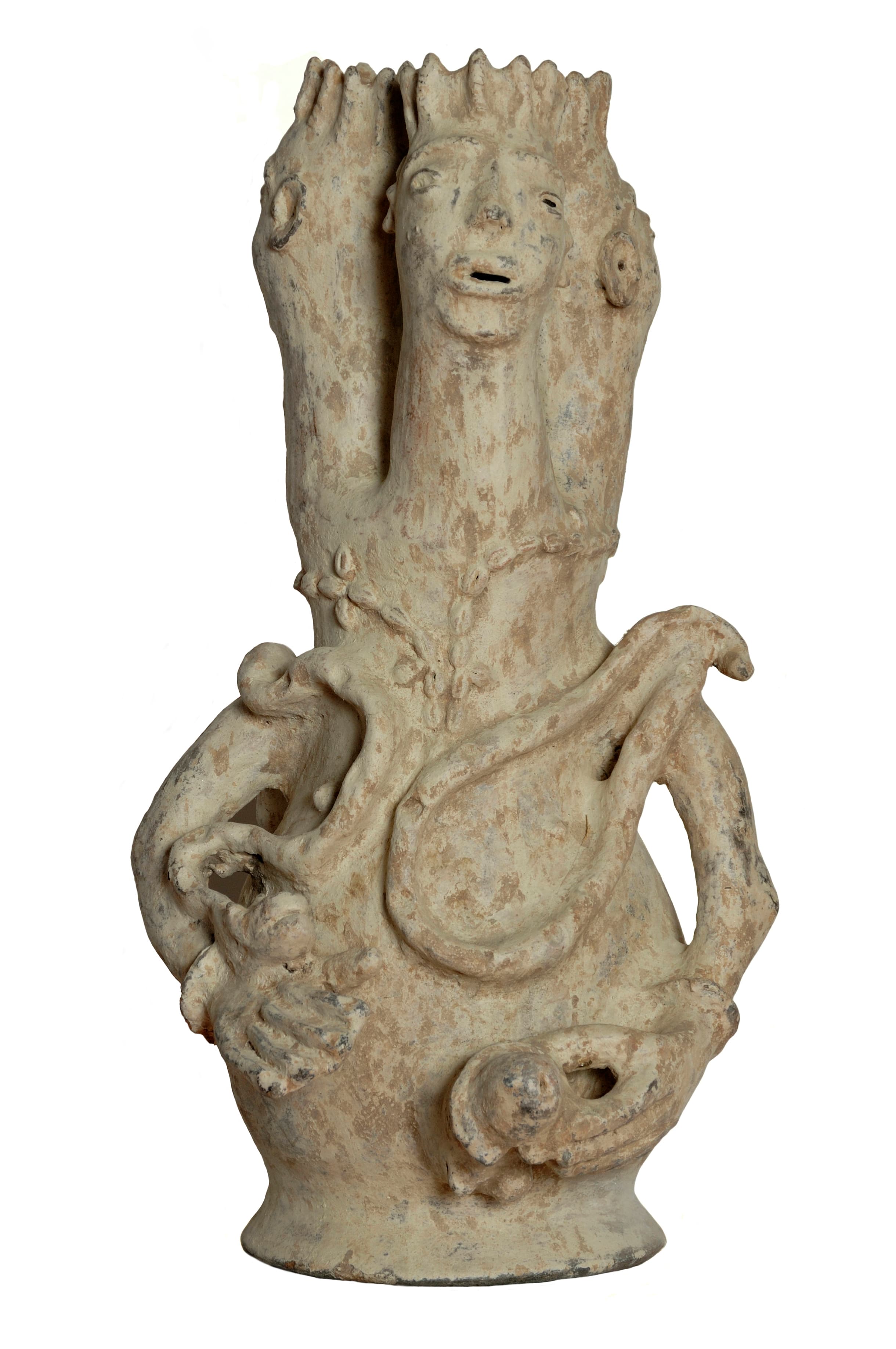
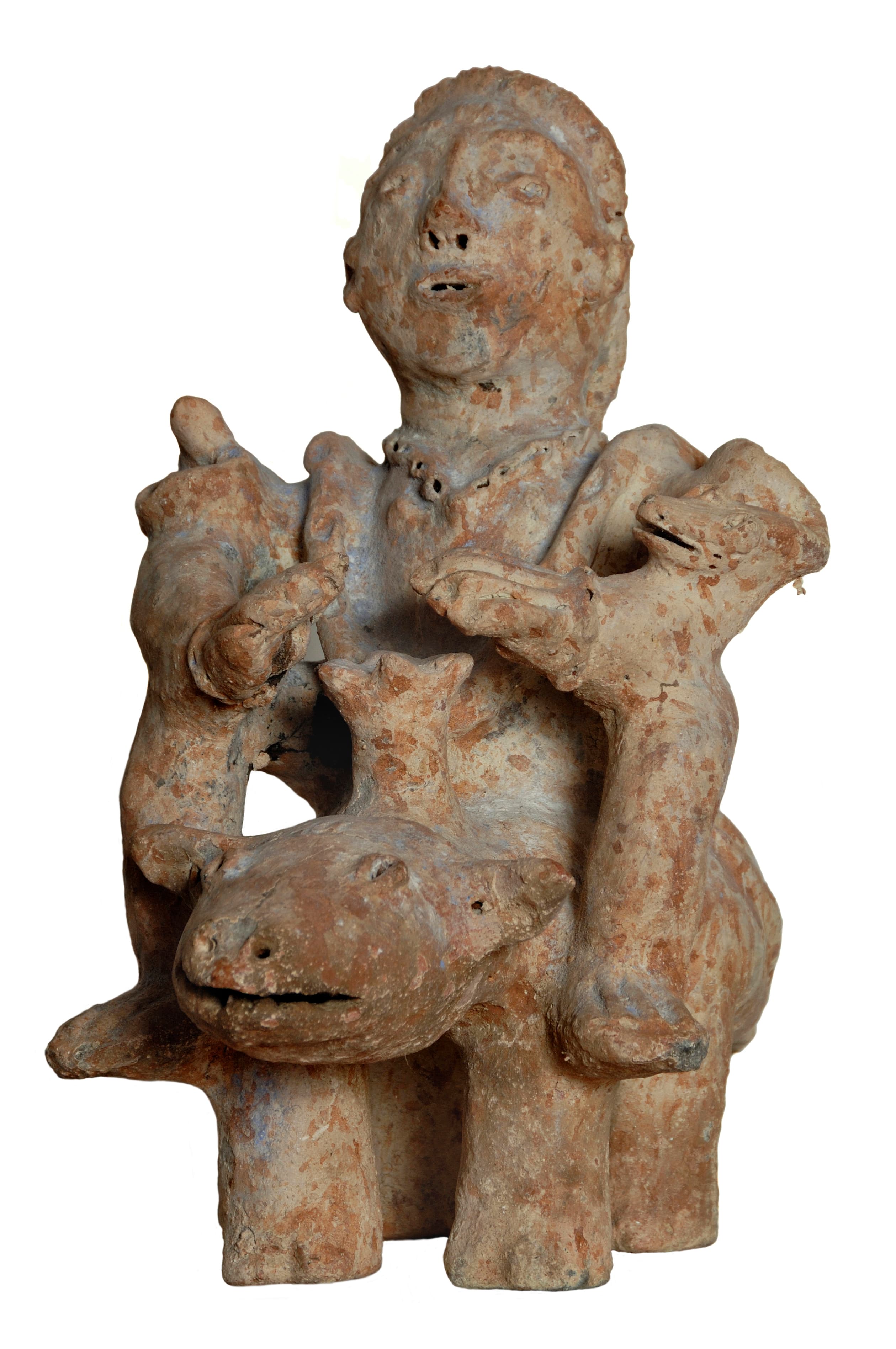
These striking terracotta torsos each feature four stylized heads facing the cardinal directions. The bodies are prominently coiled with thick, modeled snakes, and the surfaces show a dry, earthy texture with traces of ritual matter.
1. Aesthetic Style and Transcultural Iconography
Originating from the Ewe people in the Republic of Benin (Guinzin Village, Fetishist Codjo), these vessels are a powerful aesthetic manifestation of the Mami Wata cult. The design likely reflects transcultural influences, blending traditional West African clay modeling with distinct Hindu-style visual traits — Mami Wata iconography is widely understood to have absorbed elements from 19th-century European trade-prints depicting Indian deities (Drewal scholarship). The four heads facing all wind directions symbolize omniscience: an all-seeing entity from whom nothing escapes, as Hornek explicitly notes. The heavy snakes coiling around the torso are the ultimate symbol of water spirits, tying the object directly to the oceanic and riverine origins of the Mami Wata belief system.
2. Ritual Function and the Mami Wata Fetishist
These specific vessels, known as Nana Densu, belonged to a fetishist named Codjo at Guinzin Village. The Mami Wata cult, which swept across West and Central Africa in the 20th century, is fundamentally focused on the pursuit of wealth, beauty, and earthly success. These vessels were kept on the fetishist's domestic altar, acting as the physical receptacles for the water spirits. Devotees brought offerings to please the spirits and petition for good fortune. The all-seeing heads ensured that the spirit witnessed every sacrifice and monitored the community — Hornek explicitly notes that the heads "reveal distinct traces of offerings."
3. Patina, Material Weathering, and Age
The low-fired clay exhibits a dry, highly oxidized, and encrusted patina. The tops of the four heads and the bodies of the snakes display clear, authentic traces of localized offerings (likely libations of alcohol, oils, and powdered chalk). The porous nature of the clay has absorbed altar dust and ritual fluids, creating an uneven, organic crust consistent with use on Fetishist Codjo's altar.
Summary
These Nana Densu vessels are magnificent ceramic documents of the transcultural Mami Wata cult. Their omniscient, four-headed design and authentic sacrificial crusts make them vital artifacts of Beninese spiritual pursuit.
Written with AI assistance from the collection appraisal, object photography and our own research; editorially reviewed. Mistakes are possible — corrections are welcome. How we work →