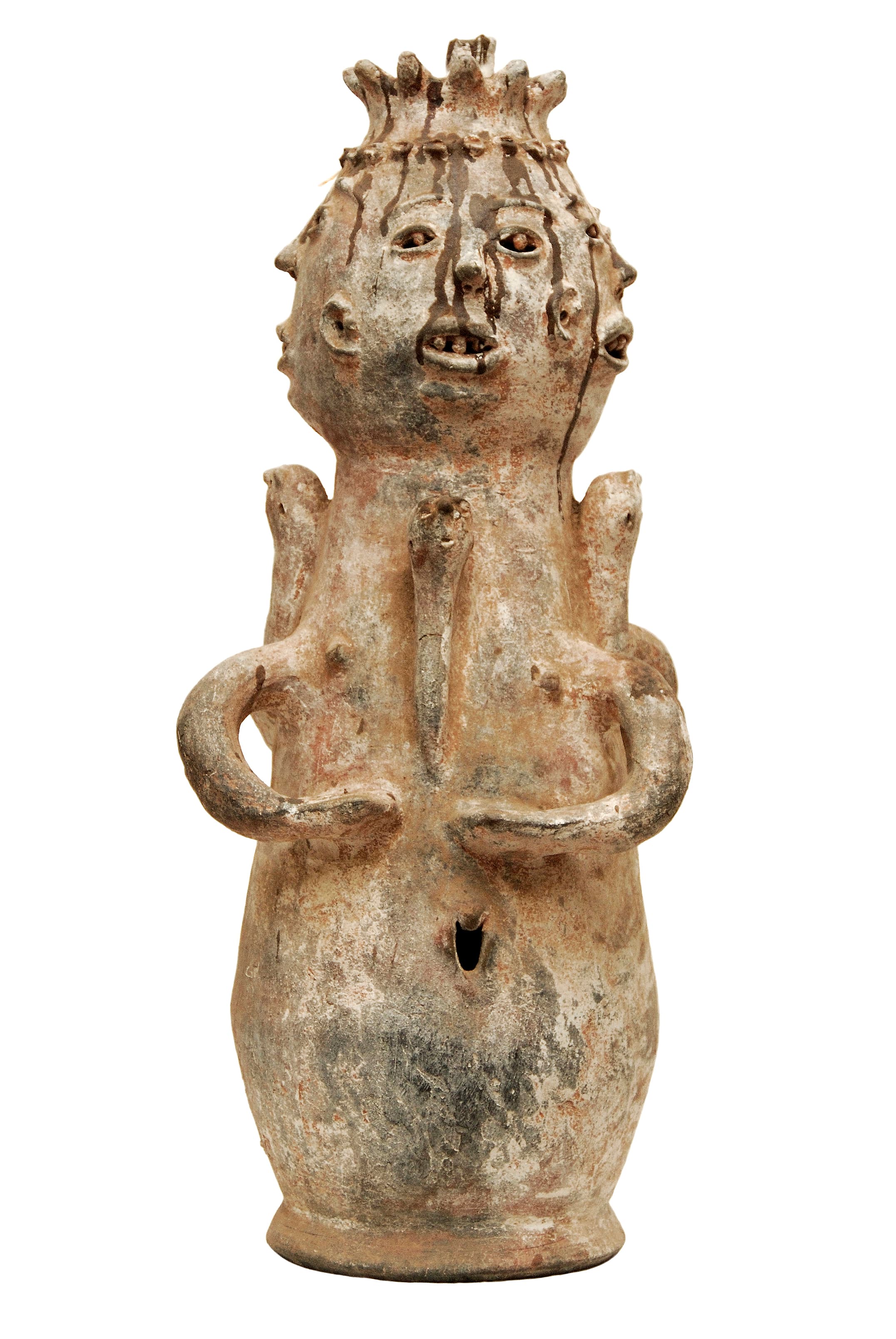
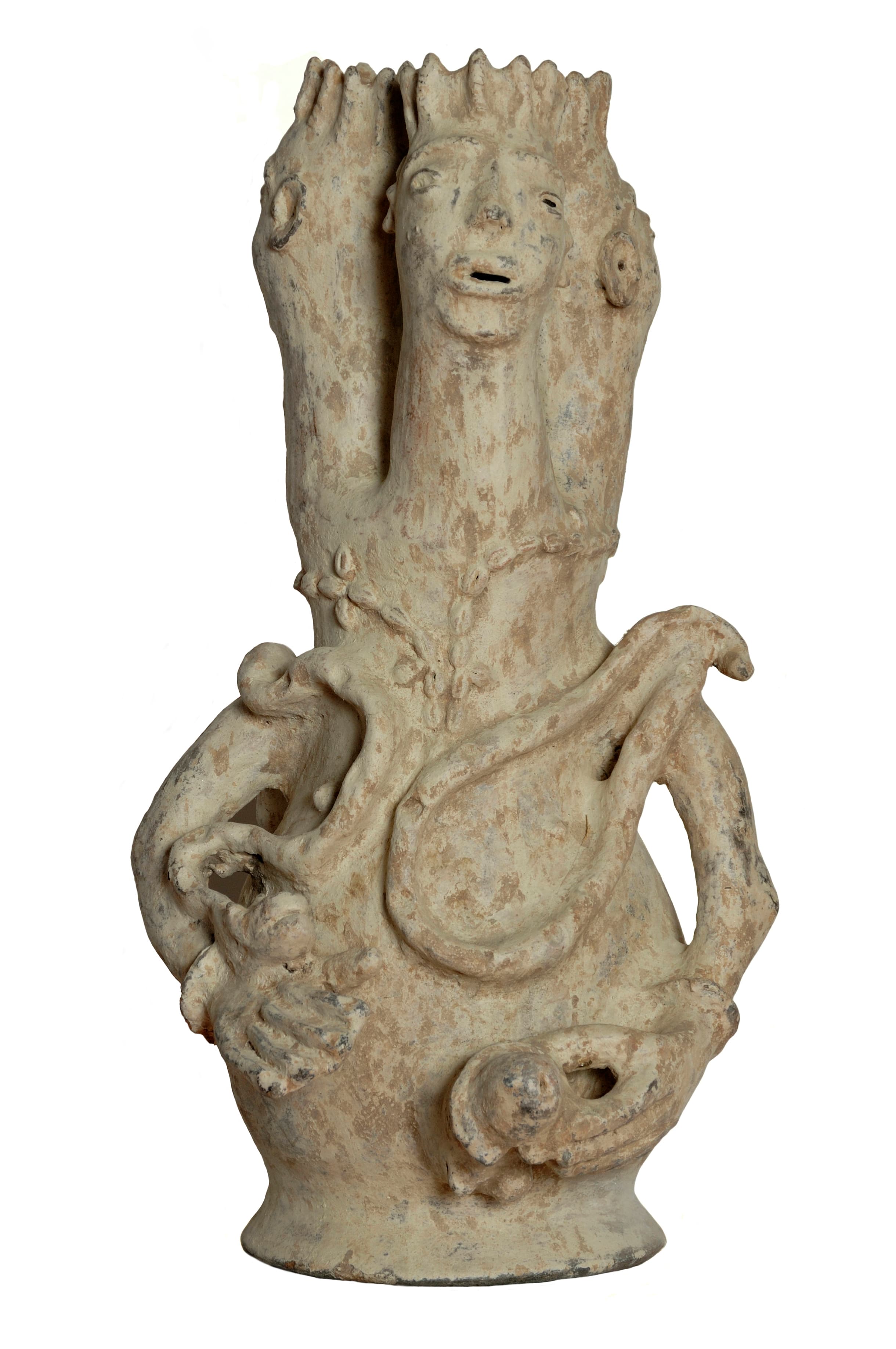
A terracotta figure about 35 cm high from the Ewe of the Republic of Benin, recorded as Ablo. A human figure with raised hands is set behind a four-legged animal with an open mouth.
1. Form and Modelling
The human figure, with a close, ridged cap of hair, looks upward, lips and nostrils pierced. A necklace of small beads lies at the throat, and the arms are lifted forward, one hand extended, the other holding a small animal that perches on the forearm. In front of the body stands a heavy four-legged animal, its head pushed forward with an open mouth and small eyes, in the manner of a hippopotamus or crocodile. A small crown-like spout rises between the animal and the figure.
2. Surface
The reddish-brown clay carries a thin, pale grey-blue coating that has worn away in speckles and patches, leaving the surface lively and matt.
3. Context
The collection catalogue sees in the figure the typical attributes of the Mami Wata cult. The name is a pidgin English term roughly meaning "mother of the water". Belief in water spirits, usually symbolised by water snakes, crocodiles or fish, is old in African traditions, while the cult itself took shape at the beginning of the twentieth century. Mami Wata stands for wealth and beauty, and gifts are offered to her on household altars. The figure comes from the village of Guinzin and the fetish priest Codjo.
Summary
A terracotta figure of the Ewe in Benin, recorded as Ablo: a human figure with raised hands set behind a four-legged animal, linked to the Mami Wata cult.
Written with AI assistance from the collection appraisal, object photography and our own research; editorially reviewed. Mistakes are possible — corrections are welcome. How we work →