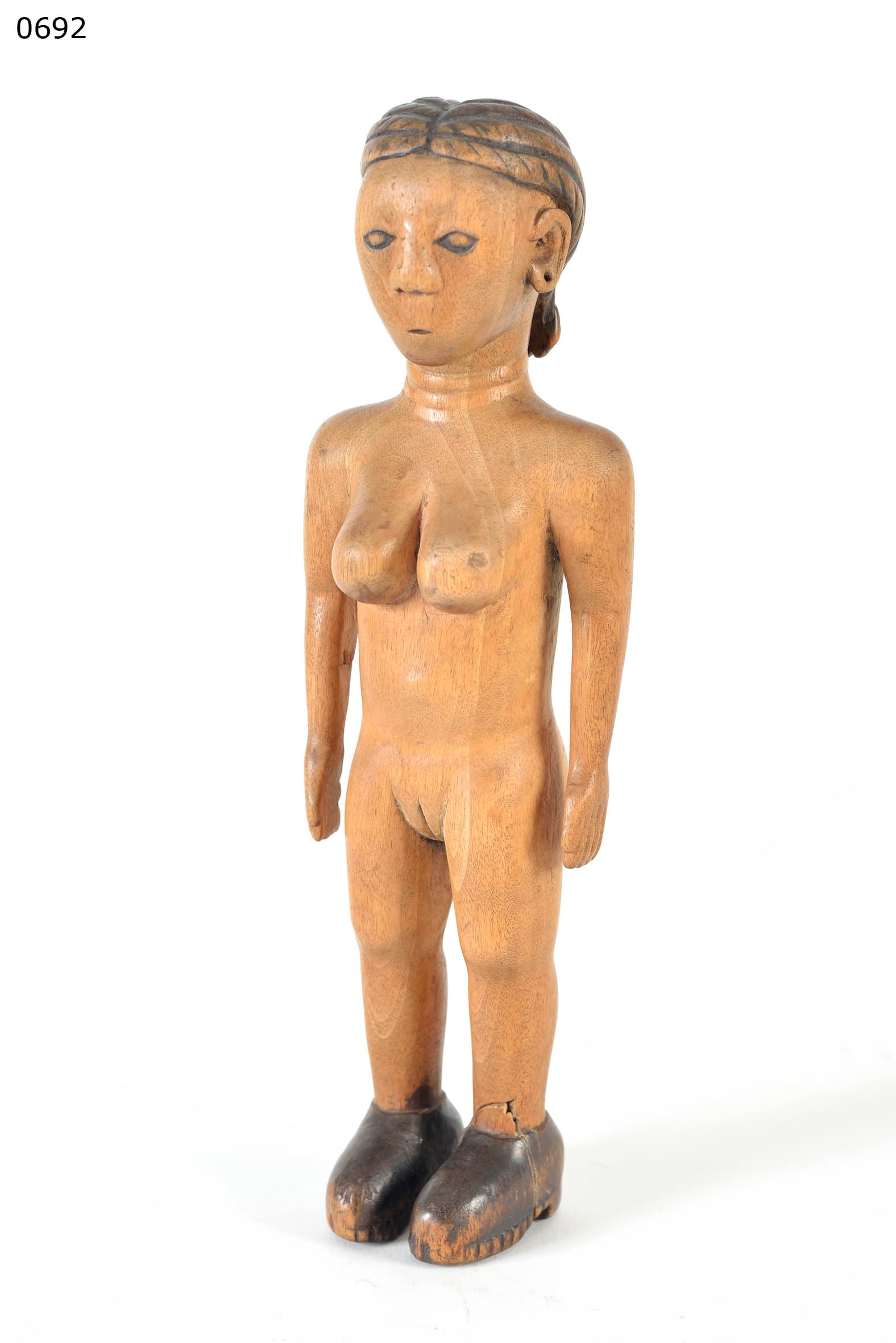
This standing wooden figure presents a highly rigid, upright posture, with separated arms hanging parallel to the torso, simple, blocky feet painted black, and a flat, stylized face topped with a painted black coiffure. The light-colored wood is dry, showing gentle, smoothed handling wear.
1. Aesthetic style and regional traits
Known as a Venavi, this figure represents the distinct carving tradition of the Ewe people of Togo. In stark contrast to the extreme, flat-headed abstraction of the neighboring Akan Akua'ba, the Ewe Venavi favors a stiff, blunt, and highly abbreviated naturalism. The strict frontality, the rigidly separated arms hanging straight down, and the blocky, unyielding legs project an aura of immobility and permanence. The carver has utilized a bright, light-colored wood accented with localized black pigments, creating a stark, graphic presence.
2. Ritual function and secret society context
Like the Yoruba, the Ewe have a high rate of twin births and revere twins as powerful, demanding spirits. When a twin dies, the Venavi is carved to act as a surrogate body for the deceased male child's soul. The mother or the surviving twin must care for the wooden doll exactly as they would a living child — feeding it, bathing it, and clothing it. If the Venavi is neglected, the restless spirit of the deceased twin is believed to cause illness or death in the family.
3. Physical patina and age indicators
The surface of this Venavi shows wear consistent with traditional maternal care. The wood is not commercially polished; it possesses a dry, lightly oxidized surface. The high points of the face, the chest, and the rigid arms exhibit a soft, localized friction patina from being held, washed, and tucked into the mother's wrapper. The applied black pigment on the feet and head has deeply faded and chipped, compatible with an early 20th-century origin and tactile ritual life.
Summary
This Ewe male Venavi is a representative, poignant example of West African twin worship. Its strict, rigid geometry and handling-worn patina are consistent with an active and well-preserved object of Togolese maternal devotion.
Written with AI assistance from the collection appraisal, object photography and our own research; editorially reviewed. Mistakes are possible — corrections are welcome. How we work →