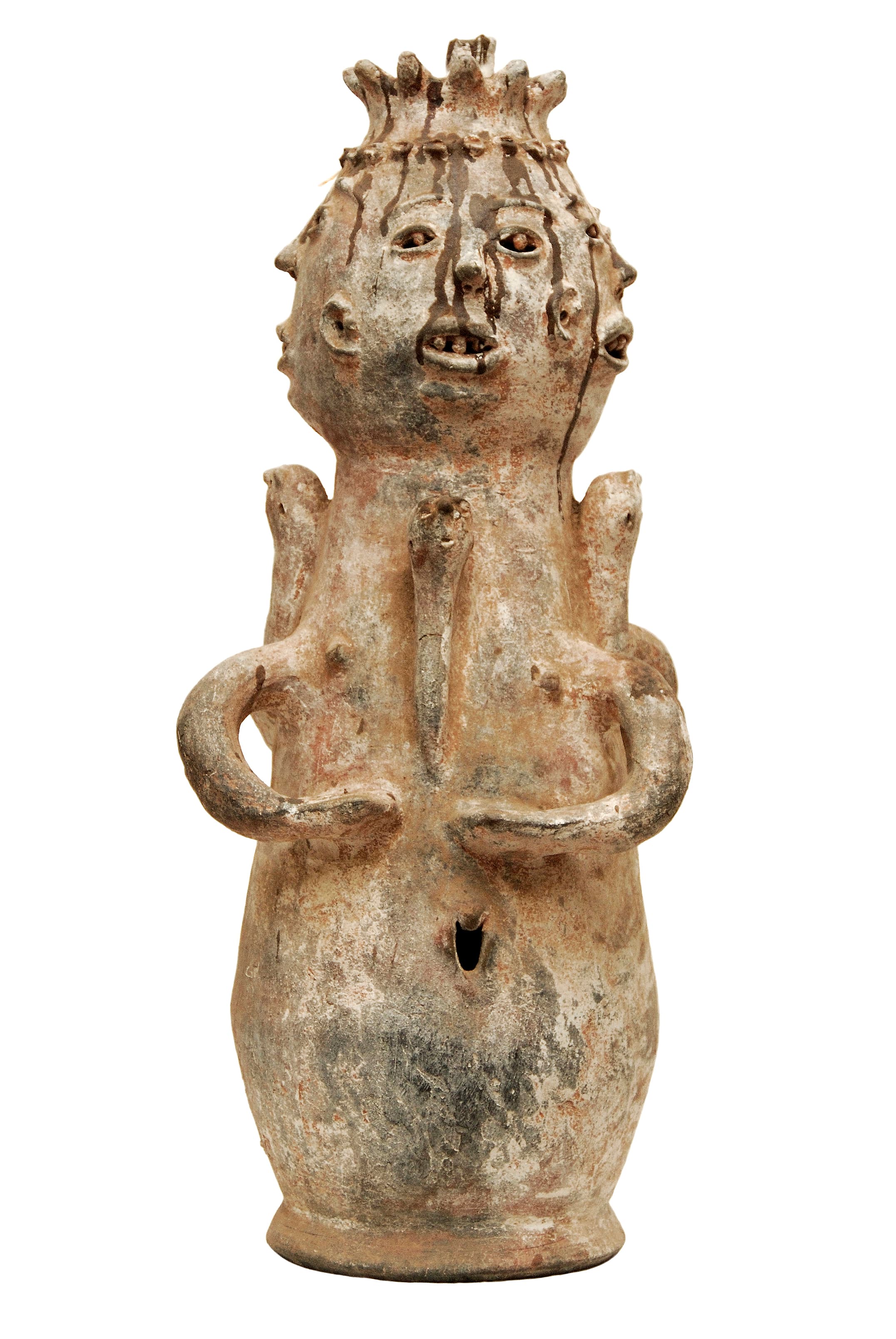
A highly unusual, light-colored terracotta or modeled clay male torso. It features a dramatically erect phallus, thick snakes coiling around the chest, and three distinct faces pointing in different cardinal directions.
1. Aesthetic Style and Transcultural Hinduism
Originating from Fetishist Codjo in the Guinzin Village of the Republic of Benin, this figure represents a radical, transcultural aesthetic shift. It belongs to the Mami Wata cult, which actively absorbed visual influences from 19th-century European and Indian trade prints. As Hornek explicitly confirms, the figure "clearly shows Hinduistic design features." The three-headed design is a direct stylistic borrowing from Hindu iconography (such as depictions of Brahma or Shiva). This imported aesthetic is seamlessly merged with traditional West African symbols of power, specifically the thick, coiling snakes representing water spirits, and the aggressive, overt depiction of male virility and fertility.
2. Ritual Function and the Omniscient Spirit
Named Nana Densu (the male counterpart in the Mami Wata pantheon — compare paired female Nana Densu vessels 195A/B + 196 also from Codjo), this figure was a highly personal and powerful cult object for the fetishist. As Hornek directly documents, the three heads facing different directions serve a distinct supernatural purpose: they render the spirit omniscient, ensuring that "it perceives everything and that nothing can escape its views." The erect member symbolizes untamed male strength, while the snakes connect the figure to the water. Placed on an altar, it received sacrifices and prayers from locals seeking wealth, fertility, and protection.
3. Patina, Material Weathering, and Age
Patina depends on which material reading holds. If clay/terracotta (likely, matching paired female vessels): the surface is very dry, powdery, lacking the dark soot of a communal fire pit, instead bearing a chalky, light-colored patina. Traces of historical offerings — dried libations or powdered kaolin — are visible in the recesses between the coiling snakes and the faces. The fragile nature and subtle edge wear confirm its survival as a carefully guarded, stationary altar object.
Summary
This Nana Densu figure is a spectacular, three-headed manifestation of the transcultural Mami Wata religion. Its fusion of Hinduistic omniscience and West African fertility magic makes it a premier artifact of Beninese spiritual evolution.
Written with AI assistance from the collection appraisal, object photography and our own research; editorially reviewed. Mistakes are possible — corrections are welcome. How we work →