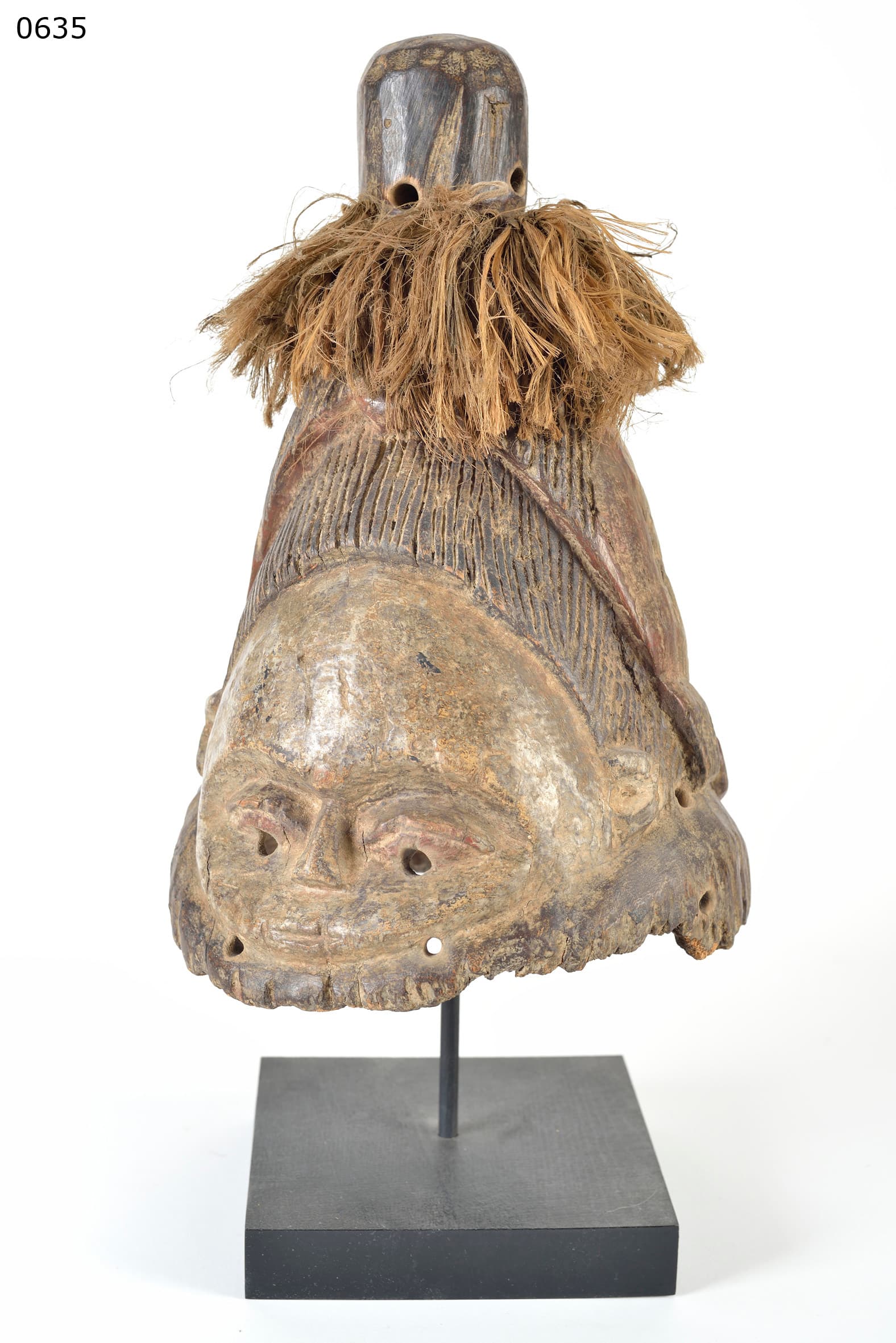
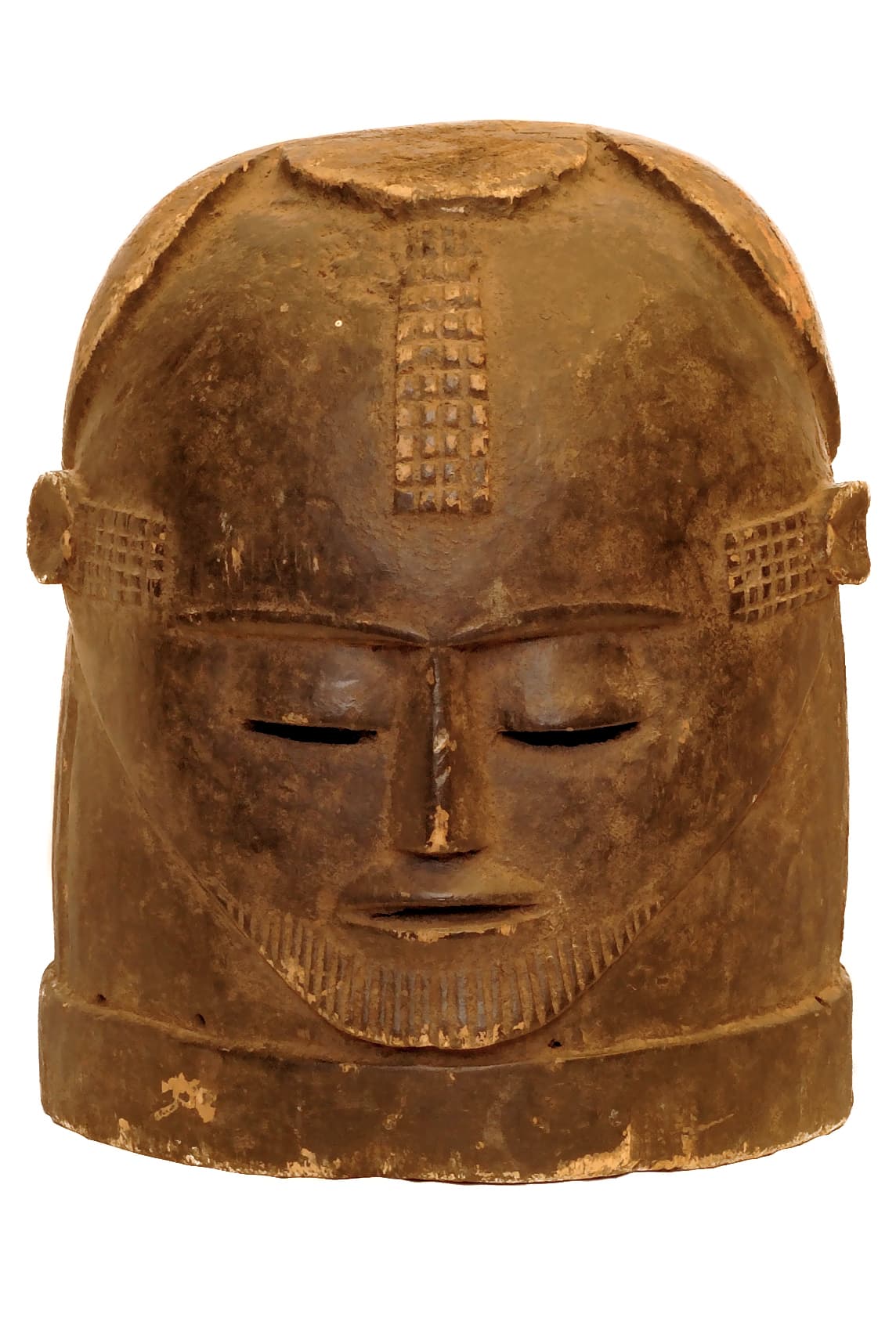
Painted wooden dance masks of the Igala, about 30 cm high, from the region of the Niger and Bénoué rivers in Nigeria. The mask shown has a pale face, black cheek marks and a coiffure of black-and-white ridges.
1. Form and Painting
The face is oval and calm, with closed lips painted red, a long narrow nose and almond-shaped eye openings outlined in black. Arched black brows meet a short vertical line at the centre of the forehead, and groups of diagonal black lines on the cheeks and temples mark scarification patterns. The chin is painted black as a beard.
The coiffure is the most striking part. Seven raised bands, painted black and carved with a herringbone pattern, run from the front hairline over the crown, separated by narrow white ridges. A red zone with a serrated white edge frames the head at the sides, and small ears are set low against it.
2. Use and Context
According to the collection catalogue, the Igala live near the great Niger and Bénoué rivers and have kept their varied cult practices, with the burial cult at their centre. These ceremonies can be very extensive, depending on the standing of the deceased, and are held in several stages. Before they begin, a young cockerel is sacrificed, and its trail of blood shows whether the spirits are prepared to accept the ritual. The catalogue describes the masks as very colourful and regularly touched up with paint, and presumes that they originated from a family organization.
3. Surface
The paint on the face is chalky and crackled in places, with small losses where the pale layer has lifted. The black and red areas are glossier and stronger in colour.
Summary
Brightly painted Igala dance masks, here with a pale face, black marks and a ridged coiffure, tied to the burial ceremonies of the Niger and Bénoué region.
Written with AI assistance from the collection appraisal, object photography and our own research; editorially reviewed. Mistakes are possible — corrections are welcome. How we work →