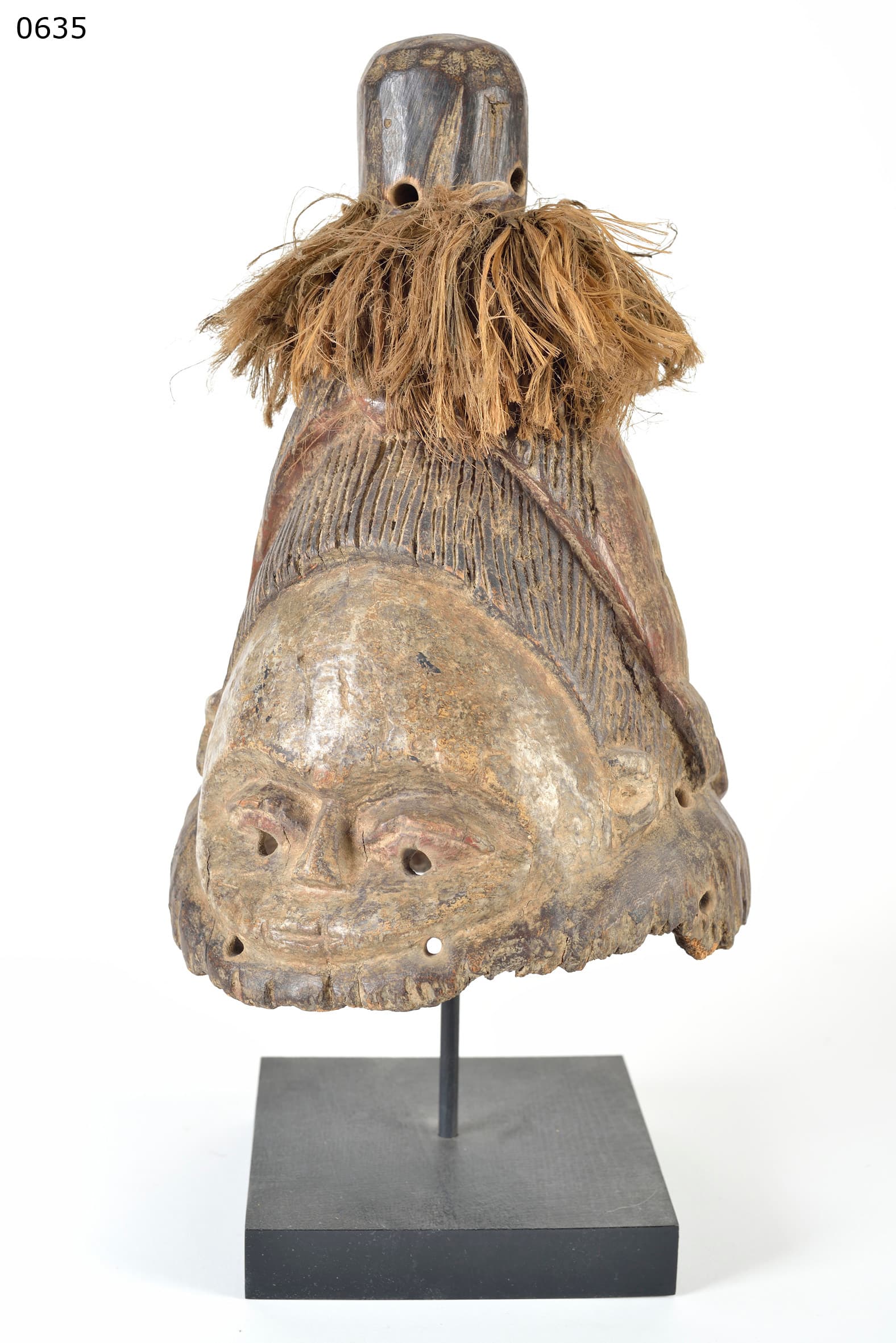
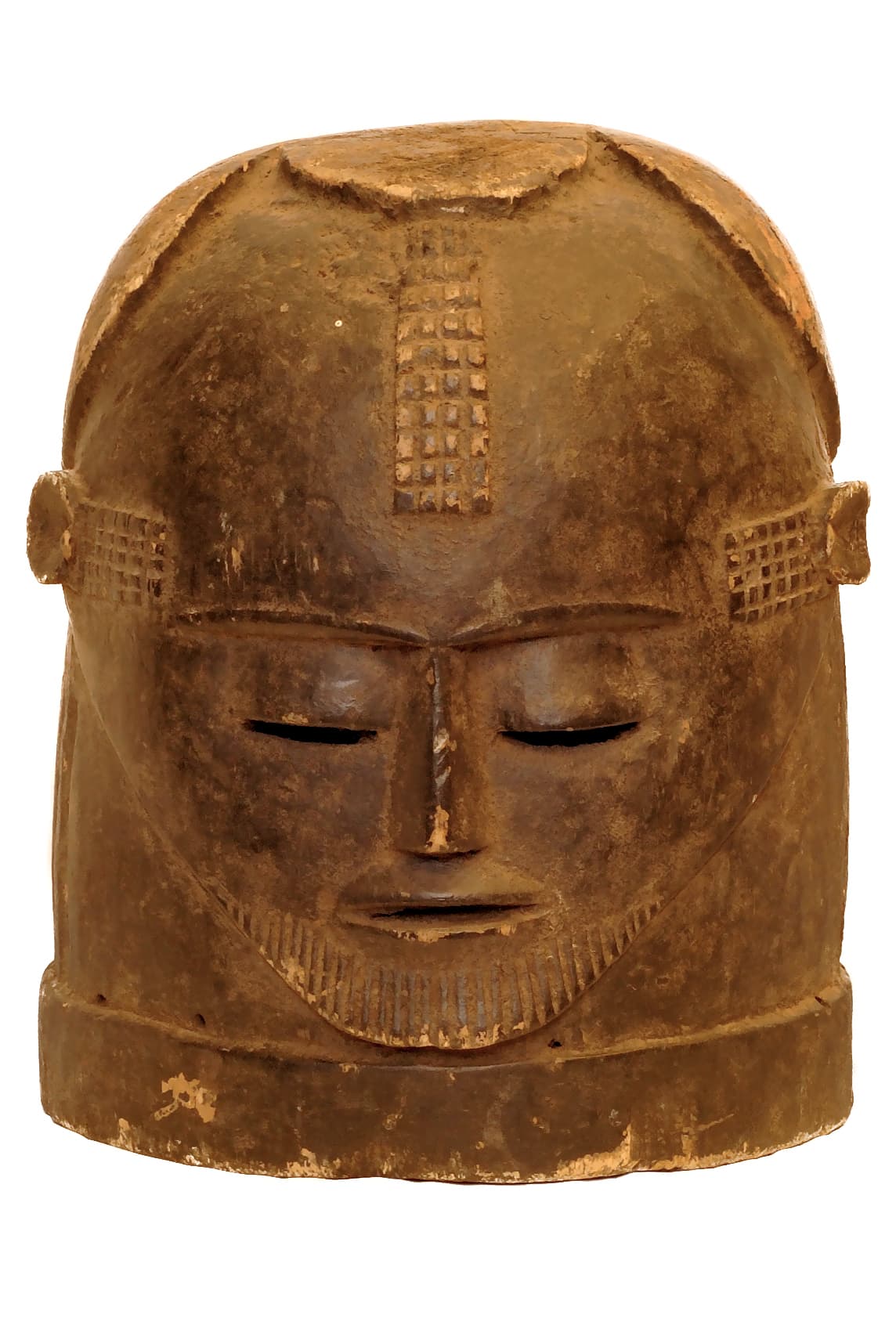
A starkly minimalist Igala wooden bird (1st half 20th C., 43 cm) from Nigeria — massive heavy beak, simplified blocky body, and thick columnar legs, the surface heavily abraded with a washed pale patina, traces of kaolin, and deep structural cracking.
1. Zoomorphic abstraction of the benue confluence
The Igala, located near the confluence of the Niger and Benue rivers, have produced a distinct corpus of highly abstract heavy wooden carving.
- Brutalist Geometry: This avian figure abandons naturalism entirely — reducing the bird to an assembly of pure brutalist geometric volumes.
- Immovable Power: The sheer mass of the oversized beak and the thick unyielding legs projects immovability and latent power — starkly contrasting with the delicate avian carvings found in other Nigerian cultures.
2. Avian familiars and witchcraft
In the complex Igala spiritual landscape, birds are highly charged liminal creatures.
- Sky-Navigating Danger: Because they navigate the sky, birds are intimately associated with the unpredictable dangerous power of "the mothers" (witches).
- Diviner's Familiar: A heavy imposing wooden bird like this was likely utilized by a diviner or traditional healer as a familiar — a spiritual ally deployed to intercept, combat, or reverse malevolent witchcraft directed at the community.
3. Ritual washing and desiccation
The surface tells a story of intense cyclical ritual use.
- Repeated Kaolin Anointing: The highly abraded pale patina suggests the figure was repeatedly coated in sacred white chalk (kaolin) and subsequently washed or exposed to the elements.
- Natural Checking: Continuous anointing and weathering, combined with deep natural fissures running through the solid blocks of wood, authenticate its early-20th-century creation and active ritual lifespan.
Summary
A striking exercise in heavy brutalist geometry, this Igala bird figure captures the raw spiritual danger associated with avian iconography in Nigeria. Its deeply checked washed kaolin patina makes it a compelling and rare ethnographic antiquity.
Written with AI assistance from the collection appraisal, object photography and our own research; editorially reviewed. Mistakes are possible — corrections are welcome. How we work →