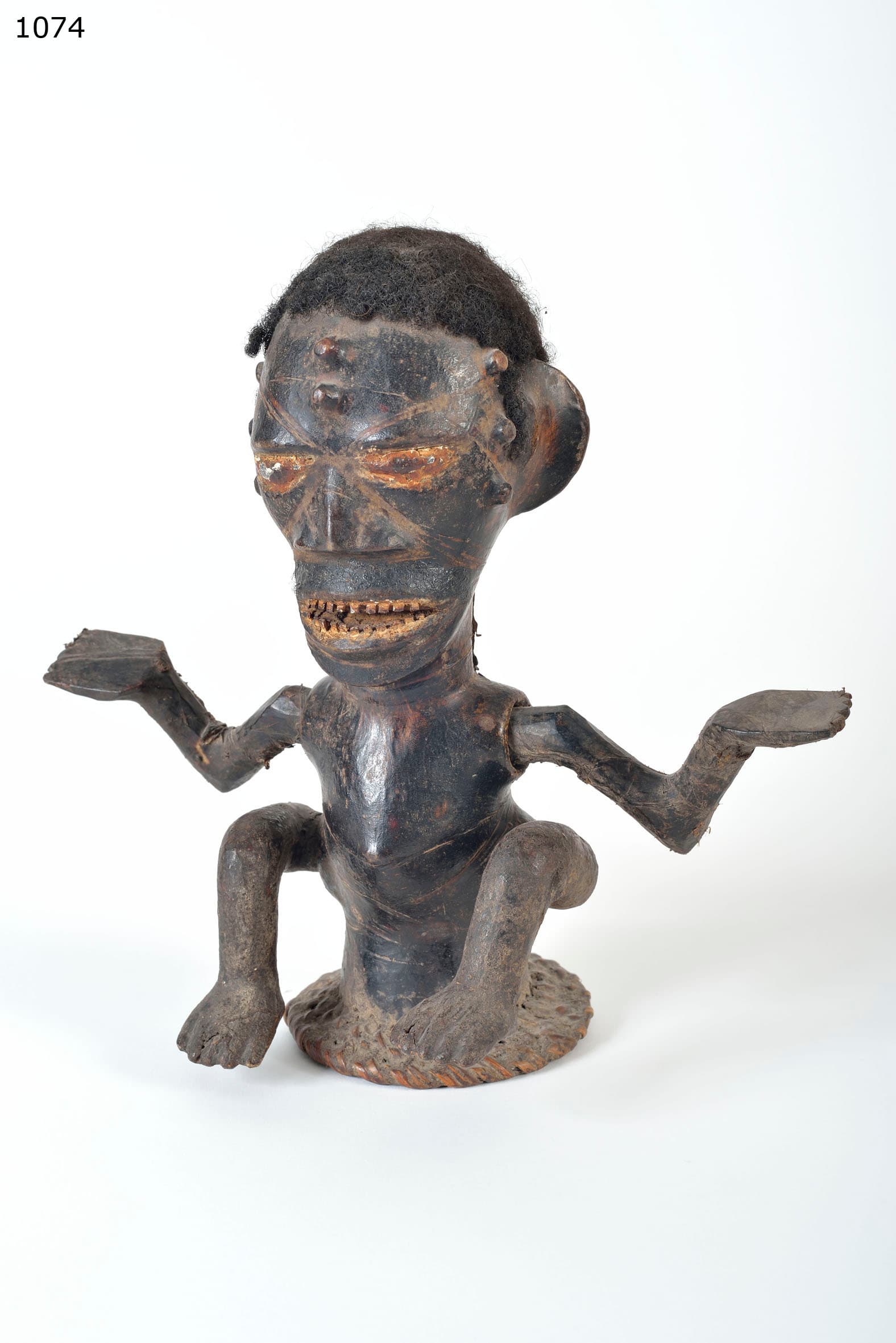
EKOI Dance Crest Mask (Cross River Region)
A striking dance crest mask from the Ekoi (Ejagham) people of Nigeria's Cross River region. Modeled with expressive realism, the head features an open mouth, prominent facial scarifications, and a series of perforations along the hairline, resting upon a ringed, cylindrical neck. The piece exemplifies the region's distinctive tradition of covering carved wooden cores with animal leather.
1. Aesthetic Style and Material Composition
The Ekoi are renowned for their highly realistic crest masks, characteristically formed by stretching animal leather—mostly goat, but occasionally antelope—over a carved wooden core. This technique imparts a lifelike, skin-like texture to the sculpture. The artist has shaped the underlying wood and manipulated the leather to create distinct facial features, including an open, chanting mouth and prominent scarification marks on the forehead. The rounded head is punctuated by a series of circular holes along the hairline, which likely served to attach organic materials such as hair, feathers, or a woven veil. Historical sensationalism often wrongly attributed the use of human skin from defeated enemies to these masks, alongside unfounded cannibalistic tendencies; however, the material is strictly animal hide.
2. Ritual Function and Ancestral Spirits
This crest mask is associated with the secret societies of the Ekoi. During performances, such crests were worn atop the head in smaller groups, while the dancer's body was completely concealed beneath a cape made from plant fibers or narrow-band cotton fabric. This concealment ensured the anonymity necessary for society members. These masquerades were central to critical community events, including initiation ceremonies, festivals for the dead, sowing, and harvesting. The appearance of the mask served to conjure and manifest ancestral spirits, establishing balance and harmony between the earthly realm and the spiritual forces governing it.
3. Patina, Surface Condition, and Age
The leather surface exhibits a varied, earthy patina with reddish-brown hues and darker, blackened areas that suggest historical environmental exposure and ritual use. The hide has desiccated and hardened over time, tightly gripping the wooden core beneath, with a dry and textured surface characteristic of aged leather. The cylindrical, ringed neck shows a significant, irregular break at the base, indicating its historical detachment from a larger structural base or the mechanical stress of active ritual use. The pierced holes around the cranium remain intact, with one wooden peg or knot still visible at the crown, though most of the original organic attachments have degraded.
Summary
This Ekoi dance crest is an expressive example of Cross River sculptural realism. Its leather-covered wooden form and earthy patina reflect the rich traditions of Nigerian secret societies and their ancestral masquerades.
Written with AI assistance from the collection appraisal, object photography and our own research; editorially reviewed. Mistakes are possible — corrections are welcome. How we work →
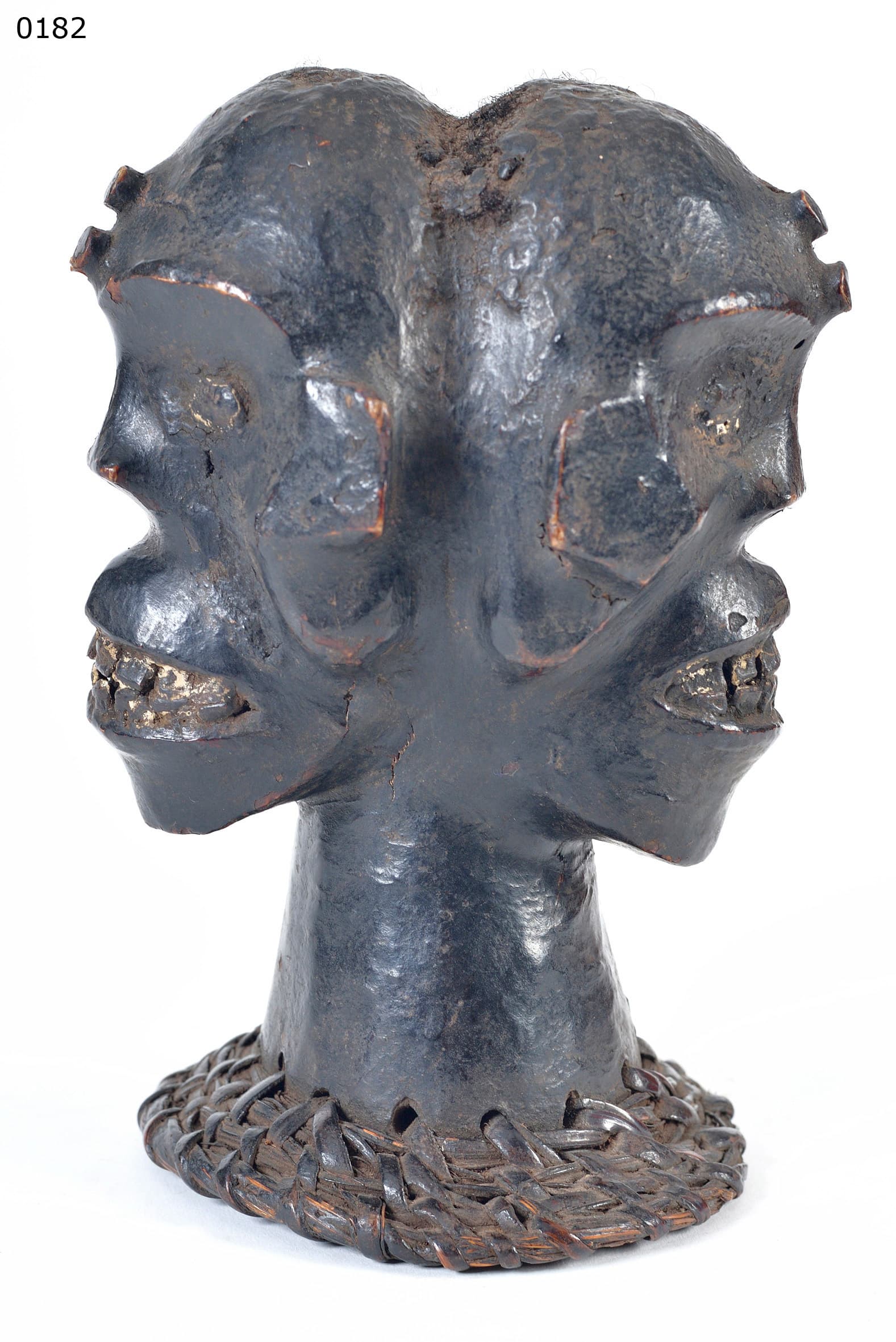
Janus head crest mask
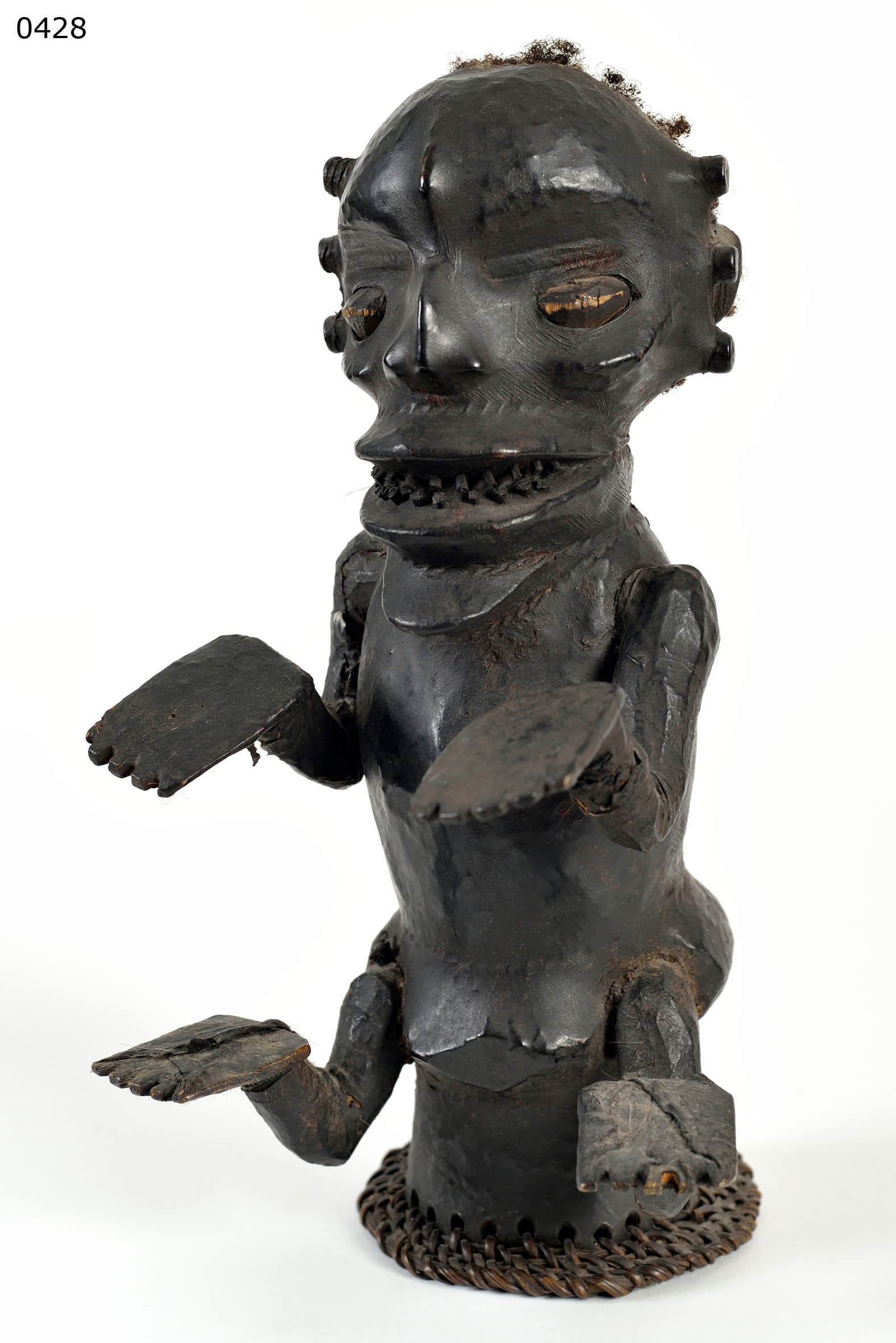
headcrest
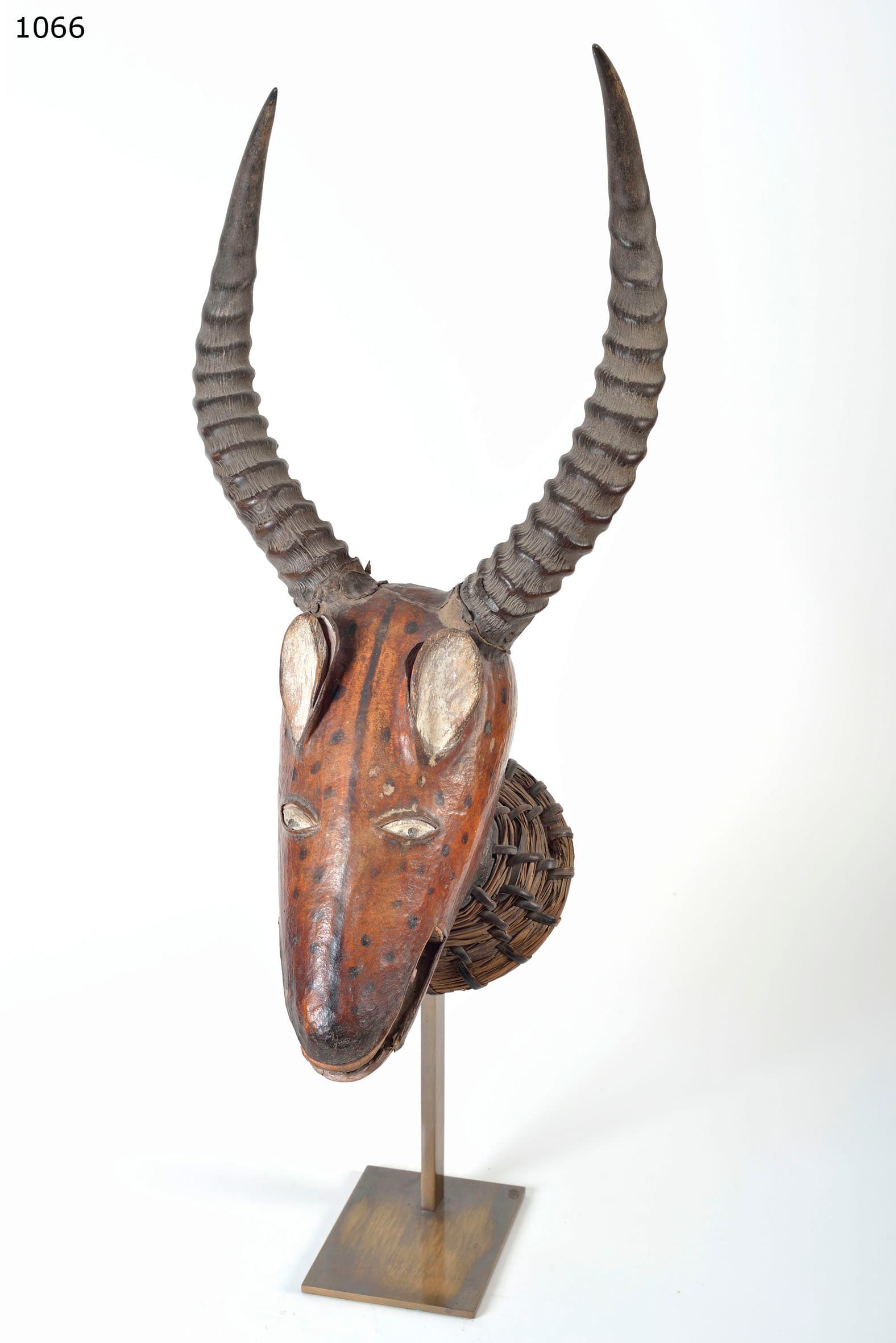
animal headcrest mask on METRA socle