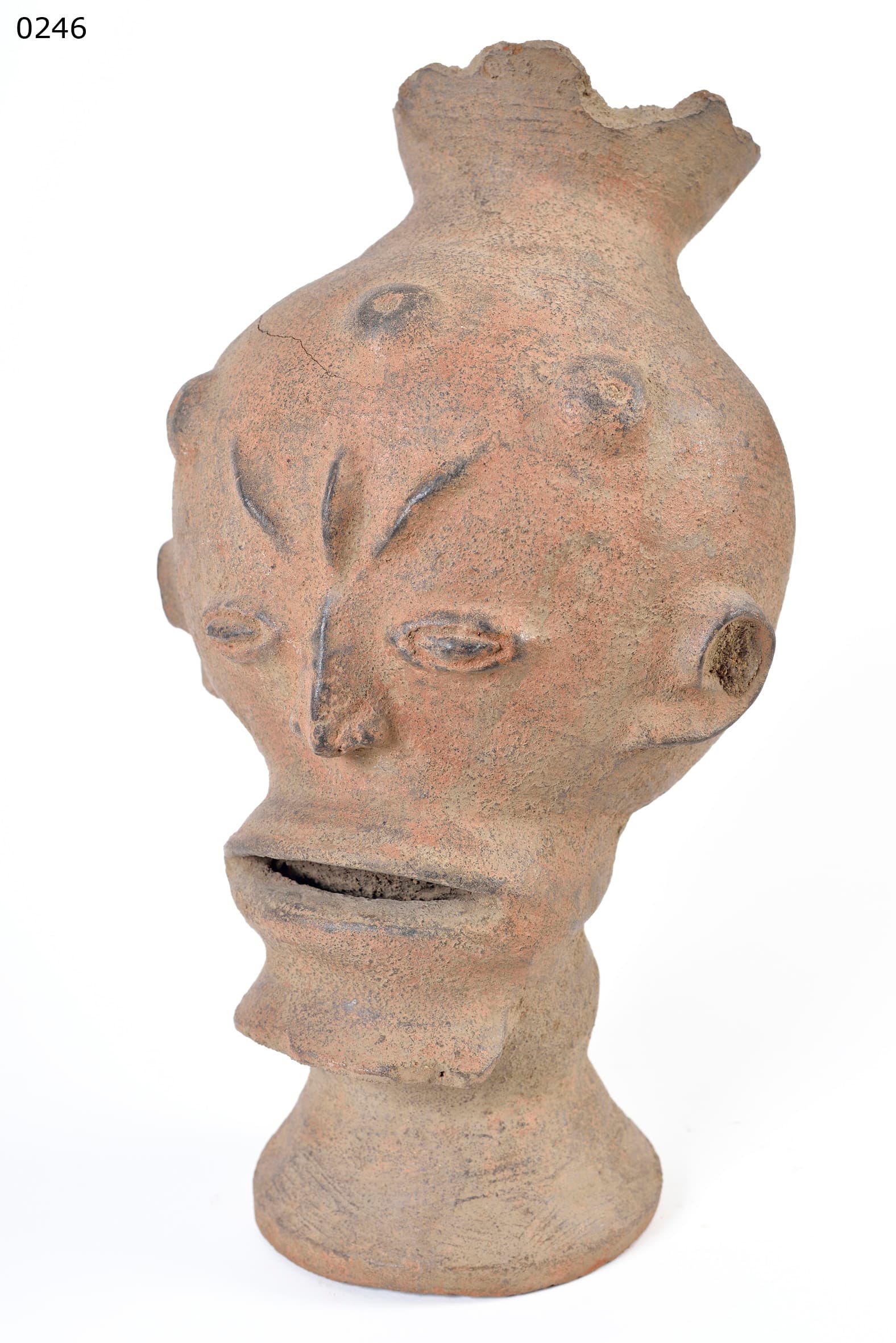
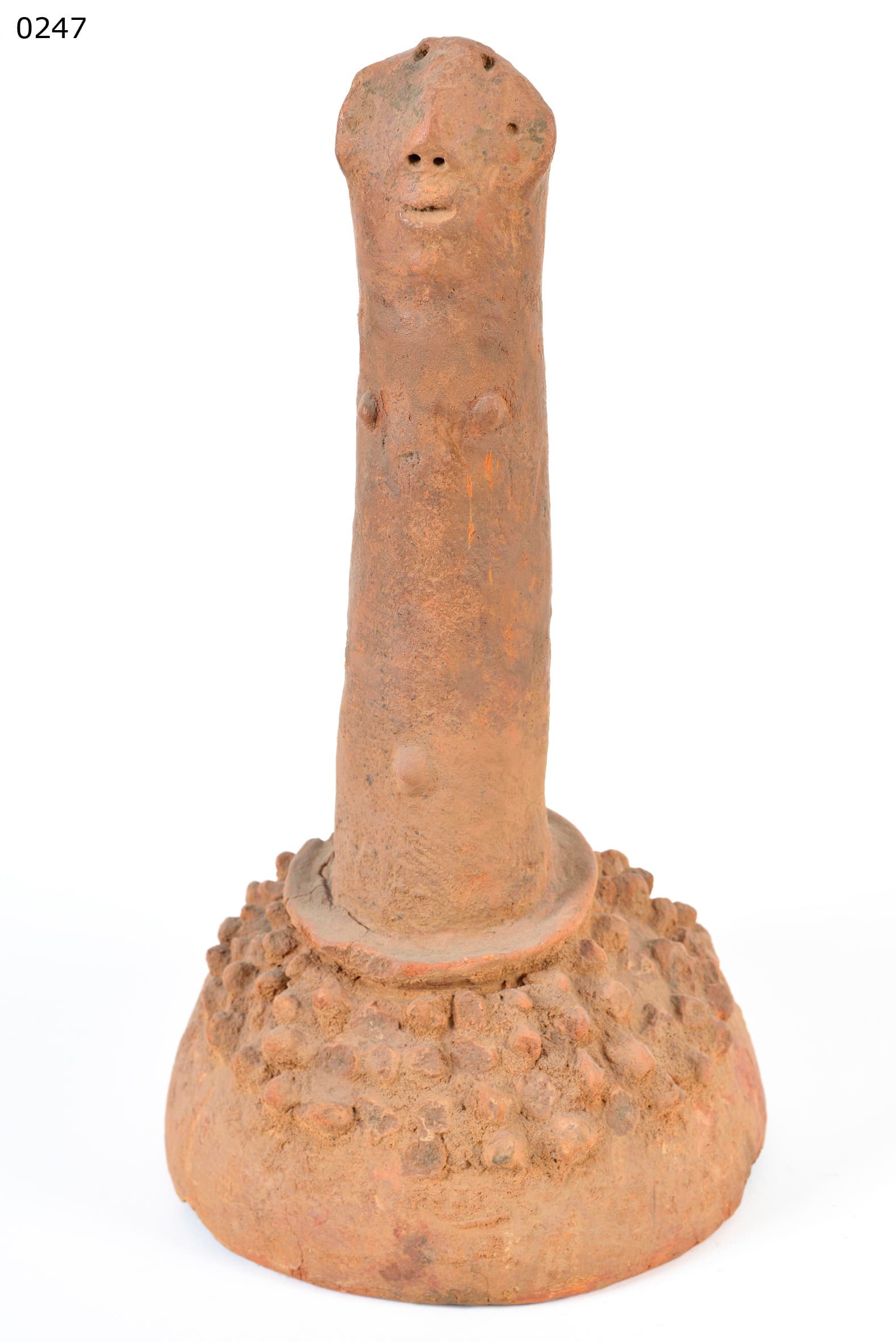
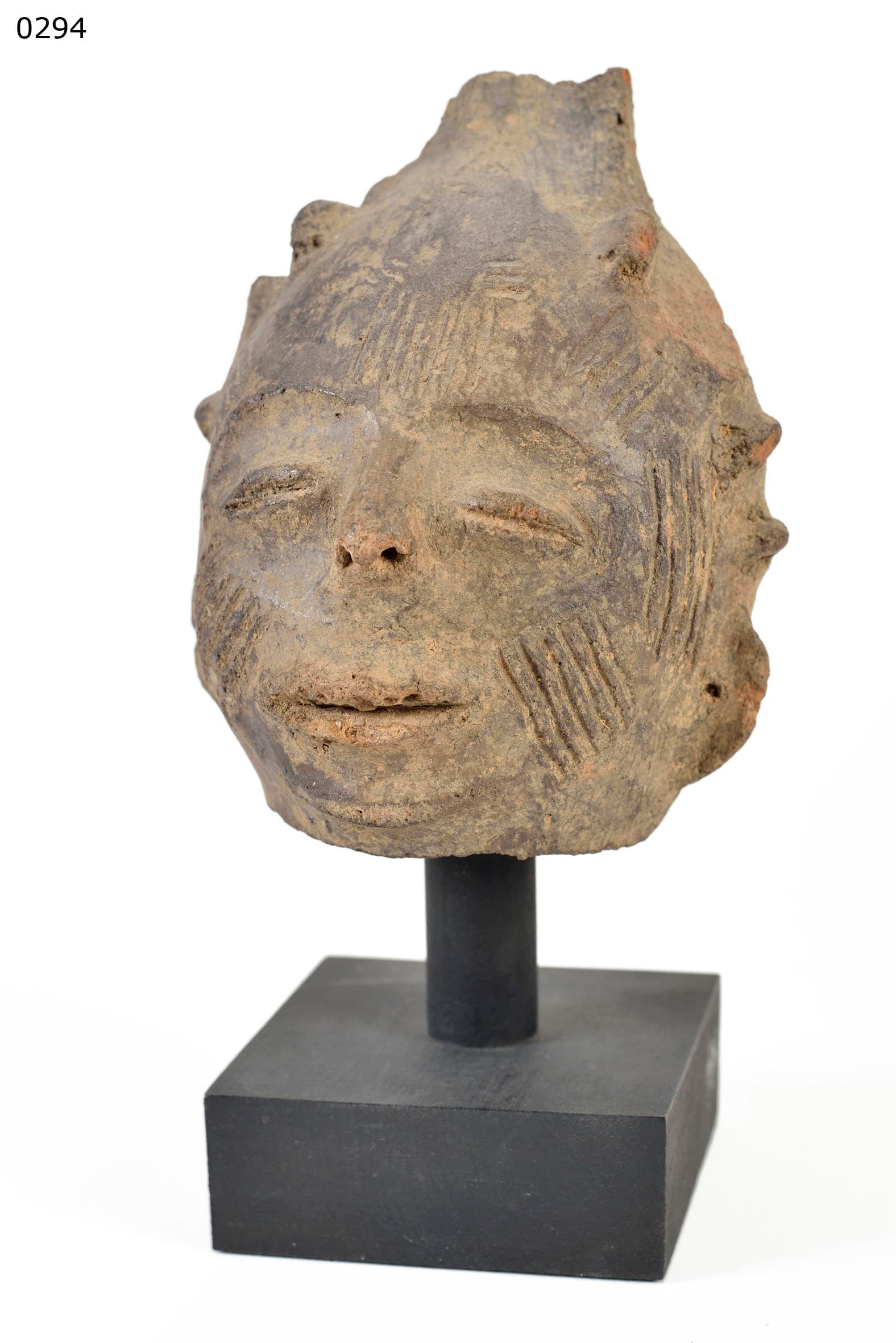
This 16 cm terracotta figure depicts a seated or crouching human with a prominent, flattened, disc-like head, coffee-bean eyes, and arms crossed resting on its knees. The fired clay exhibits a worn, ancient, earthy surface with localized firing clouds and mineral accretions.
1. Aesthetic style — Akan memorial portraiture and the disc face
Known as mawa or mma, these stylized terracotta figures are cornerstones of Akan (specifically Kwahu or Fante) funerary art in Ghana. They were never intended as exact physical likenesses; rather, they are idealized portraits representing the social status and spiritual essence of deceased royals or elites. The distinct, flattened, moon-like or disc-shaped face, combined with the ringed neck and protruding, coffee-bean shaped eyes, are strict stylistic conventions designed to convey serene ancestral wisdom, beauty, and elevated royal lineage.
2. Ritual function — the asensie sacred groves
Following the elaborate funeral of an Akan royal, these terracotta effigies were not buried with the body. Instead, they were ceremonially placed in the asensie (the "place of pots" or sacred memorial grove) alongside cooking vessels and offering bowls. They acted as permanent, terrestrial bodies for the royal ancestors to inhabit during their afterlife. Family members and priests would visit the asensie to pour libations over the figures, consulting the enshrined ancestors on matters of family governance and community safety.
3. Physical patina — archaeological weathering and desiccation
The broad 12th–18th century dating is supported by the extreme weathering of the terracotta surface. The clay is heavily abraded, having lost much of the sharp, original modeling lines due to prolonged exposure to the elements and acidic forest soils. The presence of deep, calcified mineral accretions and root marks etched into the porous ceramic is consistent with this object having sat undisturbed in a sacred grove for hundreds of years, surviving as an archaeological relic of the Akan kingdoms.
Summary
Featuring the serene, disc-shaped face characteristic of Akan royal portraiture, this terracotta figure served as a terrestrial vessel for the ancestors. Its deeply abraded, mineral-encrusted surface is consistent with a centuries-long vigil within a sacred asensie forest grove.
Written with AI assistance from the collection appraisal, object photography and our own research; editorially reviewed. Mistakes are possible — corrections are welcome. How we work →