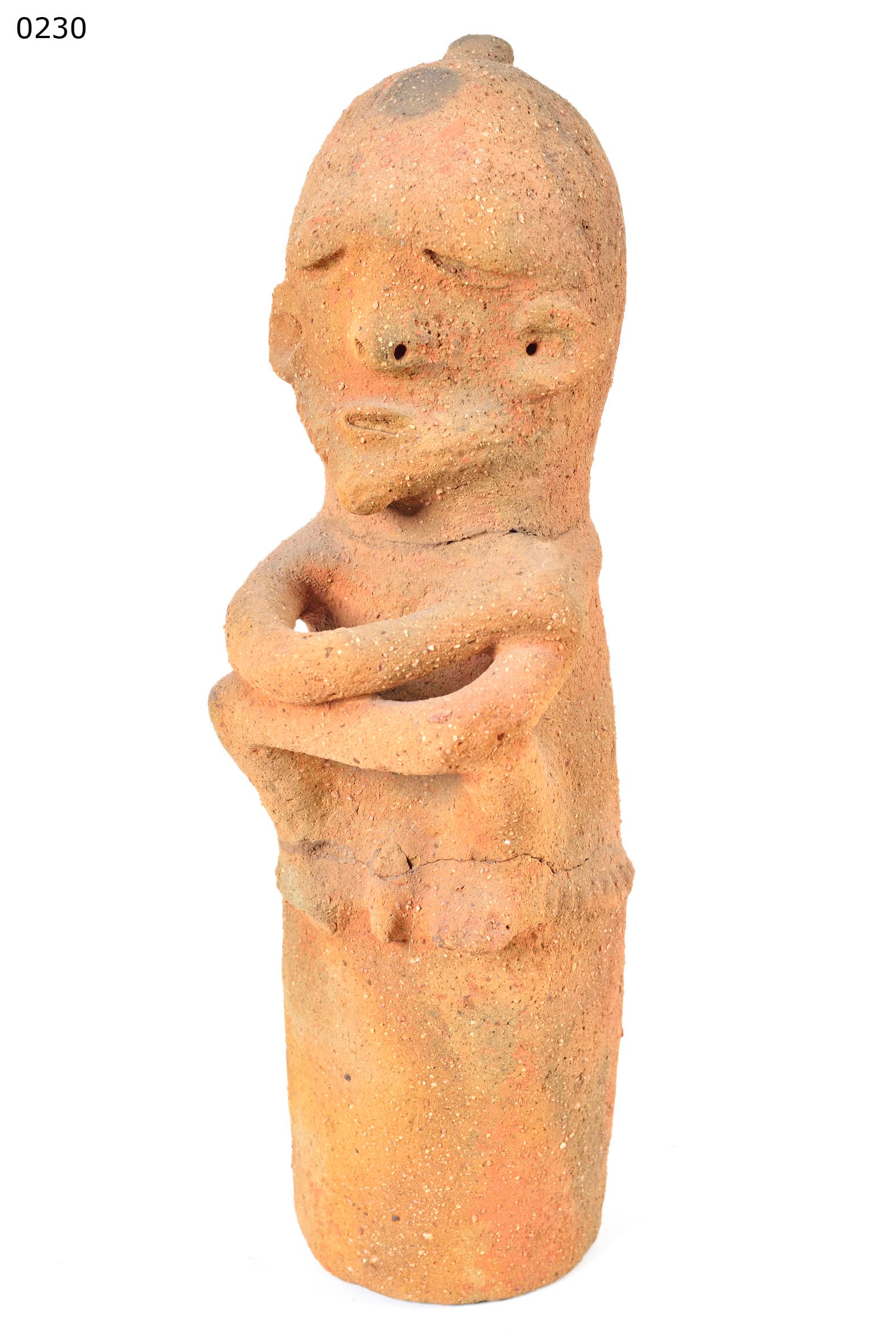
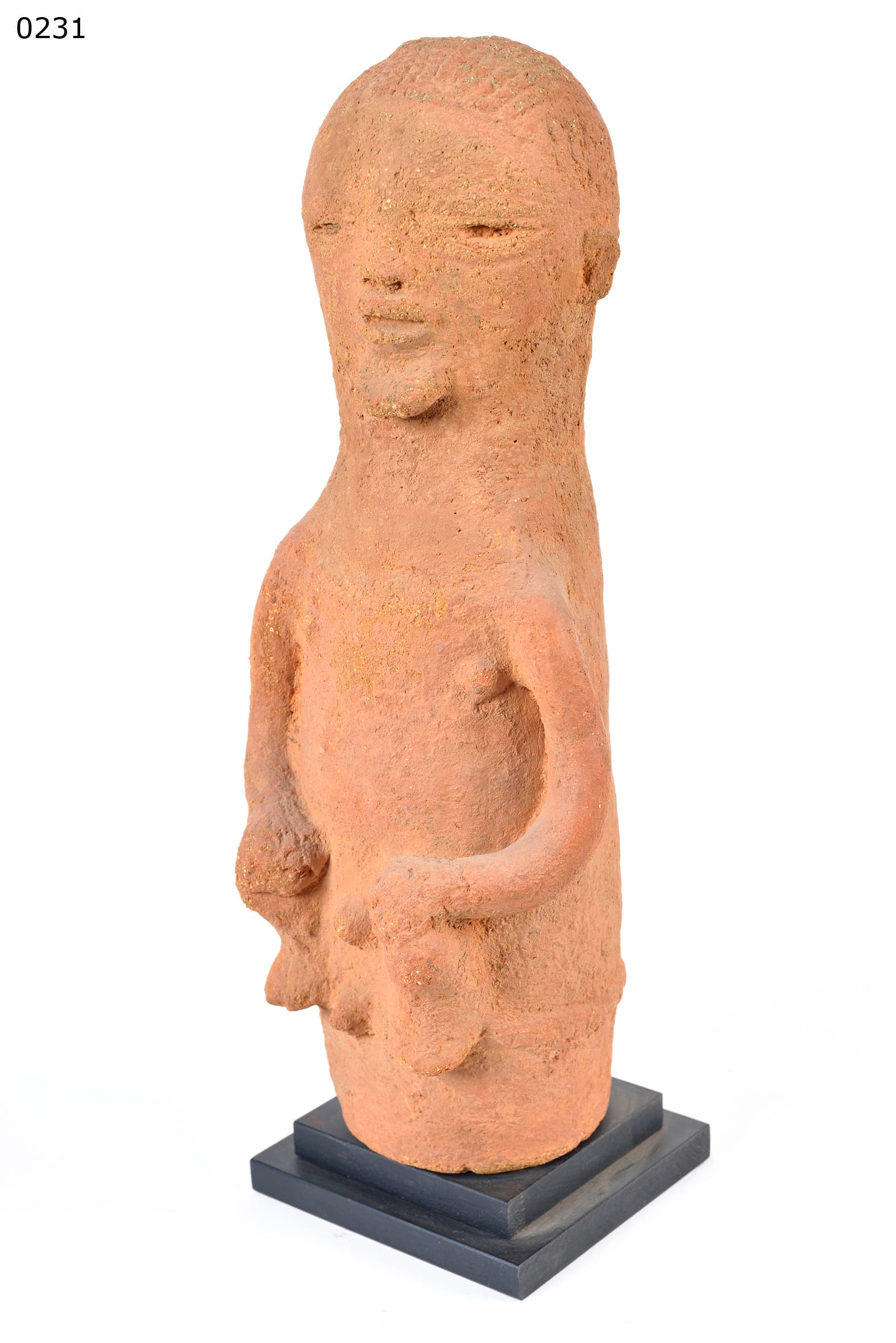
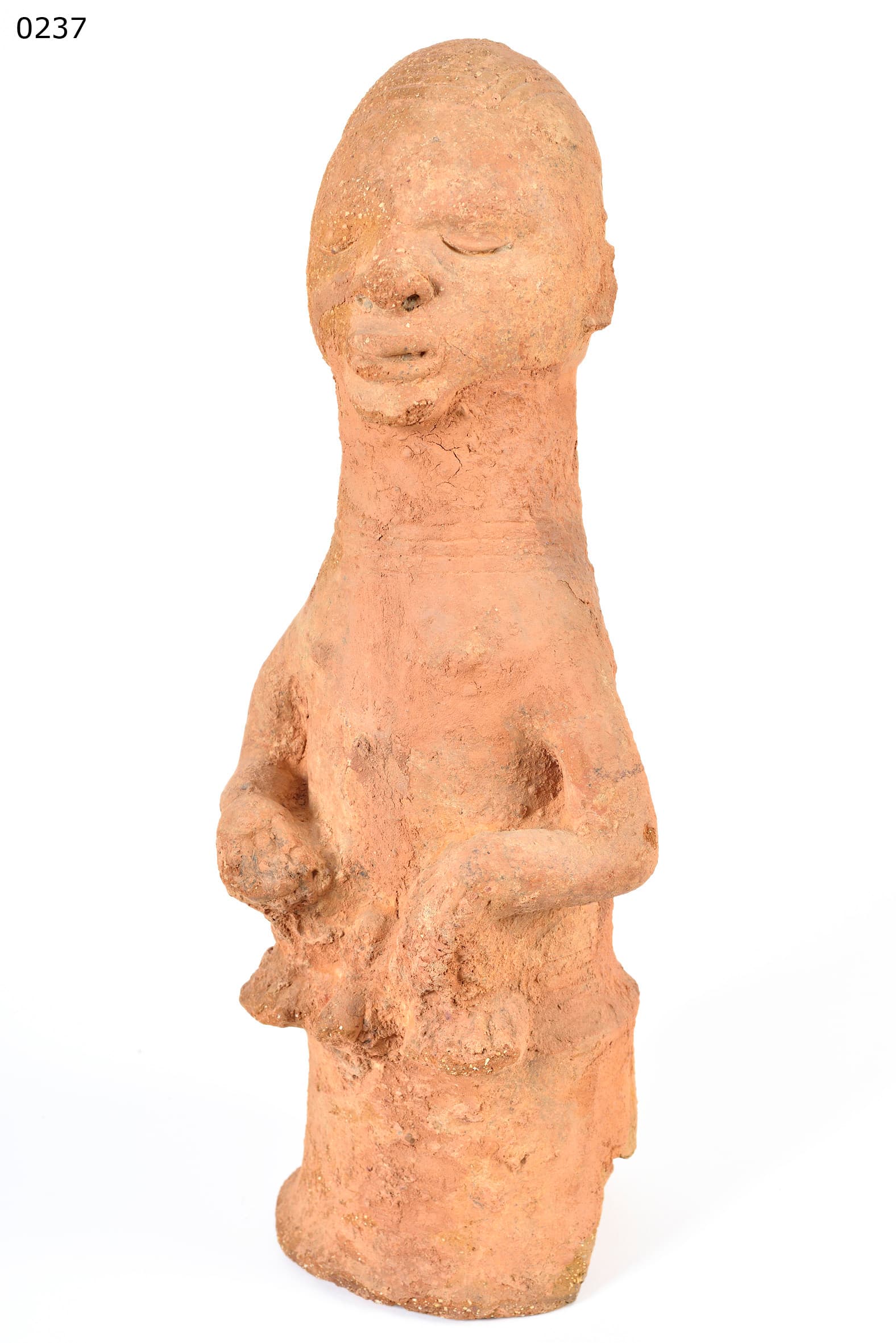
This highly eroded, 18 cm terracotta figure depicts a seated or kneeling male form with an elongated, cylindrical head featuring minimal, slit-like facial features. It clutches a small object (possibly a vessel or phallus) at its waist. The clay is extremely coarse, presenting a battered, orange-red archaeological surface.
1. Aesthetic style — the Katsina ceramic tradition
Flourishing in Northern Nigeria concurrently with the Nok and Sokoto cultures, the Katsina archaeological tradition is known for its severe, almost phallic abstraction of the human body. This figure is consistent with that style: the head is an elongated, unadorned cylinder, and the body is reduced to heavy, essential masses. Unlike the highly detailed coiffures of Nok art, Katsina figures rely on stark, unbroken profiles and minimal, slit-like incisions for the eyes and mouth, prioritizing volume over delicate, naturalistic portraiture.
2. Ritual function — grave offerings and agricultural fertility
Found primarily in ancient burial mounds and subterranean caches, Katsina terracotta figures are generally interpreted as grave goods or localized agricultural deities. The figure's posture — clutching an object at the waist or abdomen — often signifies the containment of life force, the guarding of lineage wealth, or appeals for fertility. They served as permanent, earthen intercessors, mediating between the living community above and the ancestral spirits residing within the soil, traditionally associated with efforts to guarantee the harvest.
3. Physical patina — severe archaeological degradation
The wear on this artifact is consistent with a significant age, reflected in its heavily degraded condition. The original smooth surface of the fired clay has been largely stripped away by centuries of soil acidity and groundwater erosion, exposing the coarse, granular quartz temper within the ceramic matrix. The softening of the facial features and the irregular, fragmented nature of the base are consistent with an ancient, excavated origin.
Summary
Stripping the human form down to an imposing, cylindrical geometry, this Katsina terracotta is an example of ancient Nigerian abstraction. Its severely eroded, highly granular surface is consistent with a long period of subterranean burial.
Written with AI assistance from the collection appraisal, object photography and our own research; editorially reviewed. Mistakes are possible — corrections are welcome. How we work →