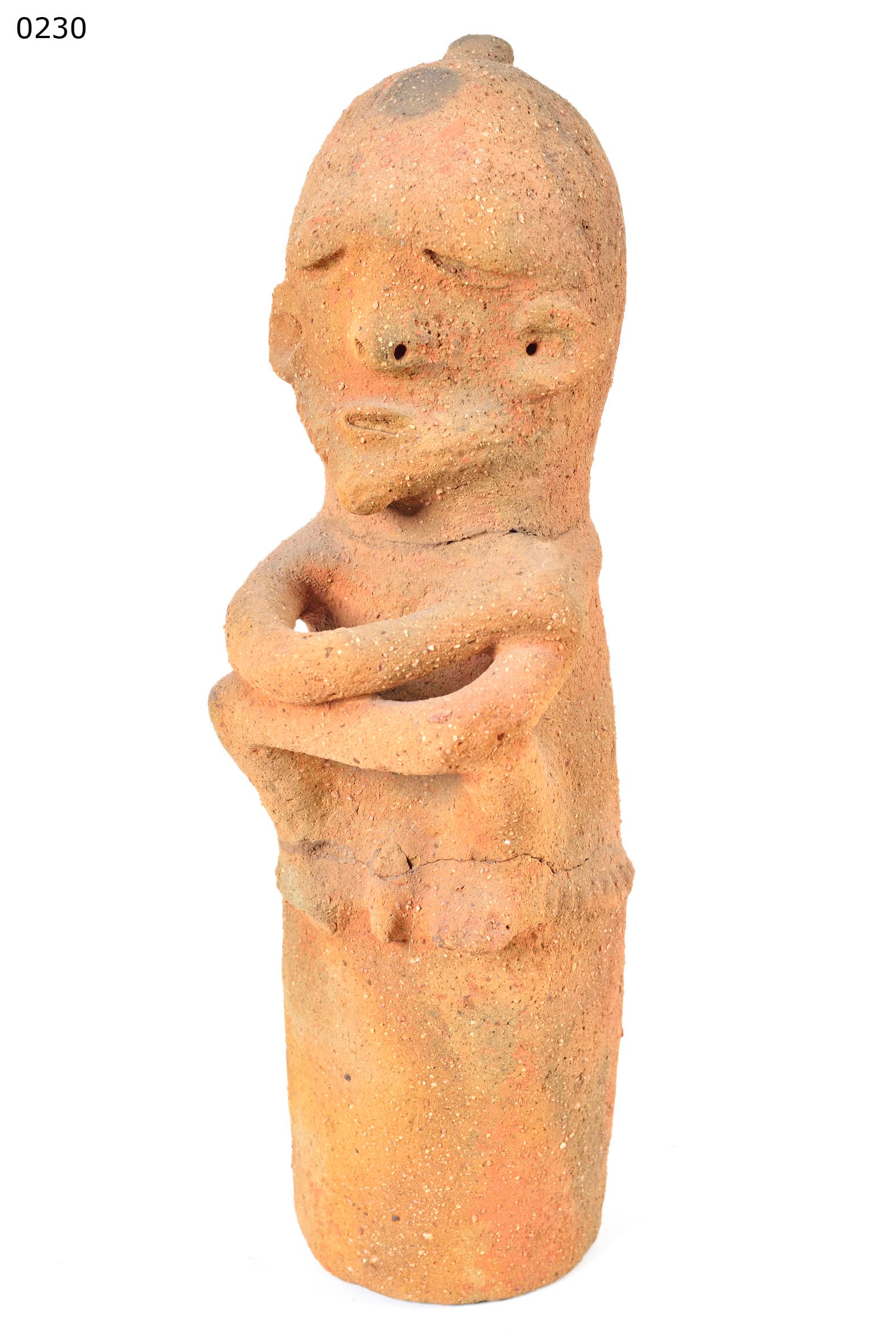
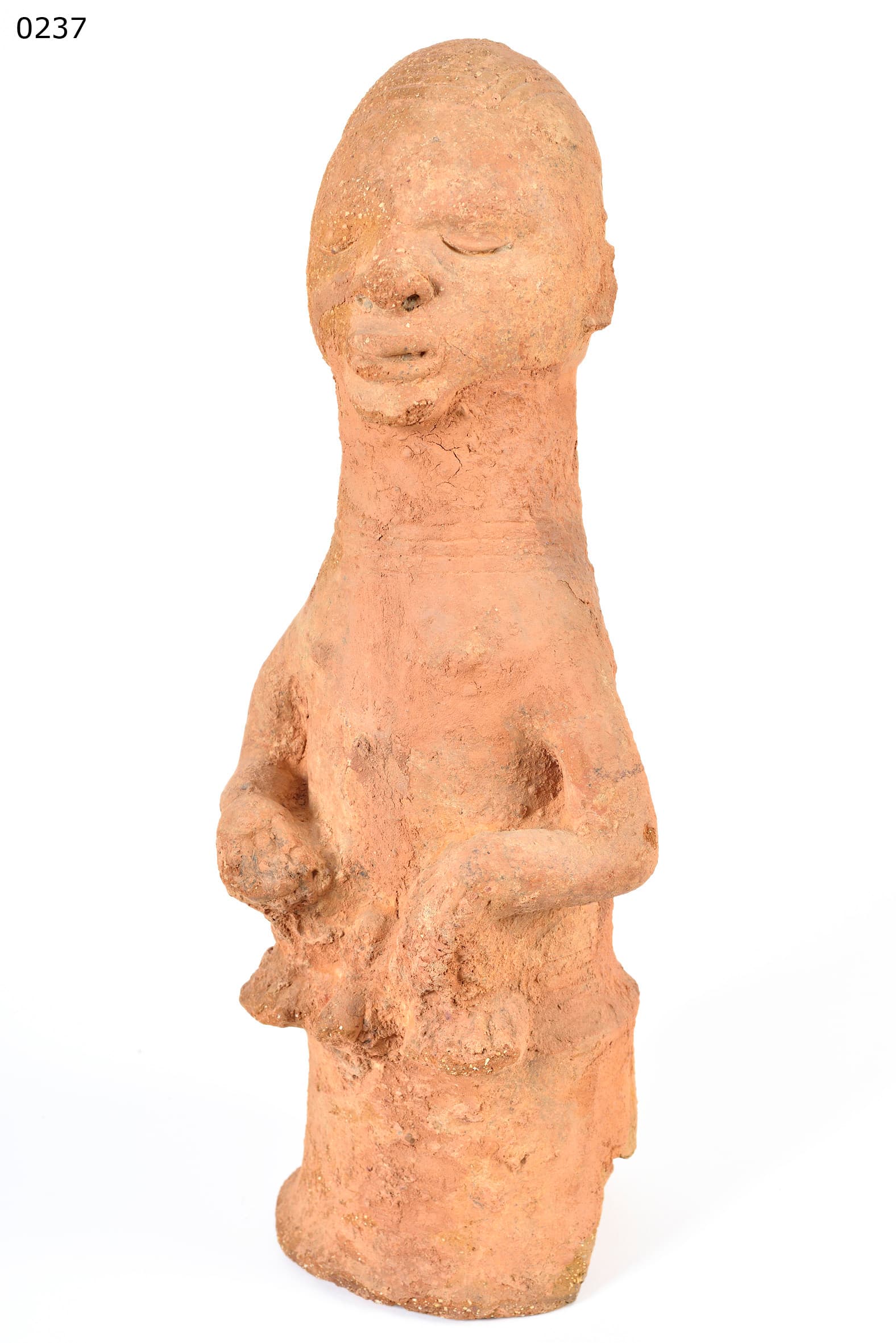
A second ancient tubular Katsina terracotta (estimated at approximately 2,000 years old, 48 cm) from Nigeria — stylized male with a smoothly domed head, minimal facial incisions, arms in high relief folding tightly across the abdomen, the dense reddish clay profoundly weathered with deep surface pitting and natural calcification.
1. A workshop sibling
At 48 cm, this figure is the close counterpart to the 50 cm Katsina male (Item 230).
- Paired Origin: Stylistic identity suggests both pieces emerged from the same workshop or ceremonial program — perhaps commissioned for the same elite tomb.
- Canonical Proportions: The tubular cylinder, domed head, and arms crossed tightly over the abdomen are characteristic features associated with the Katsina idiom.
2. Containment multiplied
Paired containment figures amplify the cosmology of the single example.
- Collective Anchor: Where one figure anchors a single spirit, two figures operating together represent a more durable form of ancestral containment — an intended reinforcement against spiritual drift.
- Gesture of Finality: The crossed arms continue to signal death, meditation, or eternal rest — locked-in postures that forbid spiritual escape.
3. Identical chemistry of age
The surface stratigraphy mirrors the 50 cm sibling almost exactly.
- Same Soil Signature: The calcified deposits fused into the facial recesses and along the arms are chemically continuous with the paired figure — compatible with a shared burial context.
- Two Millennia: Profound pitting, dissolved firing slip, and exposed granular matrix together are consistent with an Iron-Age archaeological origin.
Summary
The companion to the larger Katsina male in the collection, this 48 cm figure extends the same Iron-Age iconography and taphonomic signature. Together the pair are consistent with a coherent ancient Nigerian burial practice.
Written with AI assistance from the collection appraisal, object photography and our own research; editorially reviewed. Mistakes are possible — corrections are welcome. How we work →