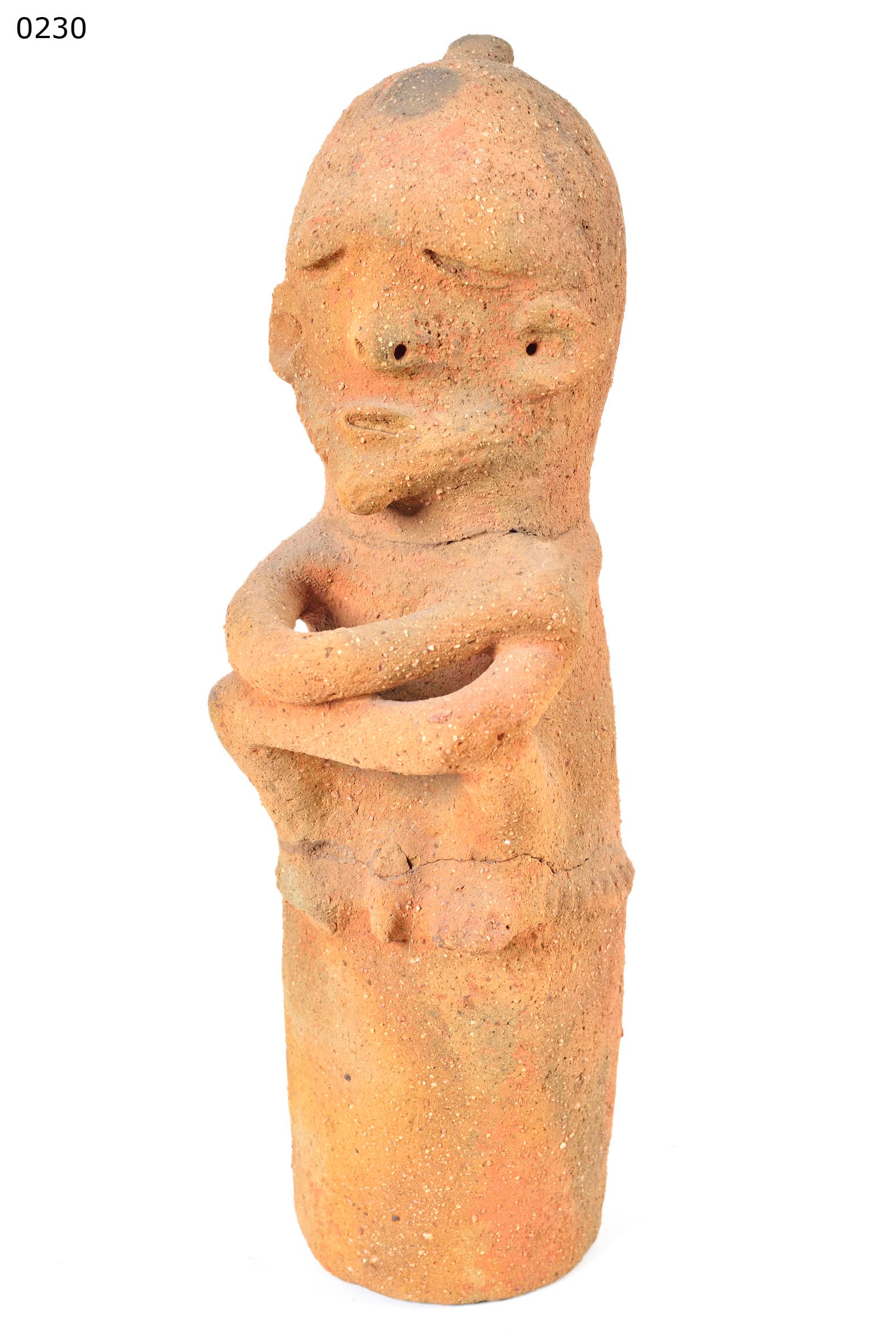
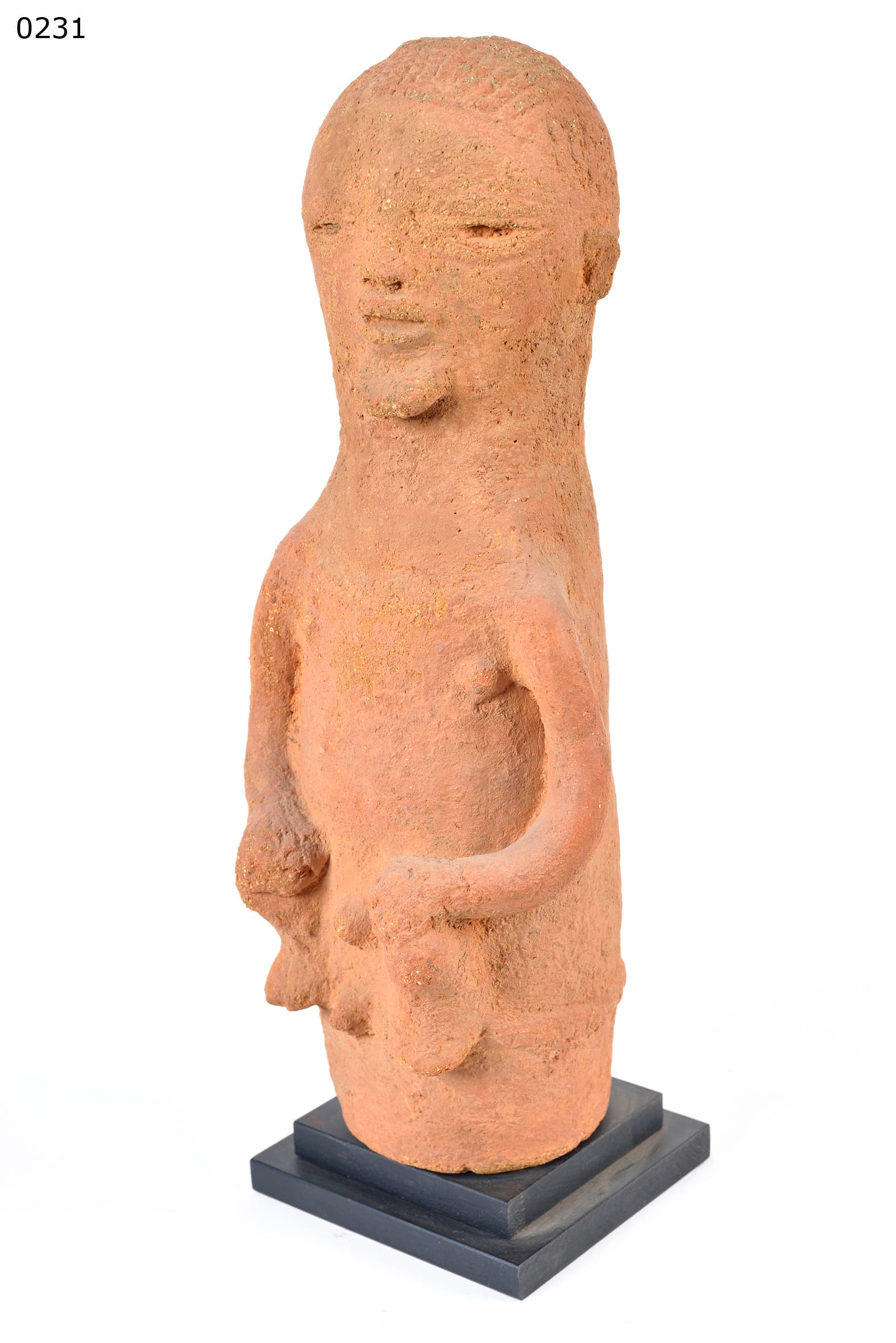
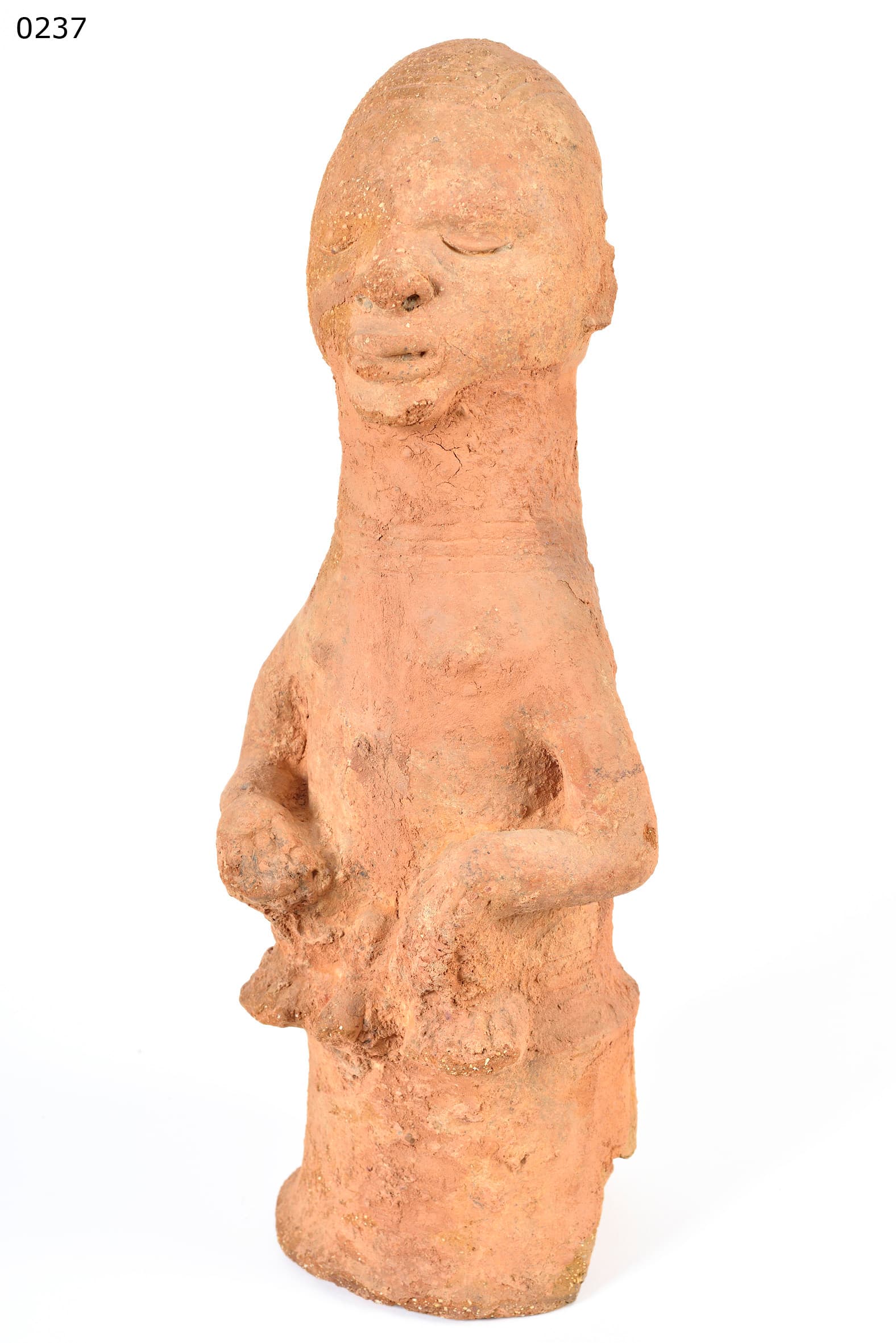
A tubular terracotta figure (estimated at ca. 2,000 years old, 45 cm) from the Katsina of Nigeria — rounded expressive head topped with a prominent textured coiffure or cap, arms resting firmly on the lower waist, the reddish-brown clay highly textured, fully stripped of its original slip, and heavily abraded.
1. Headwear and iron age status
While adhering to the strict tubular abstraction of the Katsina style, this figure differentiates itself through the elaborate detailing of the head.
- Textured Cap or Coiffure: The prominent headwear is traditionally associated with elite social status, wealth, or specialized initiation rank.
- Head as Seat of Power: In ancient Nigerian cultures, modifying the head through complex hairstyles or headgear visually elevated the individual above the common populace — headwear was civilization made visible.
2. Funerary or shrine receptacles
Contemporaneous with the Nok (ca. 500 BCE – 200 CE), Katsina figures of this scale are understood to have been central components of complex mortuary assemblages.
- Resolute Vigilance: The arms firmly planted on the waist project a posture of resolute presence and eternal watchfulness.
- Eternal Surrogate: Buried with the deceased or placed in subterranean altars, the figure acted as an immortal surrogate preserving the status and power of the ancestor.
3. Severe ceramic abrasion
The surface shows wear consistent with a long history.
- Slip Dissolved: Extreme abrasion has removed the smooth outer firing skin, exposing the coarse sandy internal matrix and quartz inclusions.
- Soil Embedded: Deep micro-pitting and the permanent fusion of soils into the recesses of the face and arms are consistent with an extended period of burial.
Summary
Projecting an aura of ancient resolute authority, this Katsina figure is a compelling example of early Nigerian terracotta art. Its intricate headwear and profound surface abrasion are consistent with its attributed age.
Written with AI assistance from the collection appraisal, object photography and our own research; editorially reviewed. Mistakes are possible — corrections are welcome. How we work →