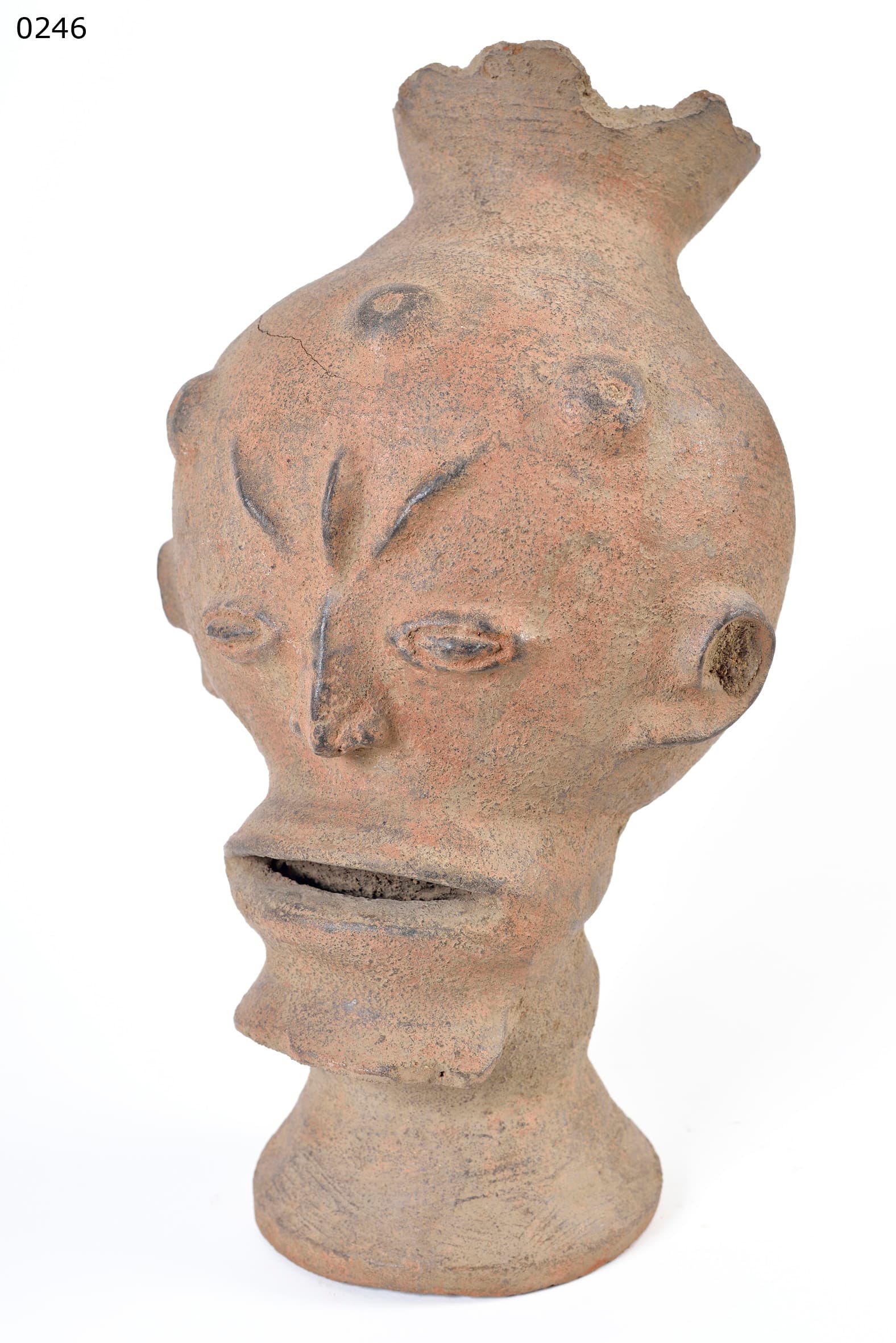
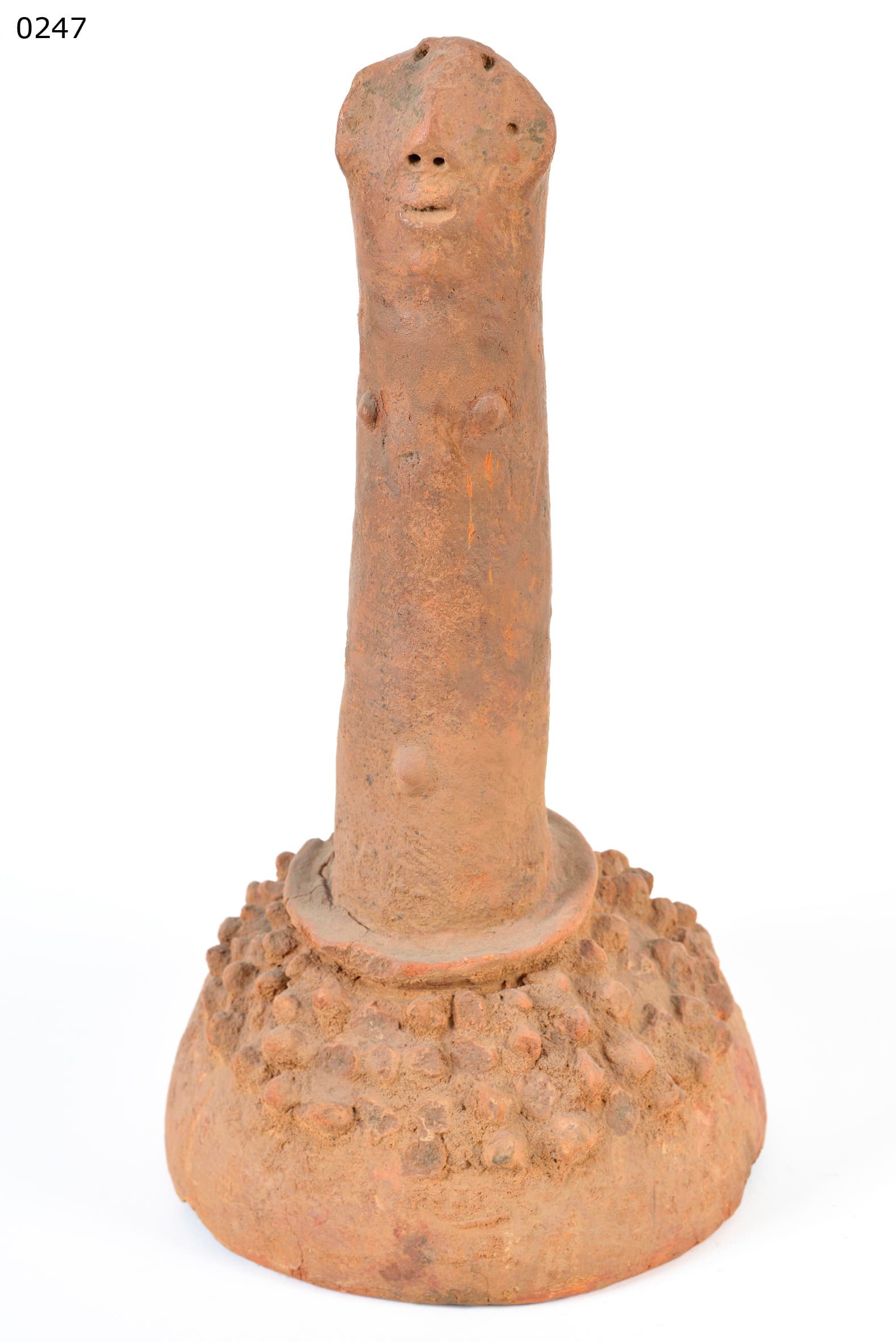
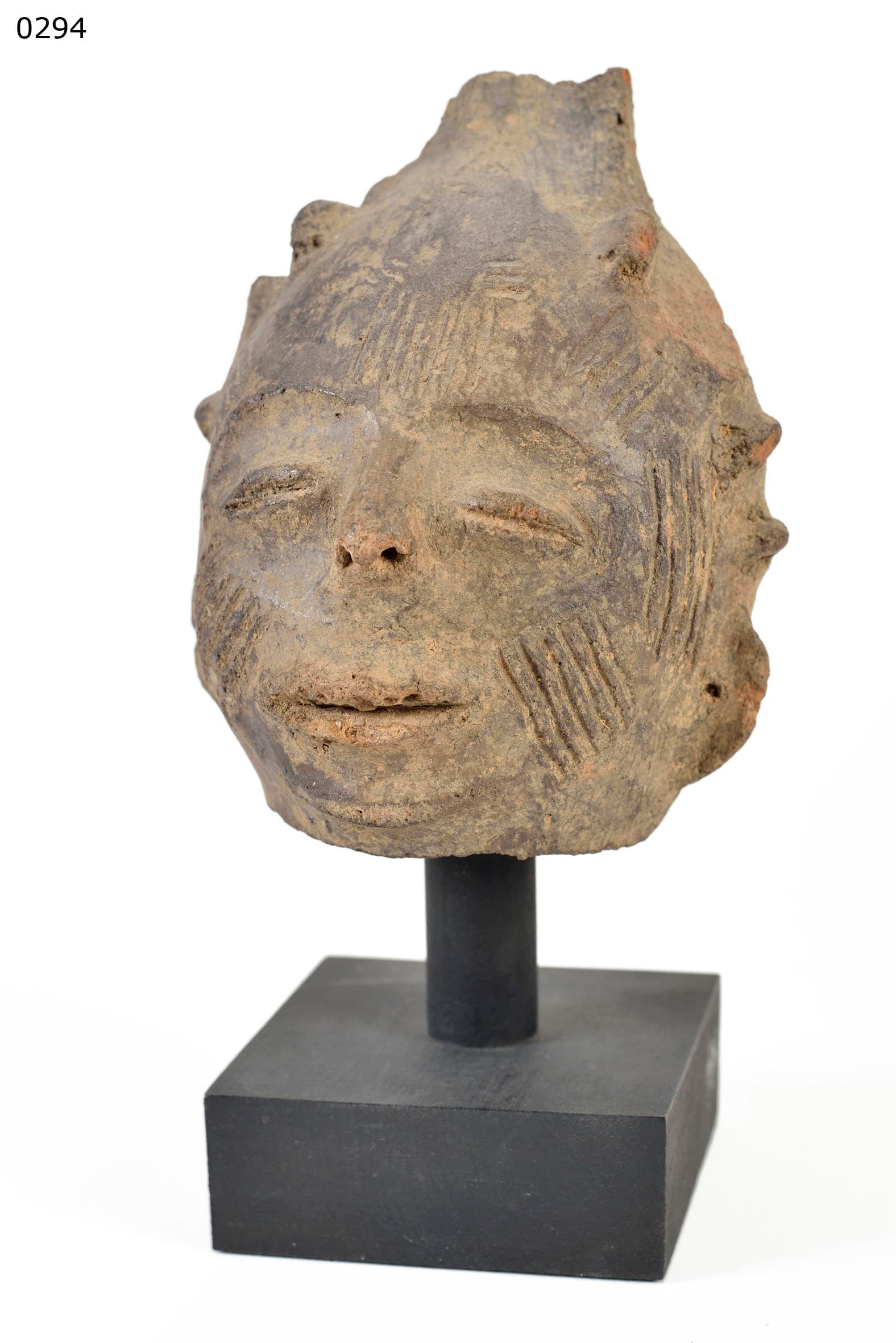
This massive, 47 cm terracotta vessel lid features a spherical form adorned with a serene, flattened face bearing cross-shaped scarification marks on the cheeks and small, studded nodes across the cranium. The baked clay surface is deeply abraded, presenting a matte, earth-toned patina with dark, oxidized firing clouds.
1. Aesthetic style — abusua kuruwa and the spherical form
This monumental terracotta sculpture is associated with Akan (likely Kwahu or Fante) memorial portraiture, known as mma. In this tradition, idealized portraits of deceased royalty were sculpted as the lids for sacred family vessels (abusua kuruwa). The spherical geometry of the head conveys serene, aristocratic composure. The cross-shaped incisions on the cheeks represent specific ethnic scarification marks, while the studded nodes mimic complex, elite braided coiffures, casting the deceased's high status in fired clay.
2. Ritual function — asensie sacred groves and funerary rites
Following the elaborate funeral of a chief or queen mother, these abusua kuruwa vessels were filled with the hair and fingernail clippings of the deceased's grieving relatives. The vessel, capped by this portrait head, was then carried deep into the forest and placed in the asensie (the "place of pots" or sacred memorial grove). This ritual act was intended to bind the living lineage (the blood/hair inside) to the protective spirit of the royal ancestor represented by the massive, watchful terracotta face.
3. Physical patina — lithic abrasion and firing clouds
The broad 12th–18th century timeline is compatible with the intense, natural weathering of the ceramic. Having sat exposed on the forest floor of the asensie, the terracotta is deeply abraded, its original smooth finish worn down by acidic rains, shifting soil, and root systems. The dark, irregular black splotches across the orange clay are "firing clouds" — carbon deposits resulting from the traditional, open-pit bonfire methods used by Akan female potters long before the advent of modern kilns.
Summary
A monumental achievement in spherical geometry, this Akan terracotta head served as a serene, watchful guardian over a royal family's sacred soul vessel. Its deeply abraded, forest-weathered surface and historic firing clouds are consistent with its role as a significant historical object of Ghanaian funerary rites.
Written with AI assistance from the collection appraisal, object photography and our own research; editorially reviewed. Mistakes are possible — corrections are welcome. How we work →