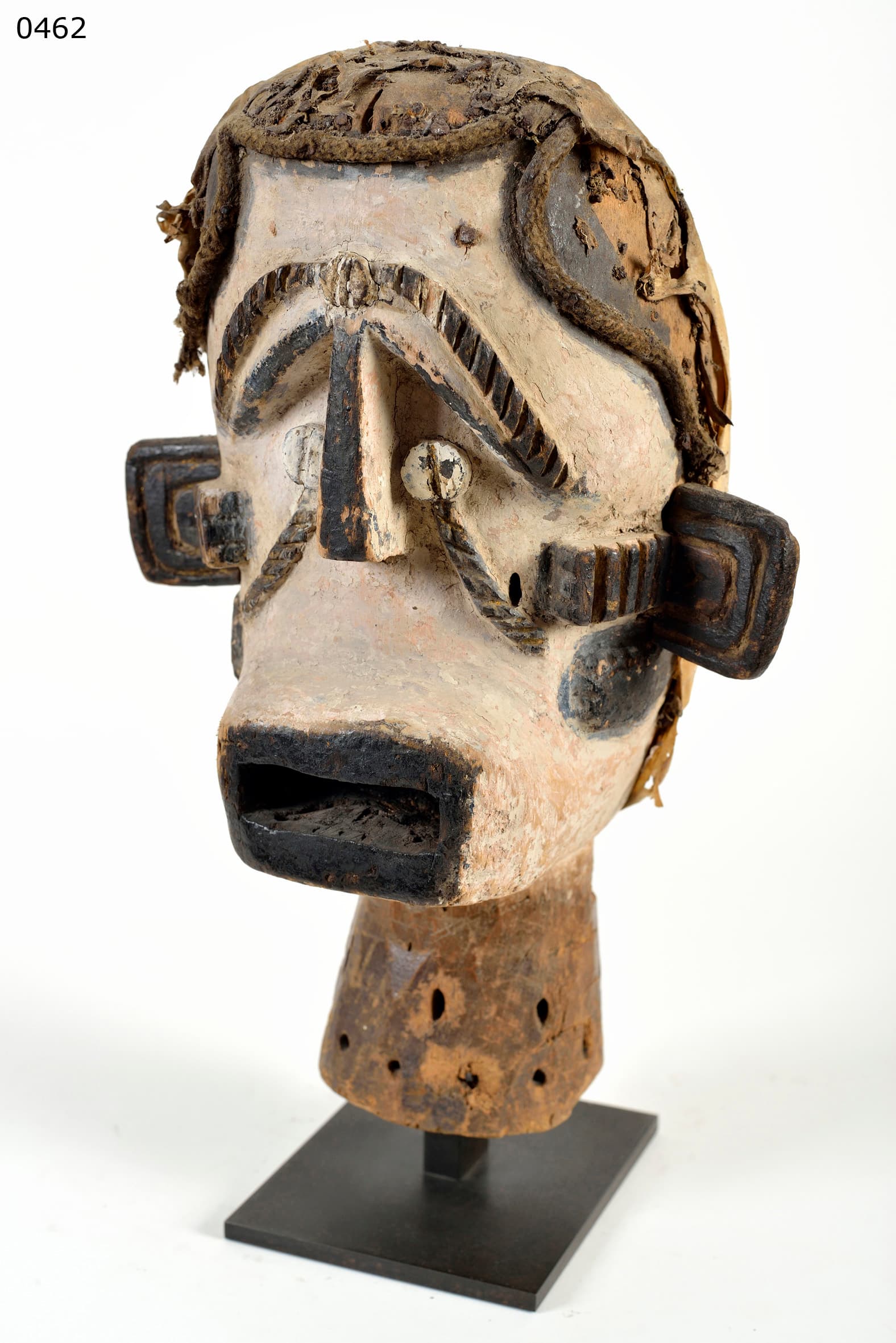
This striking wooden headcrest depicts a highly stylized animal, possibly a bird or antelope, with an elongated, downward-pointing snout and tall, backward-sweeping ears or horns. The surface is adorned with vivid, polychrome geometric triangles in red, black, and white, showing organic fading and handling wear.
1. Aesthetic style — cross river polychrome abstraction
The Boki people, situated in the culturally complex Cross River region of Nigeria, are famous both for skin-covered masks and bold, geometric wooden crests. This piece exemplifies their striking polychrome abstraction. The carver elongated the animal's snout to create a sleek, aerodynamic profile, while the towering ears pull the visual energy upward. The true genius lies in the surface treatment: the face is broken into a high-contrast grid of painted geometric triangles, turning the three-dimensional sculpture into a vibrant, flashing optical illusion.
2. Ritual function — nnuk forest spirits and age-grade societies
Unlike face masks, headcrests of this type were worn horizontally on the top of the dancer's head, secured to a woven basketry cap, with the dancer's body completely concealed beneath a voluminous costume of dyed raffia. These masks were central to the performances of men's age-grade associations or warrior societies. The energetic, brightly painted animal forms were intended to invoke the unpredictable, vital spirits of the deep forest (Nnuk), bringing their wild energy into the village plaza during funerals or agricultural festivals.
3. Physical patina — polychrome degradation and handling
The authenticity of this piece is secured by the specific degradation of its pigments. The white (kaolin clay), red (camwood or laterite), and black (charcoal) paints are traditional, porous indigenous pigments, not modern acrylics. Over the first half of the 20th century, these pigments have sunken deeply into the wood grain, fading into soft, muted tones. The edges of the ears and the snout show a smooth, dark, handling-polished wood patina where the paint has been naturally rubbed away by generations of dancers.
Summary
A visually arresting example of Cross River abstraction, this Boki headcrest seamlessly blends sleek zoomorphic carving with flashing, polychrome geometry. The soft fading and handling wear of its traditional, indigenous pigments confirm its active, vibrant life in 20th-century ceremonial dances.
Written with AI assistance from the collection appraisal, object photography and our own research; editorially reviewed. Mistakes are possible — corrections are welcome. How we work →