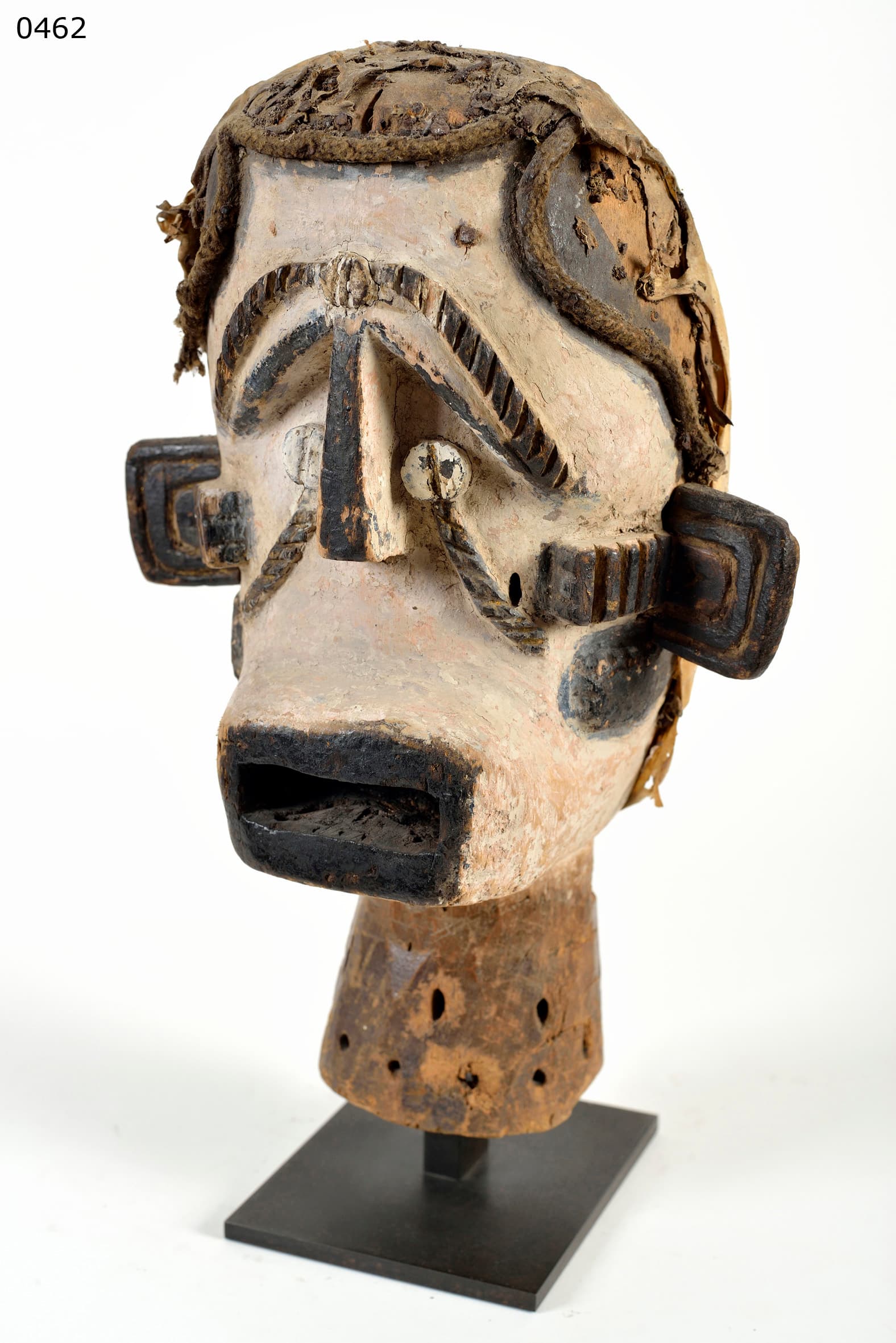
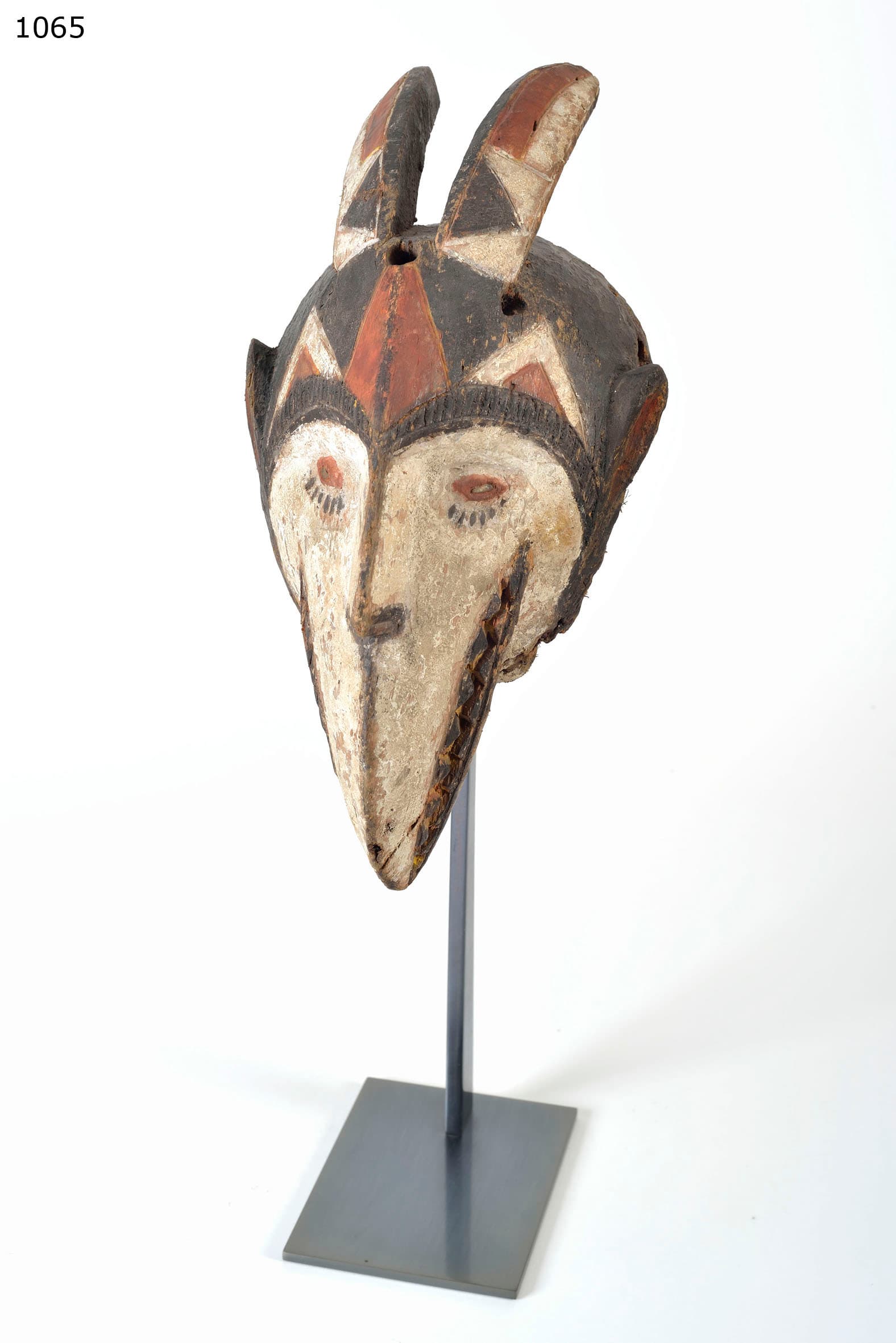
This terrifying wooden face mask features an aggressive, asymmetrical expression with deeply hollowed eyes (one ringed in stark white pigment), carved vertical cheek scarifications, and a massive, gaping mouth. The highly oxidized wood is covered in a thick, crusty layer of soot, faded pigments, and ritual matter.
1. Aesthetic style and regional traits
The Boki (or Bokyi) people, located in the dense rainforests of the Cross River region between Nigeria and Cameroon, produce some of the most visceral and psychologically intense masks in Africa. This piece is a powerful example of this raw expressionism. The carver has utilized deliberate asymmetry — painting only one eye white — to create a sense of chaotic, unpredictable energy. The massive, gaping mouth and deep scarifications eschew any sense of refined beauty, projecting instead the terrifying, untamed power of a volatile bush spirit or a deceased warrior.
2. Ritual function and secret society context
Masks of this fierce nature are strictly the property of elite male regulatory societies, such as the Nkpe (Leopard) society. These groups are the absolute executive authorities in Boki culture. When societal laws were broken, or during the funerals of high-ranking chiefs, this mask was danced to physically enforce order. The terrifying visage, combined with chaotic, aggressive dancing, was meant to strike absolute fear into the uninitiated, physically demonstrating the lethal consequences of crossing the ancestral laws.
3. Physical patina and age
A 19th-century dating of this mask is supported by its undisturbed surface. The wood is saturated with a thick, friable, and blackened crust of soot consistent with storage above shrine fires. The white kaolin pigment around the eye and within the scarifications is powdery and deeply embedded into the wood grain. Furthermore, the interior rim of the mask shows deep, smooth friction wear and sweat-staining, suggesting it was danced over generations.
Summary
This Boki mask is an uncompromising, terrifying vessel of Cross River spiritual enforcement. Its aggressive, asymmetrical expressionism and thick soot-and-sacrificial crust are consistent with its use as an active instrument of secret society justice.
Written with AI assistance from the collection appraisal, object photography and our own research; editorially reviewed. Mistakes are possible — corrections are welcome. How we work →