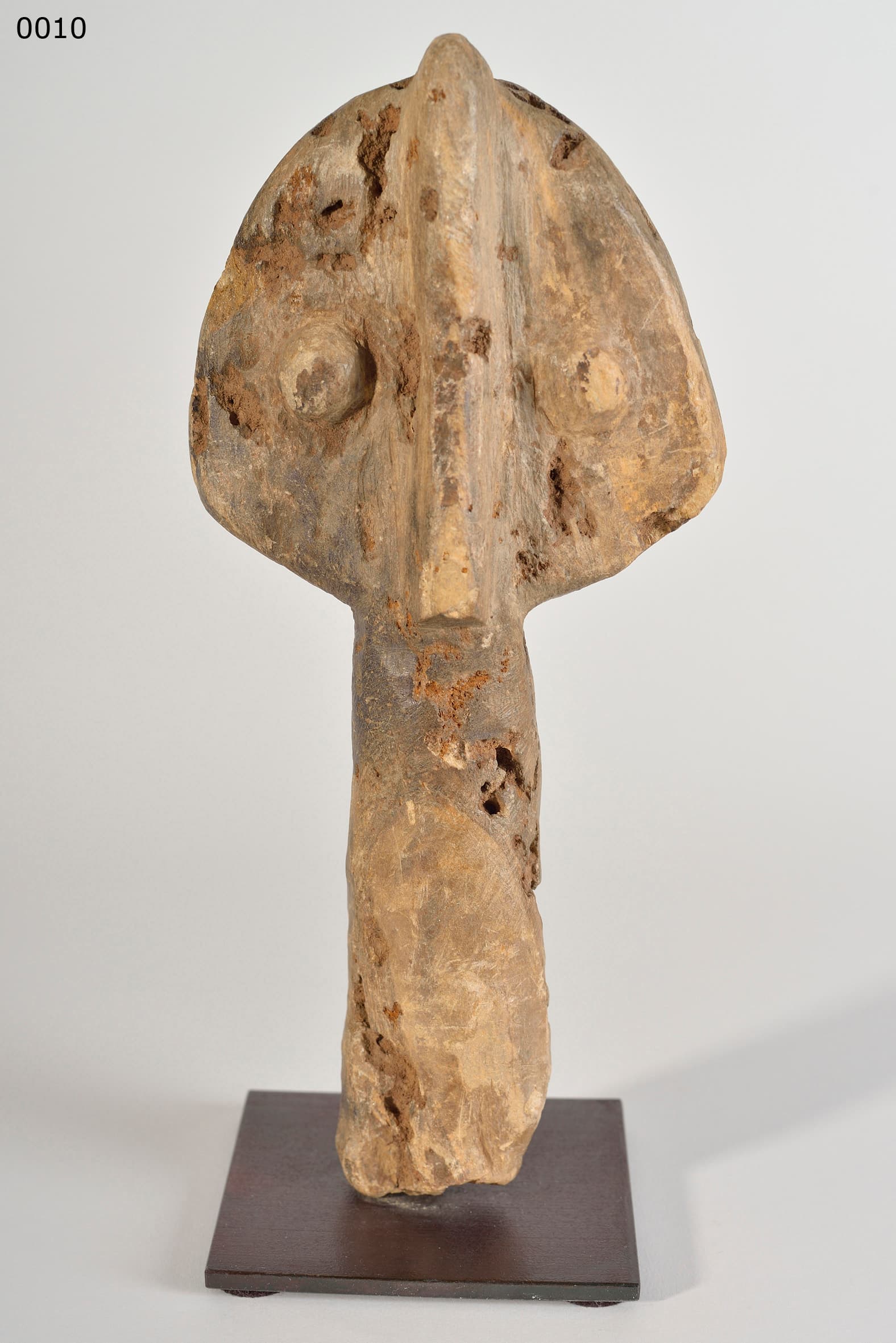
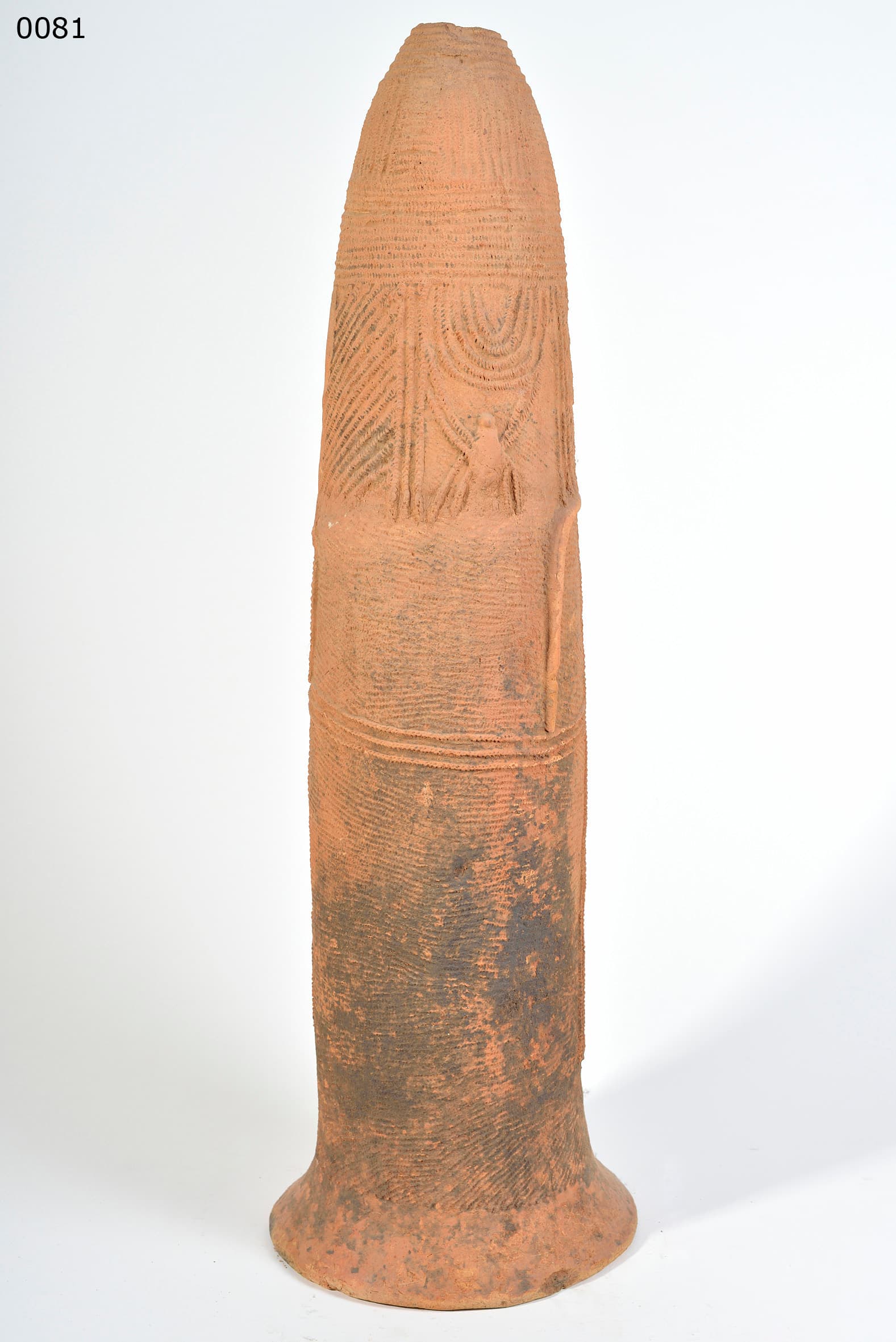
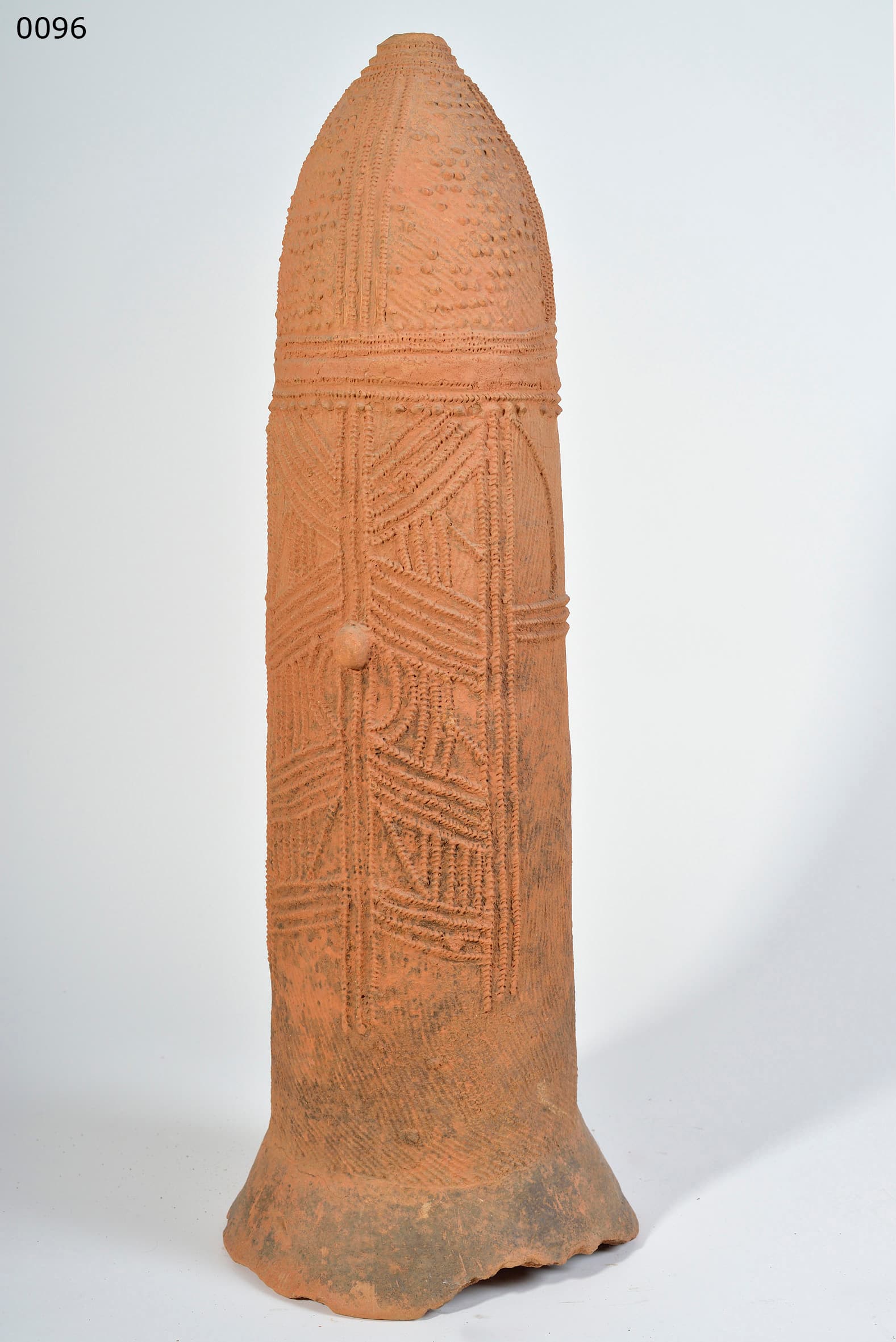
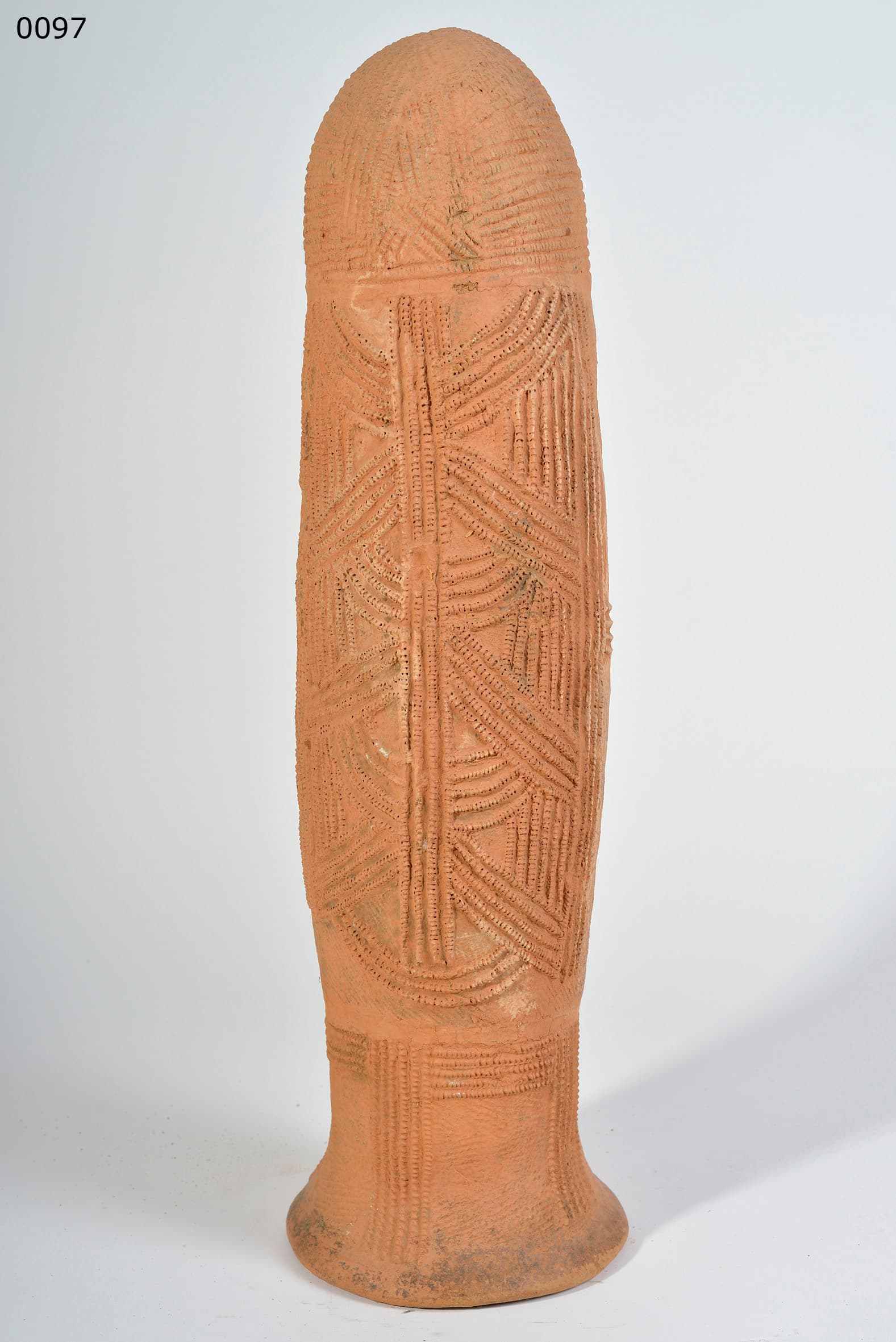
This 21 cm stone stele is carved into a distinctively phallic or columnar shape, featuring a stylized face with small, nodular eyes, and deep, intersecting diagonal bands (an X-shape) carved across its lower half. The stone surface is matte, highly eroded, and deeply integrated with earthen deposits.
1. Aesthetic style — the bura-asinda lithic enigma
The Bura archaeological complex (flourishing between the 3rd and 11th centuries CE in present-day Niger and Burkina Faso) produced a striking array of terracotta and stone funerary monuments. This stone stele is an exercise in extreme, almost phallic abstraction. The human form is reduced to a solid, unyielding cylinder. The most prominent feature is the deep, incised X-pattern crossing the "chest" or "torso." This likely represents a harness, beaded adornment, or highly specific ethnic scarification, serving as a permanent identifier of the deceased's elite rank within this ancient, highly organized society.
2. Ritual function — necropolis markers and the cult of the dead
Bura stone steles were exclusively funerary. During archaeological excavations, figures like this were discovered planted vertically into the ground, marking massive, subterranean terracotta urns filled with human remains and grave goods. The stone served as an eternal, indestructible headstone. It was a terrestrial anchor for the soul of the deceased, providing a specific geographic point where descendants could offer sacrifices and prayers, ensuring the powerful ancestor would continue to intercede on behalf of the living community.
3. Physical patina — geological weathering and sub-saharan antiquity
The age of this artifact is consistent with its profound geological erosion. The hard stone has been significantly softened and pitted by centuries of exposure to acidic soils, seasonal rains, and shifting sands. The incised lines of the crossed harness remain visible but lack the sharp edges of a fresh carving. The deep, calcified dirt embedded within the porous micro-fissures of the stone supports its attribution as an undisturbed component of a Bura necropolis.
Summary
Distilling the human form into an indestructible, phallic column adorned with a cross-harness, this stone stele is a powerful monument of the ancient Bura civilization. Its profound geological weathering and calcified earthen crust are consistent with its attribution as a 3rd–11th century necropolis marker.
Written with AI assistance from the collection appraisal, object photography and our own research; editorially reviewed. Mistakes are possible — corrections are welcome. How we work →