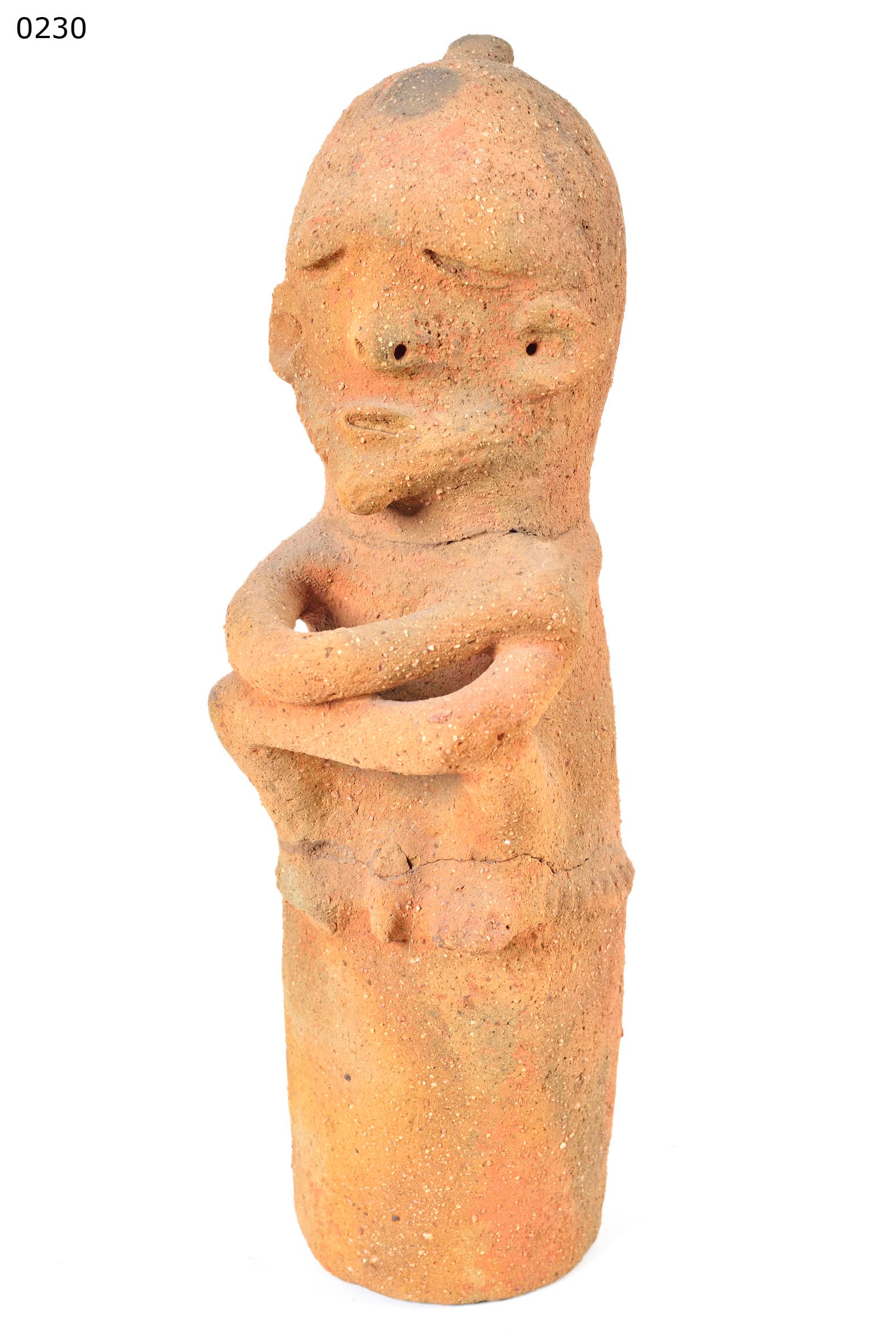
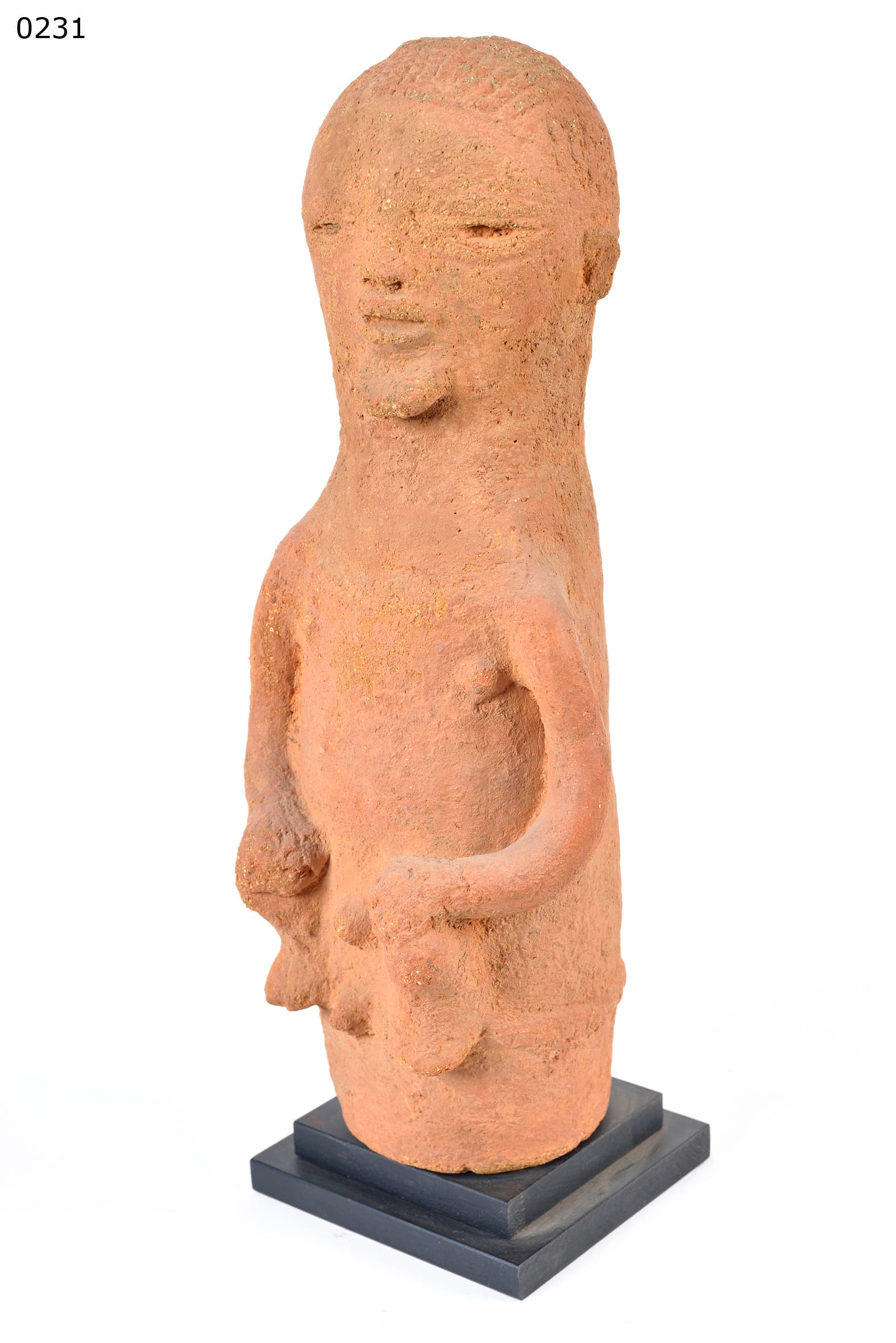
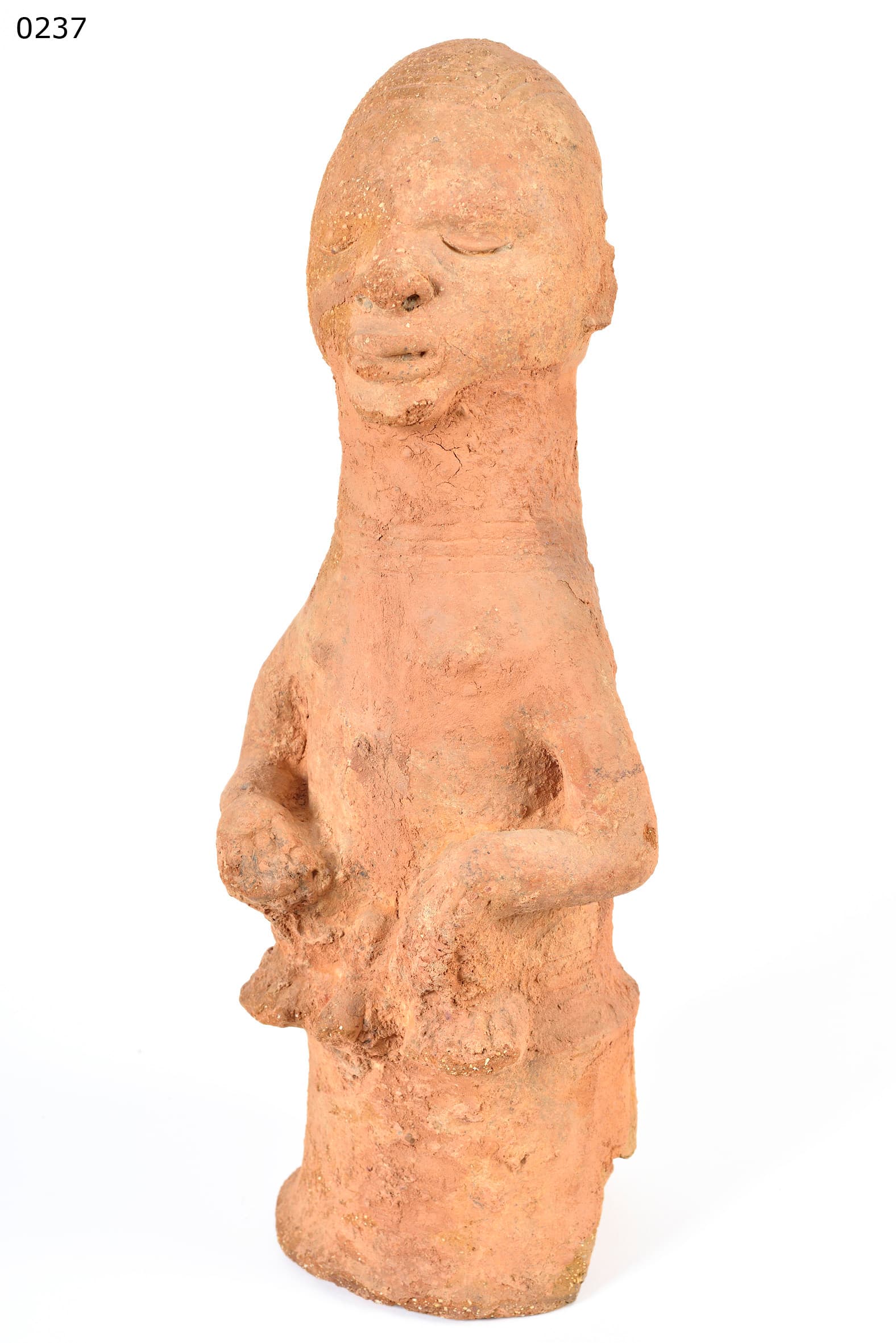
The KATSINA culture of northern Nigeria produced remarkable terracotta heads closely related to the broader Nok tradition. This small, 17-centimetre head displays the classic stylized conventions of ancient Nigerian ceramic art: hollow, almond-shaped eyes with perforated pupils, pronounced brow ridges, and carefully articulated facial planes. The modeled surface captures the dignified bearing of a high-status individual, with refined neck and jaw musculature suggesting the head once surmounted a full-figure composition. At roughly 2,000 years old, it belongs to one of Africa's earliest and most sophisticated sculptural traditions.
1. Aesthetic style — aristocratic simplicity
The KATSINA head exemplifies the restrained clarity of ancient northern Nigerian terracotta. The oval cranial form, symmetrical facial features, and perforated hollow eyes follow conventions established by Nok-period workshops centuries earlier. Delicate incised lines suggest a braided or wrapped coiffure, while the proportionate rendering of nose, mouth, and brow communicates serenity without excessive ornamentation. The scale — 17 centimetres — is intimate, yet the formal discipline projects monumental authority.
2. Ritual function — ancestor commemoration
Early Nigerian terracotta heads served primarily in ancestral veneration and funerary ritual, marking the transition of high-ranking individuals from the world of the living to the realm of protective ancestral spirits. This head's standardised format, consistent with heads excavated near Katsina-Ala and the broader Middle Benue basin, indicates workshop production for ceremonial deposit. Placed in shrines or grave contexts, such heads served as focal points for offerings and prayers directed toward the ancestor's enduring spiritual agency.
3. Physical patina — deep-field calcification
The terracotta body carries a thick encrustation of ochre-toned mineral deposits — iron-oxide and calcareous salts leached from the burial matrix over two millennia. The surface is matte to the touch, retaining traces of original clay slip beneath the calcification layer. Minor surface erosion at the crown and nape confirms genuine long-term soil exposure. These natural alterations are consistent with documented Katsina-region stratigraphic conditions and provide significant authentication value.
Summary
This KATSINA terracotta head, approximately 2,000 years old, is a refined example of ancient northern Nigerian ceramic sculpture. Its aristocratic poise, perforated hollow eyes, and dense mineral patina situate it firmly within the Nok-related tradition of the Middle Benue region — a tradition that gave Africa some of its earliest monumental figurative art.
Written with AI assistance from the collection appraisal, object photography and our own research; editorially reviewed. Mistakes are possible — corrections are welcome. How we work →