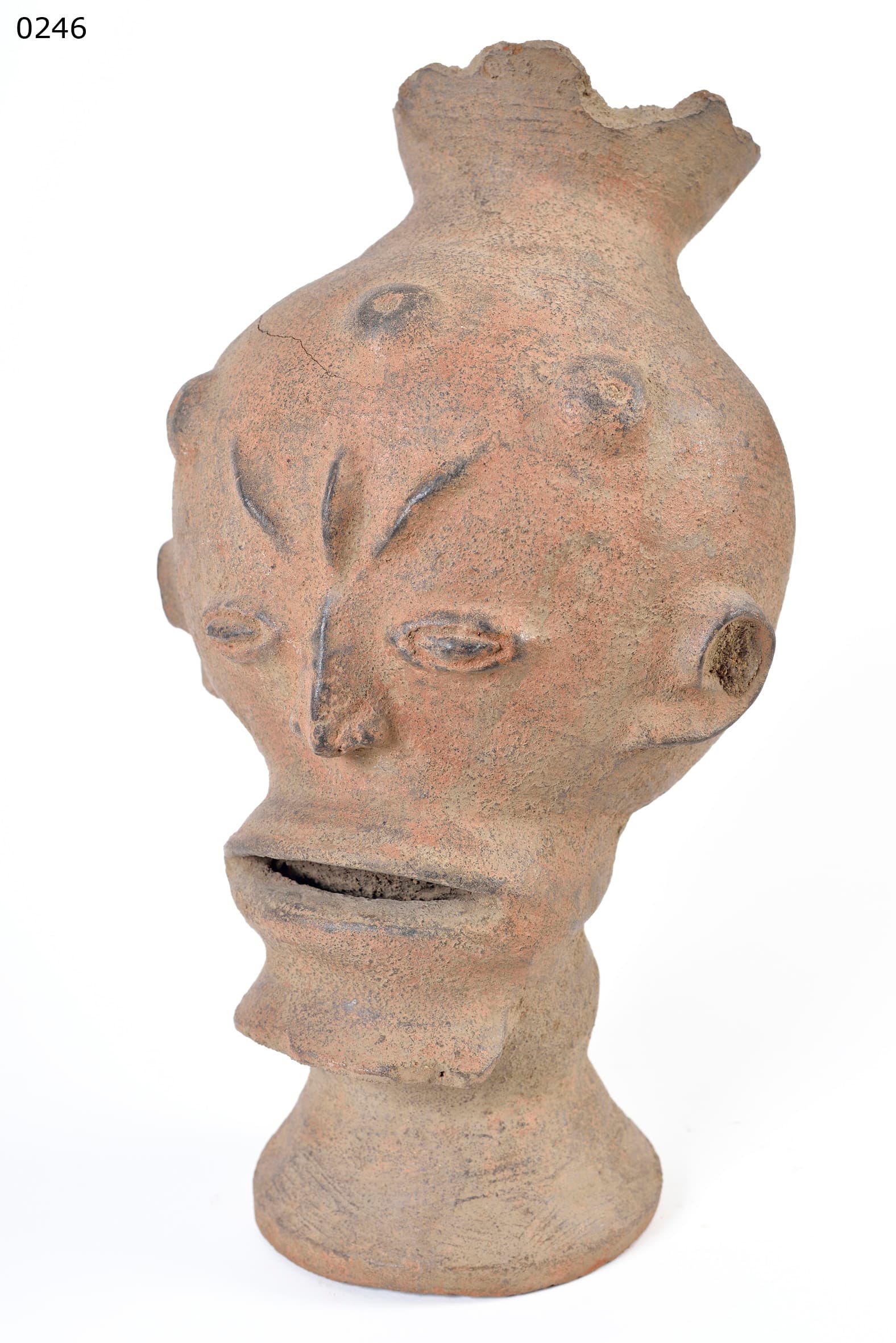
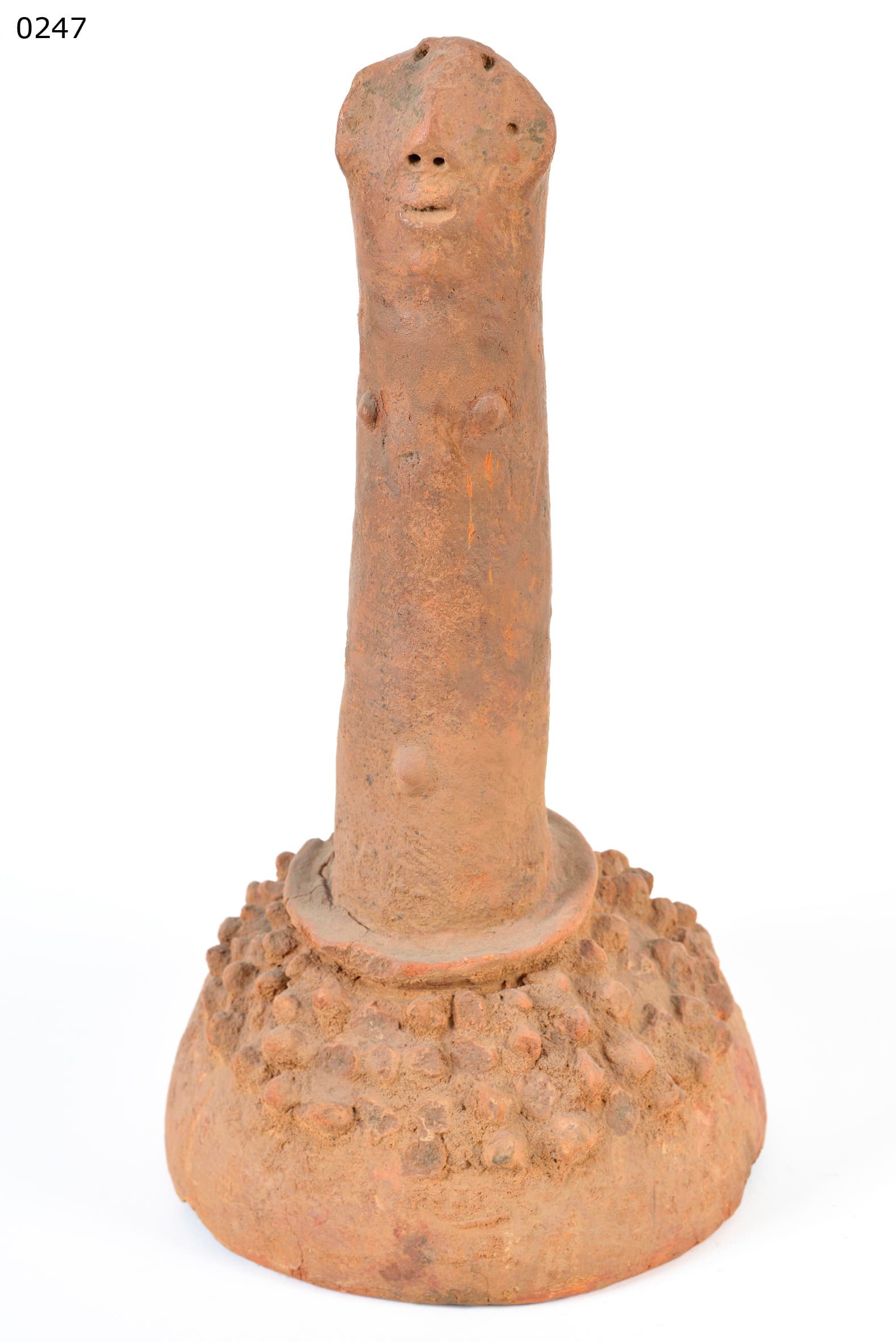
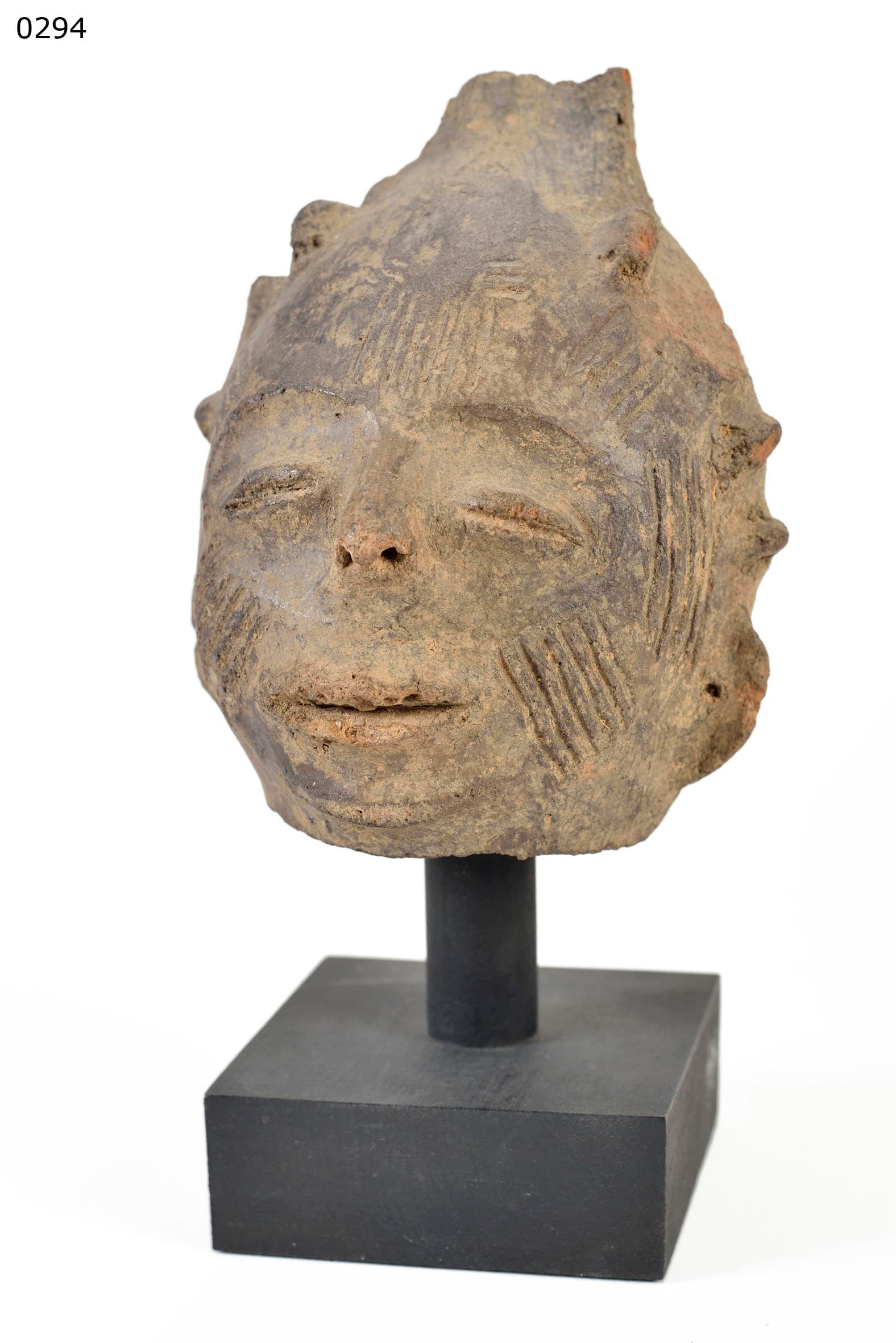
Akan commemorative terracotta heads were produced by specialist women potters and deposited in sacred forest groves following the deaths of royalty and distinguished lineage heads. This 22-centimetre head displays the canonical features of the Akan commemorative tradition: a cylindrical neck, frontal gaze, defined brow and chin, and minimal surface ornamentation that focuses attention on the face as the repository of identity. It bridges the personal and the sacred, preserving the features of the dead for periodic ritual address.
1. Aesthetic style — portraiture of dignity
The AKAN commemorative head exemplifies the tradition's aim of capturing individual character within a formal convention. The facial features — high forehead, defined cheekbones, full lips, and steady gaze — suggest a specific person rather than a generic type, though the stylised treatment prevents literal portraiture. The cylindrical neck, a consistent Akan convention, lifts the face to a forward-looking posture that reads as address or presence. The smooth, burnished clay surface — now aged to a warm brown — was finished to a degree that distinguished it from everyday ceramics.
2. Ritual function — grove shrine presence
After a royal or distinguished person died, a terracotta head was commissioned from specialist potters and deposited in the sacred grove associated with the lineage. On designated days, family members and court officials would visit the grove to make offerings, pour libations, and address the ancestral head directly — consulting the dead on matters of governance, justice, and family welfare. The head served as the permanent earthly seat of the ancestor's spirit, enabling ongoing communication across the boundary of death.
3. Physical patina — forest grove exposure
Grove-deposited Akan heads develop a distinctive surface character from centuries of open-air exposure in humid forest conditions: a mottled grey-brown patina, moss and lichen staining in shaded recesses, and occasional iron-oxide streaking where leaching groundwater deposited minerals on the surface. This head displays all three: the grey-brown overall tone, darker staining in the eye sockets and beneath the chin, and rust streaks along the jaw. No glaze or slip has survived, but the burnished surface still catches light in the way the original potters intended.
Summary
This AKAN commemorative terracotta head, 22 centimetres and spanning the 12th-18th century range, is a fine example of the Asante-region funerary head tradition. Its dignified portraiture, cylindrical neck, and forest-grove patina confirm its identity as a shrine-deposited ancestral presence piece — a permanent earthly seat for the spirit of a distinguished Akan lineage head.
Written with AI assistance from the collection appraisal, object photography and our own research; editorially reviewed. Mistakes are possible — corrections are welcome. How we work →