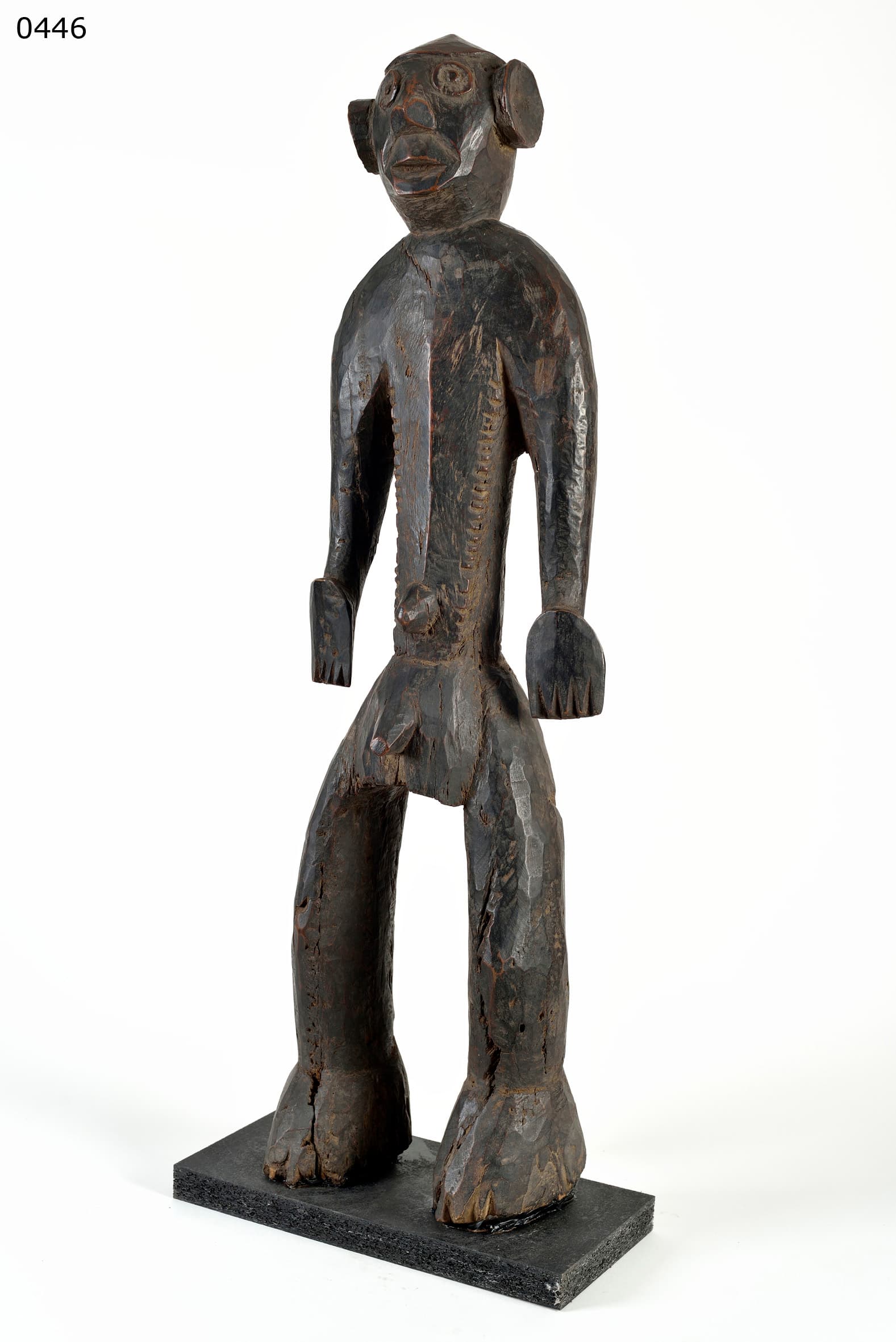
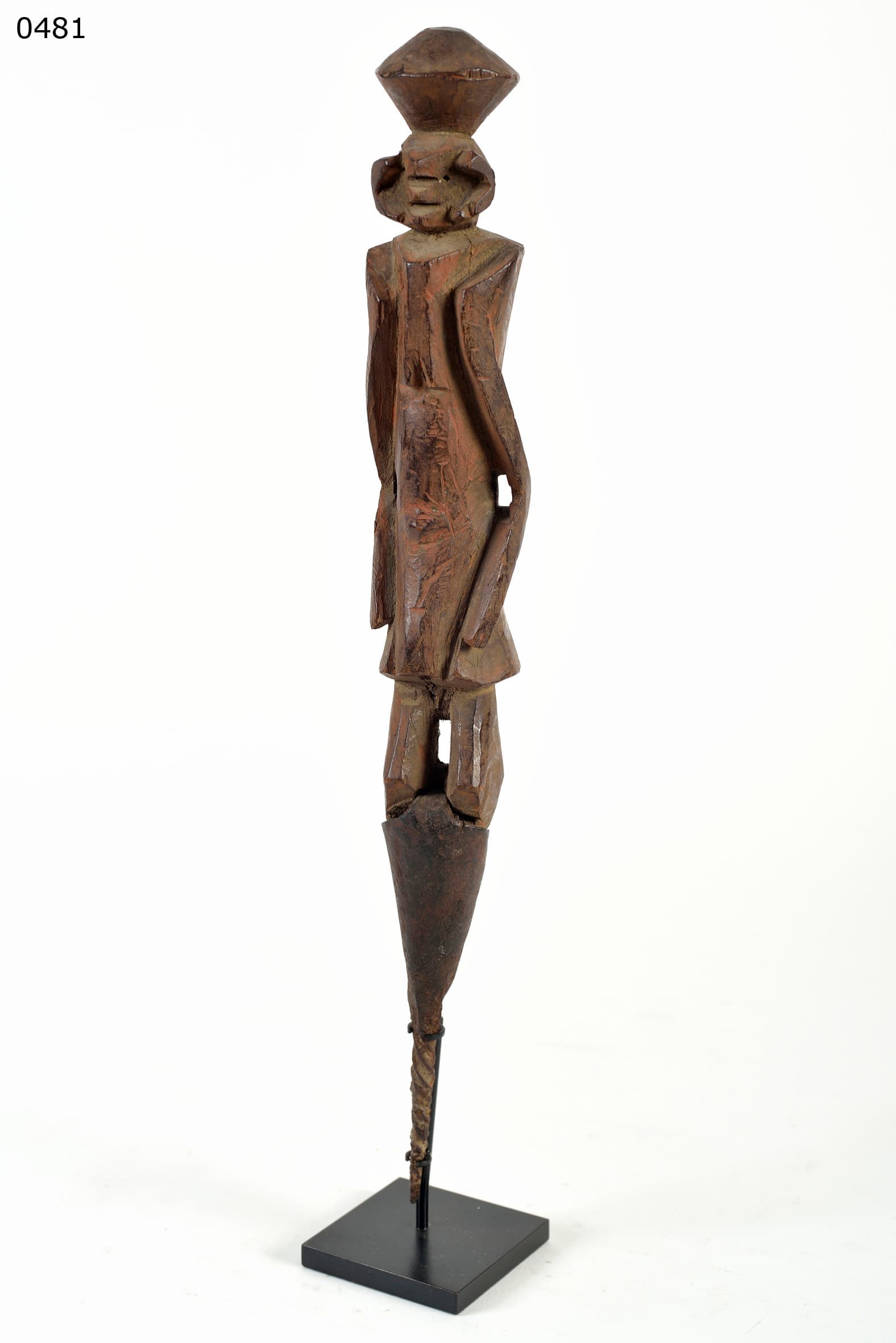
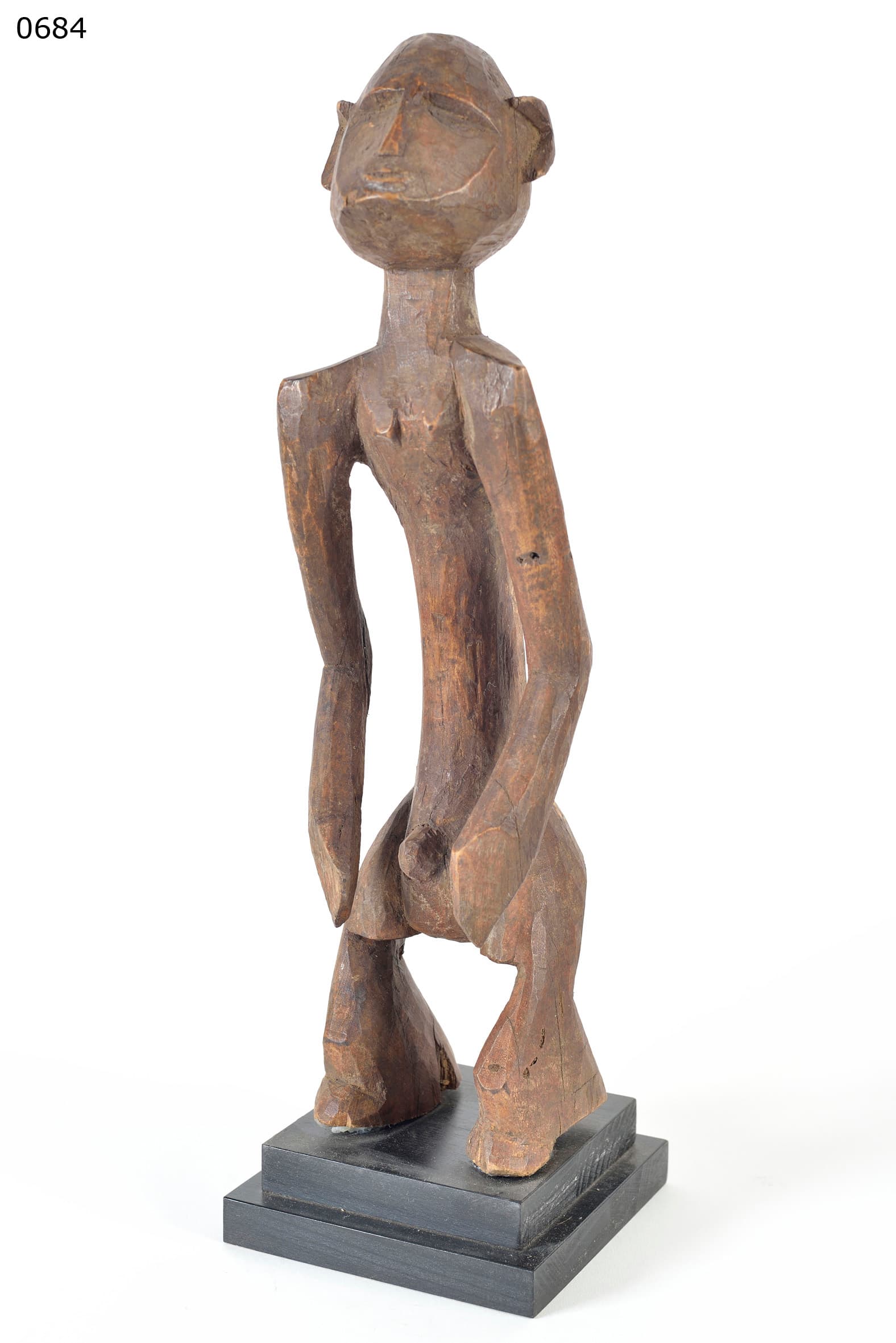
This pair of highly abstracted wooden figures features bulky, rounded heads, extremely minimalist, barely-there facial features, and thick, peg-like legs. The wood is severely eroded, entirely covered in a dry, crusty, earth-toned and grey patination.
1. Aesthetic style — volumetric minimalism in the benue river basin
The artistry of the Chamba people, located in the Benue River valley, is characterized by a deliberate rejection of intricate detail in favor of heavy, volumetric abstraction. These two statues exemplify this brutalist aesthetic. The bodies are reduced to basic geometric cylinders, and the heads are simple, swollen domes. The arms, carved in shallow relief against the torso, and the peg-like legs emphasize weight and immobility. This stylistic minimalism forces the viewer to focus on the sheer, imposing mass of the figures rather than individual human portraiture.
2. Ritual function — veneration of the dead and divinatory shrines
Figures of this type were typically carved as male and female pairs to represent the founding ancestors of a lineage or powerful bush spirits. Kept in specialized, dark shrines overseen by male elders, they served as critical points of contact between the living and the dead. During times of agricultural crisis, sickness, or social upheaval, diviners would petition these heavy, silent figures, pouring libations over them to secure their protection and guidance. Their immovable aesthetic perfectly mirrors their function as eternal anchors for the lineage.
3. Physical patina — ritual encrustation and environmental erosion
The profound weathering of these statues is consistent with a long history of use and environmental exposure. The surfaces are completely bereft of any smooth, handled polish; instead, they are coated in a thick, friable crust of dried libations, dust, and oxidized wood cells. The deep, organic erosion — particularly around the bases and the shoulders — indicates they were likely planted directly into the earth floor of a shrine. This heavy, crusty patination is a highly sought-after characteristic associated with traditional use in Benue Valley antiquities.
Summary
These Chamba ancestor figures are notable examples of the heavy, volumetric abstraction associated with the Benue River Basin. Their brutalist presence and thick, shrine-worn crust suggest a significant history of ritual use.
Written with AI assistance from the collection appraisal, object photography and our own research; editorially reviewed. Mistakes are possible — corrections are welcome. How we work →