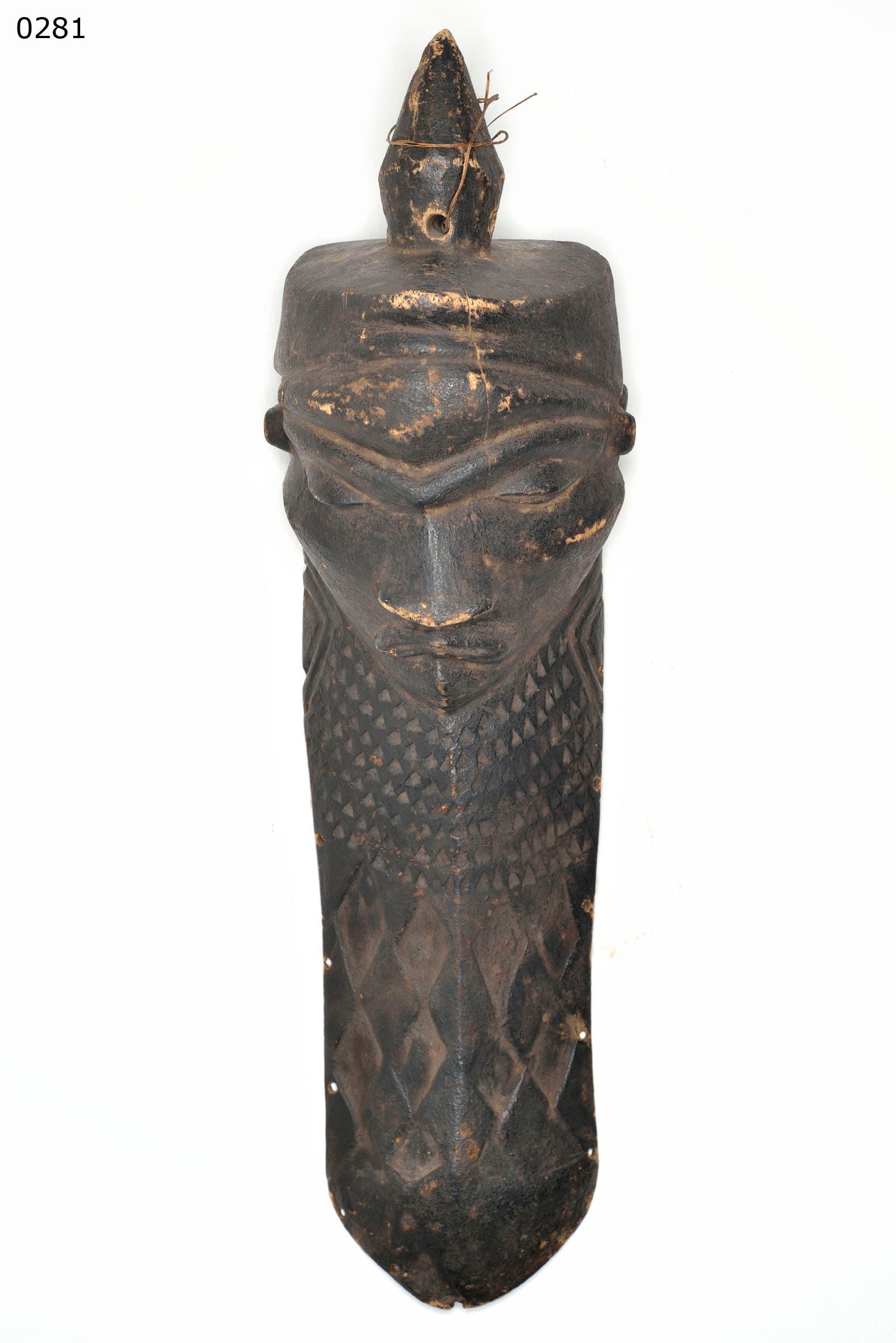
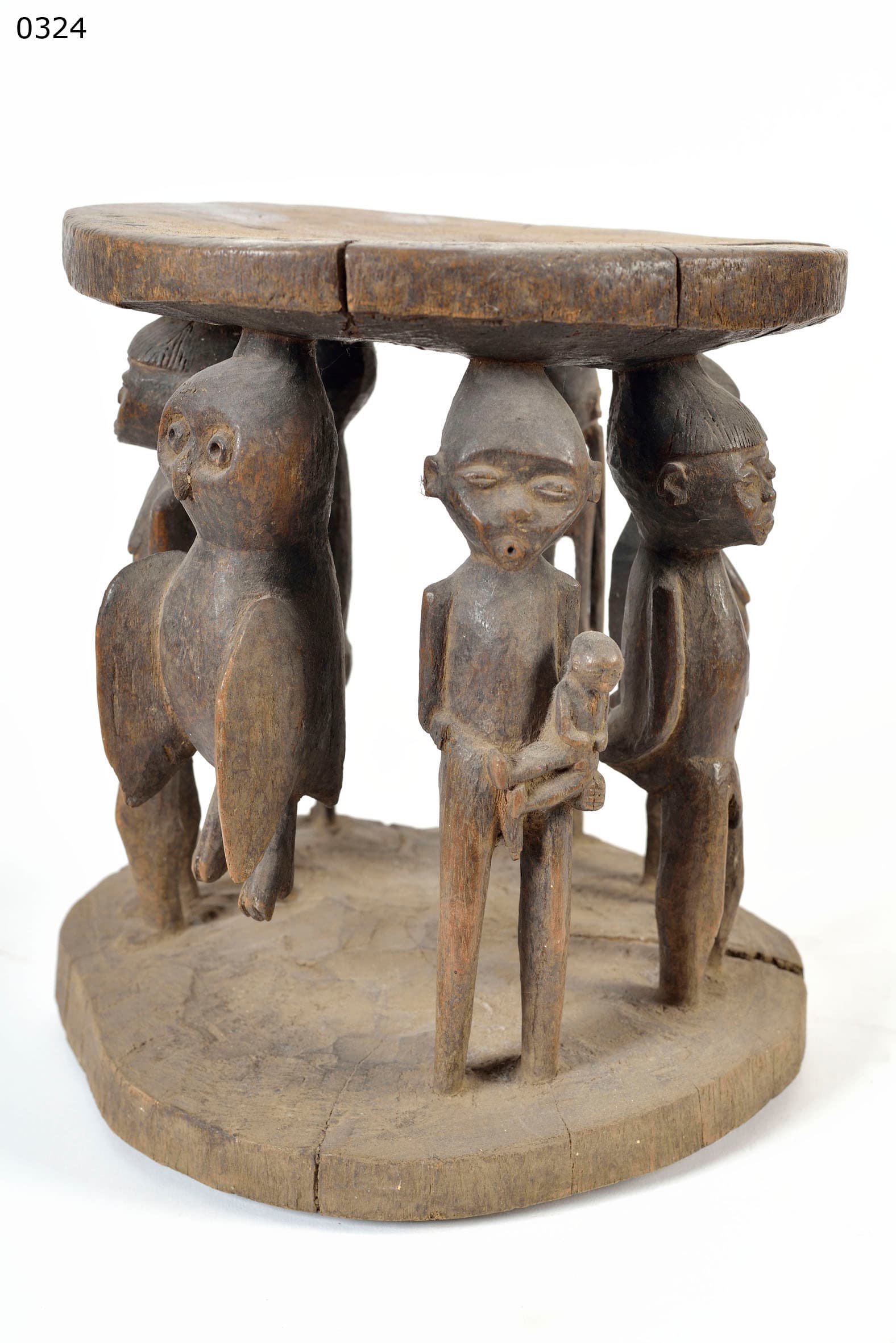
This object features a slender, dark wooden body standing rigidly with arms outstretched, topped with a canonical Pende mask face exhibiting pointed ears or horns. The figure is elaborately "dressed" in a thick, multi-layered skirt of dried raffia and woven fiber.
1. Aesthetic style — the translation of masquerade into statuary
The Pende are famous for their dynamic Mbuya (village masquerades), but this piece translates the ephemeral, kinetic energy of the mask into a stationary, structural form. The head of the figure closely replicates the geometric planes of classic Pende masks — the continuous, sweeping brow line, the heavy, downcast eyelids, and the sharply pointed ears or tufts of hair. By affixing a masquerade face to an architectonic, static body, the sculptor has created a permanent, three-dimensional avatar for a spirit that is usually only present during fleeting, seasonal dances.
2. Ritual function — the minganji and stationary ancestral shrines
While masks are worn by living dancers, a figure of this scale and composition was likely utilized within an initiation camp or a specialized ancestral shrine. Among the Pende, the Minganji are the powerful, dangerous spirits of the ancestors. When the masquerade was not actively being performed, the spiritual presence of the mask needed to be safely housed and venerated. This figure acts as a permanent altar, dressed in the exact raffia costume (malamba) worn by the dancers, serving as an anchor for the spirit to receive offerings of palm wine and kola nut throughout the year.
3. Physical patina — mixed-media aging and desiccated raffia
The physical presence of this object is defined by the heavy aging of its mixed materials. The underlying wood has oxidized to a deep, dark brown, with a matte surface indicating it was kept in the smoky environment of a shrine house. The massive raffia skirt is highly desiccated, brittle, and has faded to a pale, golden-straw color, showing organic fraying and insect wear consistent with long-term storage in the tropics. The integration of these fragile organic elements alongside the wood is consistent with its age and supports its attribution as an authentic ethnographic object.
Summary
This Pende altar figure bridges the gap between the kinetic masquerade and static architectural veneration. Its mask-like face and desiccated raffia costume, showing wear consistent with age, make it a compelling and complete ethnographic artifact.
Written with AI assistance from the collection appraisal, object photography and our own research; editorially reviewed. Mistakes are possible — corrections are welcome. How we work →