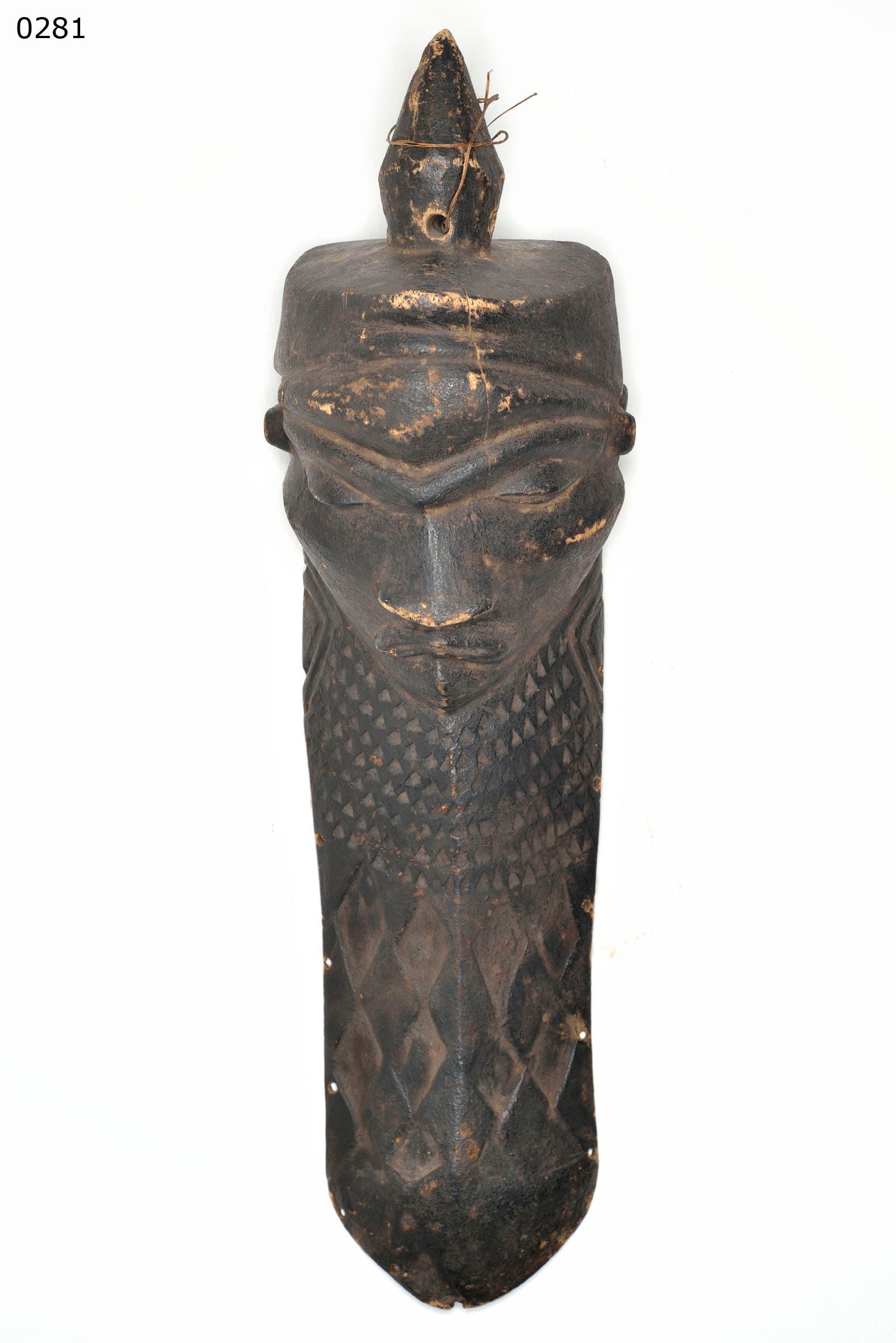
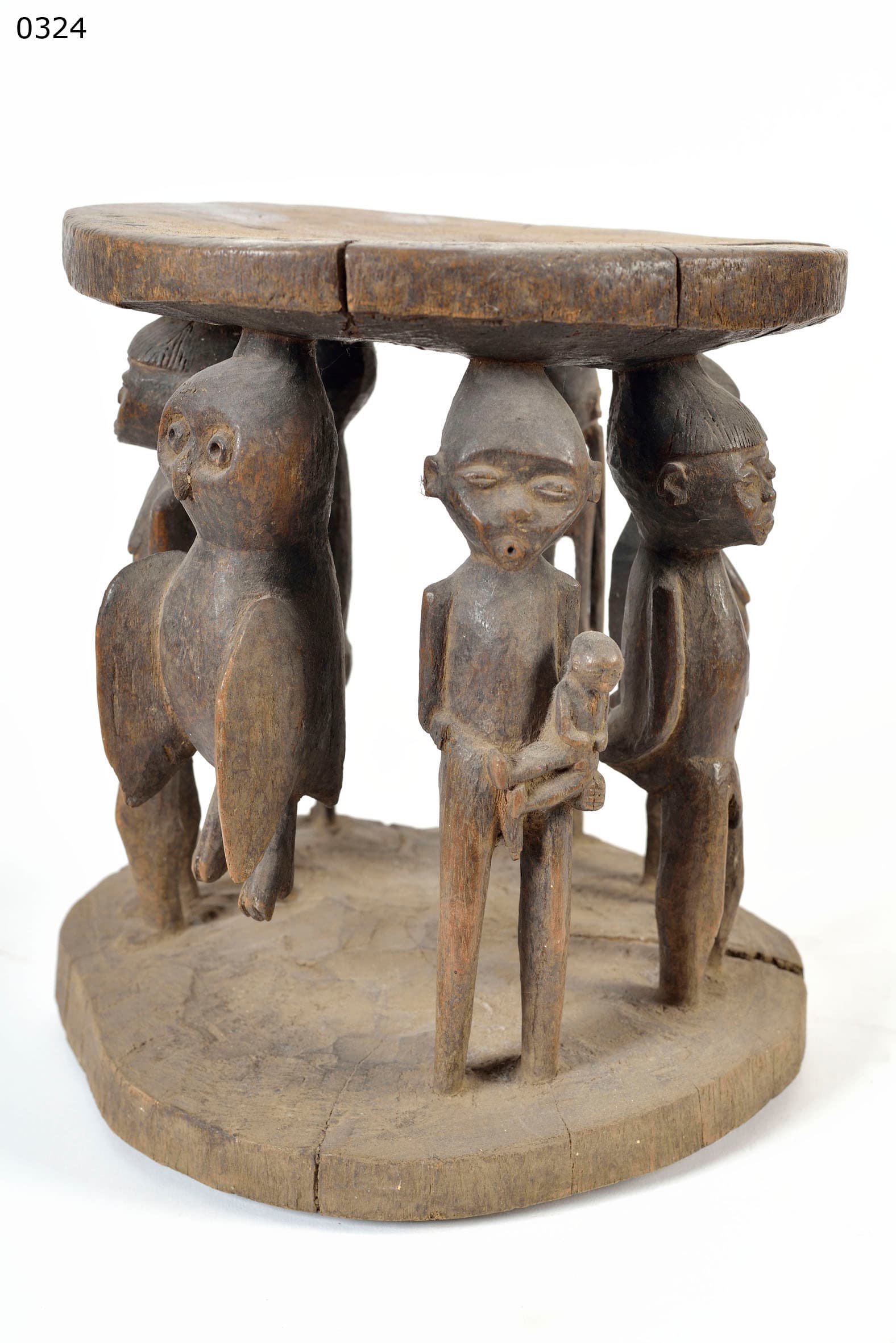
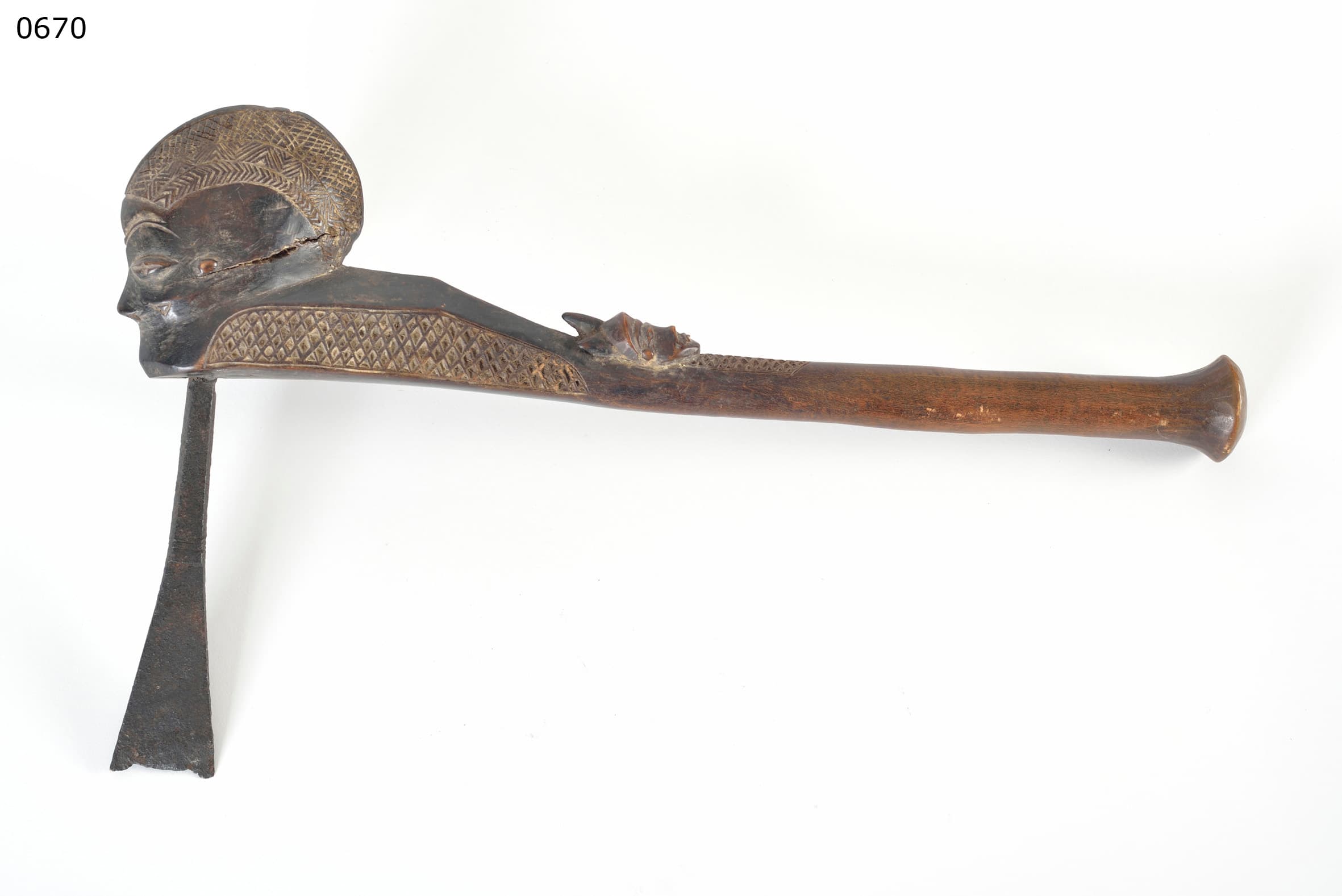
A compact Pende Mbuya face mask (mid 20th C., 26 cm) from DR Congo — featuring the Pende heart-shaped structure, with a continuous heavy V-shaped unibrow, downcast bulging eyes, and a sharply projecting triangular nose. The dry deeply aged wood is painted with alternating geometric zones of faded red, white, and dark earth pigments.
1. The mbuya aesthetic and facial geometry
The Central Pende are recognized for the Mbuya masking tradition, which relies on a highly specific standardized facial geometry.
- V-Unibrow + Triangular Nose: The defining hallmark — the heavy unbroken brow line that swoops down to form the bridge of the nose.
- Bedroom-Eye Introspection: Heavy-lidded downcast "bedroom" eyes project an aura of aloofness, introspection, and ancestral solemnity — manipulating geometric volumes to create intense psychological expression.
2. Mukanda initiation and village theatrics
The Mbuya masquerade is a theatrical event celebrating the successful return of young boys from the Mukanda (isolated circumcision and initiation camps).
- Village Archetype Cast: The masks represent a vast cast of village archetypes, ancestors, and comedic characters — the chief, the flirt, the diviner, the fool.
- Satirical Pantomime: Performers act out elaborate satirical pantomimes that entertain the community while reinforcing moral boundaries and social norms for the newly initiated men.
3. Pigment oxidation and performance wear
The patina is consistent with use in energetic outdoor Congolese festivals.
- Bonded Native Pigments: Natural polychrome (white kaolin, red tukula, black soot) has deeply faded, flaked, and bonded with the cellular structure of the dry wood — a process typical of traditional materials rather than modern synthetic paints.
- Dusty Matte Friction Surface: Lacks commercial varnish, retaining instead a dusty matte surface with significant friction wear along the chin and interior rim — suggesting it was worn by an active dancer.
Summary
This Pende Mbuya mask exhibits the dramatic V-shaped facial geometry and heavy-lidded expression characteristic of Congolese portraiture. Its deeply faded native polychrome pigments and performance wear are consistent with artifacts of the Mukanda initiation cycle.
Written with AI assistance from the collection appraisal, object photography and our own research; editorially reviewed. Mistakes are possible — corrections are welcome. How we work →