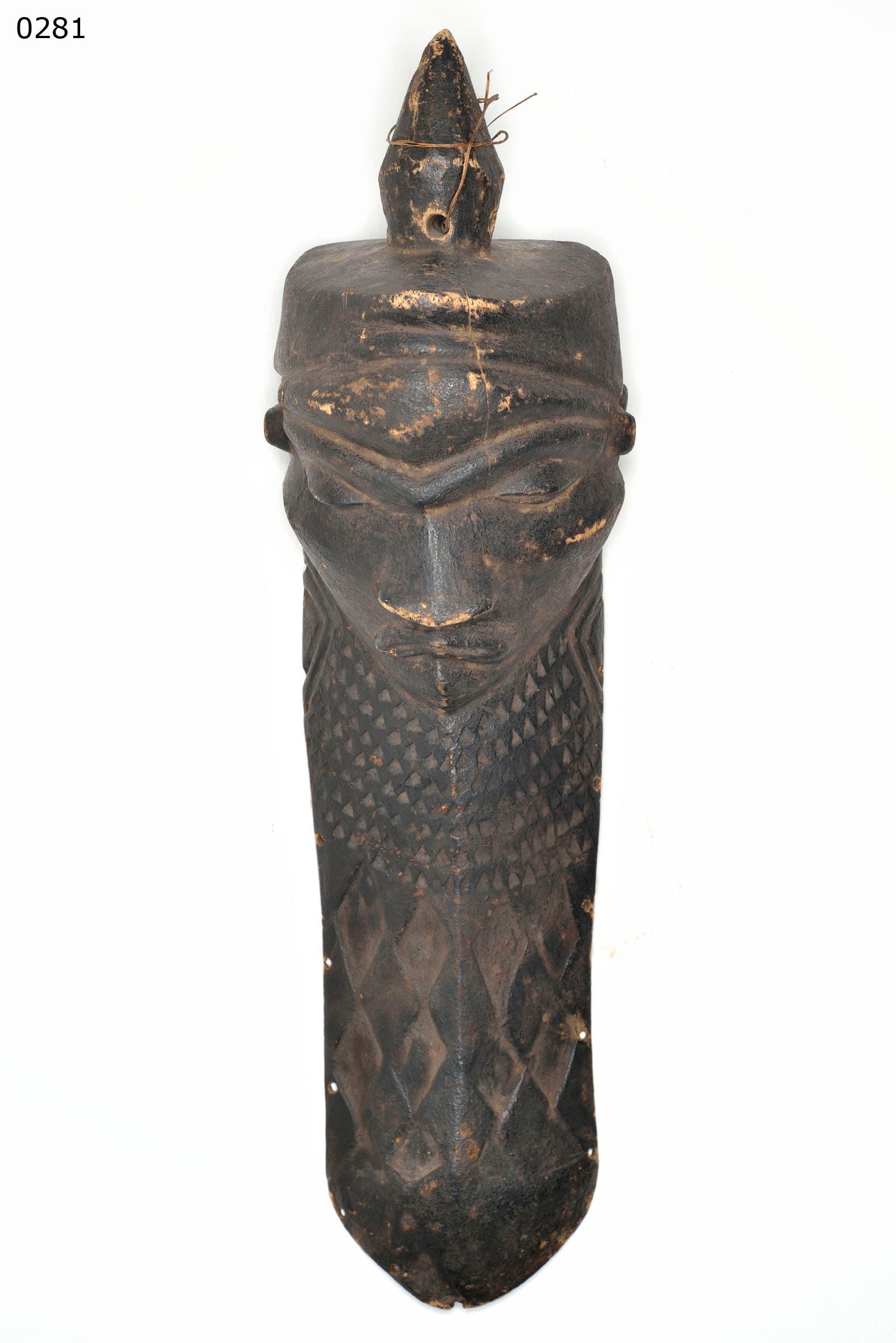
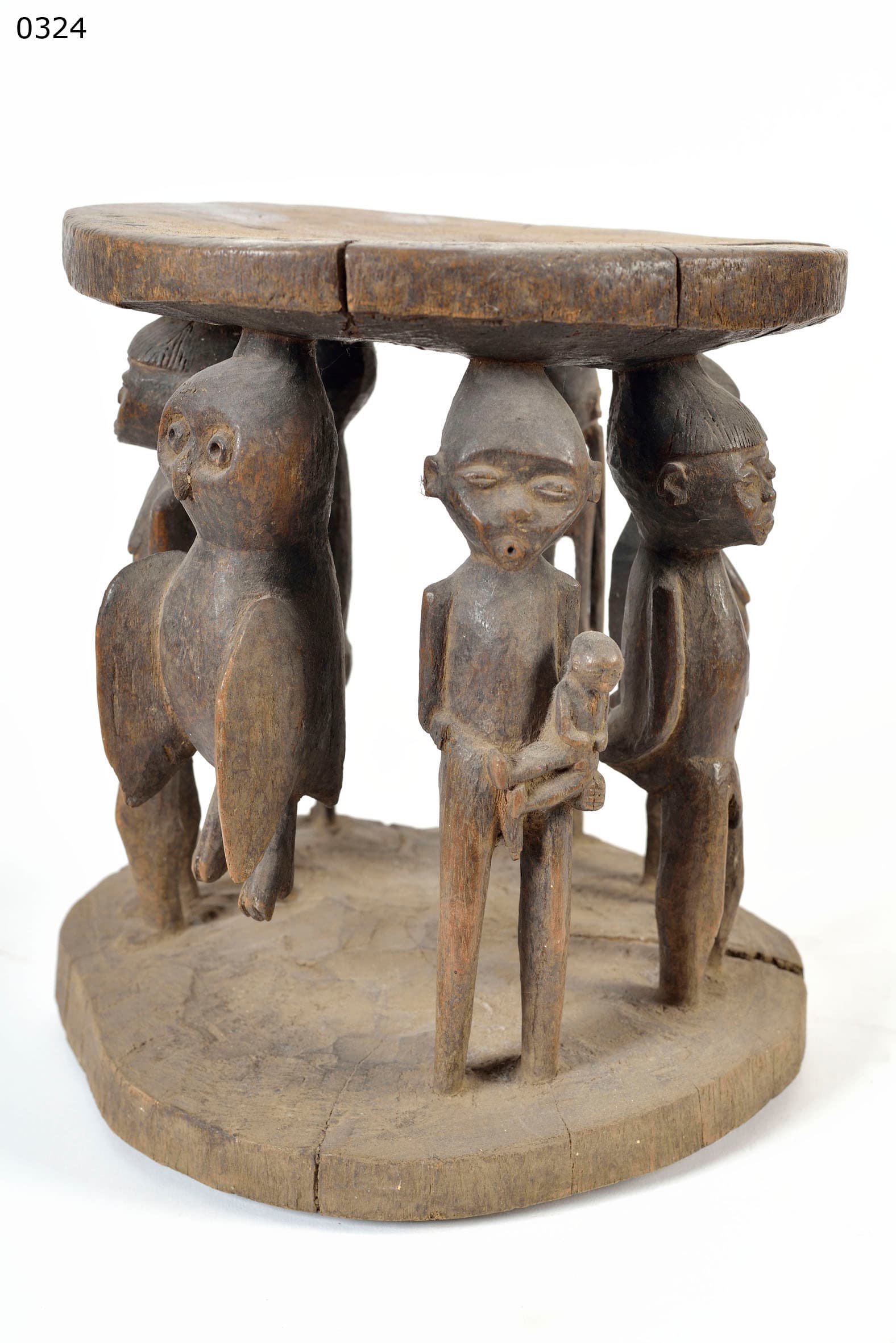
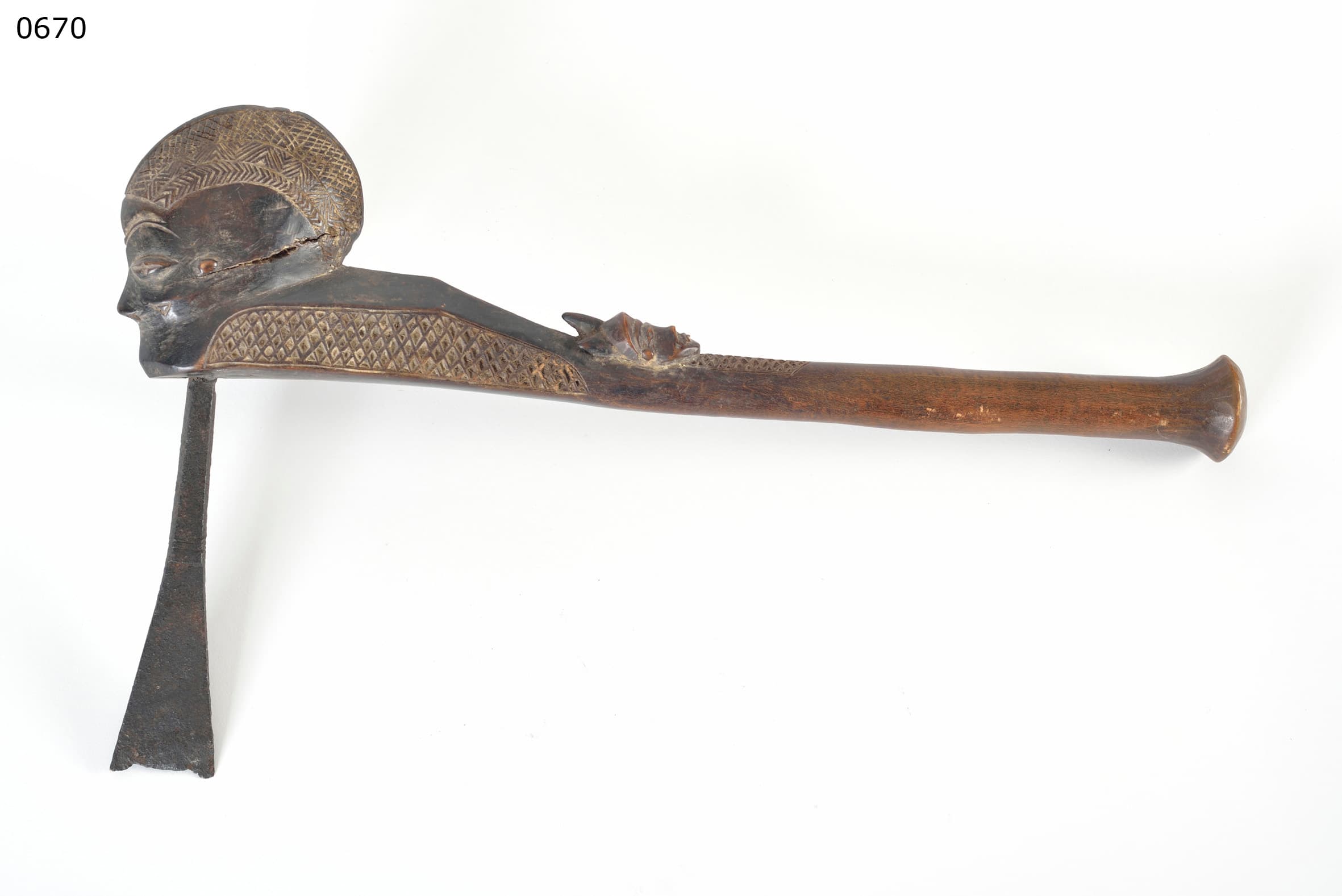
A striking rectangular Pende architectural panel (1st half 20th C., 91 cm) from DR Congo — a high-relief carved face in the center exhibiting the classic Pende continuous unibrow and triangular nose. The panel surrounding the face is meticulously carved with hundreds of interlocking geometric triangles, painted in alternating faded shades of red, white, and black.
1. Architectural polychrome and the mbuya aesthetic
The Pende are renowned for their highly expressive Mbuya masks, and this object illustrates the application of such portraiture to grand-scale architecture.
- Classic V-Unibrow + Triangular Nose: The artist has carved a classic Pende face — the heavy continuous V-shaped unibrow that seamlessly merges into the sharp triangular nose — in high relief from the heavy timber.
- Geometric Tapestry: The surrounding panel features a complex display of Congolese geometric design — deeply incised interlocking triangles creating a rhythmic pattern of color and shadow.
2. The kikumbi and initiation prestige
A decorated panel of this scale (91 cm) suggests a significant architectural element rather than casual decoration.
- Lintel for Chief's Hut or Initiation Lodge: Likely served as the lintel or door frame for a chief's dwelling or a Kikumbi (the sacred initiation hut for young boys) — the carved face acted as an ancestral sentinel watching over the threshold.
- Pangolin/Leopard Geometric Protection: The intricate geometric triangles (Minganji motifs) are deeply symbolic — often representing pangolin scales or leopard spots, signifying the dangerous protective magic of the wilderness guarding the sacred initiation space from female intrusion and witchcraft.
3. Environmental desiccation and faded pigments
The patina shows wear consistent with early 20th-century exposure.
- Exterior Mounted Exposure: Consistent with exterior mounting, the wood is dry and oxidized — exhibiting stabilized desiccation cracks running longitudinally across the panel.
- Sun + Rain Bonded Pigments: Natural earth-based red, white, and black pigments have faded and flaked, bonding with the cellular structure of the aged timber in a manner consistent with natural aging.
Summary
This Pende architectural panel presents a fusion of high-relief ancestral portraiture and polychrome geometric design. Its environmental desiccation and faded pigments are consistent with an authentic artifact of Congolese initiation rites.
Written with AI assistance from the collection appraisal, object photography and our own research; editorially reviewed. Mistakes are possible — corrections are welcome. How we work →