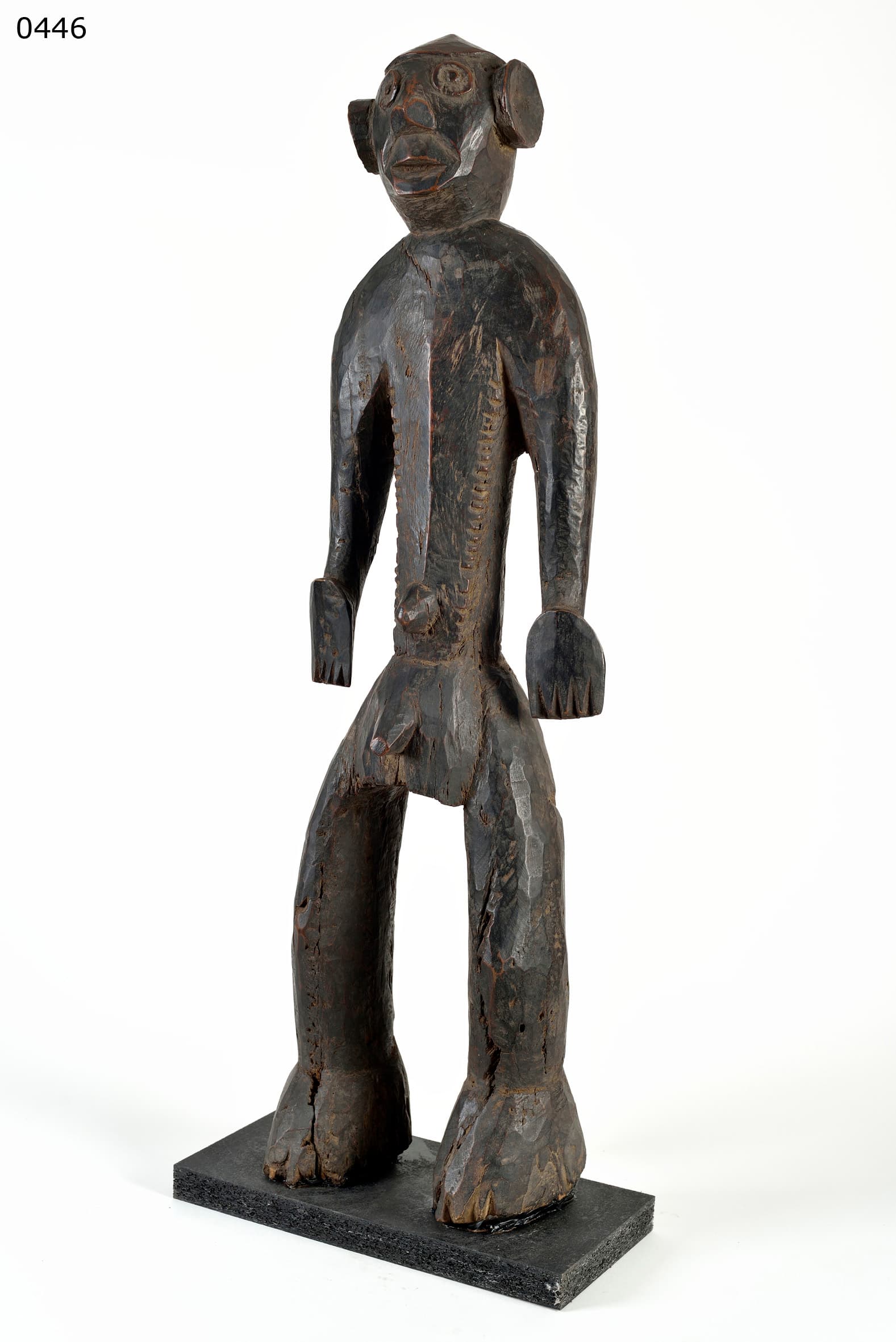
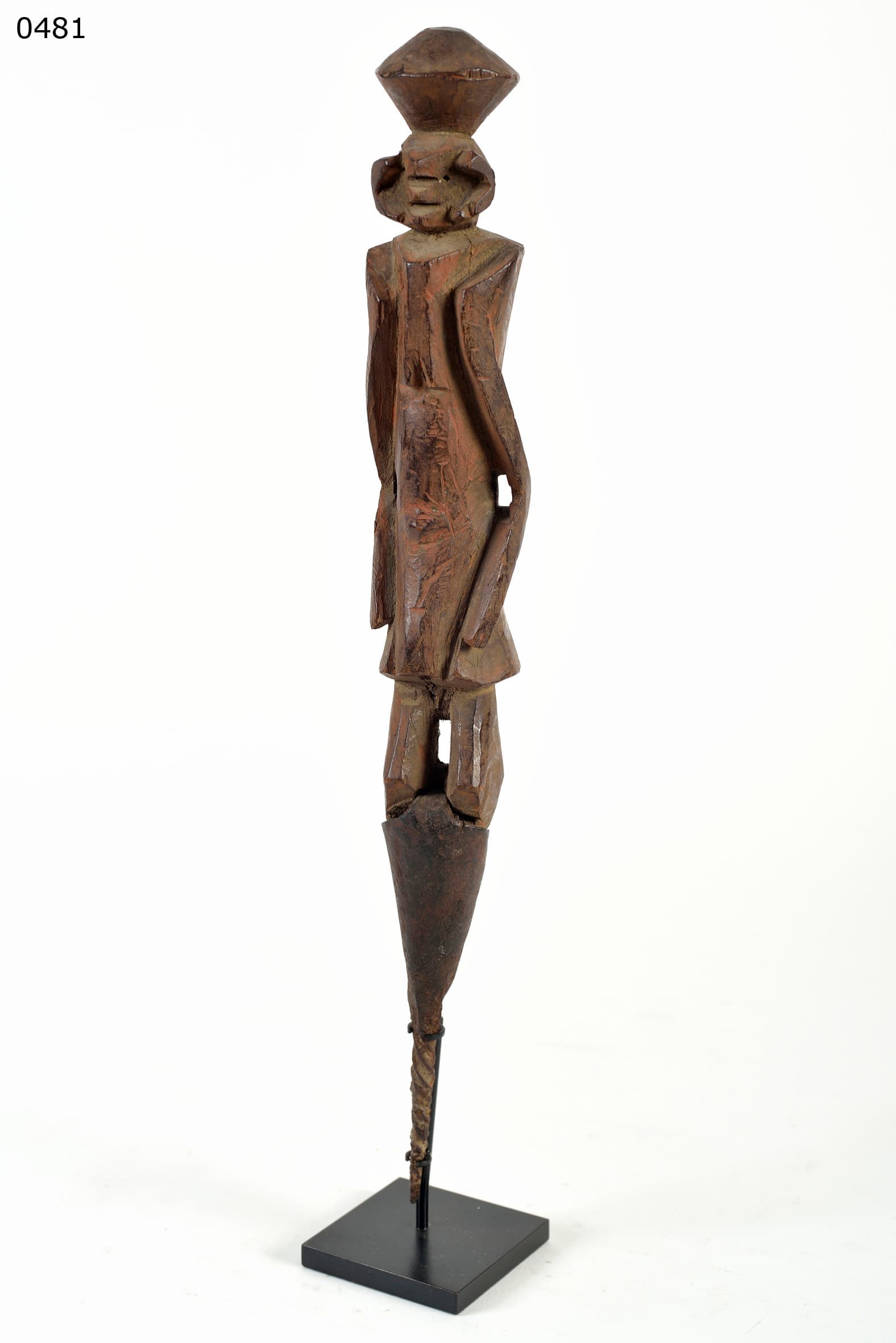
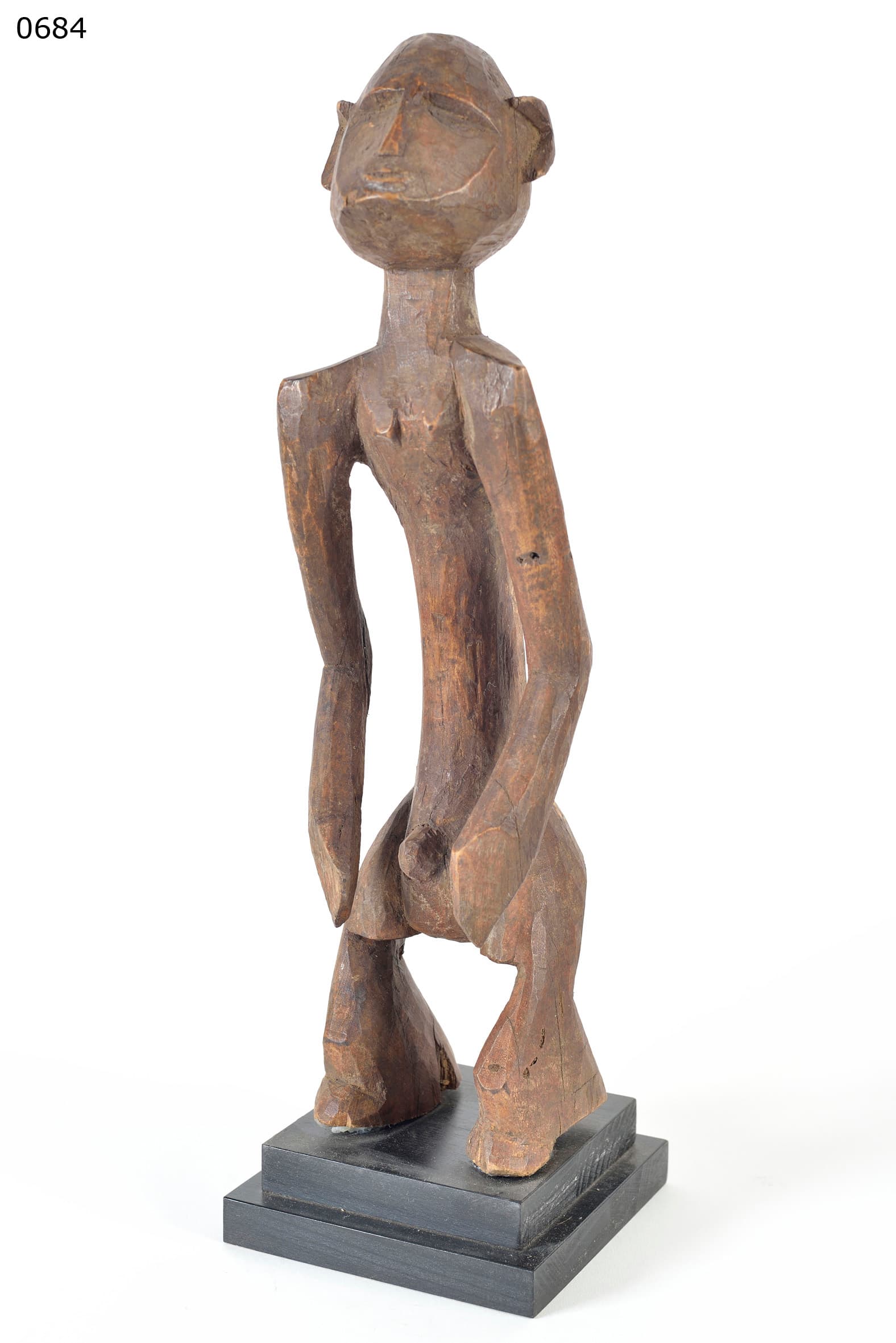
This highly abstracted wooden figure features a long, slightly curved torso, a prominent sagittal crest on the head, and distinctive, massive, paddle-like hands that flank its body. The wood is entirely covered in a thick, dry, reddish-brown crust, indicating heavy ritual application of camwood and oil.
1. Aesthetic style — the paddle-hand abstraction of the Chamba
The Chamba people of the Benue River Basin are masters of sculptural reduction, and this figure is a quintessential example of their unique formal vocabulary. The defining characteristic of this style is the complete abstraction of the arms and hands into massive, flat, spade-like appendages that extend parallel to the torso. The face is barely suggested beneath the sweeping dome of the head. This extreme, heavy-set cubism prioritizes the symbolic, sweeping gesture of the arms over any attempt at anatomical realism, creating a form of raw, imposing weight.
2. Ritual function — bush spirits and the sweeping of malevolence
These statues are utilized in highly secretive divination and healing cults, often representing dangerous bush spirits (tau) that the Chamba believe cause illness or madness if left unappeased. The massive, paddle-like hands are not merely stylistic; they are deeply symbolic. In Chamba ritual thought, these hands are conceptually used by the spirit to "sweep away" evil, disease, and witchcraft from the village, or conversely, to capture and strike down enemies of the cult. Placed deep within dark shrines, they act as the heavy, immovable enforcers of the community's spiritual health.
3. Physical patina — camwood encrustation and shrine taphonomy
The extraordinary surface of this figure is the result of continuous, accumulative ritual feeding. The thick, reddish-brown patina is a hardened mixture of crushed camwood powder (tukula), palm oil, and earth. Because this piece was kept stationary in a shrine and never polished for public display, the encrustation has built up into a highly friable, dry crust that obscures the original chisel marks. The deep, dark oxidation of the exposed wood at the base suggests it was likely planted directly into the shrine floor for decades.
Summary
A formidable expression of Nigerian brutalist carving, this Chamba power figure utilizes massive, sweeping abstraction to convey raw spiritual force. Its iconic paddle-like hands and dense, red-wood crust make it a classic example consistent with the Benue Valley tradition.
Written with AI assistance from the collection appraisal, object photography and our own research; editorially reviewed. Mistakes are possible — corrections are welcome. How we work →