This crude, peg-like wooden figure is almost entirely consumed by a massive, chaotic accumulation of tied cordage, animal hide, sacrificial earthen matter, and an attached, rusted metal horn or bell. The underlying wood is dark and heavily degraded, while the binding materials are stiff with age and blood libations.
1. Aesthetic style — the anti-aesthetic of Voodoo accumulation
This object is a classic Bocio (empowered body), originating from the Fon and Ewe cultures of the Republic of Benin, the heartland of traditional Voodoo (Vodun). Unlike canonical African statuary that strives for visual beauty, the Bocio utilizes an intentional anti-aesthetic. The crude carving of the wood is irrelevant; the true power and visual impact of the piece lie entirely in the violent, chaotic accumulation of materials bound to its surface. This assemblage of ropes, iron, and sacrifice represents the raw, terrifying, and unpredictable nature of the Vodun deities.
2. Ritual function — psychological defense and surrogate suffering
A Bocio is an incredibly potent psychological and spiritual tool. Planted in the ground at the entrance to a home or within a shrine, it functions as a magical surrogate or decoy for its owner. When a curse, a disease, or a malevolent spirit targets the human client, the Bocio "catches" the attack. The tight ropes and cords physically and magically bind the evil energy, trapping it within the object. The attached metal horn may have been used to whistle or call the spirits during the activation ritual, overseen by a Fa diviner.
3. Physical patina — sacrificial taphonomy and extreme encrustation
The physical reality of this Bocio is overwhelming and is consistent with intense, traditional ritual use. The object is coated in a thick, friable, and deeply opaque crust of organic matter — likely a mix of palm oil, chicken blood, cornmeal, and local soil. The fibrous cords are stiff and brittle with this accumulated matter, and the metal horn exhibits deep, flaky red oxidation. The peg base has been blunted and eroded in a manner consistent with exposure to the humid earth of Benin, making this a notable example of historical Vodun practice.
Summary
A terrifying and visually overwhelming artifact of Republic of Benin Voodoo, this Bocio is a physical manifestation of psychological defense and raw spiritual accumulation. Its chaotic, heavily encrusted, and bound taphonomy supports its attribution as a significant ethnographic power object.
Written with AI assistance from the collection appraisal, object photography and our own research; editorially reviewed. Mistakes are possible — corrections are welcome. How we work →

rare power figure (used in VOODOO ceremonies)
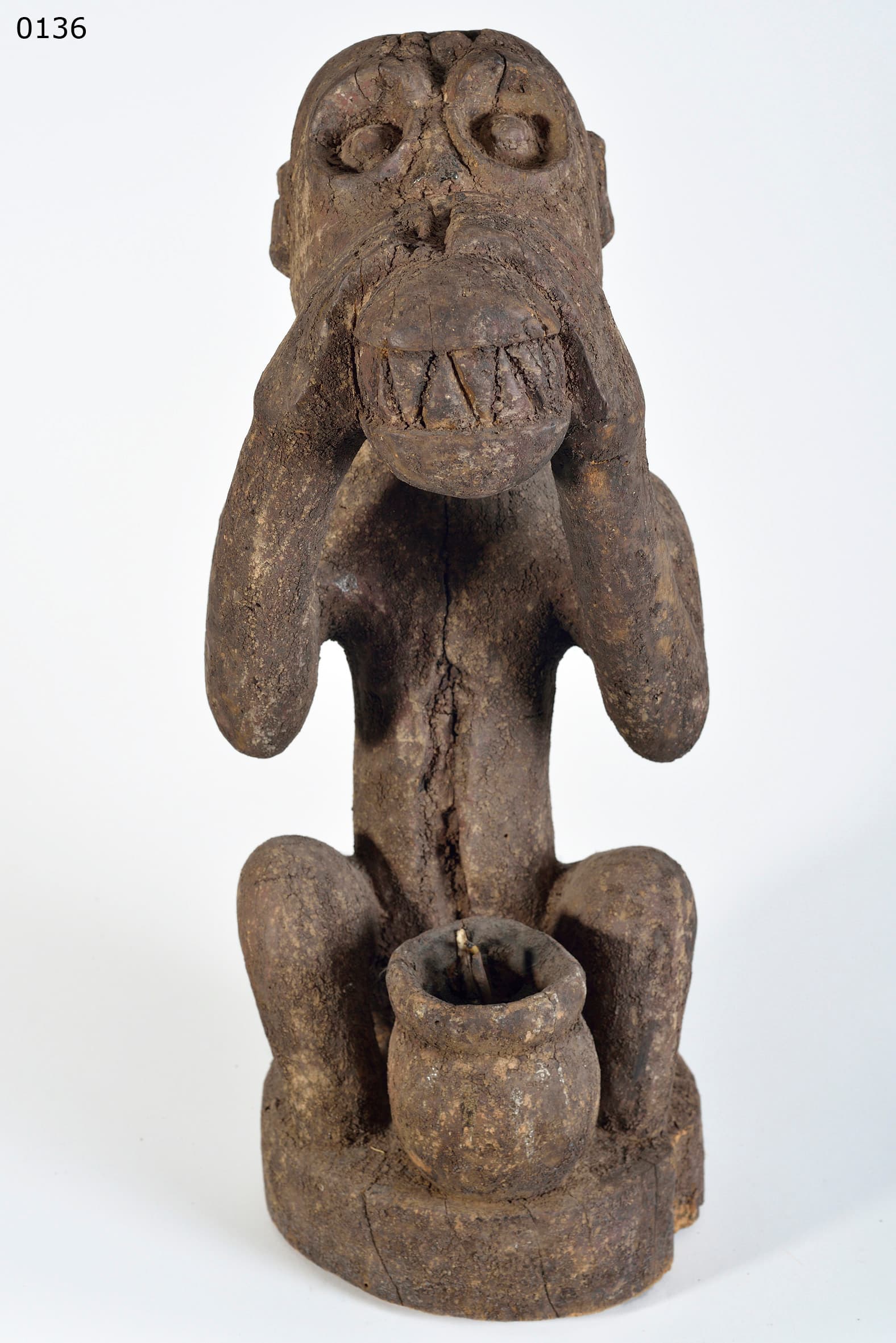
simian shrine figure
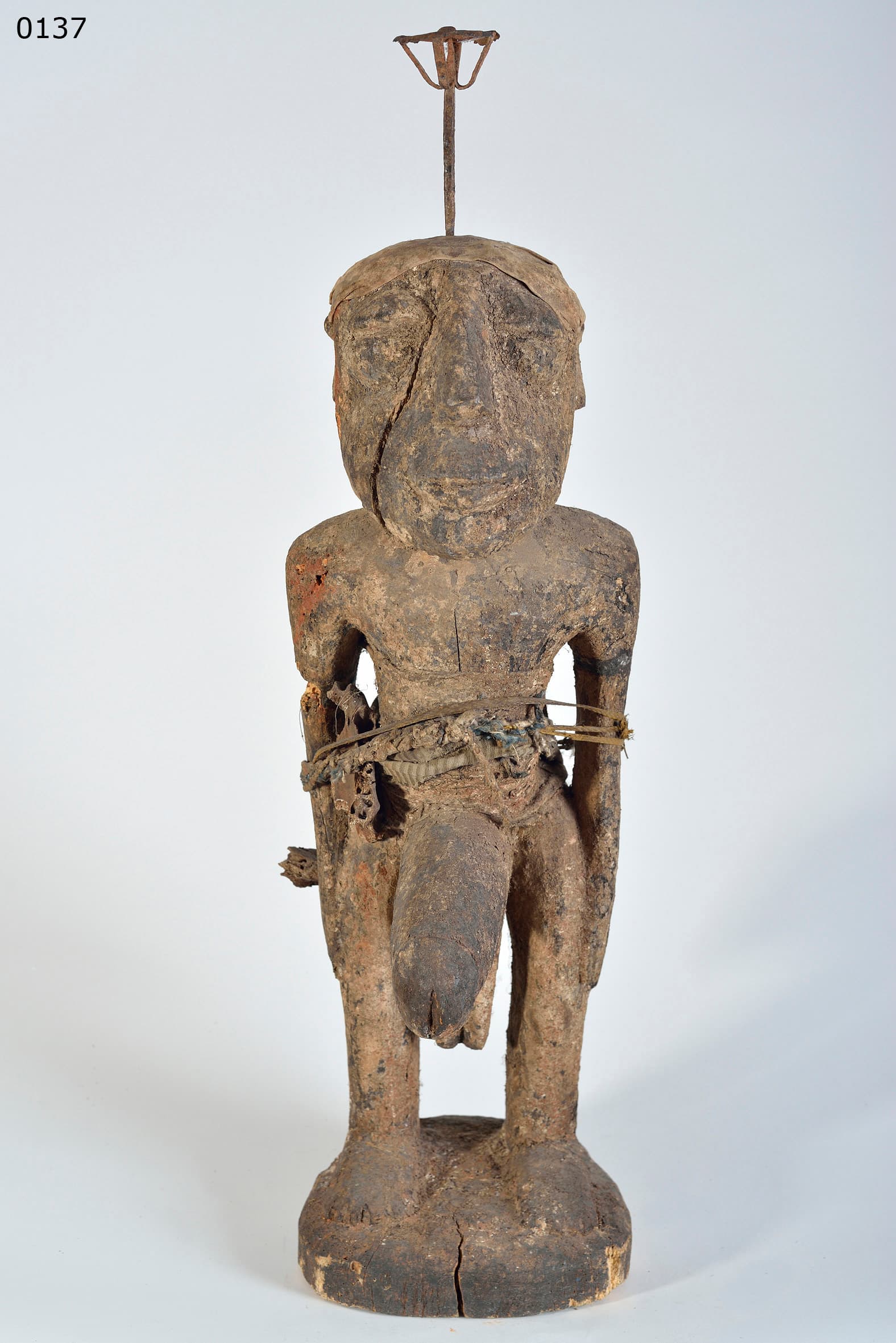
BOCIO statue (used in Voodoo ceremonies)
