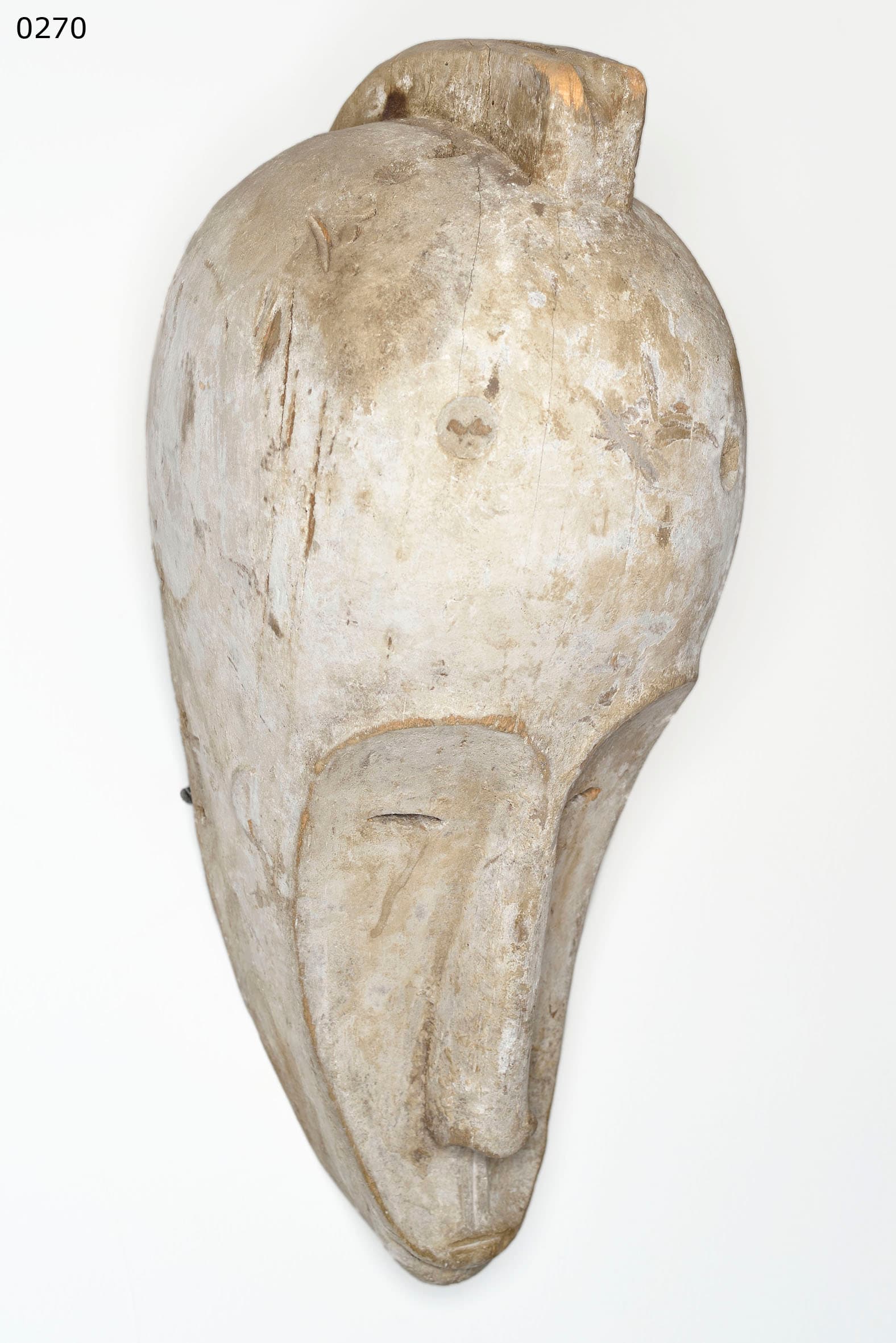
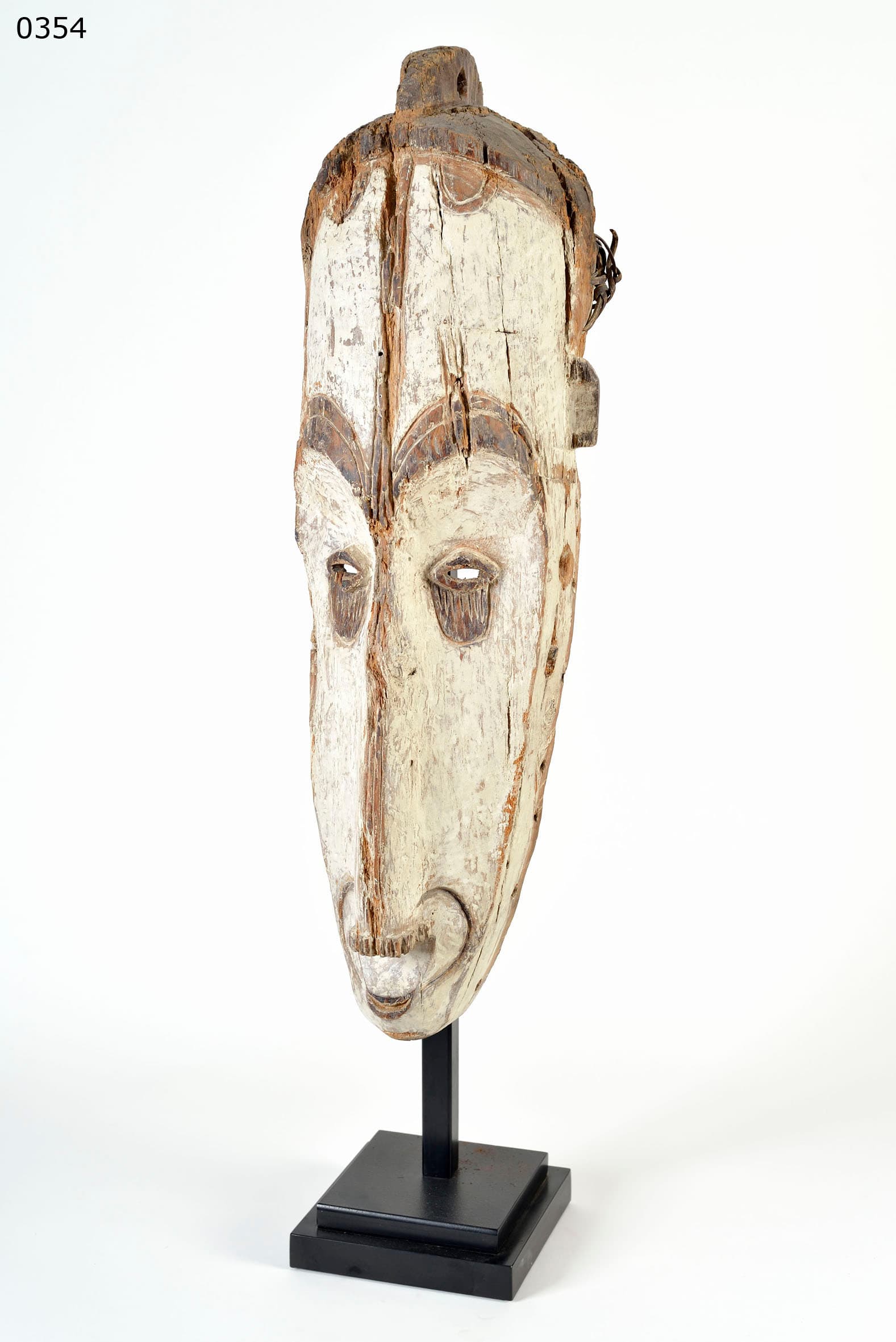
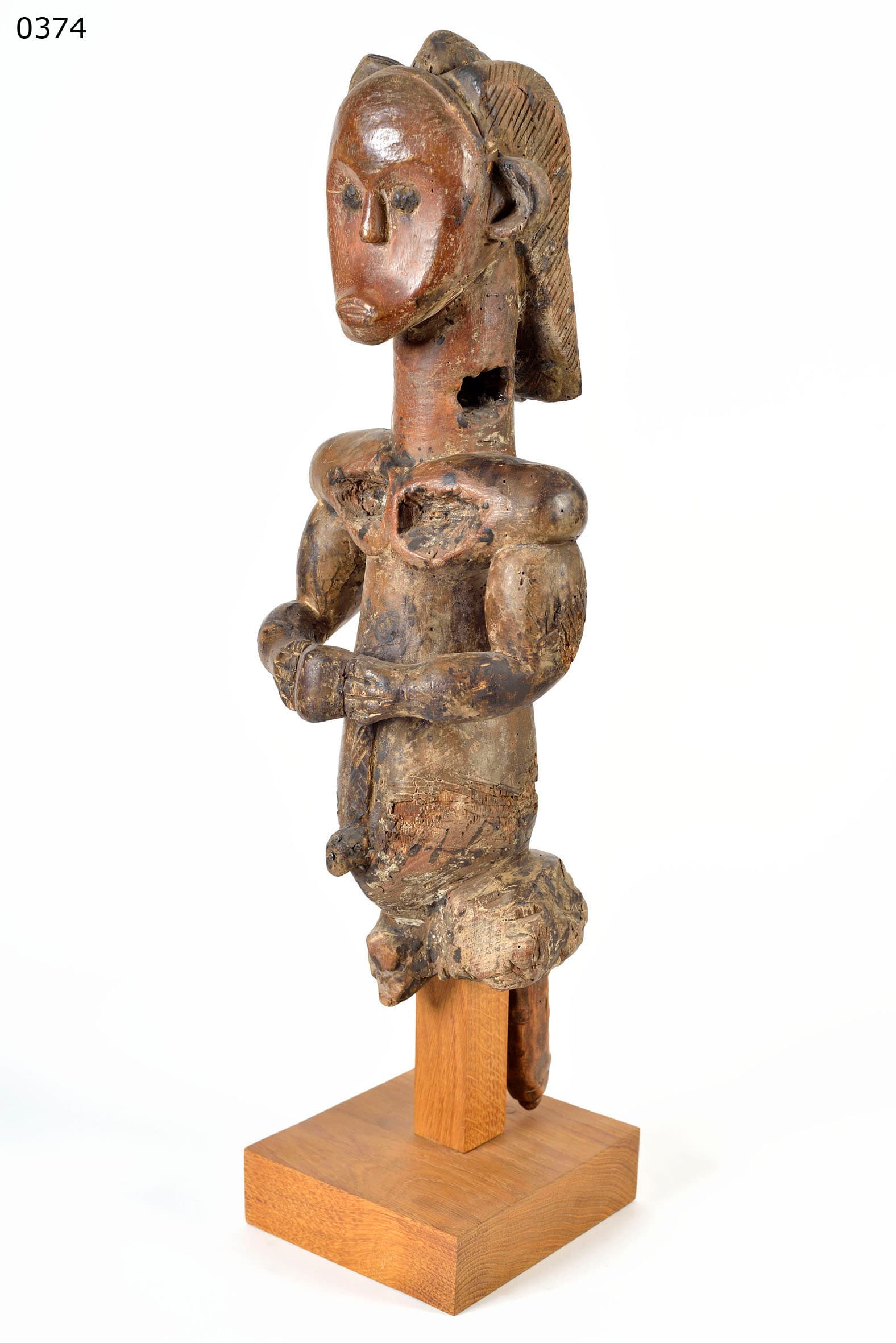
This magnificent, dark wooden figure is carved in the classic seated/squatting posture, grasping a cylindrical vessel or ritual flute before its chest. It features an incredibly complex, authentic headdress radiating with large, dark bird feathers, and the entire wooden surface exudes a thick, lustrous, black, oily patina.
1. Aesthetic style — the canonical byeri proportions and internal tension
This figure is a supreme execution of the Fang Byeri aesthetic, highly prized by early 20th-century European modernists for its perfect balance of opposing forces. The sculptor has harmonized the infantile, oversized head and prominent, bulging belly (symbolizing birth and the future) with the powerful, muscular tension of the thighs and shoulders (symbolizing the strength of the adult warrior). This visual paradox creates a sculpture that is perfectly static yet seemingly vibrating with contained energy, perfectly suited to guard the most sacred relics of the clan.
2. Ritual function — the melan rites and the guardians of the bones
In the traditional, highly mobile Fang society of Equatorial Guinea and Gabon, the bones of important ancestors were kept in cylindrical bark boxes. This Byeri figure was designed to sit atop the box, acting as a terrifying, hyper-vigilant guardian to ward off uninitiated women, children, and malevolent sorcerers. During the secretive Melan initiation rites, these figures were removed from the boxes and manipulated like puppets to educate young men about their lineage. The attached crown of feathers is extremely rare to find intact and dramatically heightens the intimidating, wild aura of the guardian spirit.
3. Physical patina — exudation, palm oil, and organic integration
The patina on this Fang reliquary is remarkably rich and suggests a long history of ritual use. Traditionally kept in the smoky rafters of the shrine, the dense hardwood was repeatedly saturated with palm oil and copal resin over decades. Today, the wood exhibits exudation — a deeply lustrous, wet-looking, dark black surface where the ancient oils continuously weep from the grain. The survival of the fragile feather headdress, tied with native, blackened cordage, is a miraculous ethnographic detail that completes the original, intended visual impact of the piece, supporting its attribution as an authentic, early 20th-century work.
Summary
This Fang Byeri figure is an exceptional example of Gabonese/Equatorial Guinean reliquary art, possessing a fine balance of muscular tension and profound ancestral authority. Its spectacularly weeping, oily patina and incredibly rare, intact feather headdress make it a highly significant example of African art.
Written with AI assistance from the collection appraisal, object photography and our own research; editorially reviewed. Mistakes are possible — corrections are welcome. How we work →