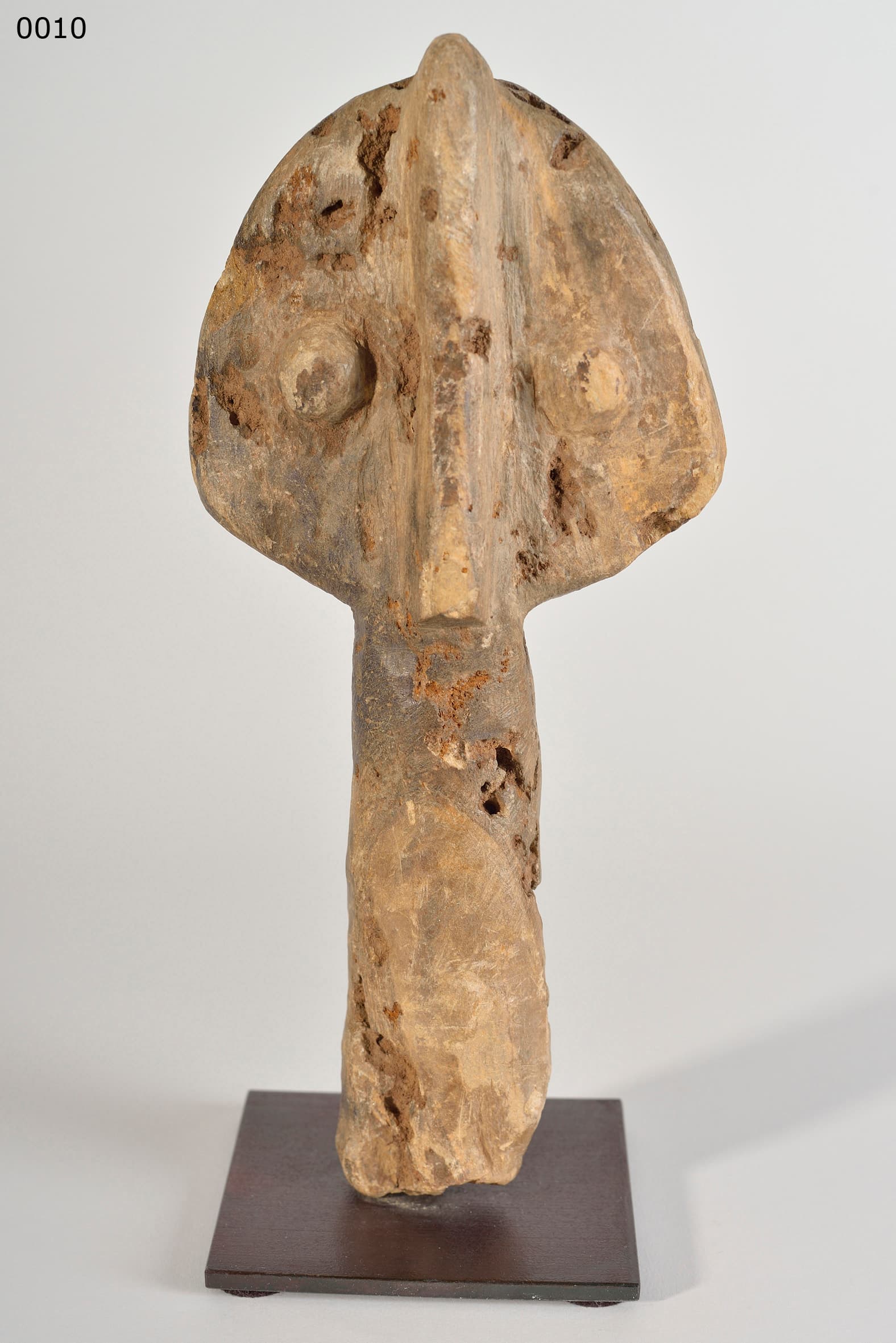
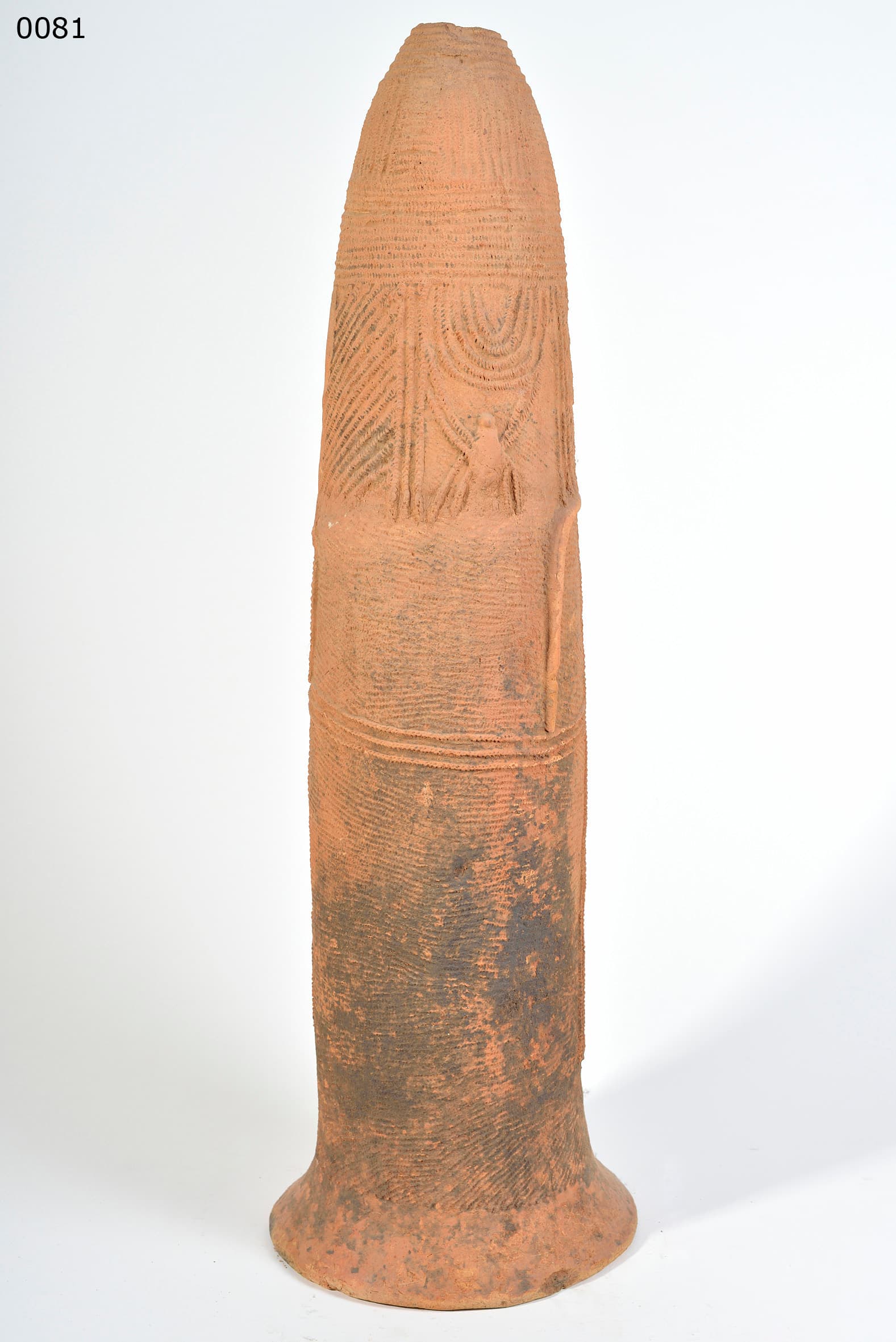
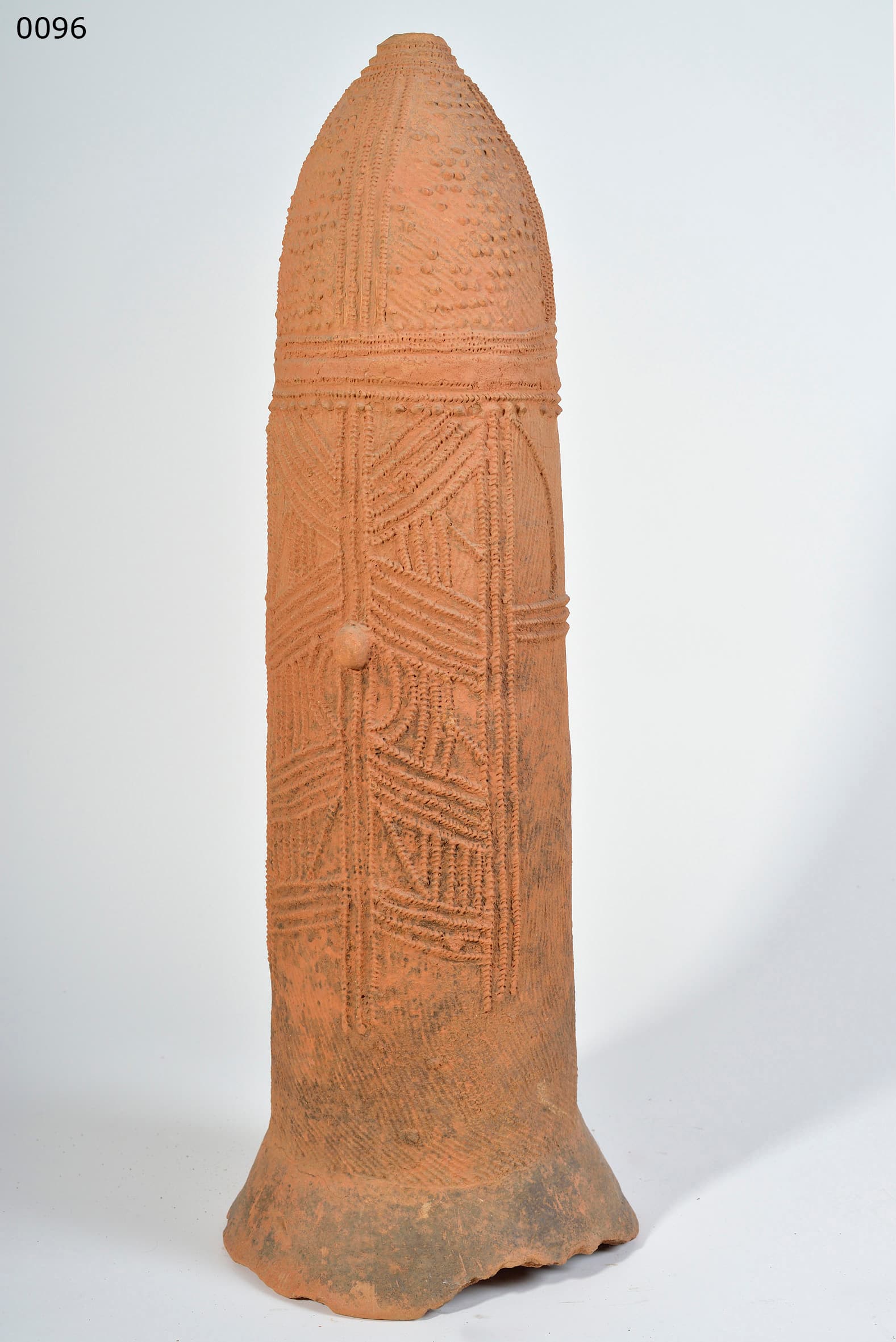
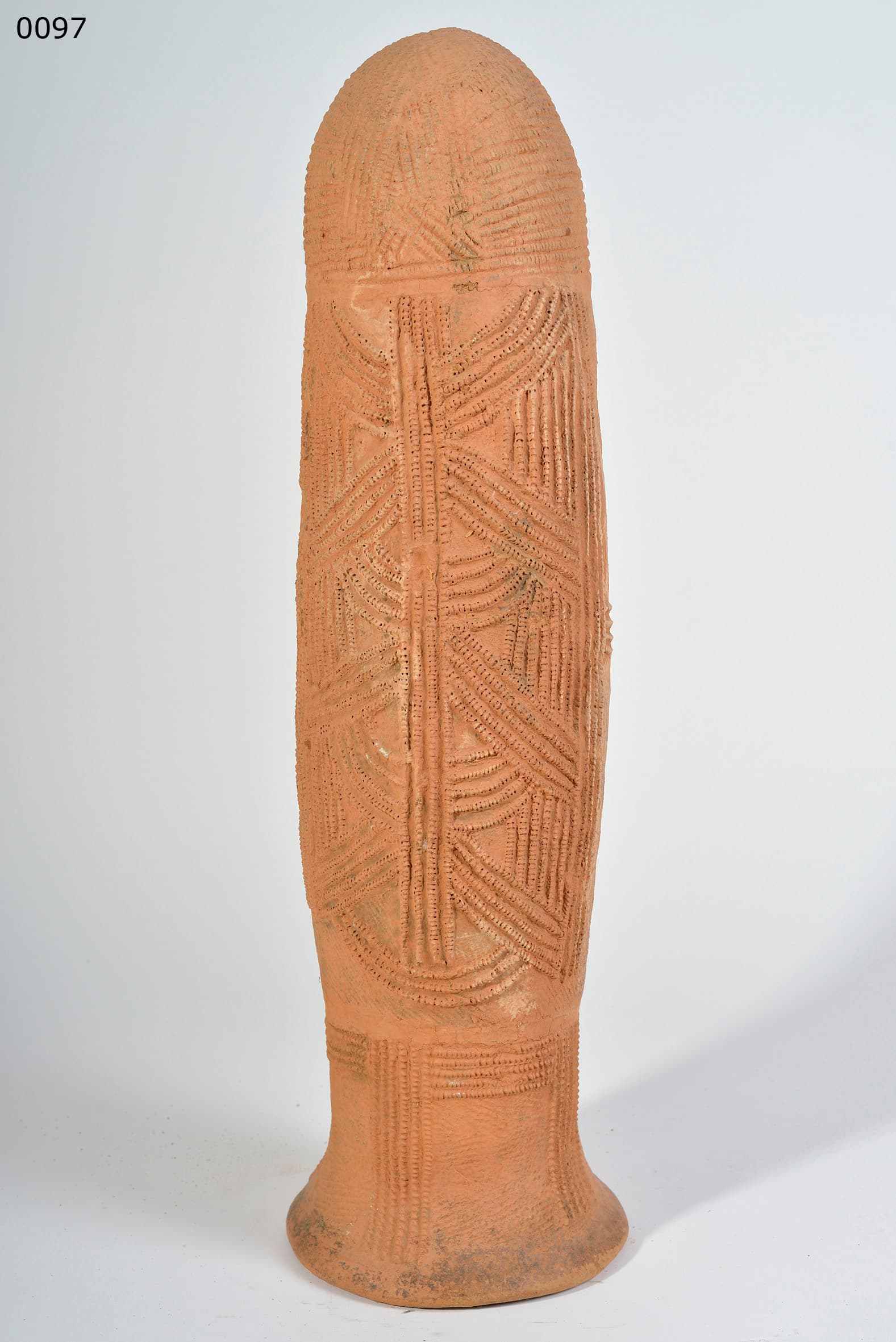
A tall terracotta burial vessel (3rd–11th C., 63 cm) from the Bura of Niger/Burkina Faso — a spiked head atop a hollow body, with arms raised dramatically to the sky.
1. The Bura necropolis and secondary burial
This vessel belongs to the archaeological Bura-Asinda-Sikka culture (3rd–11th century).
- An Ancient Casket: The Bura practiced secondary burial — after the initial flesh decayed, the bones and skull were placed inside the hollow body of the urn.
- Cities of the Dead: These urns were then buried together in vast, city-sized necropolises that still dot the Niger-Burkina borderland.
2. The ancestor made visible
Unlike purely abstract phallic urns of the same culture, this piece is anthropomorphic.
- A Human Guardian: The potter added a head and arms, transforming the urn from a container into a literal portrait of the guardian spirit protecting the remains inside.
- The Spiked Crown: The bristling head spikes may represent an elaborate ceremonial coiffure, weaponry, or supernatural aggression — a crown that radiates power from the grave.
3. The rain-praying posture
The raised arms connect this figure to a deep Sahelian visual tradition.
- Tellem and Dogon Parallels: The gesture mirrors later West African rain-calling and prayer postures, suggesting an unbroken cosmological thread across a millennium.
- Pleading the Heavens: Frozen in clay, the figure performs an eternal prayer on behalf of the buried ancestor — a permanent petition for rain, fertility, and continuity.
Summary
This Bura anthropomorphic urn is a spectacular monument of ancient African archaeology. At 63 cm, it is a highly personalized terracotta tomb, putting a human face on the mysterious funerary practices of the 1st millennium.
Written with AI assistance from the collection appraisal, object photography and our own research; editorially reviewed. Mistakes are possible — corrections are welcome. How we work →