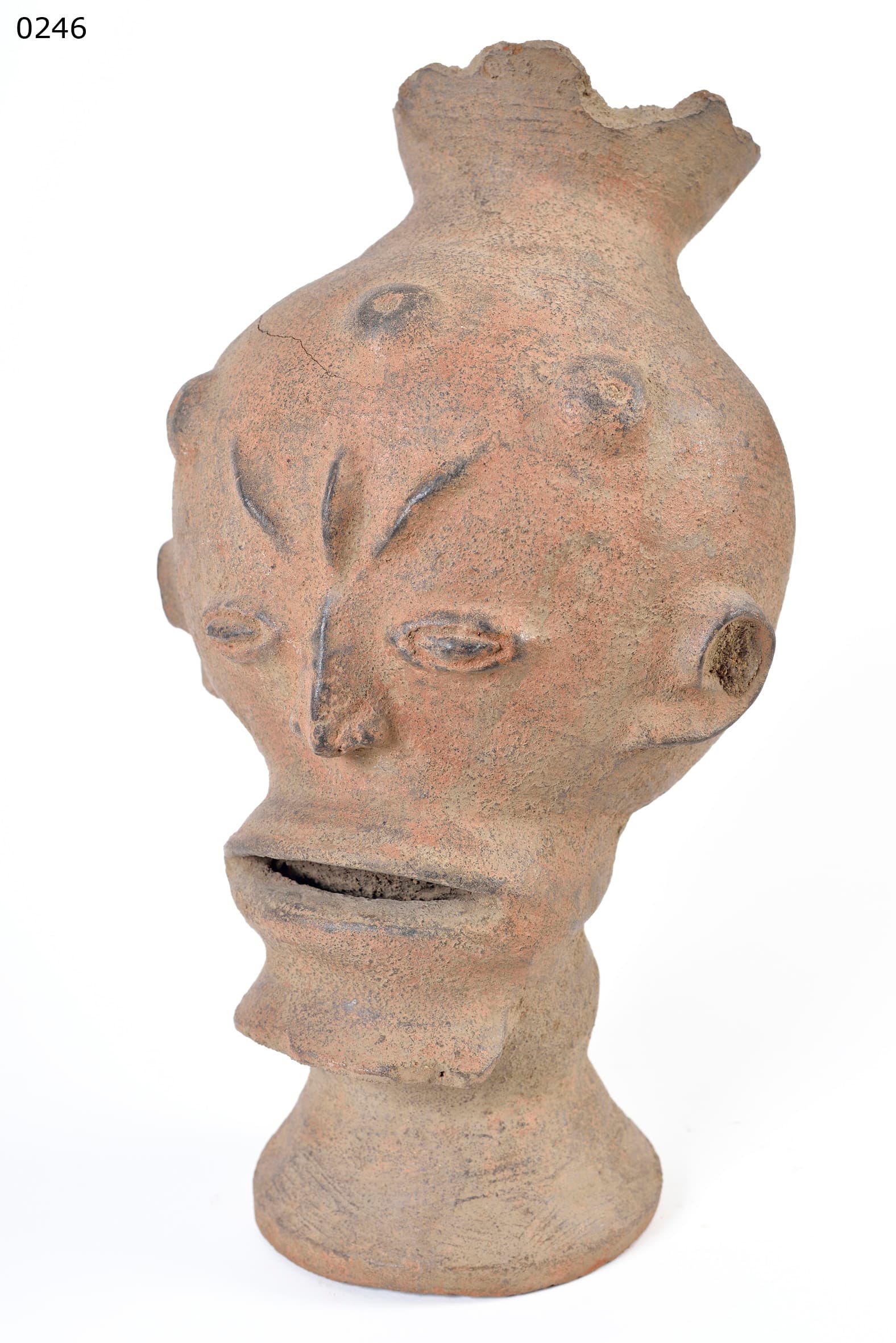
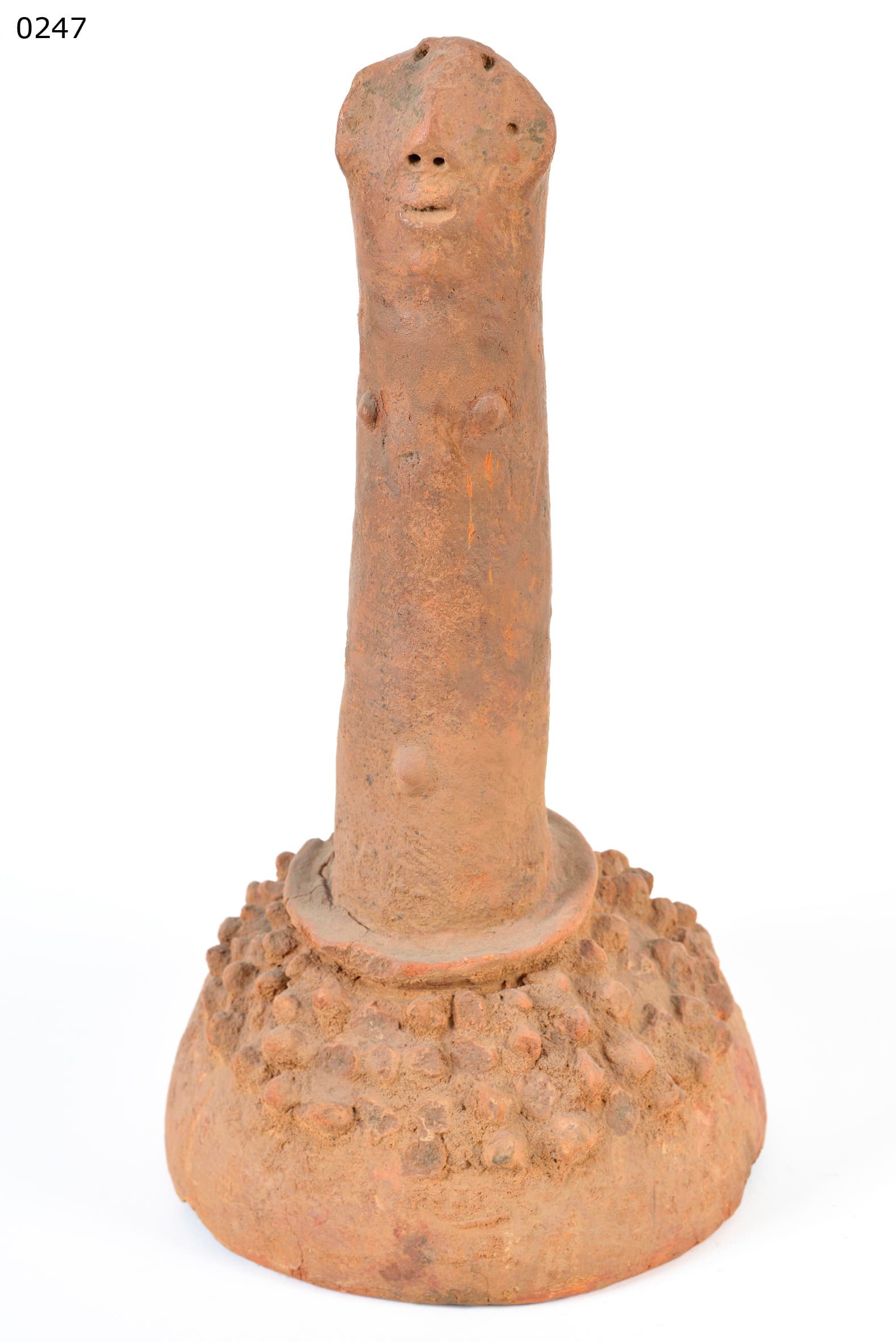
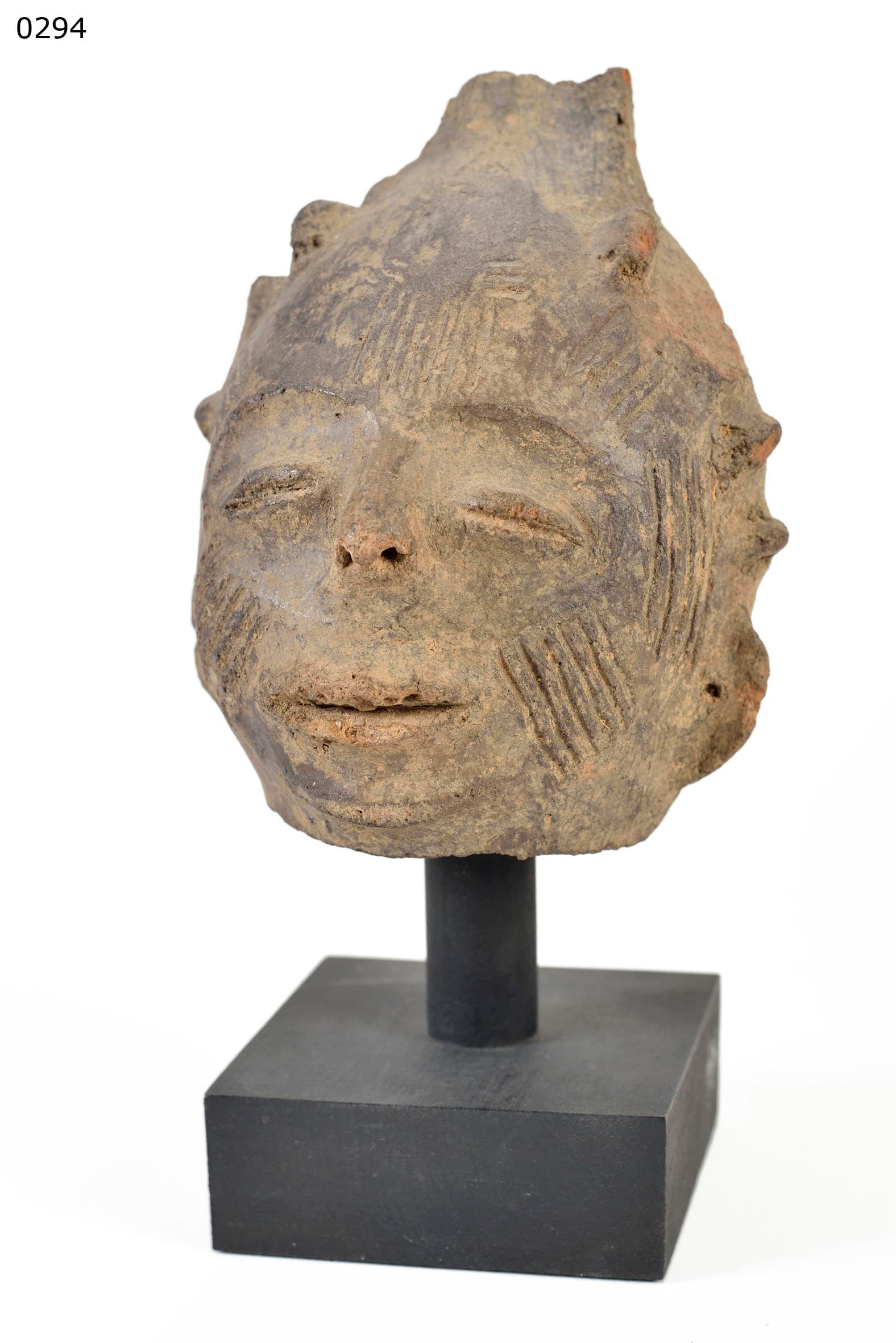
This flat, heavily stylized terracotta head features a disc-like face with sweeping, arched eyebrows, protruding coffee-bean eyes, and a finely modeled, textured coiffure consisting of circular clay nodes. The pale orange clay is extensively weathered, with a dry, porous, and highly abraded surface.
1. Aesthetic style — the idealized disc-face of Akan mma
This object belongs to the sophisticated Akan tradition of mma (terracotta portraits), specifically reflecting the Kwahu or Fante sub-style characterized by the radical flattening of the face into a disc-like form. This is not realistic portraiture, but an idealized philosophical statement. The Akan associate the circle with the moon, feminine energy, and divine perfection. The wide, serene forehead and the arched brows denote high intelligence, composure, and royal dignity — traits expected of the deceased ruler or queen mother that this terracotta was modeled to commemorate.
2. Ritual function — the asensie memorial grove
In traditional Akan statecraft, the death of a royal figure initiated a complex process of memorialization. This head would have originally been attached to a pot or a hollow cylindrical torso. It was not buried with the body, but rather placed in a specialized, open-air sacred grove known as an asensie (the place of the pots). Here, the terracotta effigies of past rulers stood together, functioning as a physical royal court in the spiritual realm. The living community visited the asensie to pour libations, offer food, and consult the royal ancestors on matters of state and warfare.
3. Physical patina — environmental erosion and open-pit firing
The physical condition of this head is consistent with its creation and its time spent in a West African forest grove. The slightly mottled, pale orange hue is indicative of traditional, low-temperature, open-pit firing methods used by female Akan potters. Having been left exposed to decades or centuries of rain, wind, and sun in the asensie, the original smooth slip has been completely abraded away. The resulting texture is highly porous, dry, and fused with micro-particles of local soil, providing an organic patina consistent with environmental exposure.
Summary
A classic representation of Ghanaian royal dignity, this Akan terracotta head utilizes geometric abstraction to convey ancestral calm. Its environmental weathering and association with the asensie memorial groves make it a significant example of this tradition.
Written with AI assistance from the collection appraisal, object photography and our own research; editorially reviewed. Mistakes are possible — corrections are welcome. How we work →