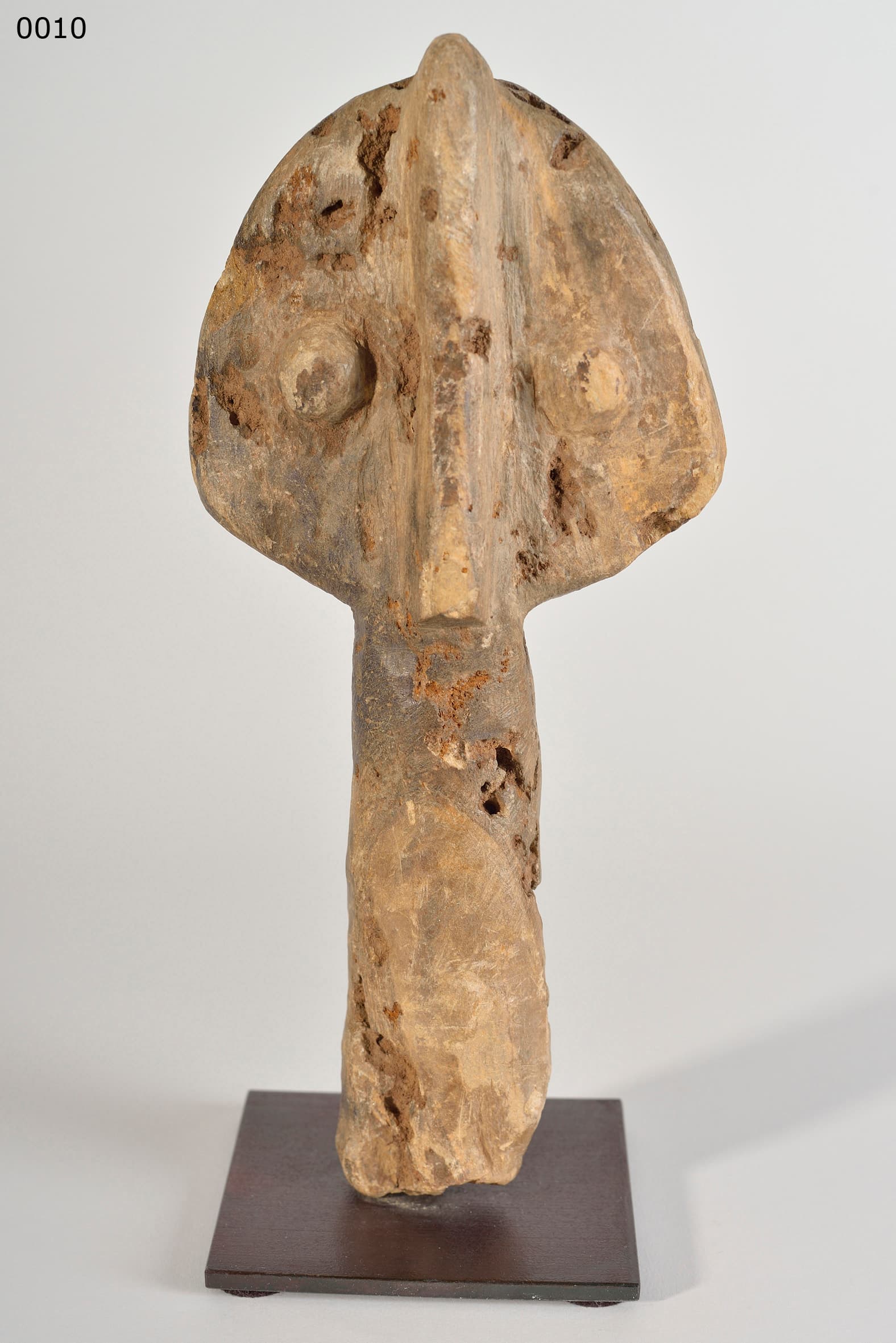
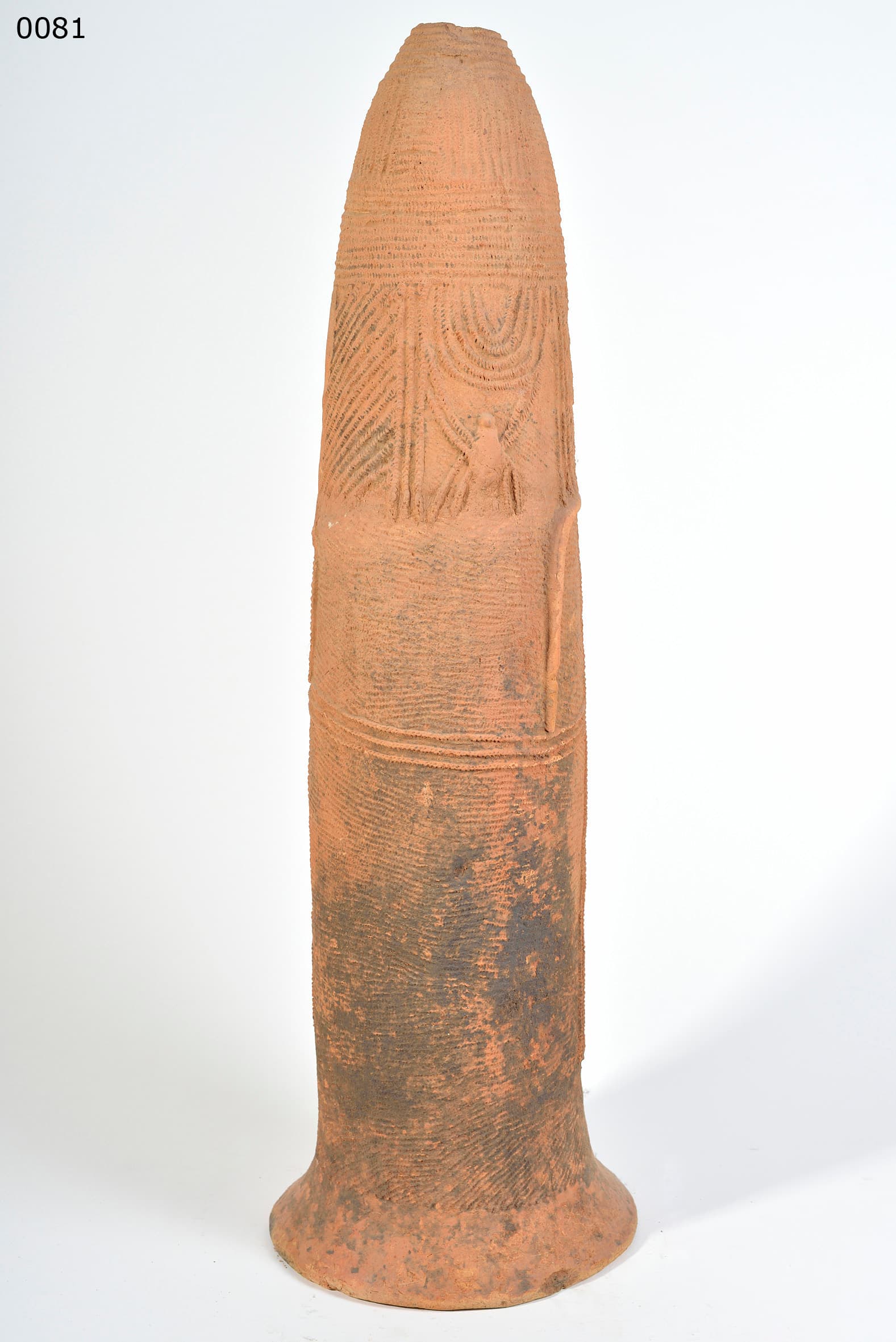
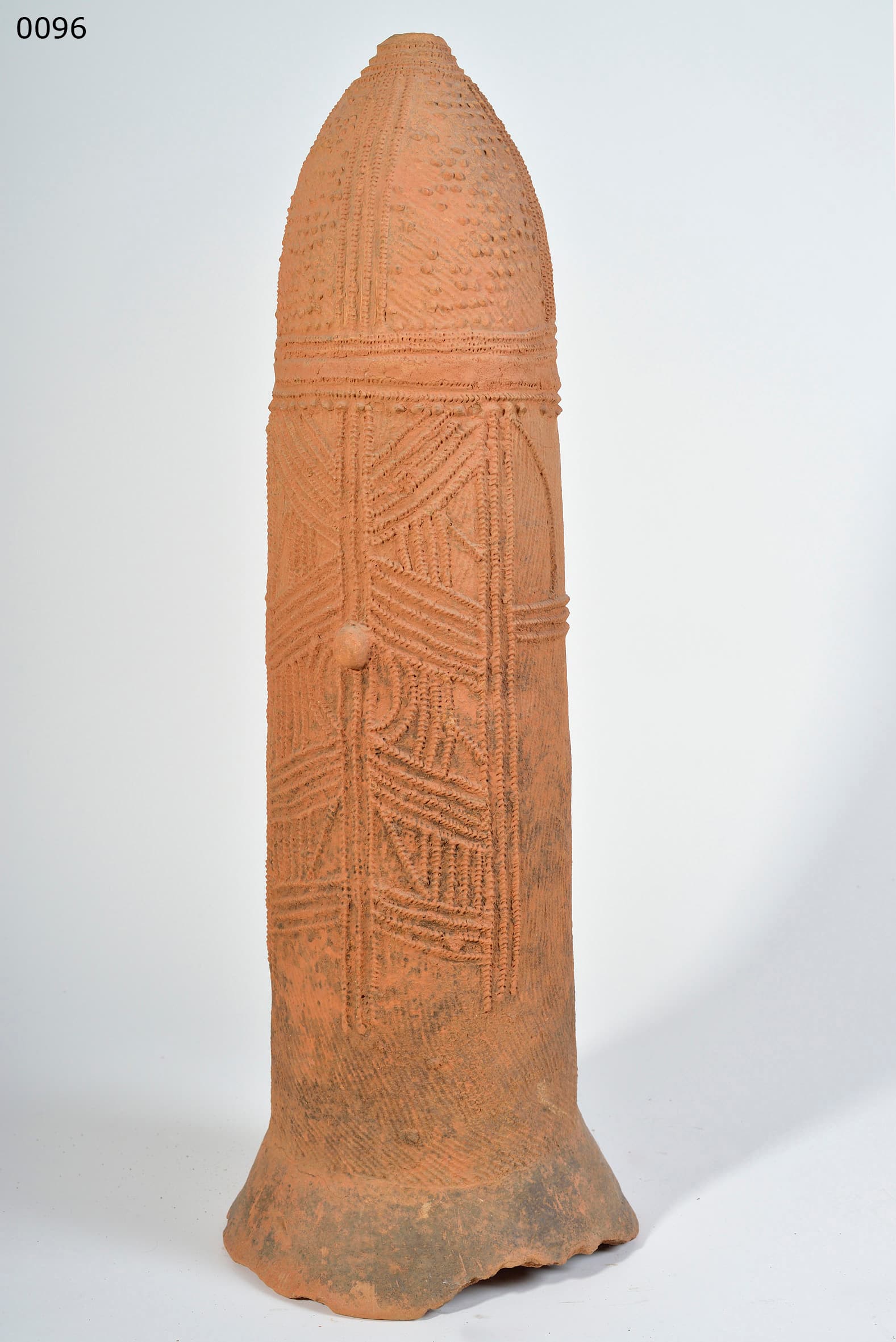
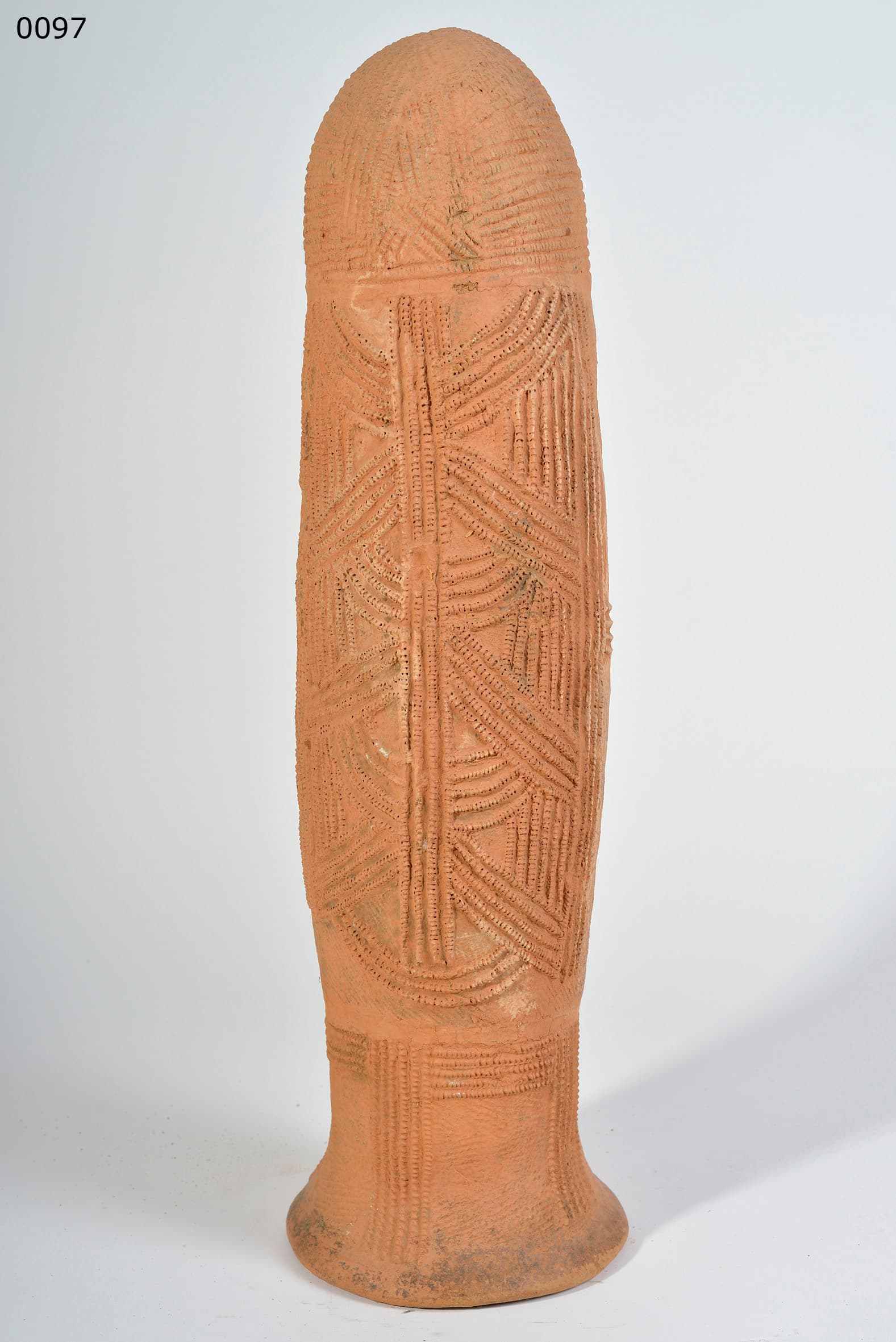
A towering bullet-shaped terracotta urn (3rd–11th C., 54 cm) from the Bura of Niger/Burkina Faso — heavily textured with rouletted geometric lines, branching arch motifs, and concentric bands.
1. The symbolism of regeneration
This urn belongs to the Bura-Asinda-Sikka culture and served the same secondary-burial function as the anthropomorphic vessels.
- Seed and Grave: In early West African cosmology, death was a return to the earth in service of new life.
- Planted Ancestors: Interring the deceased inside phallic vessels symbolically "planted" the vital seed of the ancestor back into the soil, ensuring the fertility and survival of the living descendants.
2. The texture of identity
The intricate patterns are a clan registry pressed into wet clay.
- Rouletted Lines: Made by rolling braided fibers and carved wooden tools over the surface before firing.
- Family Codes: The specific combinations of geometric bands, waves, and arches identified the lineage, wealth, and social status of the person entombed within.
3. Iron-age ceramic mastery
At 54 cm, this is a substantial thick-walled ceramic tube.
- Thermal Precision: Firing a hollow cylinder of this mass in an open bonfire without shattering required supreme control over fuel load and cooling rate.
- Surviving Intact: The piece's survival across more than a millennium testifies to a highly organized society with dedicated master artisan guilds.
Summary
This Bura phallic urn perfectly fuses death and male fertility. Heavily adorned and precisely fired, it is an eternal terracotta seed — a massive archaeological anchor for a civilization lost to the Sahelian sands.
Written with AI assistance from the collection appraisal, object photography and our own research; editorially reviewed. Mistakes are possible — corrections are welcome. How we work →