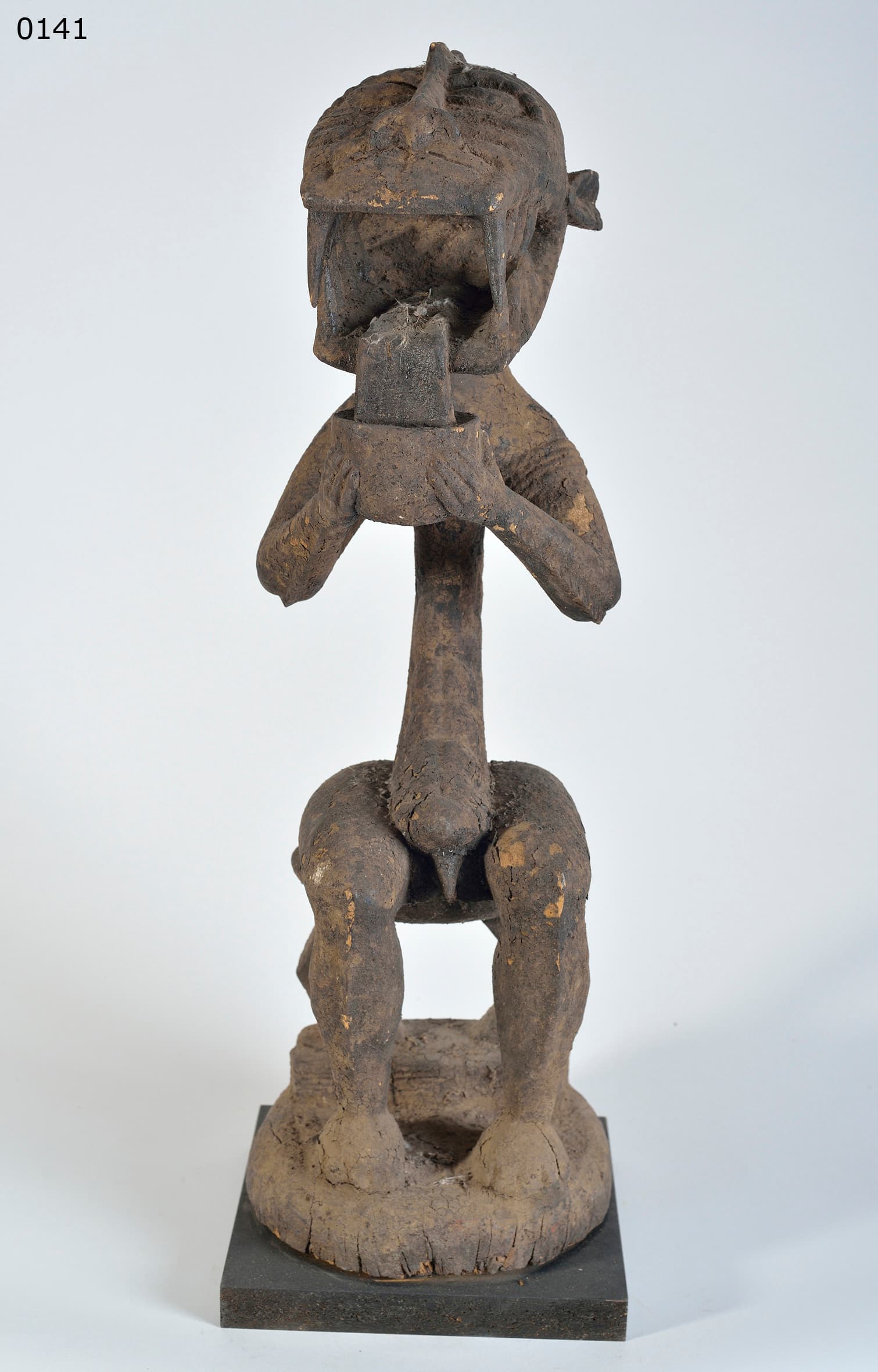
This aggressive wooden figure portrays a stylized monkey or baboon seated on a stool, gripping a small bowl in its hands, with its massive jaws wide open to reveal jagged, sharp teeth. The entire carving is heavily encrusted with a thick, friable layer of dried sacrificial matter and oxidized blood.
1. Aesthetic style — the brutal aesthetics of the mbotumbo
Among the Baoule, who are otherwise known for the serene beauty of their blolo bian figures, the mbotumbo (monkey figure) represents a deliberate aesthetic shock. The carver abandons refined portraiture to create a creature of pure, visceral aggression. The oversized head, the terrifying, jagged teeth, and the forward-leaning, muscular posture are all designed to project intimidating, untamed power. By combining human anatomy (seated on a stool) with the ferocious features of a primate, the artist perfectly visualizes a dangerous bush spirit that bridges the boundary between the village and the wild.
2. Ritual function — amwin spirits and blood sacrifice
The mbotumbo serves as a powerful amwin (nature spirit) utilized by specialized diviners (komien). Unlike protective household spirits, amwin are volatile, dangerous entities that can cause immense harm if not properly controlled. This figure was kept hidden in a dark, sacred enclosure. The bowl held in the monkey's hands is a functional receptacle intended to receive offerings. To harness the spirit's aggressive energy for protection, hunting success, or the destruction of enemies, the diviner "fed" the statue with raw, potent sacrifices, commanding the creature to attack malevolent forces on behalf of the village.
3. Physical patina — sacrificial taphonomy and thick encrustation
The extraordinary surface of this figure is consistent with authentic ritual use. It has not been polished for public display. Instead, it is entirely coated in a thick, crusty, asphalt-like patination resulting from decades of repeated sacrifices. This dense accumulation of dried chicken or dog blood, millet porridge, and chewed kola nuts has hardened over the wood, softening the carved details and giving the piece a powerful, organic texture. This profound encrustation is compatible with continuous, active use in esoteric Baoule bush cults.
Summary
A striking manifestation of untamed wilderness power, this Baoule mbotumbo subverts traditional Ivorian beauty to project raw aggression. Its bared teeth and dense, sacrificial crust make it a notable ethnographic power object.
Written with AI assistance from the collection appraisal, object photography and our own research; editorially reviewed. Mistakes are possible — corrections are welcome. How we work →

mask (collected in Abidjan)

mask (called GOLI)
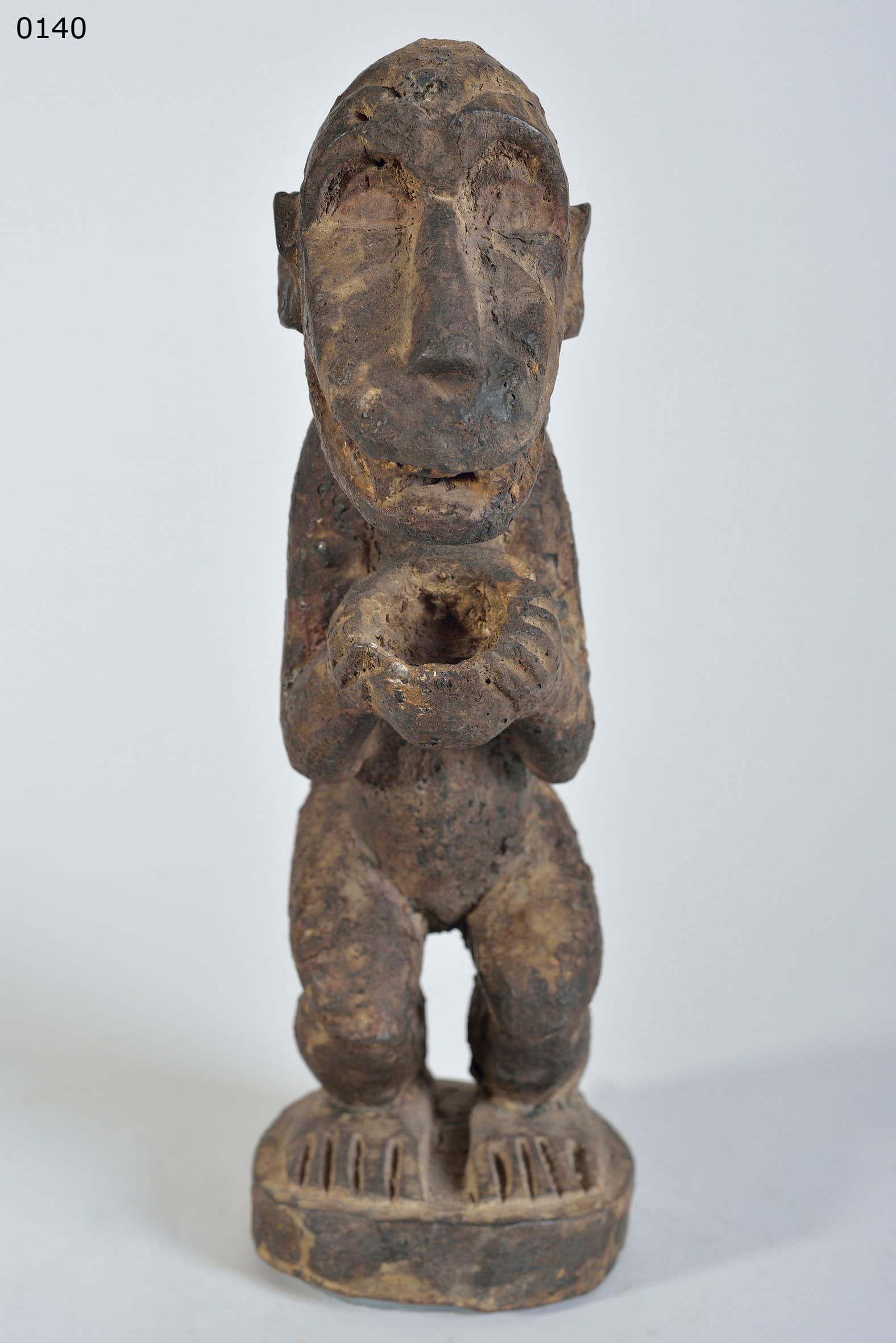
simian statue (called MBOTUMBO or GBEKRE)