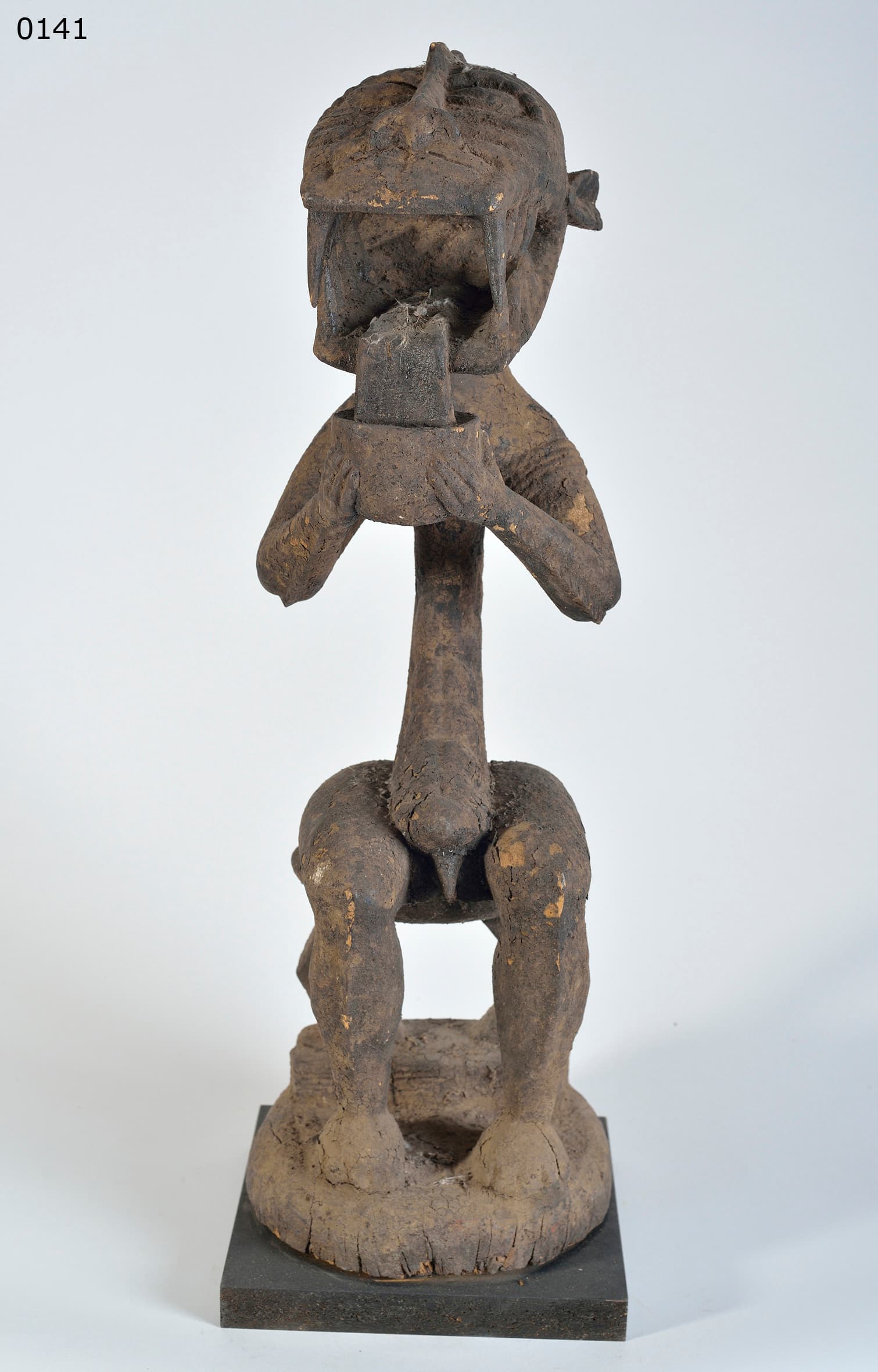
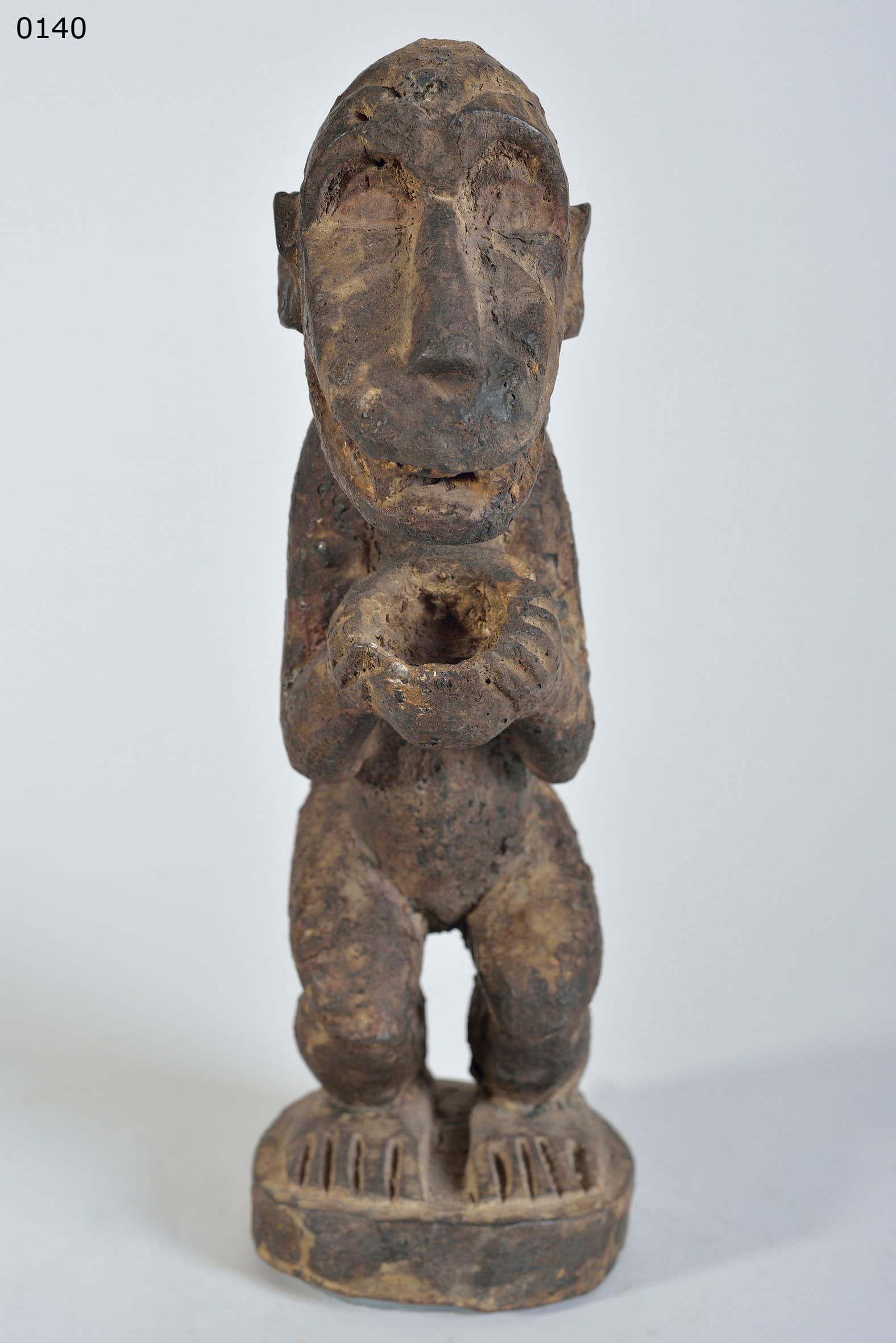
This wooden figure depicts a squatting baboon holding a small cup directly to its mouth, featuring deep, arched eye sockets and jagged, menacing teeth. The surface is heavily degraded and completely enveloped in a dark, crusty, earth-like patina of sacrificial residue.
1. Aesthetic style — zoomorphic abstraction and the primate motif
This mbotumbo variation captures the essence of the cynocephalus (baboon) through aggressive, heavy volumes. The carver has focused on the powerful, jutting muzzle and the deep-set eyes, creating a face that is less a biological study and more a geometric representation of hunger and ferocity. The posture—squatting on bent knees and bringing the cup directly to its bared teeth—emphasizes the figure's gluttonous, demanding nature, physically acting out the continuous need for the spirit to be "fed" in order to be pacified.
2. Ritual function — the komien and the dangerous bush
Like its seated counterpart, this figure is an amwin controlled by a komien (diviner). The Baoule worldview clearly delineates the civilized, ordered village from the chaotic, dangerous bush. Monkeys, existing on the periphery, represent the unpredictable forces of nature that can ruin crops or bring disease. By carving the monkey and capturing its spirit within the wood, the diviner domesticates a fraction of this chaotic power. The cup held to the mouth is a direct channel for libations; it is the specific site where the raw energy of the sacrifice is transferred into the spiritual entity.
3. Physical patina — fused encrustation and smoke oxidation
The surface of this object features a profound, accumulative patina. The underlying wood matrix is virtually invisible, buried beneath a highly textured, friable layer of dried blood, palm oil, and earth. The figure shows indications of having been stored in a heavily smoked environment, likely the rafters of a diviner's hut, resulting in a deep, matte, charcoal-like oxidation that has fused with the sacrificial layers. The rounding of the jagged teeth is consistent with wear from repeated ritual feeding, suggesting use in early 20th-century animist practices.
Summary
This Baoule mbotumbo represents the dangerous spirits of the Ivorian wilderness. Its aggressive, cup-holding posture and thick, blackened sacrificial encrustation are consistent with its attribution as a traditional African power figure.
Written with AI assistance from the collection appraisal, object photography and our own research; editorially reviewed. Mistakes are possible — corrections are welcome. How we work →

mask (collected in Abidjan)

mask (called GOLI)
simian statue (called MBOTUMBO or GBEKRE)